
On Wednesday, 19 August, the debt of the United States crossed $40.047 trillion.
Two days later, the Treasury Secretary went on television and said something that most people took as a denial, but which is actually correct.
“There’s nothing magic about the $40 trillion number… We can grow our way out of that.”
— Scott Bessent, US Treasury Secretary, speaking on CNBC, **21 August 2026
He is right. There is no magic number. Nothing detonates at $40 trillion, and nothing would have detonated at $30 trillion or $50 trillion either.
Which is precisely why the question everyone asks — when does it collapse?
So let's look at this question properly.
American fiscal doomsday is not an arithmetic event. It is a confidence event, and confidence events have a recognisable sequence. Five stages. And this week, two of them arrived.
First, Why the Big Number Is a Distraction
I want to get the bad version of this argument out of the way first, because it keeps discrediting the good version.
The United States borrows in a currency it issues. It cannot be forced into the kind of default that hit Argentina or Sri Lanka. There is no foreign-currency debt to run out of.
The rollover panic is overdone, too. Roughly $10 trillion of Treasury debt matures in 2026, about a third of the total. That sounds apocalyptic until you notice that when it matures, the holders get cash they have to put somewhere.
Money market funds, insurers, foreign central banks -most of them are legally or operationally obliged to hold Treasuries. Ten trillion of maturities meets roughly ten trillion of returning demand.
So no, I don’t think the wall is the story.
The story is the price. And the price depends on whether people want the paper at 4% or at 6%.
The Machine That Actually Runs
Debt is sustainable when the economy grows faster than the interest rate on the debt. When the interest rate wins, the debt compounds on its own, with nobody voting for a single new spending programme. That’s really the whole thing.
And the direction isn’t comforting. Interest costs were a record 3.2% of GDP in 2025. CBO’s February long-term outlook has them reaching 6.9% of GDP by 2056, with deficits rising from 5.8% to 9.1% of GDP, and debt hitting 175% of GDP.
Interest already costs more than the American military. It’s the second-largest line in the federal budget, above $1 trillion a year, and Treasury yields are sitting at 19-year highs.
What gets me is how thin the margin for error is. CRFB points out that long-term rates are running about 30 basis points above CBO’s assumptions.
If that holds, interest costs rise by another trillion dollars over ten years.
Thirty basis points. One trillion dollars. That’s the leverage in this system, and it’s why small things matter more than big announcements here.
It also got worse for a reason people have already forgotten. On 20 February the Supreme Court ruled 6–3 that emergency powers “do not authorize the President to impose tariffs.” The revenue plan was struck down, refunds started going out, and CRFB now scores the loss at $1.7 trillion through 2036, pushing projected debt toward $58 trillion.
So the debt didn’t just grow. The plan to pay for it was ruled illegal.
The Five Stages of a Sovereign Confidence Event
Now the actual answer to “when.”
David Wessel of Brookings has laid out how you would know that the US Treasury is struggling to borrow. Combine his indicators with the historical record and you get a sequence. Here it is, in order.
- Auctions start to tail. When the yield at auction comes in above the pre-auction market yield, buyers demanded a discount. In the week of 24–26 March 2026, the two-year auction had a bid-to-cover of 2.44 against a 2.62 average, a tail of 1.8 basis points against a -0.2 average, and primary dealers forced to absorb 24% of issuance against an 11% norm. That is stage one, and it has already happened once this year.
- Dealers become the buyer of last resort. When the 25 primary dealers are eating a rising share, it means real money stepped back. Wessel notes dealers took 24.7% in November 2023 — a stress signal — and single-digit shares when demand is healthy. Watch this number more than any headline.
- Foreign holdings fall in absolute terms, not just as a share. This is the one that matters, and it arrived on 17 August. Foreign holdings of Treasuries fell to $9.299 trillion in June, down $72.1 billion in a month. Japan sold $26.4 billion. China’s holdings dropped to $633.4 billion — down 13% year on year and the lowest since September 2008. The official Treasury series is published here; you can watch it yourself.
- The issuer starts intervening in its own market. This arrived on Wednesday. Treasury doubled its buyback programme from $2 billion to $4 billion per issue for 10-, 20- and 30-year bonds, running 9 September to 4 November. Bessent said he would go further: “We are going to make a market in these… it could be more than $4 billion per issue.” Krishna Guha of Evercore ISI called it “a weak form Operation Twist… that in itself will have little enduring impact.” The ten-year climbed back above 4.7% the next morning anyway.
- A trigger. Not a number — an image. Something that makes the market believe the authorities are frightened.
Three of the five are visible. The fifth is the one that decides the date, and it cannot be forecast, only recognised.
Why Iran Is the Accelerant
Now connect the war, because it is not a separate file.
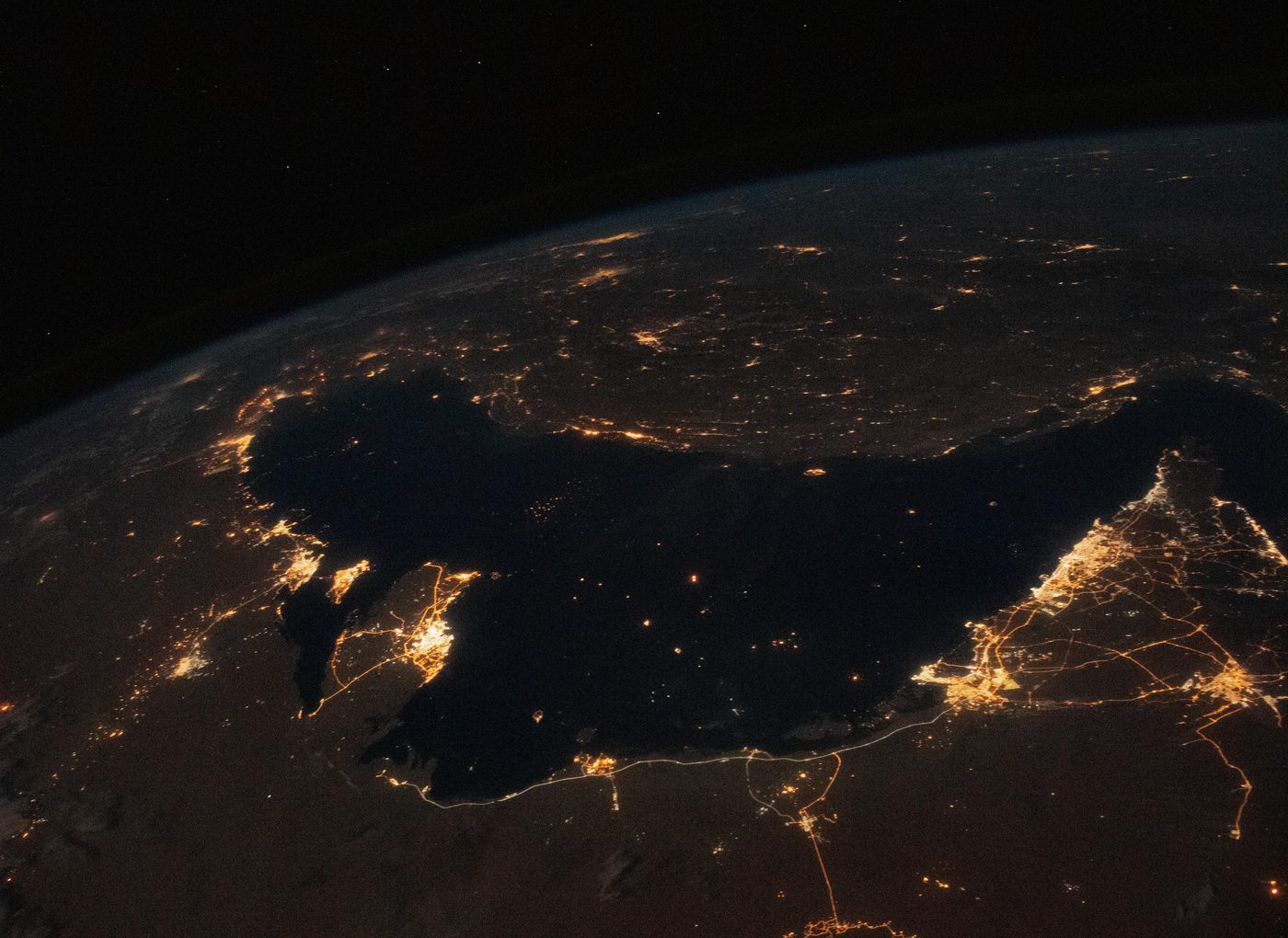
The single thing that would relieve America’s interest bill is lower rates. Lower rates need lower inflation. And inflation right now is being set in the Strait of Hormuz.
Brent is near $93.50.
Gasoline is up roughly a quarter year-on-year.
The Federal Reserve held rates in July on a 9–3 vote in which all three dissents wanted a hike. Kevin Warsh gives his first Jackson Hole keynote on 28 August.
So the war removes the one exit.
Then there is the second-order effect, which is stranger. On the same day the debt crossed $40 trillion, the President announced an “ECONOMIC D-DAY” against Iran, threatening any country doing business with Tehran with “TREMENDOUS Economic Consequences.”
The countries in that category — China, the Gulf states, and Turkey — are the same countries in the Treasury holdings table.
Iran’s foreign minister said it plainly the next day.
“The so-called ‘Economic D-Day’ is a diversion from America’s own crisis: unprecedented debt & surging interest costs.”
Consider the arithmetic of that.
Japan sold $26 billion of Treasuries in June, largely to defend its own currency — the same currency Washington then spent its own reserves helping to prop up, precisely because it feared the selling would raise American borrowing costs.
The world’s largest debtor is now managing its creditors’ problems to protect its own funding. That is not a collapse. It is something more interesting: dependence running in a direction nobody planned.
What 1976 Teaches About the Date
If you want to know what stage five looks like, look at Britain in 1976.
The fundamentals had been deteriorating for years. Everyone knew. Nothing broke.
Then on 28 September, Chancellor Denis Healey turned around at Heathrow airport and drove back to Downing Street rather than fly to an international conference.
It was a precautionary decision. But as Policy Exchange’s account of the episode puts it, that act “triggered the perception of a crisis.” Within weeks, an entirely false rumour that sterling would be devalued from $1.64 to $1.50 was moving the market, because markets were already primed to believe bad news.
By December, Britain was at the IMF.
The lesson is not that Britain was insolvent. It wasn’t. The lesson is that a sovereign crisis is a change in what people are willing to assume, and it can be detonated by a gesture.
America’s fundamentals have been deteriorating for years. Everyone knows.
All three rating agencies have already acted — S&P in 2011, Fitch in 2023, and Moody’s in May 2025, cutting the US from Aaa to Aa1. Nothing broke.
The trigger, when it comes, will look small. A failed 30-year auction. A Treasury Secretary cancelling a trip. A buyback announced at an odd hour.
The Case That Doomsday Never Comes
Now the strongest argument against everything above, because it deserves a real hearing.
Bessent’s claim is not empty. He says the deficit will land near 5.7% of GDP in 2025, that fiscal consolidation is coming, and that “there’s a very, very good chance” the worst of the deficit is behind.
If nominal growth outruns the average interest rate, the ratio falls on its own. Countries have grown out of worse — the United States did exactly that after 1945.
Second, there is nowhere else to go. Every alternative reserve asset is smaller, less liquid, or issued by someone less trusted. Selling dollars requires buying something, and the something does not exist at scale.
Third, the crisis dynamic works backwards for the US. In a genuine global panic, money runs into Treasuries, not out. That is the opposite of Britain in 1976, which had to buy foreign currency to survive.
Fourth, and most humbling: people have been predicting this since the 1980s. Every year has produced a chart proving the end was near. Every year, the auctions cleared.
All four points are strong. Here is what they do not answer.
There are arguments about capacity, and stage five is not about capacity. Britain in 1976 could pay.
So could France in 1968 and Italy in 2011. The question was never whether the money existed. It was whether lenders wanted to keep finding out.
So — When?
The honest answer is that there is no date, and anyone who gives you one is selling something.
But there is a condition, and it is specific enough to watch.
American fiscal doomsday arrives when the interest rate on the debt stays durably above nominal growth, and foreign official holders keep reducing in absolute terms, and the Treasury is visibly managing its own yield curve — and then something ordinary goes wrong in public.
The first condition is arguable. The second started in June. The third started on Wednesday.
That is not a crash. Please do not read it as one. It is the difference between a country that borrows because the world wants its paper, and a country that borrows because the world has not yet decided to stop.
Remember one thing. Empires do not go bankrupt. They become expensive.
They pay more for money than they used to, and more for allies than they used to, and one morning, everyone notices that the terms changed years ago and nobody announced it.
Doomsday is not the day America cannot pay its debts.It is the day the world stops assuming that it will.


Comments
No comments yet. Be the first.
Comments are closed on this article.