
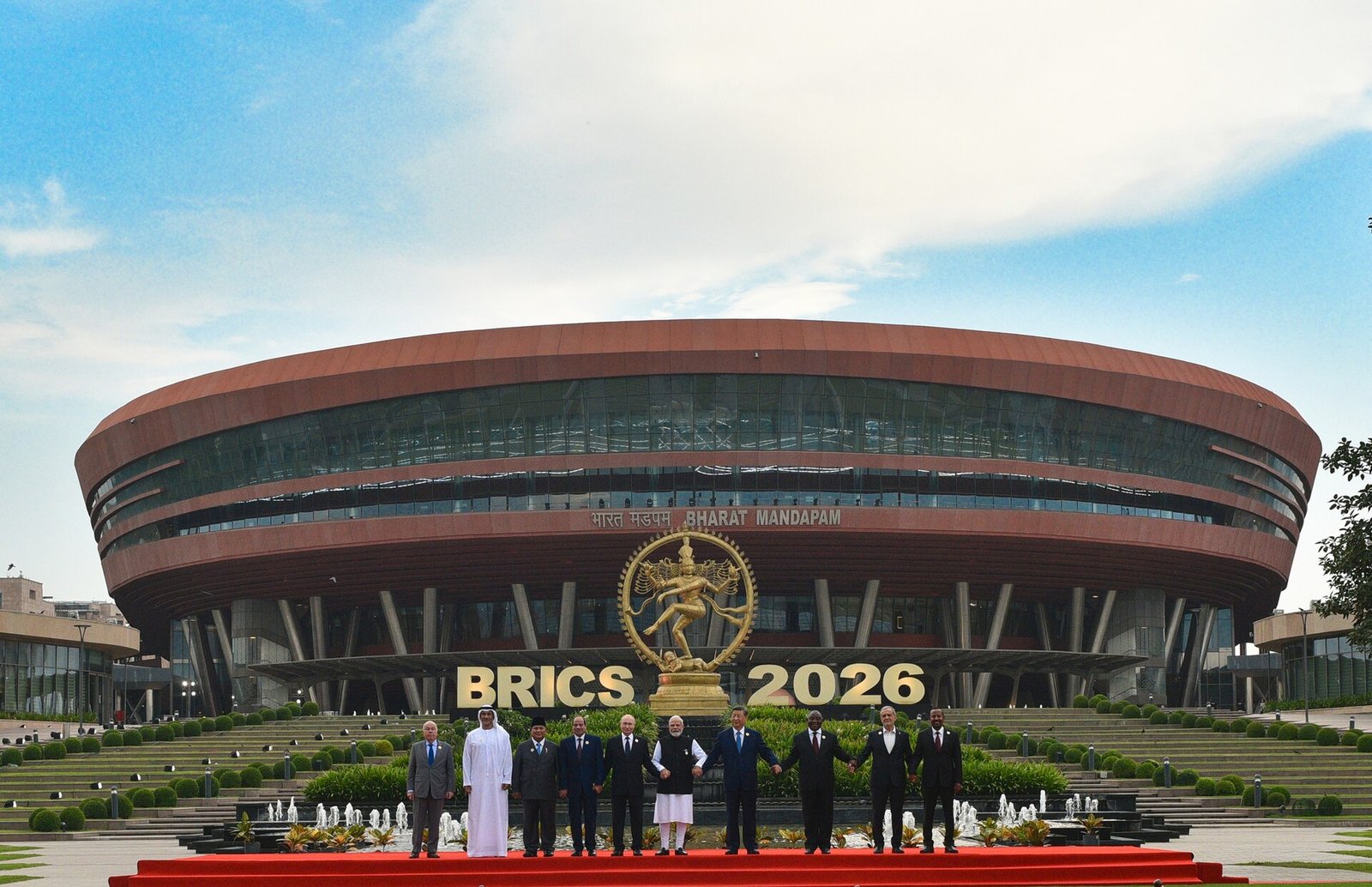
Bangladesh's decision to stay away from the 18th BRICS Summit in New Delhi should not be read as proof that Dhaka has chosen Washington over BRICS. The stronger interpretation is more uncomfortable: Bangladesh's room for strategic ambiguity is becoming narrower as trade, sanctions, technology controls and regional diplomacy increasingly overlap. The protocol dispute mattered, but it mattered inside a larger structure of constraints.
On 10 September, Bangladesh's state minister for foreign affairs said no government representative would attend the summit because the invitation had been extended to the BIMSTEC chair rather than to Bangladesh's prime minister in that capacity. He also stressed that Prime Minister Tarique Rahman's first visit to India should be a bilateral one. Prothom Alo reported the decision. Bangladesh's high commissioner to India later described the absence as the product of "certain context and circumstances," rather than a simple rejection of BRICS.
Protocol was real, but it was not the whole story
There was a genuine diplomatic distinction between an invitation to a head of government and an invitation to the chair of a regional organisation. India had separately invited Rahman for a bilateral visit, while the BRICS outreach invitation was tied to Bangladesh's 2025–27 chairmanship of BIMSTEC. Treating the two invitations as identical would erase a real protocol difference.
But protocol alone cannot explain why the choice became politically significant. Summit attendance would not have made Bangladesh a BRICS member, nor would it have committed Dhaka to every BRICS position. Outreach diplomacy is inherently flexible. A leader can attend a multilateral gathering, meet several counterparts and still reject parts of the host forum's agenda. The real question, therefore, is why the symbolic cost of attendance appeared high enough for Dhaka to stay away entirely.
The U.S. trade agreement has changed the strategic context
The answer begins with the February 2026 U.S.–Bangladesh Agreement on Reciprocal Trade. The agreement is not merely a tariff document. The United States kept a 19 percent reciprocal tariff on most Bangladeshi imports while offering zero treatment for specified products, but the agreement also links trade to economic and national security cooperation. USTR's official fact sheet describes cooperation on export controls, supply-chain resilience and investment security.
Article 4.2 is especially important. It says Bangladesh will cooperate with the United States on national-security-sensitive technologies and goods, harmonise its export-control regime with U.S. controls, and work — subject to Bangladeshi law — toward restricting transactions that would violate U.S. sanctions or export controls if conducted in the United States or by a U.S. person. The agreement text is public. This does not amount to a blanket ban on commercial relations with Russia, Iran, China or any other BRICS state. But it does mean that some future transactions will have to be evaluated through both Bangladeshi law and U.S.-linked economic-security commitments.
That matters because the expanded BRICS includes countries that are subject to major U.S. sanctions or export-control restrictions. It would be an overreach to claim that Washington ordered Dhaka to skip the summit; there is no public evidence for that. Yet it would also be unrealistic to pretend that the new trade-security framework has no bearing on how Bangladesh assesses politically sensitive economic ties.
BRICS is moving in the opposite institutional direction
The New Delhi summit reinforced the contrast. In the 2026 New Delhi Declaration, BRICS leaders backed further work on cross-border payment mechanisms and discussed promoting trade settlements and investment using local currencies, while explicitly acknowledging national priorities and rejecting a one-size-fits-all model. Paragraph 90 of the declaration captures the direction: more financial room outside a single dominant channel, without requiring a common BRICS currency.
For Bangladesh, this matters less as an ideological project than as a question of optionality. Dhaka already participates in a BRICS-created financial institution. Bangladesh became a member of the New Development Bank on 16 September 2021. That membership gives Bangladesh access to a BRICS-linked development-finance platform without requiring BRICS political membership or alignment with every member's foreign policy.
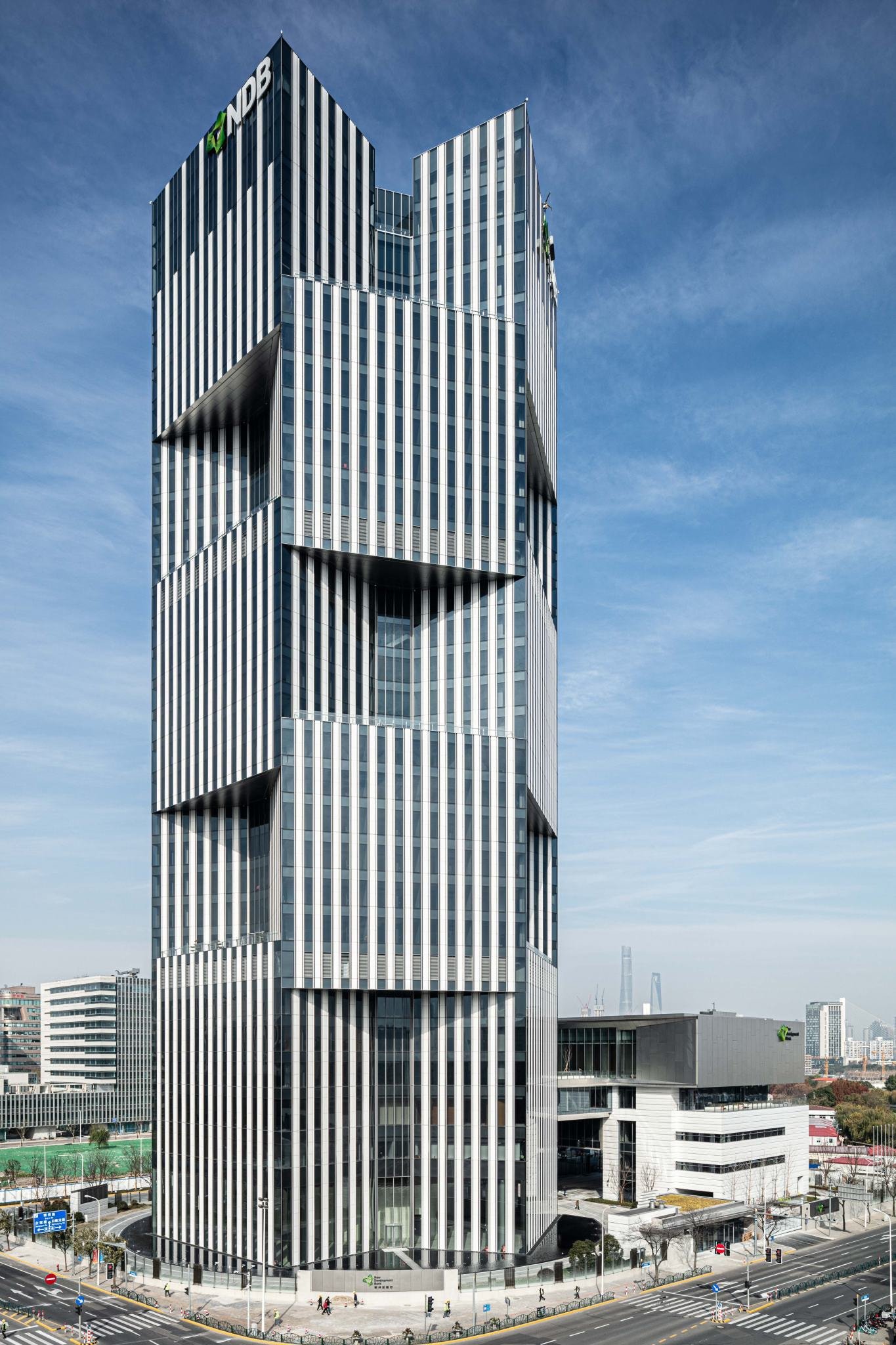
The New Development Bank lists Bangladesh as a member since September 2021. That is precisely why the idea of a binary choice — Washington or BRICS — is analytically weak. Bangladesh already operates across overlapping institutions.
What Bangladesh actually lost by staying away
The cost of absence was therefore not membership. It was diplomatic access. A summit attended by major leaders from India, China, Russia, Brazil, South Africa, Iran, the Gulf and other emerging powers created opportunities for corridor diplomacy, bilateral conversations and signalling. Bangladesh could have attended as BIMSTEC chair without endorsing BRICS positions on sanctions, de-dollarisation or global governance.
At the same time, Dhaka may have calculated that the symbolic value of preserving a separate bilateral India visit outweighed the benefits of a crowded multilateral appearance. That judgement is defensible. Bangladesh–India relations remain politically sensitive, and a first visit by a new prime minister carries meaning. But a defensible choice still has costs. The problem is not that Bangladesh refused BRICS; it is that the government has not yet articulated a public framework explaining when multilateral access is worth taking and when protocol or bilateral sequencing should take priority.
A balancing policy now needs rules, not slogans
For years, Bangladesh could describe its foreign policy through broad formulas about friendship, balance and non-alignment. Those formulas are becoming less useful. New trade agreements increasingly contain security clauses. Technology supply chains are being divided by export controls. Financial systems are becoming geopolitically contested. Infrastructure, ports, data, energy and defence procurement now trigger questions about strategic alignment that did not arise with the same intensity a decade ago.
Dhaka therefore needs a more operational version of strategic autonomy. First, it should separate diplomatic attendance from political alignment: joining an outreach session should not be treated as endorsement of an entire bloc. Second, it should publish clear principles for how U.S.-linked export-control and sanctions commitments will be implemented under Bangladeshi law. Third, it should continue using institutions such as the New Development Bank where they serve development needs, while avoiding the assumption that BRICS membership is the only path to engagement. Fourth, bilateral relations with India should be strengthened on their own terms rather than made dependent on whether Bangladesh appears at a multilateral event hosted by New Delhi.
What would change our assessment
Our assessment would change if credible evidence emerged that Washington directly conditioned trade benefits or security cooperation on Bangladesh avoiding BRICS forums. That would indicate a much sharper strategic tilt than the public record currently supports. It would also change if Dhaka began systematically withdrawing from BRICS-linked institutions, reducing NDB engagement or declining future outreach invitations while deepening U.S.-aligned restrictions beyond what its treaty commitments require. Conversely, regular participation in future BRICS outreach events alongside continued U.S. economic cooperation would strengthen the argument that Bangladesh is still pursuing a genuinely multi-vector foreign policy.
The larger lesson
Bangladesh's absence from New Delhi was not evidence of a clean geopolitical realignment. It was evidence that balancing is becoming harder. The U.S. relationship now reaches into trade, technology, sanctions and investment security. BRICS is building mechanisms for greater financial autonomy. India remains an unavoidable neighbour and regional partner. China remains central to trade and infrastructure. Russia remains relevant to major projects and energy cooperation.
In that environment, strategic ambiguity cannot be managed by avoiding every politically complicated room. Bangladesh will need to decide, case by case, where attendance expands its options and where commitments reduce them. The BRICS invitation controversy was therefore more than a dispute over diplomatic wording. It was an early test of whether Dhaka can turn balanced diplomacy from a slogan into a set of transparent, defensible rules.
The authors supplied the original manuscript, thesis and policy argument. AI tools were used to assist with source discovery, factual updating, structure and language editing. The authors reviewed the final text, verified the cited sources and take full responsibility for the analysis and conclusions.
Selected sources: Prothom Alo on the decision not to attend (10 September 2026) · U.S.–Bangladesh Agreement on Reciprocal Trade and the USTR fact sheet (9 February 2026) · New Development Bank members.

Comments
No comments yet. Be the first.
Comments are closed on this article.