
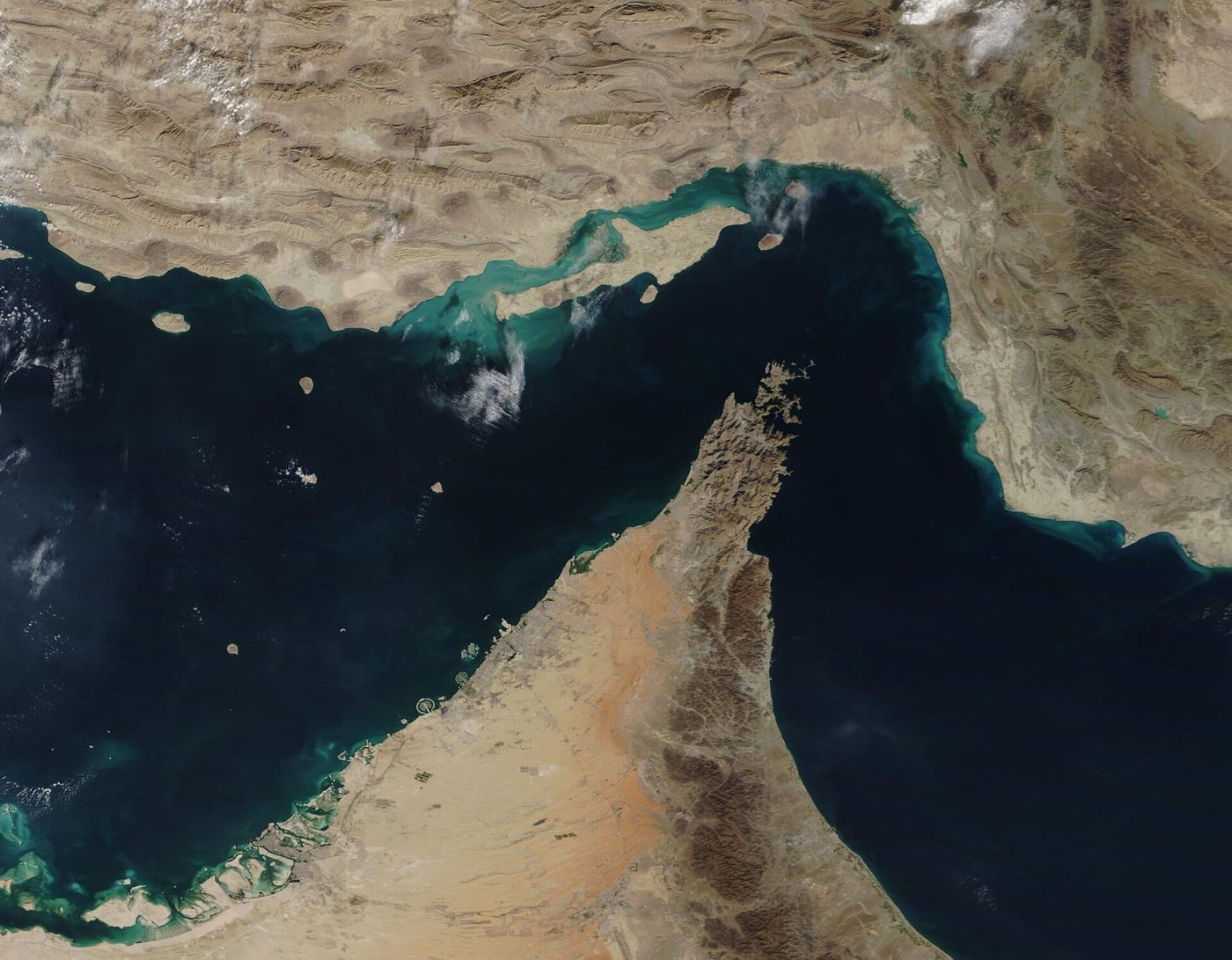
For six months, every analysis of the Iran war has rested on an unstated assumption. The Strait of Hormuz could close, and the world would still get its oil, because Saudi Arabia had a way around it.
On Thursday morning, drones launched from Iraqi territory struck pump stations on that way around, in the Riyadh and Medina regions. Fires burned. Several people were injured. On Friday the Saudi Energy Ministry shut the East–West pipeline as a precaution.
By Sunday, Brent was trading at $107.87 and West Texas Intermediate at $102.87. American diesel reached an all-time high, a record the White House now blames on Ukraine, after a summer in which Washington had already been quietly licensing Iranian crude into its own ports. The ten-year Treasury had closed Friday at 4.97%.
The assumption is gone. This article is about what replaces it, and about where the cost of its disappearance is actually being charged.
What the pipeline was for
The East–West Crude Oil Pipeline, which the Saudis call Petroline, runs roughly 1,200 kilometres from Abqaiq on the Gulf coast to Yanbu on the Red Sea. Its design capacity is seven million barrels a day. Since Iran closed Hormuz on 28 February, it had been moving about five million barrels a day, between four and five percent of world supply, that would otherwise have gone through the strait.
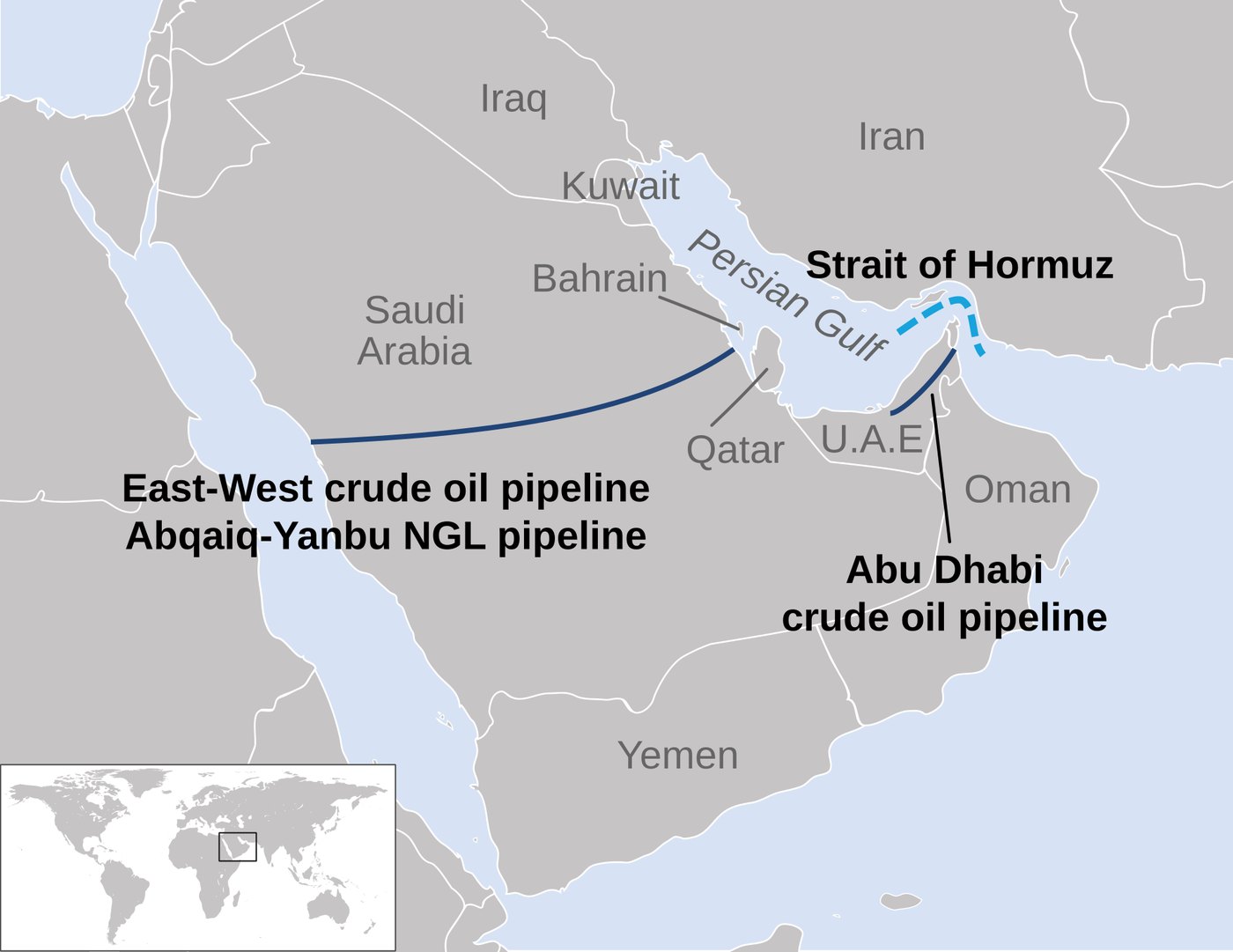
That is what a bypass is. Not a clever workaround but a second door, built at enormous expense in the 1980s during the last tanker war, precisely so that a blockade at the mouth of the Gulf could not shut the kingdom in.
Ben Cahill of the Atlantic Council's Global Energy Center put the loss plainly. The line was Saudi Arabia's "principal bypass option to avoid the Strait of Hormuz," and "the key buffers that got us through the last six months have basically been worn away."
What is left
Here is the arithmetic, and it is the part the market has not finished reading.
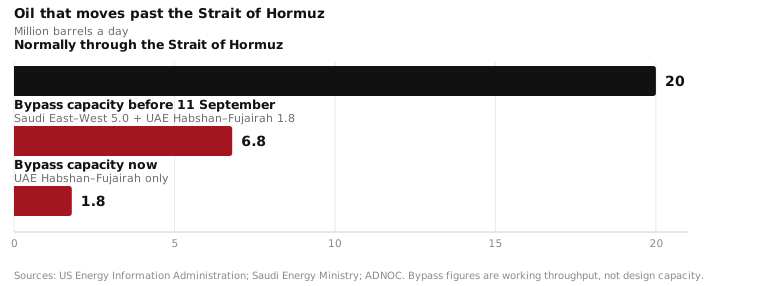
Around twenty million barrels a day normally pass through Hormuz. Against that, the region's entire stock of bypass capacity was two pipelines. The Saudi line, carrying five million. And the United Arab Emirates' Habshan–Fujairah pipeline, which runs 400 kilometres to the Gulf of Oman and handles about 1.5 million barrels a day, with a design capacity near 1.8 million.
Roughly 6.8 million barrels of daily escape capacity for a chokepoint that carries twenty. That was always thin. Since Friday it has been 1.8 million.
The UAE is building a second line, West–East 1, which would double its strait-free capacity to 3.6 million barrels a day. In May it was reported as about half complete, with a target of 2027. That is the right project. It is also eighteen months away from a market that needs it this week.
Why drones from Iraq change the calculation
The physical damage is repairable. Pump stations are not exotic machines, and Saudi Aramco has repaired worse: after the 2019 Abqaiq strike it restored most of a five-and-a-half-million-barrel outage within weeks.
What is not repairable in weeks is the thing the attack demonstrated.
A pipeline was supposed to be the answer to a blockade because a pipeline is inland. Thursday established that inland is not a category any more.
The drones did not come from Iran. They came from Iraqi territory, across a border Riyadh does not control and Washington cannot easily bomb without opening a front with Baghdad. Twelve hundred kilometres of steel crossing an open desert cannot be defended the way a naval convoy can be escorted. Every pump station along it is now a target that costs a few thousand dollars to attack and hundreds of millions to protect.
That is the real change. Before Thursday, the Gulf had one chokepoint and two exits. After Thursday, it has one chokepoint, one exit, and proof that exits can be closed from a third country.
From a pump station to a Treasury auction
Four days ago in this publication I argued that the American bond market, not the Gulf, is where this war is actually being decided, and that every tanker the United States sinks raises the cost of its own debt. The chain in that piece ran: oil up, inflation up, Fed hawkish, yields up, interest bill up.
The pipeline closure has tightened every link in it, and quickly.
Oil is no longer hovering at $100; Brent has been near $110, a four-month high. Core consumer prices came in hotter than expected. The market's implied probability of a Federal Reserve rate increase at this week's meeting has moved from roughly 49% a week ago to about 72%. And the ten-year Treasury yield, which was 4.796% when I wrote that piece on Wednesday, closed Friday at 4.97%.
Seventeen basis points in four days, on a national debt approaching $40 trillion. Federal interest payments had already reached $931 billion in the first ten months of this fiscal year. Not all of that debt reprices at once, but roughly a third of it rolls over inside a year, and it rolls at whatever the market demands on the day.
The drones were aimed at a Saudi pump station. The invoice is arriving at the United States Treasury.
What the Fed does on Wednesday
The Federal Open Market Committee meets on 16 September into a situation that monetary policy is not built for.
An oil shock is a supply shock. Raising interest rates does not produce barrels. It works, when it works, by destroying enough demand that the price falls, which means the cure for expensive oil is a weaker economy. Chair Kevin Warsh has said the Fed's "predominant focus right now should be on prices." A hike this week would be the first in a shooting war since 1973, and it would raise the government's own borrowing costs in the same motion.
Holding is not free either. If the Fed pauses while oil runs toward $110 and diesel sets records, the bond market prices the inflation itself, and long yields rise without the Fed's help. That is what the move toward 5% already is: not an expectation of Fed tightening alone, but a demand for compensation.
There is no version of Wednesday in which American debt gets cheaper.
The counter-case
Three arguments say this is a scare rather than a structural break, and they deserve a hearing.
First, the pipeline is shut as a precaution, not destroyed. The Saudi statement says so. If inspection finds limited damage it could restart within days, and the five million barrels return.
Second, oil at $107 is not 1979. In real terms it is well below the 2008 peak, the world uses far less oil per unit of output than it did, and American shale responds to $100 by drilling. The United States is a net energy exporter; the terms-of-trade hit lands on Asia and Europe, not Washington.
Third, high prices are self-correcting. Demand destruction is already visible in Asian refining margins, and OPEC spare capacity, such as it is, becomes more valuable the higher the price goes.
Each is reasonable. None of them restores the buffer. A pipeline that can be closed by drones from Iraq on a Thursday can be closed again on any other Thursday, and the insurance value of a route that might be interrupted at will is not the same as the insurance value of a route that works. Markets price that difference as a risk premium, and a risk premium on oil is a risk premium on inflation, which is a risk premium on Treasuries.
What to watch
Four things will tell you which way this goes, and none of them is a headline about a summit.
- The restart date. If Saudi Arabia restarts the line within a week, the price gives back most of this move. If the shutdown runs into October, $110 becomes a floor rather than a spike.
- Whether the UAE line is attacked. Habshan–Fujairah is now the only functioning bypass on earth. A strike on it, or on Fujairah port, would be the single most consequential event of this war for the world economy.
- The Wednesday decision and the language around it. Watch less for the rate than for whether the statement acknowledges that the inflation is imported. A Fed that says so is a Fed preparing to tolerate it.
- Iraq. If Baghdad cannot or will not stop launches from its territory, the war acquires a fourth theatre, and the American position in Iraq becomes a liability rather than an asset.
The shape of it
Wars against chokepoints are not won by holding the chokepoint. They are won by making every alternative to it more expensive than the adversary can bear.
Iran cannot beat the United States Navy in the Gulf. It does not need to. It needs the world to conclude that there is no reliable way to move oil out of the Middle East while this war continues, and on Thursday, using drones that cost less than a car, it moved that conclusion considerably closer.
The strait was the hostage. The pipeline was the ransom note nobody had to pay. Now there is no second door, and the bill is being presented in a currency Washington cannot print its way out of: the interest rate on its own debt.

Comments
No comments yet. Be the first.
Comments are closed on this article.