
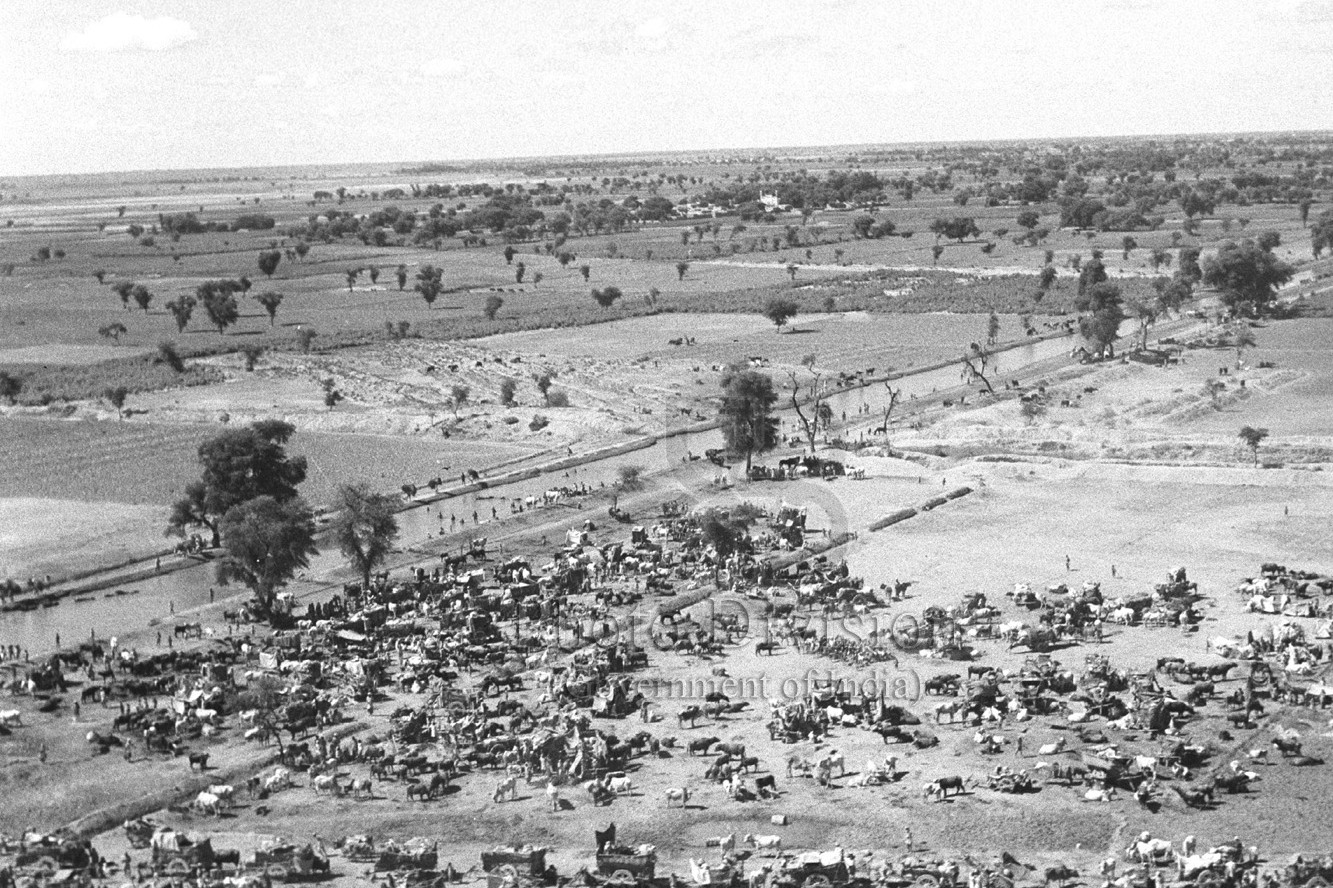
There are dates in history that create new countries, and there are dates that permanently alter the economic geography of a civilisation. 1947 was both.
The Partition of British India created two new dominions, India and Pakistan, but it also cut through an economic system that had developed over centuries. Punjab was divided between wheat-producing agricultural regions and major urban-industrial markets. Bengal was separated between the world’s great jute-growing areas and its processing centres. Cotton moved across the new frontier. Railways, rivers, ports, irrigation systems, financial networks and trading communities suddenly found themselves divided by an international boundary.
The question is therefore larger than whether Partition created two states. What was the economic, political and social price of dividing an integrated subcontinent?
The answer cannot be reduced to a single monetary figure. Much of the cost was structural: disrupted markets, displaced populations, broken supply chains, divided families, new military expenditures, border disputes and the loss of economic complementarities.
A civilisation with extraordinary economic weight
Long before modern nation-states, the Indian subcontinent was one of the world’s major centres of production, agriculture, manufacturing and trade.
Historical GDP estimates associated with Angus Maddison indicate that the territory broadly corresponding to the Indian subcontinent represented roughly 27% of world GDP around 1700, falling to about 16% by 1820, 7.5% by 1913 and 4.2% by 1950. These are historical purchasing-power estimates rather than modern national-account figures, and they should not be interpreted as evidence that ordinary people were uniformly wealthy. They nevertheless demonstrate the enormous economic scale of the region.
The tragedy is that by 1947 this enormous civilisation had already experienced profound economic transformation under colonial rule. The question facing its political leadership was therefore not simply independence, but how to transform a huge, poor and economically fragmented colonial economy into a modern productive one.
A united economic space potentially offered an enormous internal market—from the ports of Karachi, Bombay and Calcutta to the agricultural plains of Punjab, Sindh and Bengal and the mineral regions of eastern India.
But potential is not destiny.
A united India would not automatically have become an economic superpower. Political stability, industrialisation, education, infrastructure, governance and equitable development would still have been essential. What can reasonably be argued is that Partition removed economic complementarities at precisely the moment when the region needed integration for development.
The remarkable paradox: one economy, two halves
Jawaharlal Nehru himself described the economic problem immediately after Partition.
In December 1947, he argued that the larger pre-Partition Indian economy could be regarded as a relatively self-sufficient unit in which one region could satisfy the requirements of another. Partition, he observed, had separated the more industrialised areas from large agricultural areas and created difficulties because neither new economic unit was as balanced as the former whole.
His examples are revealing.
Jute: much of the jute was grown in East Bengal, while processing capacity was concentrated around Calcutta in India.
Cotton: a substantial share of India’s textile manufacturing remained in India, while important cotton-producing areas were transferred to Pakistan.
In other words, the new border did not merely divide people. It divided the supply chain.
The same problem appeared in wheat, irrigation, railways, coal, ports, river systems, markets and financial networks.
A farmer could wake up on one side of the border while his traditional market was suddenly on the other.
A factory could retain its machinery while losing access to its raw material.
A port could remain intact while the commercial hinterland that had historically fed it became foreign territory.
That is an economic cost difficult to calculate in rupees.
Punjab: when an economic ecosystem became an international border
Punjab was not simply a geographical territory. It was an integrated agricultural, irrigation, commercial and transport system.
The Partition of Punjab divided villages, markets, canals, railway routes and trading networks.
The economic consequences were particularly serious because agriculture and industry were geographically complementary. Wheat and other agricultural products moved through established commercial networks, while Lahore and other cities functioned as administrative, educational and commercial centres.
The new border transformed internal economic movements into international transactions.
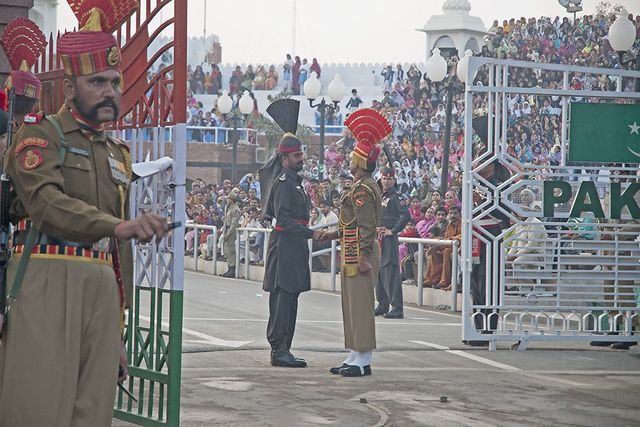
A railway journey that had once been domestic could suddenly require customs, passports and political agreements.
A canal system designed without an international border had to be renegotiated.
And millions of people who had participated in the same economic system were forced to relocate.
The historians Tan Tai Yong and Gyanesh Kudaisya describe the consequences as long-term and subcontinental: Partition disrupted transport and river networks, destroyed property through violence and forced massive refugee resettlement, while creating economic dislocations in Punjab and Bengal.
Bengal: the jute contradiction
Perhaps the clearest illustration of Partition’s economic irrationality can be found in Bengal.
Before 1947, Bengal had an integrated jute economy.
After the Radcliffe boundary, much of the jute-growing territory went to Pakistan’s eastern wing while the principal processing industry remained around Calcutta in India.
Thus:
- One side possessed the raw material;
- The other possessed the factories.
The economic relationship that had previously been internal now required international trade.
The result was predictable: shortages, disrupted markets, new trade restrictions and pressure to develop substitute production and processing capacity on both sides.
The post-Partition experience therefore demonstrates an important principle:
Political borders can create economic scarcity even when the physical resources themselves have not disappeared.
The human cost was also an economic cost
Partition was not merely a constitutional rearrangement.
Research estimates that between 14.5 and 18 million people were displaced, while historical estimates of deaths associated with Partition commonly approach one million, although the precise number remains disputed.
Every displaced family represented more than a humanitarian tragedy.
It also meant:
- Loss of land and housing;
- Destruction of businesses;
- Disappearance of established markets;
- Interruption of education;
- Loss of skilled labour;
- Destruction of financial assets;
- Disruption of professional networks;
- Enormous government expenditure on rehabilitation.
The economic consequences extended into later generations. Research on population transfers has found long-term effects of refugee settlement on agricultural development, demonstrating that Partition’s economic consequences did not end in 1947.
The political leaders who imagined another future
The history of Partition is often presented as if division was inevitable.
It was not.
It became increasingly difficult to avoid, but alternative constitutional arrangements were seriously debated until the final years of British rule.
Among the most important advocates of a united or composite India was Maulana Abul Kalam Azad, who argued for a shared Indian political identity in which Muslims and Hindus were partners in the construction of the country. Scholarship on the 1946 negotiations shows that Azad sought a constitutional settlement capable of preserving Indian unity while addressing Muslim political concerns.
Mahatma Gandhi remained opposed to Partition and continued to argue for Hindu-Muslim unity.
Khan Abdul Ghaffar Khan, the Pashtun leader of the Khudai Khidmatgar movement, also opposed the division of India. His political position became especially bitter after the Congress accepted Partition without securing the political future that he and his followers had demanded for the Pashtun areas.
There were also Muslim organisations and leaders who rejected the idea that Muslims necessarily required a separate sovereign state.
Their position should not be romanticised. They were operating in an environment of communal violence, political mistrust and competing nationalisms. But their existence proves that Partition was contested—not historically predetermined.
The Cabinet Mission: perhaps the road not taken
The most important constitutional alternative came in 1946.
The British Cabinet Mission proposed a loose Indian Union retaining common responsibility for defence, foreign affairs and communications, while giving extensive powers to provinces and allowing provinces to operate in groups.
This proposal attempted to solve the central contradiction:
How could India remain economically and strategically united while allowing Muslim-majority regions substantial autonomy?
The Cabinet Mission itself warned that dividing India would seriously damage its transportation, postal and telegraph systems. It also argued that the existing Indian armed forces had been organised as a unified force and that partition would weaken defence arrangements.
The Plan ultimately collapsed amid profound disagreement between the Congress and Muslim League over the powers of the centre, provincial groupings and the constitutional future of Muslim-majority regions.
This is one of the great historical ironies:
A constitutional formula existed that attempted to preserve unity without simply imposing a powerful centralised state but political trust was too weak to make it work.
What exactly did Partition cost?
There is no credible single number that can capture the total economic cost of Partition.
But the losses can be classified.
Market fragmentation
A vast internal market became divided by an international frontier.
Supply-chain disruption
Raw materials and factories frequently ended up on opposite sides of the border.
Infrastructure fragmentation
Railways, roads, river systems, canals and ports were designed for an integrated economic geography.
Human-capital destruction
Millions were displaced, including traders, farmers, craftsmen, teachers, professionals and entrepreneurs.
Fiscal costs
The new states had to spend enormous resources on refugees, border administration, defence and institution-building.
Permanent security expenditure
India and Pakistan entered a prolonged strategic rivalry, including repeated wars and extensive military expenditure.
Lost regional trade
Goods that had once crossed provincial boundaries as part of ordinary domestic commerce increasingly had to cross an international frontier.
Political opportunity cost
Instead of concentrating exclusively on poverty reduction, literacy, health, industrialisation and infrastructure, both states inherited security dilemmas that demanded enormous political and economic attention.
But was a united India guaranteed to succeed?
No.
That distinction matters.
It would be historically irresponsible to calculate today’s hypothetical GDP of an undivided India and present it as a fact.
A united state could also have suffered from communal conflict, weak institutions, regional inequality, political instability or competing nationalisms.
Indeed, one of the strongest arguments behind the demand for Pakistan was the fear among many Muslims that a democratic system based simply on population could produce permanent Hindu-majority political dominance. The Cabinet Mission itself recognised that Muslim anxieties about political, cultural and economic security were genuine.
Therefore, the historical question should not be:
“Would united India definitely have become a superpower?”
It should be:
“Could a politically negotiated, economically integrated South Asia have avoided some of the enormous costs created by Partition?”
The historical evidence strongly supports the second proposition as a serious question.
The greatest lost asset: complementarity
Perhaps the most important lesson is not the size of pre-1947 India but its complementarity.
Punjab supplied food and agricultural resources.
Bengal supplied jute and other commodities.
Sindh possessed major agricultural and commercial potential and important ports.
The eastern regions possessed enormous agricultural and river resources.
Bihar and Bengal contained important mineral and industrial resources.
Bombay and Calcutta were major commercial and industrial centres.
Karachi connected the northwest to the Arabian Sea.
The subcontinent therefore contained something that modern economies desperately seek:
A huge internal market containing agriculture, raw materials, manufacturing, ports, labour, consumers and human capital within one economic geography.
Partition did not destroy those resources.
It separated them.
A different South Asia was possible
History should not be used merely to mourn the past.
The deeper lesson is contemporary.
India, Pakistan and Bangladesh together form one of the world’s largest concentrations of population, agriculture, manufacturing, ports, rivers, labour and consumer markets. Their histories remain interconnected even though their political systems are separate.
The economic logic that existed before 1947 has not completely disappeared.
Railways can reconnect markets.
Energy can cross frontiers.
Water can be managed through cooperation.
Universities can collaborate.
Tourism can connect historical cities.
Businesses can create regional supply chains.
And people can discover that political borders do not erase economic geography or shared history.
The subcontinent does not need to become politically united for its peoples to recover some of the economic advantages of regional integration.
The final irony
The tragedy of 1947 was not simply that one country became two.
It was that a civilisation possessing extraordinary internal diversity had not yet found a constitutional formula capable of turning that diversity into a stable political arrangement.
The price was paid in blood first, in refugees second, in broken markets third, and in decades of strategic rivalry thereafter.
Perhaps the most haunting sentence comes from the economic reality recognised immediately after Partition:
The two new economies were not naturally complete economic units; they had been parts of a much larger economic organism.
The border created two sovereignties.
But geography remained one.
Rivers remained one.
Markets remained connected.
Families remained connected.
History remained one.
And economics, perhaps more stubbornly than politics, continued to remind the subcontinent that division can create states much faster than it can create self-sufficient economies.
The question for the twenty-first century is therefore not whether history can be reversed.
It cannot.
The more useful question is whether South Asia can finally learn the economic lesson of 1947:
Political sovereignty may require borders, but prosperity does not require economic isolation.
Comments
No comments yet. Be the first.
Comments are closed on this article.