
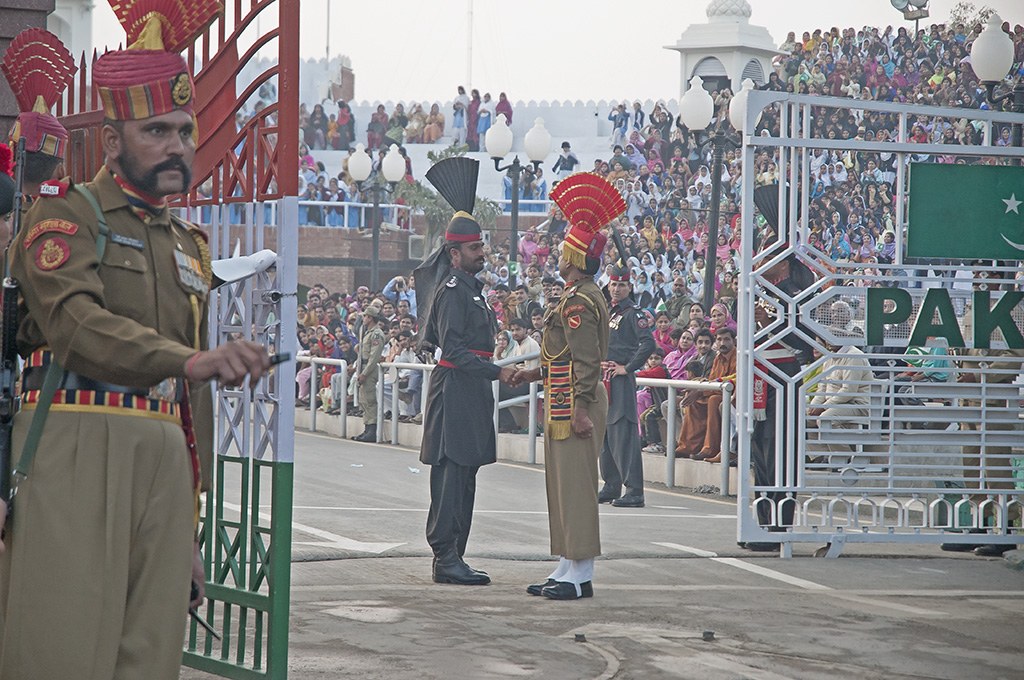
Imagine a different South Asia.
A Pakistani from Karachi, Lahore, Quetta, Islamabad or Peshawar sitting across a table from an Indian from Delhi, Mumbai or Kolkata not as an enemy, not as a proxy, not as a soldier, but as a businessman, researcher, teacher, doctor, engineer, student or neighbour.
What would they discover?
Perhaps that the ordinary Pakistani knows remarkably little about the ordinary Indian, and the ordinary Indian knows remarkably little about the ordinary Pakistani. They may have inherited histories of conflict, competing national narratives and political suspicions, but their daily concerns are surprisingly familiar: employment, food prices, education, healthcare, housing, electricity, clean water, dignity and security.
The question, therefore, is not whether Pakistan and India have disagreements. They unquestionably do. Kashmir, terrorism, water, borders, security and competing political narratives cannot simply be wished away.
The more fundamental question is this:
What would happen if two nuclear armed neighbours decided that disagreement did not automatically require economic hostility?
The economic opportunity is much larger than today's trade
The present economic relationship provides a striking contrast to the size of the two economies and populations.
Al Jazeera reported that bilateral trade had fallen from $2.41 billion in 2018 to about $1.2 billion in 2024, before the further deterioration in relations following the 2025 Kashmir attack.
Yet research by the Pakistan Business Council using 2022 trade data identified significant product-level export potential. Its analysis estimated Pakistan's potential exports to India in five major categories at approximately $2.66 billion, while India's potential exports to Pakistan in five major categories were estimated at about $19.6 billion.
These figures are important because they demonstrate the size of the immediate commercial gap but they should not be confused with a forecast of trillion-dollar bilateral trade.
A trillion-dollar relationship would require decades of economic integration, investment, services trade, regional supply chains, infrastructure connectivity and political stability. It is better understood as a hypothetical long-term scale of economic integration, not as a number that current evidence establishes.
The broader regional evidence is nevertheless striking.
The World Bank says intraregional trade accounts for only around 5 percent of South Asia's total trade, compared with approximately 25 percent in ASEAN. It estimates current South Asian intraregional trade at around $23 billion against potential of at least $67 billion.
South Asia is therefore not merely under-trading with the world.
It is also under-trading with itself.
What if borders became economic bridges?
Imagine Pakistani textile manufacturers selling directly into Indian markets.
Imagine Indian pharmaceutical, technology and machinery companies operating transparently in Pakistan under mutually agreed regulations.
Imagine Pakistani agricultural products reaching Indian consumers while Indian industrial inputs reach Pakistani manufacturers.
Imagine universities exchanging students and researchers.
Imagine hospitals cooperating in medical research.
Imagine technology companies developing joint software and artificial-intelligence services for hundreds of millions of consumers.
Imagine Karachi, Lahore, Amritsar, Delhi, Mumbai, Peshawar and other regional cities becoming parts of interconnected commercial networks rather than isolated economic spaces.
The economic logic is straightforward: proximity can reduce transport costs, shorten supply chains and create larger markets.
But economics is not the only potential dividend.
The defence-budget question
Security competition has an economic opportunity cost.
According to SIPRI's latest figures, India spent approximately $92.1 billion on its military in 2025, while Pakistan spent approximately $11.9 billion. India's expenditure increased by 8.9 percent and Pakistan's by 11 percent that year.
These numbers do not mean that either country can simply eliminate defence expenditure. Both have legitimate security concerns, difficult borders and strategic obligations.
But they raise a larger economic question:
What happens when even a small portion of resources devoted to perpetual strategic competition can instead be directed toward human capital, infrastructure, health, education, water security and productive investment?
For Pakistan, this question is particularly important because the IMF has highlighted poverty, weak human-capital outcomes, employment and social protection as major development challenges.
The same principle applies to India: a country of India's scale also faces enormous requirements in education, healthcare, employment, infrastructure and social development.
Peace does not automatically create prosperity.
But prolonged hostility certainly creates economic costs.
The forgotten common denominator: the ordinary human being
Political geography tells us where people live.
It does not tell us what they dream about.
A young man in Peshawar looking for employment and a young woman in Delhi looking for professional opportunity may belong to different political systems, but unemployment affects both.
A farmer in Punjab, Pakistan, and a farmer in Punjab, India, may debate national politics, yet both understand the uncertainty of weather, water, input prices and markets.
A mother in Karachi and a mother in Mumbai may have completely different passports, but both understand the cost of educating children.
A patient does not ask whether a medicine was manufactured by an Indian or Pakistani engineer before taking it.
A researcher does not care about nationality when a scientific collaboration saves lives.
This is where the concept of the good neighbour becomes economically meaningful.
Neighbourhood does not eliminate national sovereignty. It simply recognizes geography.
From enemies to competitors and perhaps eventually partners
The realistic alternative to permanent friendship is not necessarily permanent hostility.
Countries can disagree politically while trading economically.
They can compete internationally while cooperating on selected problems.
They can maintain national security while developing controlled trade corridors.
They can disagree over Kashmir while cooperating on climate adaptation, disaster management, public health and regional commerce.
This is particularly important because South Asia faces problems that do not respect borders: climate change, floods, heatwaves, air pollution, water stress, infectious diseases, food insecurity, energy shortages and economic displacement.
The World Bank argues that greater regional cooperation could strengthen infrastructure, connectivity, trade and climate resilience across South Asia.
The real enemy may be poverty
There is a strange contradiction in South Asia.
The region possesses enormous human capital, large consumer markets, technological talent, agricultural capacity and strategic geographic importance.
Yet millions remain vulnerable to poverty, unemployment, inadequate healthcare, poor education and climate shocks.
While political elites debate borders and strategic influence, ordinary citizens often struggle with much more immediate questions:
Where is my next job?
Can I afford medicine?
Can my child receive a quality education?
Will my electricity bill be affordable?
Will the next flood destroy my home?
Can I build a dignified life?
These are not Indian questions or Pakistani questions.
They are human questions.
The difficult part: trust
None of this means that trade alone can solve Pakistan-India relations.
It cannot.
Trade requires political stability. Political stability requires mechanisms for managing security crises. Cross-border investment requires legal protection. Transport links require agreements. And sustainable peace requires institutions capable of handling disputes without repeatedly closing every channel of communication.
Carnegie's analysis of South Asian trade has emphasized that the India-Pakistan trade relationship has remained suspended since 2019 and that confidence-building measures could play a role in restoring broader cooperation.
The lesson is therefore not that history should be forgotten.
It is that history should not be allowed to become the permanent owner of the future.
A different definition of victory
Perhaps South Asia needs to reconsider what victory means.
Is victory another military confrontation?
Another closed border?
Another generation taught to fear the neighbour?
Or could victory mean that a Pakistani child receives better education because resources were redirected toward human development?
Could it mean an Indian farmer receives a better market?
Could it mean cheaper medicines, more jobs, stronger universities, better infrastructure and greater investment?
Could it mean that two nuclear-armed countries spend more time competing in science, technology, exports and human development than preparing for the next crisis?
Nobody needs to erase national identity.
Pakistan can remain Pakistan.
India can remain India.
Their flags can remain different.
Their political systems can remain sovereign.
Their historical disagreements can remain subjects of diplomacy.
But neighbours do not necessarily have to be enemies.
Perhaps the greatest strategic imagination for South Asia is not to ask:
“How do we defeat each other?”
but:
“What could our two societies build if we stopped treating each other's prosperity as a threat?”
The answer may not be a trillion-dollar trade relationship tomorrow.
But the possibility of a much larger, more integrated South Asian economy is supported by the region's enormous unrealized trade potential.
And if billions of dollars currently lost through confrontation, barriers and mistrust were gradually converted into investment in human beings, the greatest dividend would not belong to Islamabad or New Delhi.
It would belong to the ordinary people of South Asia.
Perhaps the future generation will look back at today's hostility and ask a very simple question:
“You were neighbours. Why did you spend so much of your history trying to become enemies?”
Comments
No comments yet. Be the first.
Comments are closed on this article.