
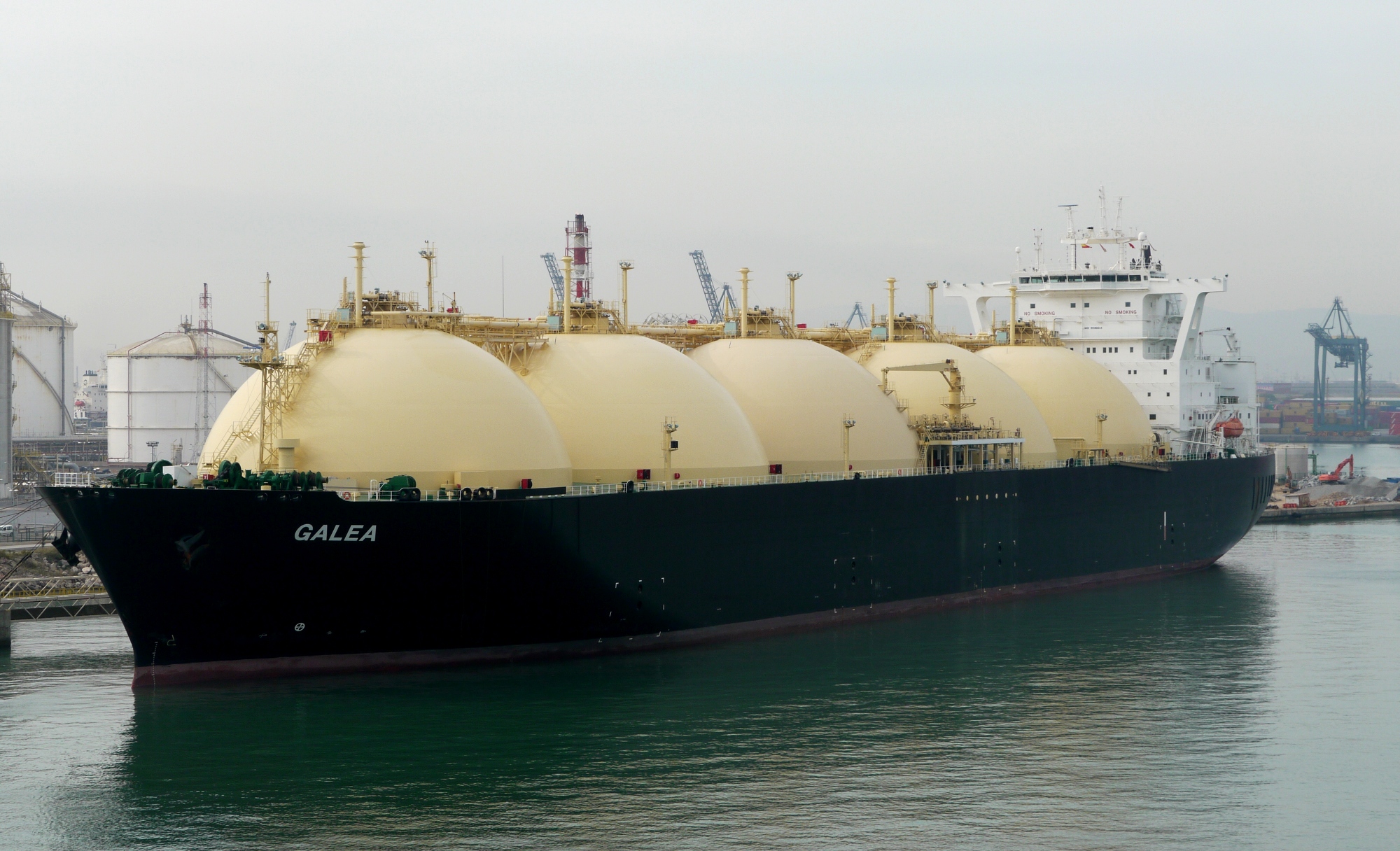
Mozambique's LNG restart is being described as the moment the country's long-delayed gas wealth finally comes within reach. But the fiscal question is more complicated. The state's own tax architecture, already visible in the project that is producing today, delays much of the expected revenue into the 2030s. A major expansion of global LNG supply is arriving at roughly the same time. The question for Mozambique is therefore not simply how much gas it will sell, but how much fiscal value will remain when that revenue finally arrives.
What actually restarted
Start with what actually restarted. The Mozambique LNG consortium decided on November 7, 2025, to lift the force majeure declared in 2021 following the militant attack on Palma. The full restart of onshore and offshore activities was announced separately, on January 29, 2026, at a ceremony at the Afungi site. The project, Area 1, is now targeting first LNG in 2029, on a budget of $20 billion, according to Reuters. Construction has resumed with more than 4,000 workers mobilized, and the project is assessed at 40% complete. Nearly 90% of its output is already contracted to long-term buyers, including CNOOC, EDF and Shell.
This is not Mozambique's first LNG project. Eni's Coral Sul FLNG, in Area 4 of the Rovuma Basin, has been producing since 2022. A second floating project, Coral Norte, reached a positive final investment decision in October 2025. Coral Sul is the closest thing Mozambique has to a live test of what its tax architecture actually delivers, rather than what it promises.
What Coral Sul reveals about Mozambique's tax design
A policy brief published in May 2026 by the Centro de Integridade Pública (CIP) modeled Coral Sul's tax contribution using a discounted cash flow methodology calibrated against Mozambique's own government accounts. In the base case, at $12 per million British thermal units, the project generates an average of $149 million a year in tax revenue. That is equal to 10.08% of what CIP calls the effective Government Take, its measure of the share of project earnings captured by the state. Cost recovery, the mechanism that lets the operating consortium retain up to 75% of available revenue to amortize capital and operating costs first, means most Corporate Income Tax will only begin to be collected from 2032 onward. The same brief found that ENH, Mozambique's state hydrocarbons company, holds its 10% stake in Area 4 through a carried interest arrangement financed by its consortium partners. That has left ENH with an estimated $1.356 billion in debt, accruing at LIBOR plus 1%. Its dividends from Coral Sul will be consumed by that debt until at least 2033.
These figures describe Area 4, not Area 1. Mozambique's newly restarted project is larger and structured differently, and it would be a mistake to treat $149 million as a forecast for what Area 1 will generate. What Coral Sul demonstrates is not a number to be copied across projects. It is a mechanism: cost recovery and rear-loaded tax collection, already operating and already visible in Mozambique's own fiscal accounts. Mozambique's Medium-Term Fiscal Scenario, approved by the Council of Ministers in mid-2024, shows total state LNG revenue of $91.8 million in 2024, with a projected decline of 13.8% in 2025 and a further 16.4% in 2026. That is the government's own account of what its currently producing gas is delivering to the budget, consistent with CIP's modeling rather than contradicting it.
Debt is immediate; gas revenue is not
Mozambique's debt-service obligations are immediate. The larger gas revenues expected from the new projects are not. In its 2025 Article IV consultation, concluded on February 13, 2026, the joint IMF-World Bank Debt Sustainability Analysis found that overall public debt is in debt distress, due to persistent debt-service arrears, and that external debt is assessed at high risk of debt distress. The assessment also found the debt to be unsustainable. A further IMF staff mission, concluding on September 18, 2026, again reviewed the country's economic situation, with discussions continuing on the reforms needed to underpin a Fund-supported program. Debt charges consumed 15.2% of the state's total operating expenditure in 2025, according to Ministry of Finance data reported by Lusa.
The supply wave arriving at the same time
There is a second problem, external to Mozambique's contracts. It compounds the first rather than standing apart from it. Global LNG supply is entering one of its largest periods of expansion on record, arriving at almost exactly the moment Area 1's gas is scheduled to reach the market. The International Energy Agency's data, cited in an IEEFA analysis, put more than 220 million tonnes of new liquefaction capacity coming online globally between 2025 and 2030, an increase of more than 40% over 2024 capacity. Much of it is driven by Qatar's North Field expansions and new US Gulf Coast projects, including Golden Pass and Plaquemines LNG. The Oxford Institute for Energy Studies estimates that by 2030, global LNG production capacity will exceed demand by 6% to 13%, depending on the scenario. Vitol's head of LNG told the LNG2026 conference in Doha, as reported by CTV News, that the market is facing an unprecedented supply increase that will bring real stress to prices. A separate IEEFA update from September 2026 noted that conflict in the Middle East had pushed back the timing of this wave, not removed it, and that the underlying expansion remains largely intact.
Long-term contracts offer protection, not immunity
The long-term contracts behind nearly 90% of Area 1's output offer real protection here, not a guarantee. These contracts typically include price review clauses and are often indexed to oil prices or regional benchmarks rather than to spot prices directly, which shields Mozambique from the most extreme effects of a soft market. It does not remove the exposure. Buyers gain leverage at every price review when supply is abundant. Qatar's own contracted share of output, according to the Middle East Institute's analysis of Bloomberg data, is expected to fall from 73% in 2027 to as low as 59% by 2030, as buyers use a soft market to negotiate down optional volumes. This is an illustration of buyer leverage in an oversupplied market, not a prediction that Mozambique's specific buyers will act the same way. It shows what a soft market makes possible for buyers generally. Mozambique's contracts protect it from the worst outcome. They do not protect it from a weaker one, layered onto a tax architecture that already defers most revenue past 2030.
The timing comparison
There is a useful comparison to the west. Senegal and Mauritania's Greater Tortue Ahmeyim project, developed by BP and Kosmos Energy, began production in 2025, ahead of the bulk of the 2026 to 2030 supply wave. Mozambique's 2029 target would place Area 1's initial production later in the same cycle, after much of the new global capacity is expected to have come online. The comparison is not about which project has more fiscal value. It is about timing. Two projects drawing on the same regional gas story are entering the global market at different points in the same cycle, for reasons that have little to do with either country's reserves and much to do with how quickly each project was able to proceed.
What would change this assessment
It is worth being specific about what would prove this analysis wrong. If Asian LNG demand recovers faster than current forecasts, absorbing the 2026 to 2030 supply wave without the price softening that several energy analysts are currently projecting, and if Area 1's long-term buyers exercise their contracted volumes in full rather than negotiating them down, the external risk will have been overstated. Mozambique's revenue outlook would then depend primarily on its own tax design. If instead prices soften through the back half of this decade, as several forecasts already expect, and buyers seek to defer or renegotiate volumes the way Qatar's own buyers are already doing, that will confirm Mozambique's already-delayed gas revenue is arriving at a discount, on top of a delay built into its own tax code. Both outcomes should be visible in contract terms and in Mozambique's fiscal scenario documents well before 2030.
The fiscal question behind the gas
LNG wealth is not only a function of the size of a country's gas reserves. It is also a function of when production begins, how quickly the state captures revenue from that production, and what the market is willing to pay when that revenue finally arrives. Mozambique's gas may still become a major fiscal asset. Coral Sul shows that Mozambique's gas can be brought into production and monetized commercially. It also shows, in numbers the government has itself published, how much of that value the state's own contracts route away from the near term. Area 1's gas will arrive several years later still, amid one of the fastest expansions of LNG supply in the fuel's history. Mozambique's fiscal future depends on what lies beneath the Rovuma Basin. It depends just as much on when that gas is produced and what it is worth on the day it finally is.
Sources: TotalEnergies: Mozambique LNG announces full restart of activities (29 January 2026) · Eni: Final Investment Decision on Coral North (2 October 2025) · Centro de Integridade Pública: What Does Rovuma Gas Actually Bring to Mozambique? (May 2026) · 360 Mozambique: Gas revenues rose 21.8% in 2024 but will decline by 2026 · IMF: 2025 Article IV Consultation with Mozambique (February 2026) · IMF staff mission to Mozambique (September 2026) · Club of Mozambique: Public debt up 5% in 2025 (Lusa/Ministry of Finance) · IEA: Coming surge in LNG production · Oxford Institute for Energy Studies: The Global Outlook for Gas Demand in a $6 World (NG 202) · CTV News/Vitol: LNG2026 conference, Doha · Middle East Institute: Qatar's LNG expansion plans and the issue of market oversupply · BP: First gas at Greater Tortue Ahmeyim.

Comments
No comments yet. Be the first.
Comments are closed on this article.