
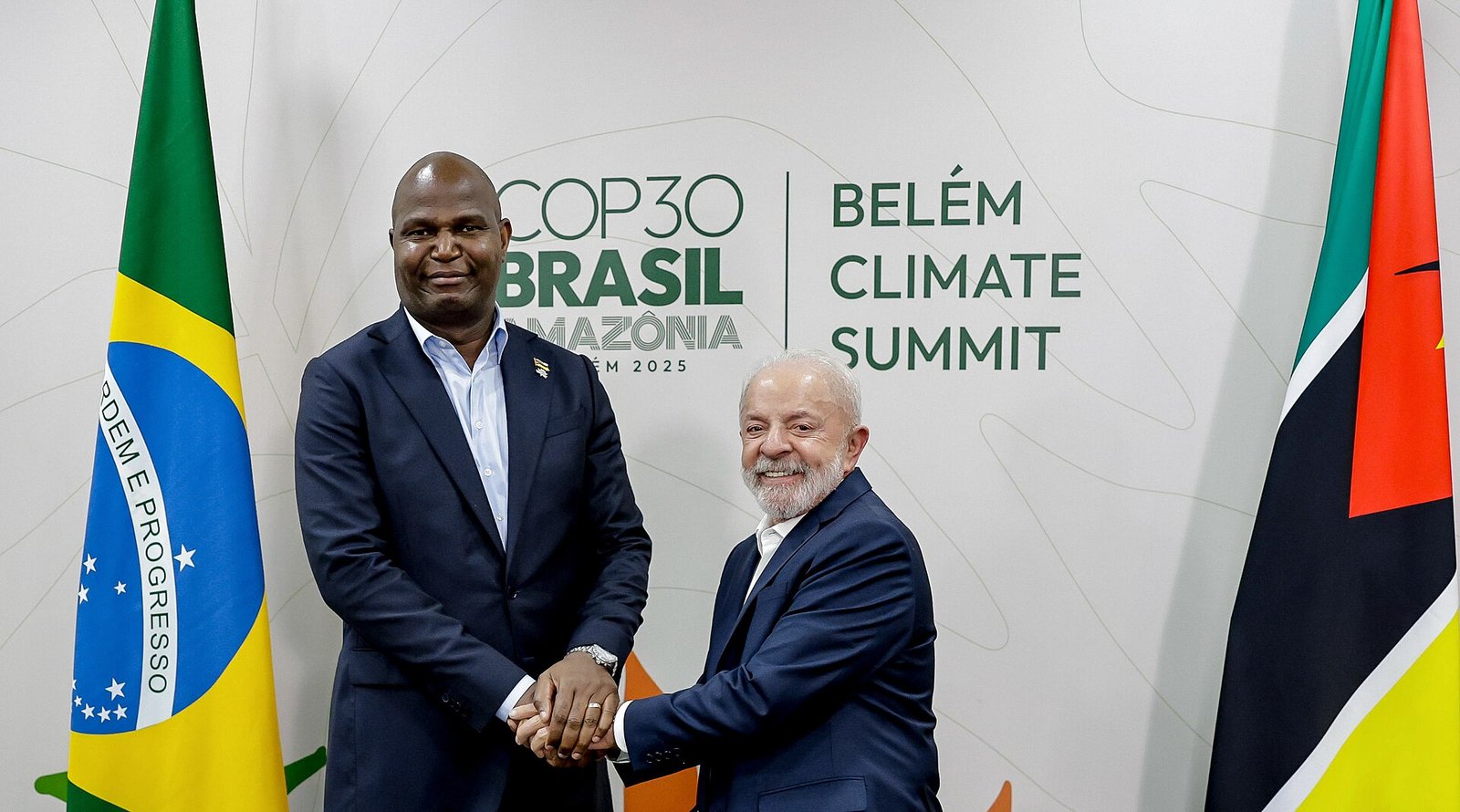
Mozambique's new mining law is being presented as an assertion of greater control over the country's mineral resources. But control on paper is not the same as bargaining power in practice. A state can demand a larger share of future mineral revenues, yet the value of that demand depends on whether investors are still willing to put capital into the projects. For Mozambique, that question is especially important because the country is negotiating from a position of severe fiscal pressure.
President Daniel Chapo signed Law No. 7/2026 on June 3, 2026, replacing the mining framework established in 2014. The law requires the state, through the Empresa Nacional de Minas (ENM), to hold a minimum 15% stake in mining projects. The stake is free carried and non-dilutable, according to Reuters' review of the legislation on June 4. The law also restricts the export of unprocessed or semi-processed minerals unless a ministerial exemption is granted in connection with an approved local-processing plan. Regulatory responsibilities are also being transferred to a new institution, AREMI.
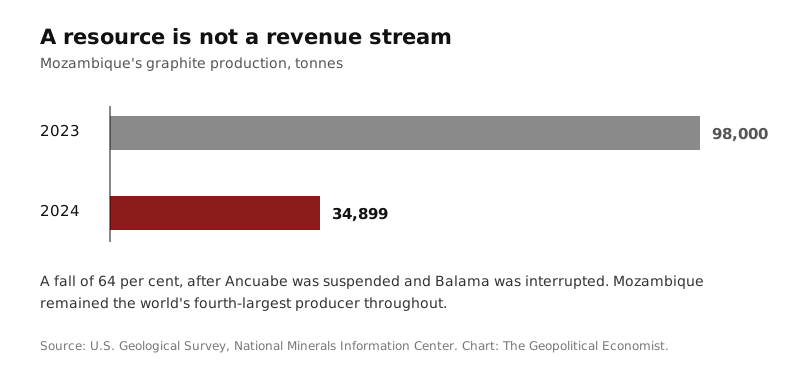
The policy is built around a resource base that gives Mozambique genuine strategic importance. The United States Geological Survey reported that Mozambique was the world's fourth-largest graphite producer in 2024, accounting for about 3% of global production. That year, however, Mozambique's graphite production fell by 64% to 34,899 tonnes. The decline followed the suspension of operations at Ancuabe and interruptions at Balama. The USGS also reported that Ancuabe remained inactive through 2024, while Balama faced weak demand, labour problems and disruptions that eventually forced a shutdown.
That distinction matters. Mozambique has important graphite resources, but the existence of a resource is not the same as the existence of a stable revenue stream. Balama has substantial production capacity, while Ancuabe remains a development story rather than a fully operating mine. The USGS reported that Triton Minerals agreed to sell 70% of its Mozambican graphite assets to China's Shandong Yulong Gold, with the transaction expected to help bring Ancuabe into production.
The international market nevertheless gives Mozambique an opportunity. Graphite is an important material for battery supply chains, and critical minerals have become an increasingly important part of competition over industrial supply chains. That creates room for resource-producing countries to demand greater local participation and more domestic processing. Mozambique's new law is therefore not unusual in its objective. The more difficult question is whether the country can capture more value without discouraging the investment required to produce that value.
That question becomes sharper when the fiscal position is considered.
The World Bank's International Debt Statistics show that Mozambique's external debt stock was equivalent to 350.6% of gross national income in 2024. The World Bank's definition includes public, publicly guaranteed and private external debt. Its 2025 International Debt Report puts Mozambique's total external debt stock at approximately US$69.8 billion in 2024.
The International Monetary Fund's February 2026 debt sustainability analysis is even more important for the argument. The IMF and World Bank assessed Mozambique's external debt as being at high risk of debt distress and its overall public debt as in debt distress. The assessment also classified the overall debt position as unsustainable under the existing policy framework. At the end of 2025, debt-service arrears were estimated at 1.3% of GDP.
The IMF's February 2026 Article IV report also describes increasingly difficult financing conditions. Net external financing has been negative, while domestic banks have become more reluctant to increase their exposure to government debt. The Fund reported that debt-service delays continued through 2025 and that Mozambique's fiscal deficit remained difficult to finance.
This is the bargaining position from which Mozambique is asking mining companies to accept a free-carried, non-dilutable state stake, local-processing requirements and a new regulatory framework.
The economic issue is not whether Mozambique has the sovereign right to impose these conditions. It does. The issue is the price of exercising that right.
In a negotiation, leverage depends partly on the alternatives available to each side. A government with large fiscal reserves and easy access to financing can afford to delay a project while demanding better terms. A government facing financing constraints has less room to absorb delays in investment and production.
Mozambique's situation therefore creates a difficult trade-off. The state wants to obtain a larger share of future mineral rents. At the same time, those rents can only be collected if companies invest, develop mines, produce minerals and find buyers.
That is the circularity at the centre of this debate.
The government is asking investors to accept tighter conditions in order to capture more value from future production. But the investment needed to create that future production is precisely what the government cannot afford to lose.
This does not mean that investors will necessarily leave. Nor does it mean that the new law will reduce investment. Those outcomes cannot yet be established. The policy could succeed if the strategic importance of Mozambique's minerals is strong enough to compensate investors for the additional obligations.
But there is another risk. If companies delay investment while they assess the new rules, Mozambique could lose part of the production, exports and foreign-exchange earnings that the policy is designed to increase.
The IMF has already identified foreign-exchange shortages and financing constraints as important risks to Mozambique's economic outlook. It also projects that international reserves could decline over the medium term as external debt-service obligations rise faster than net export proceeds.
This makes the timing of the mining policy important. Mozambique is not introducing these rules during a period of abundant fiscal space. It is doing so while attempting to restore debt sustainability and attract investment into an economy facing tight financing conditions.
The comparison with Zimbabwe and the Democratic Republic of Congo is useful, but it should be made carefully. Both countries have also moved toward greater control over the processing or export of strategic minerals. Zimbabwe has restricted exports of certain forms of unprocessed lithium, while the DRC has used restrictions on the export of some raw minerals as part of its efforts to encourage domestic processing.
The important point is not that Mozambique is following exactly the same model. It is that similar resource-nationalism policies operate under different fiscal and investment conditions. The economic consequences cannot simply be transferred from one country to another.
Mozambique therefore needs to demonstrate that the 15% state stake will generate more value than the investment and financing costs created by the new rules.
There are clear ways to test that proposition.
Over the next 12 to 24 months, investors' responses will provide evidence. If existing operations expand, Ancuabe moves toward production, new projects reach final investment decisions and processing investments increase, the government will have evidence that greater state participation can coexist with continued capital formation.
If projects are delayed, financing costs increase or companies redirect investment elsewhere, the costs of the new framework will become clearer.
The same applies to local processing. If Mozambique can attract processing facilities and develop reliable infrastructure, the policy could create additional economic activity beyond mining itself. More value would then remain in the country through processing, employment, services and related industries.
But processing requires capital, electricity, transport infrastructure, technical capacity and reliable access to export markets. A processing requirement by itself does not create a processing industry.
This is why the mining law should ultimately be judged not by the size of the state's formal shareholding, but by what that shareholding produces for the economy.
A 15% stake in a large and profitable mine can be valuable. A 15% stake in a delayed or financially marginal project is much less valuable. The same principle applies to local processing. A processing plant that operates competitively can create significant domestic value. A plant that cannot compete internationally may become another source of financial pressure.
Mozambique's resource strategy therefore has two separate objectives that must work together. The first is to increase national participation in the mineral economy. The second is to maintain enough investment to make that participation economically meaningful.
The first objective is visible in the new law. The second will be determined by what happens after the law takes effect.
Resource sovereignty is not only about who owns a percentage of a mine. It is also about whether the state has the fiscal strength, institutions, infrastructure and negotiating capacity to turn natural resources into durable public revenue.
Mozambique has taken a stronger position over its mineral resources. Whether that position becomes genuine economic leverage will depend on what comes next.
The country's fiscal constraints make the margin for error unusually important. The government is effectively betting that international demand for strategic minerals will remain strong enough for investors to accept a larger state role while continuing to commit capital to Mozambican projects.
That is a reasonable proposition to test. But it remains a proposition, not yet a proven result.
The coming investment decisions will provide the evidence.
Sources: Reuters on Law No. 7/2026, via Mining Weekly · U.S. Geological Survey, Mozambique · Mining Weekly on the Triton Minerals sale · World Bank International Debt Statistics · IMF, Republic of Mozambique: 2025 Article IV Consultation, 19 February 2026.
Comments
No comments yet. Be the first.
Comments are closed on this article.