
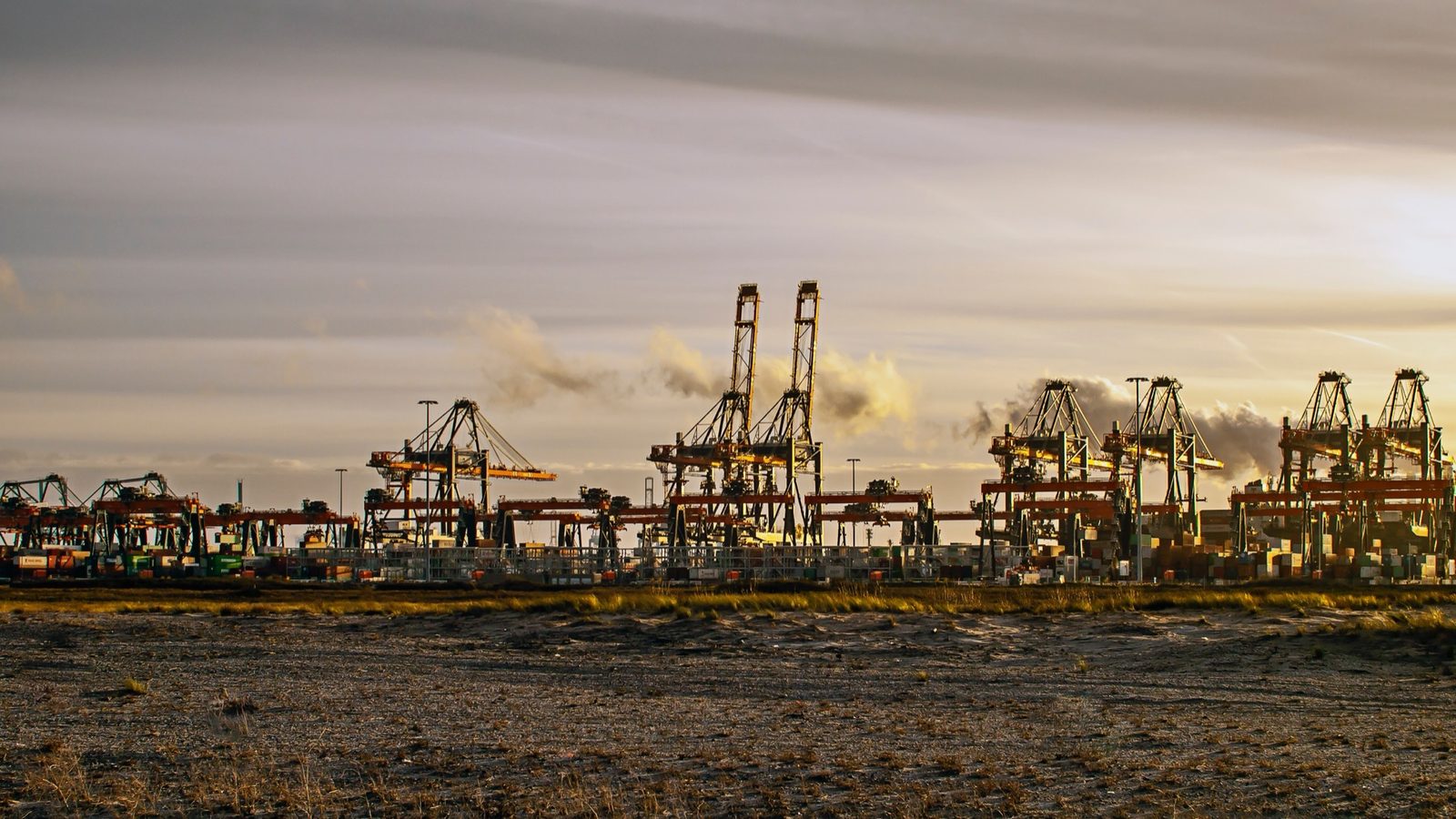
On October 9, 2026, the European Union and China reached a preliminary understanding to ease trade tensions. The understanding includes facilitating rare earth mineral supplies to Europe, improving market access for several European products in China, and limiting Chinese hybrid vehicle exports to the European market by potentially up to 50%. The agreement still requires approval from the 27 EU member states.
This development comes as China's trade surplus in 2025 exceeded US$1.2 trillion, while the European Union's trade deficit with China reached €103.3 billion. This imbalance illustrates the pressure facing European industries amid competition from Chinese products.
The agreement is particularly significant amid escalating tensions between the United States (US) and China, which began in 2018 and have continued to the present. Indeed, their rivalry has contributed to the fragmentation of the global economy. This agreement also serves as a strong indicator of the ongoing fragmentation of the global economy.
As is well known, the European Union has long been a strategic ally of the US in trade, defense, and security. However, the understanding with China demonstrates that economic interests can lead allies to adopt different approaches toward Beijing. The issue is that Europe needs rare earth supplies for its electric vehicle, renewable energy, electronics, and defense industries. Meanwhile, China's dominance in strategic mineral processing means that supply chain diversification cannot happen instantly.
For the US, this situation poses a challenge to transatlantic economic coordination. If each ally pursues its own path to secure supplies and markets, the effectiveness of a joint strategy toward China could weaken. However, these differences in approach do not automatically mean that relations between the US and Europe are fracturing. Nevertheless, economic interests underscore that fragmentation is becoming a tangible reality.
The Europe-China negotiations demonstrate that economic interests do not always align with geopolitical ties. Europe must protect its industries, secure raw material supplies, and maintain market access. Negotiations with China are therefore a pragmatic choice to manage dependencies while reducing the risk of a trade war. For the US, the answer is not simply to ask Europe to follow Washington's policies. The US needs to offer cooperation that delivers tangible benefits through investment, technology, and the development of alternative sources of supply.
Fragmentation and these changes bring fresh momentum while opening opportunities for ASEAN and Indonesia. According to the Geological Agency of Indonesia's Ministry of Energy and Mineral Resources, Indonesia has rare earth mineral resources recorded in its national inventory. However, geological potential does not automatically translate into economically viable reserves ready for extraction. Mastering separation and refining technologies also remains a challenge for ASEAN and Indonesia. Indonesia's opportunity, therefore, is not simply to replace China as a raw material supplier, but to build a processing industry capable of meeting global market demand with greater added value.
ASEAN's position in the rare earth mineral supply chain is becoming increasingly visible through Malaysia. According to Eurostat, June 29, 2026, the European Union imported 15,100 tonnes of rare earth elements in 2025, worth €124.9 million. China supplied 46.8% of total imports by weight, while Malaysia accounted for 23.1%, or approximately 3,500 tonnes. These figures demonstrate that Malaysia has become an important supplier to the European market. However, the 23.1% figure represents Malaysia's share of EU rare earth imports, not its share of total ASEAN exports. Therefore, these figures cannot be used to determine the total value of rare earth exports from all ASEAN countries.
Meanwhile, data from the World Bank through WITS show that Indonesia imported US$17,960 worth of rare earth metals, scandium, and yttrium in 2024. Meanwhile, the BPS statistics on Indonesia's 2025 exports provide a national export data basis by commodity code, destination country, net weight, and FOB value.
The difference between Malaysia's and Indonesia's positions demonstrates that mineral wealth does not automatically translate into export strength. Malaysia has already been recorded as a rare earth supplier to Europe, while Indonesia still needs to strengthen commodity data collection, regulatory certainty, mastery of separation and refining technologies, and downstream industrial capacity.
Therefore, changes in the geoeconomic landscape and the fragmentation of the global economy should become an opportunity for ASEAN, including Indonesia, through the following measures:
First, diversify global supply chains through measurable policies, clarify economically viable resources and reserves, develop processing facilities, attract investment based on technology transfer, and strengthen industrial partnerships with Europe, the United States, Japan, and South Korea. This strategy would be more beneficial than simply pursuing higher raw material exports.
Second, use the EU-China meeting as an opportunity to strengthen economic diplomacy with the European Union, the United States, Japan, and South Korea through partnerships that provide market access, investment, and the development of domestic industrial capabilities. ASEAN does not have to choose one economic bloc, but it must ensure that every partnership delivers measurable benefits.
Third, ASEAN needs to build cooperation on strategic mineral supply chains, including standardization, joint research, and the strengthening of downstream industries. A regional strategy could increase the region's bargaining power while reducing dependence on a single supplier.
Fourth, downstream industrial development must be accompanied by environmental governance, raw material traceability, and workforce skills development so that the added value genuinely benefits the national economy.
Thus, the Europe-China understanding demonstrates that global competition also creates room for negotiations and new economic opportunities. For the US, the challenge is to maintain coordination with its allies through mutually beneficial cooperation. For ASEAN and Indonesia, this momentum must be translated into a concrete industrial strategy.
Indonesia cannot rely on merely possessing mineral resources. It must be able to process them, master the necessary technologies, and build partnerships that strengthen its position in global supply chains. In this way, changes in the economic relations among major powers can become an opportunity for national industrialization, rather than merely a shift in the destinations of raw material exports.

Comments
No comments yet. Be the first.
Comments are closed on this article.