
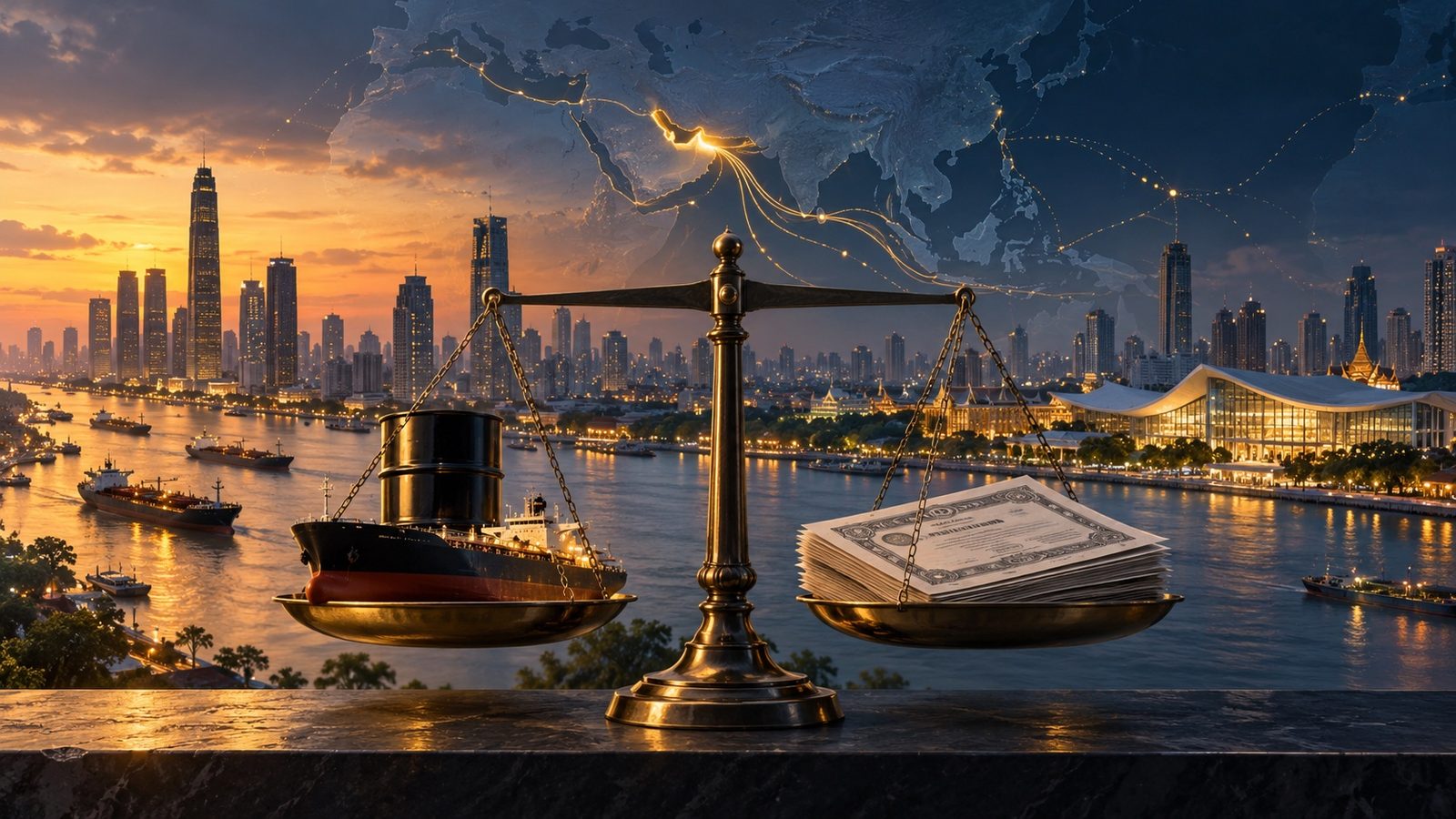
The finance ministers arrive in Bangkok this week with a problem that does not fit neatly into a communiqué.
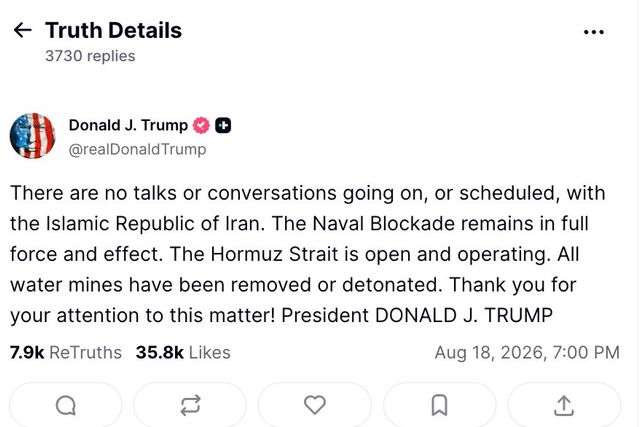
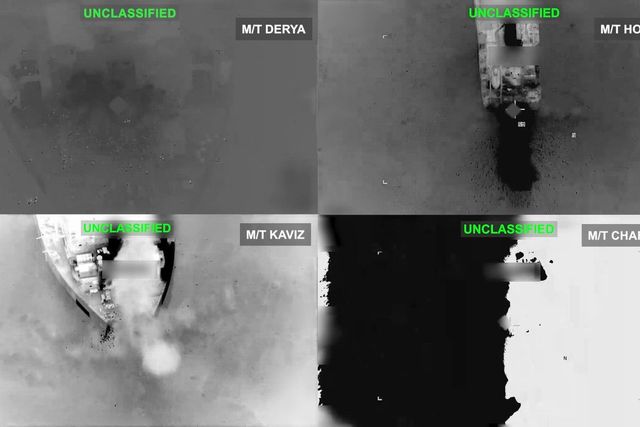
The IMF and World Bank Annual Meetings begin on Monday, October 12. The war with Iran is in its eighth month. The Strait of Hormuz, through which roughly a fifth of the world's oil normally moves, has been disrupted. Diesel and fertilizer prices are rising, as Reuters reported ahead of the meetings. Interest rates remain high. Governments that borrowed heavily through the pandemic are being asked to cushion another shock with less room to do it.
The question is not simply whether the world economy can absorb another energy crisis. It is which countries can absorb it without cutting investment, food support, health spending or the value of their currencies—and which will be told to adjust first.
That is the real test in Bangkok. The war is producing a global price shock, but it is not producing a global burden. The countries with the least influence over the conflict and the least fiscal room to respond are among those paying the highest relative price.
A conference arriving after the shock
Bangkok last hosted these meetings in 1991. The setting has changed; the institutional choreography has not. Ministers and central-bank governors will gather for the plenary, the International Monetary and Financial Committee and the World Bank's Development Committee. The official program includes sessions on AI, private capital and jobs. Those topics matter. But the war will sit behind every discussion of prices, growth and financing.
The World Bank's June forecast projected global growth slowing from 2.9 percent in 2025 to 2.5 percent in 2026, its weakest pace since the pandemic, amid higher energy costs and weaker prospects for energy-importing economies. That forecast was already built around a major shock. It is not a final measure of the damage now unfolding: the conflict's duration, shipping conditions and infrastructure losses can all change the arithmetic.
The IMF's April outlook similarly warned that emerging and developing economies would take a larger growth hit than advanced economies, with the Middle East conflict lowering their 2026 growth forecast by 0.3 percentage point against the pre-conflict baseline. The IMF has since updated its energy-shock policy tracker, which records more than 1,200 measures across 175 countries. That is the scale of the policy response. It is also evidence that governments are already improvising before the official forecasts catch up.
The shock travels through more than the price of crude. Diesel moves food, goods and people. Fertilizer is made with energy and feeds into next season's harvest. Freight and insurance rise when ships face danger or must take longer routes. A government can buy oil on the world market, but it cannot buy back the foreign exchange it loses when its import bill jumps.
The same barrel, different balance sheet
For an energy exporter, higher prices can bring more revenue—if it can produce, load and ship the fuel. For an importer, the immediate effect is often an expensive invoice, weaker currency and pressure on the budget. If the government suppresses the domestic price, it must pay the difference. If it passes the price through, households and businesses absorb it.
Neither choice is painless. The difference is who has the capacity to choose.
The United States can draw on a deep Treasury market, its own large energy sector and the dollar's central role in finance. It still faces inflation, political pressure and the cost of the conflict. But a low-income fuel importer does not have the same shock absorbers. It may need dollars for fuel, fertilizer and debt service at the same moment that export receipts, tourism or remittances weaken.
That is why a global price movement becomes a geopolitical event. The disruption begins in a narrow waterway and a war zone. It then moves through shipping lanes, currencies and sovereign bond markets, arriving as a domestic choice between a subsidy and a protest—or between debt repayment and public investment.
The World Bank's latest International Debt Report puts the constraint in perspective. Low- and middle-income countries owed a record $8.9 trillion in external debt in 2024. They paid $415 billion in interest that year, 2.4 times the level a decade earlier. Debt service eased from its 2023 peak, but it remained $1.3 trillion in 2024. That is money leaving budgets and economies before the next emergency arrives.
Those totals cover countries with very different debt positions; they do not mean every developing country is near default. But they show why a temporary energy spike can become a financing crisis. If dollars get more expensive and investors demand a higher return, a state can face rising costs to borrow just as it needs more money to stabilize fuel prices or protect food access.
The subsidy trap is real—and so is the need to protect people
The IMF's own policy tracker shows how governments have responded: subsidies, tax cuts, price caps, reserve releases, rationing, currency support and emergency lending. By September, the tracker had recorded 1,216 measures in 175 countries. The mix varies by region and by the room each government has to spend.
The IMF's advice is to protect people, not prices. Its economists argue that broad fuel subsidies and tax cuts can be expensive, poorly targeted and difficult to withdraw; they may also weaken incentives to conserve fuel. The alternative is temporary, targeted support for vulnerable households and viable firms, while allowing prices to communicate that supply is scarce. Its policy guidance lays out that case.
That is sound macroeconomic advice in the abstract. In practice, it depends on an administrative state that can identify who needs help and deliver it quickly. It also assumes households can survive the period before the transfer arrives, and that public transport, food supply and electricity are functioning well enough for them to adjust.
The political economy is harsher. A price cap is visible, immediate and easy for a government to announce. A targeted benefit requires data, institutions and trust. If those are missing, a policy that is more efficient on paper can fail at the moment it is needed. That is one reason the IMF's October working paper, using its energy-shock tracker, finds that institutional capacity, inflation and the political cycle help shape whether governments can make support targeted and temporary.
There is a second problem: governments have already used many of their emergency tools. The IMF counted nearly 900 measures by June and more than 1,200 by September. Each measure has a fiscal cost, and each extension becomes politically harder to reverse. The expense is not only the cash subsidy. If a state-owned utility or fuel company is ordered to sell below cost, the liability can disappear from the budget today and reappear as a rescue tomorrow.
So the choice is not between an irresponsible subsidy and a virtuous pass-through. It is between different distributions of harm. A government can spend scarce fiscal space to hold down fuel costs, let prices rise and compensate selected households, or ration supply. It can also try to borrow. The least damaging option depends on the country—and on whether support comes before the household's budget breaks.
What the institutions can—and cannot—do
The IMF can lend foreign currency to countries facing balance-of-payments pressure, advise on monetary and fiscal policy, and convene creditors. The World Bank can finance development programs and targeted support. Neither institution controls the Strait, sets global diesel prices or can make the combatants stop fighting.
The distinction matters because the language of “resilience” can disguise who is being asked to adjust. If emergency financing arrives only after a government has cut imports, tightened spending and accepted a weaker currency, the rescue may stabilize a balance sheet while the social damage is already done. If money arrives quickly but is paired with opaque fuel subsidies, it may preserve an unsustainable price and benefit richer consumers most.
The Fund's September review of its lending programs acknowledged that repeated shocks make it difficult to restore external viability, and called for programs built around realistic financing assumptions, country capacity and contingency planning. That is an important admission. A plan written for one shock will not survive a second if it assumes the first one is temporary.
But the harder question is whether creditors will accept the same realism. If a country is already spending a large share of export earnings on debt service, an energy shock can turn a liquidity problem into a solvency problem. New loans may bridge the gap; they do not make an unsustainable debt stock sustainable. Restructuring can free resources, but it is slow and politically contested, especially when creditor groups disagree over who should take losses.
This is where Bangkok's geopolitics enters the room. The United States is chairing the G20 this year, but Treasury Secretary Scott Bessent is skipping the meetings, with two senior officials representing the department. That is not the same as a U.S. withdrawal from the institutions, and no one should infer a hidden motive from one absence. It does, however, reduce the chance of high-level bargaining in person at a moment when Washington's policy decisions—from the war to sanctions and energy flows—are central to the shock others are trying to manage.
The risk of asking the wrong question
The standard crisis question is: how do we restore stability? The more useful one is: stability for whom, and on whose balance sheet?
If the meetings end with a call for fiscal discipline but no credible path to affordable financing, the countries with the fewest options will be asked to make the fastest adjustment. If they cap prices instead, the immediate relief may become a budget liability that consumes money meant for schools, clinics or infrastructure. If they borrow to postpone the choice, they may return to the same institutions later with a larger bill.
The answer cannot be an unlimited global subsidy. Nor can it be a rule that treats every country as though it has the same reserves, tax base, welfare system and access to capital. The policy has to follow the constraint: temporary transfers where delivery systems work; concessional finance or grants where debt is already binding; transparent debt workouts where repayment cannot coexist with basic public spending; and investments that reduce the next shock's import exposure.
That is a demanding agenda, and a week of speeches cannot deliver it. The meetings can still make a difference if they produce three things: a shared update to the economic outlook that reflects the war's latest damage; financing that arrives before importers are forced into disorderly adjustment; and a creditor process that moves faster than the crisis it is meant to solve.
What would change this analysis
This argument would weaken if the Hormuz disruption ended quickly, energy and fertilizer prices returned toward prewar levels, and the latest IMF and World Bank forecasts showed little lasting damage to import-dependent economies. It would also weaken if emergency support were consistently temporary, transparently funded and targeted without excluding households that lack formal records or bank access.
The debt picture could improve too. The World Bank's 2025 report projected that external debt service would fall in 2025–27 as financial conditions eased. If that forecast holds despite the war, and private capital returns to vulnerable countries at sustainable rates, the current shock may remain a severe but manageable interruption rather than the start of a new debt cycle.
Those are measurable tests. A falling fuel bill, stable currencies, lower borrowing spreads, a decline in emergency price controls and sustained public investment would count as evidence of adaptation. Repeated extensions of subsidies, rising arrears, depleted reserves and new debt distress would point the other way.
The bill follows the routes of power
The war is being fought in the Middle East. Its economic cost is being transmitted through a global system of shipping, energy, finance and food. That system does not distribute risk evenly. Countries that can print debt in their own currency, draw on deep capital markets or control energy supplies can make time for themselves. Countries that need dollars for fuel and debt service cannot.
Bangkok is therefore not just a meeting about growth forecasts. It is a test of whether the institutions built to manage the global economy can distinguish a country's policy mistake from a shock it did not choose—and whether they can finance that distinction before it becomes a crisis.
If the answer is no, the cost will not stay in the conference rooms. It will show up in fuel bills, food prices, public budgets and the next round of political instability. The war will have crossed another border without a single soldier moving.
Comments
No comments yet. Be the first.
Comments are closed on this article.