
There is a fairly reliable way to gauge how incandescent a public question has become: watch what happens to anyone who merely tries to describe it. One can write that the Chinese Communist Party exercises pervasive control over society without readers presuming to know one’s position on Taiwan. On Ukraine the space has narrowed; yet disagreement over the conduct of the war does not amount to denying the political existence of either belligerent. On Israel and Palestine that distinction is all but exhausted. Every sentence is read first as evidence of allegiance and only afterwards, if at all, for what it asserts.
Anyone who has written on the subject knows the mechanism. Condemn 7 October and you will be asked why you are silent on Gaza. Write about Gaza and you will be asked why you have not mentioned the hostages. Mention the settlements and you will be reminded of Hamas; mention Hamas and you will be reminded of the occupation. These look like demands for completeness. What is actually requested is a signal, a password that tells the reader which side the author is on before deciding whether the argument deserves a hearing. Every fact thus enters a ledger of loyalty in which its value depends less on whether it is true than on which camp it appears to serve.
The question worth asking is therefore not who is right. It is why this conflict, more than others as bloody and at times deadlier, turns spectators into symbolic combatants. Nobody is materially forced to choose. There is, however, a structure of incentives that makes declining to choose socially expensive. There is also a strategic reason why that structure seeks to recruit us.
A conflict about existence as well as conduct
The standard explanations are familiar, and each holds part of the truth. Holocaust memory weighs on the Western conscience as no other contemporary conflict does. Colonial memory offers another part of Western opinion a ready-made template casting Israel as the colonial power, one to which the settler-colonial paradigm has lent academic authority in Anglophone universities. Jerusalem carries a religious charge that no boundary in the Donbas will ever carry; in the United States it is amplified by a large evangelical constituency. Western societies project their own fractures onto the Middle East, from antisemitism and Islamophobia to the widening distance between generations, while digital ecosystems reward declarations of identity over analysis. Together these factors describe the context without capturing the core.
The core lies in the structure of the conflict itself. Western debate on the Russia-Ukraine war turns mainly on conduct: who attacked whom, by what means, in breach of which norms. It does not turn mainly on whether either country has a right to exist as a political community. On Israel and Palestine, debate about conduct slides continually into debate about the legitimacy of the actors themselves. Criticism of Israeli military operations is heard by many as a challenge to Israel’s right to exist and defend itself. Criticism of Palestinian terrorism or of Palestinian leaderships is heard by others as a denial that Palestinians exist as a people entitled to rights. A judgement on an act is received as a verdict on a collective identity.
This slippage makes descriptive neutrality increasingly difficult. When every fact seems to bear on someone’s existence, description becomes position-taking and silence becomes denial. This is not necessarily a moral failing of observers but the predictable effect of a conflict in which both peoples have historical reasons to understand survival as being at stake. Israelis carry the memory of extermination and of regional actors that for decades declared Israel’s destruction a political aim; 7 October reactivated that memory in its most literal form. Palestinians carry the memory of 1948, of the occupation begun in 1967 and of a territorial fragmentation that makes statehood ever more abstract. Each memory rests on real history. Each tends to make the other invisible.
A conflict that manufactures the other side’s evidence
On the ground this structure generates a self-sustaining loop. Palestinian extremism supplies the Israeli far right with evidence for the claim that no territorial separation is compatible with security; settlement expansion supplies Palestinian armed groups with evidence for the claim that no negotiation will yield a state. The two radicalisms are not allies. Each is nonetheless the other’s most dependable supplier of evidence. Moderates on both sides are left defending wagers that events appear to refute week after week.
In the vocabulary of institutional economics, this resembles cumulative causation: every radical move can raise the expected payoff of the next and lower the perceived payoff of compromise. The result is a sustained selection pressure in favour of the actors best equipped to exploit the evidence their opponents provide.
The Western observer reproduces this loop at scale. Each camp selects the facts that confirm its reading and thereby supplies the omissions the other needs to denounce its bad faith. Those who minimise 7 October hand the perfect argument to those who minimise the destruction of Gaza, who duly return the favour. This is more than psychological mirroring. Understanding it requires looking at how contemporary wars produce and sustain their own external constituencies.
Legitimacy as a theatre of war
Wars are fought not only for territory but also for the legitimacy of the force exercised over it. No state or armed movement can sustain a prolonged campaign while entirely ignoring the actors on whom its resources depend: arms supplies and export licences, diplomatic cover in multilateral bodies, trade and cooperation agreements, humanitarian funding, international recognition and the political costs that allies can impose. Each of these responds, on different timescales and with different degrees of sensitivity, to public opinion in the countries that control it.
Legitimacy therefore behaves less like a moral attribute than like a strategic input. It is accumulated, spent and depleted; its political price moves with events; it can be contested by anyone who stands to gain from its scarcity.
Seen this way, Western capitals, universities, newsrooms and digital platforms are not merely places where the war is discussed. They are spaces in which one dimension of the conflict is conducted. This is not because their inhabitants are simply being manipulated, a hypothesis that would credit the belligerents with a directorial capacity nobody possesses. It is because international consent is a real strategic resource that those who depend on it have every incentive to cultivate.
The causal chain can be traced. An event on the ground becomes representation: images, casualty figures, testimony, reconstructions and denials. Representation mobilises opinion; mobilisation can become pressure on parliaments and governments; pressure can contribute to decisions with material effects, such as the suspension or continuation of an arms supply, a vote in an international assembly, diplomatic recognition or the invocation of a human-rights clause in a trade agreement. Those decisions return to the conflict and alter the parties’ room for manoeuvre.
No link automatically triggers the next, and no single observer determines a decision. Nor does public mobilisation alone explain state behaviour, which remains shaped by strategic interests, alliances, domestic institutions and political leadership. The loop nonetheless helps explain one source of pressure surrounding the recognition of a Palestinian state by the United Kingdom, Canada, Australia and other Western governments in September 2025, as well as the American debate over support for Israel, without exhausting the reasons for either. Israel’s foreign ministry dismissed those recognitions as gestures aimed at domestic electorates. The dismissal itself presupposes the relevance of the circuit, since it locates at least part of the explanation for a diplomatic act in the state of Western opinion.
Three consequences follow. The first is that both parties have a structural interest in how their conduct is represented abroad. This does not mean that every outcome is engineered: actors can learn to exploit consequences they did not initially seek. How far Hamas factors the international political cost of Palestinian civilian deaths into its decisions, and how far the Israeli government pursues a systematic strategy of delegitimising institutions that scrutinise its conduct, are questions for a different inquiry. The argument here needs only a more modest premise: neither side is indifferent to what the West thinks.
The proposition is also testable. If sustained changes in Western public opinion proved largely unrelated to changes in diplomatic recognition, arms policy, trade relations or multilateral support, the claim that legitimacy functions as a strategic input would be substantially weakened. Conversely, evidence of a recurrent relationship would strengthen the mechanism proposed here without proving that public opinion alone caused any particular decision.
The second consequence concerns the observer. Whoever believes he is voicing a personal opinion on a distant conflict is contributing, in minimal and aggregated form, to the production of a strategic variable. The pressure to take sides can therefore be understood not only as a pathology of public debate but also as the social expression of a systemic interest: individual alignments, once aggregated, acquire a political price. Alignment is a priced asset. At this point, “symbolic combatant” ceases to be merely a metaphor and begins to describe a function.
The third consequence is the most insidious. If public judgement is a strategic prize, institutions that claim to produce knowledge independently of the camps become contested ground. Courts, United Nations agencies, humanitarian organisations, universities and newspapers are discredited by whichever side their findings disfavour and celebrated by the other, with a reversibility that often depends on the latest report.
Impartiality is a public good: it lowers the cost of establishing facts for everyone. Like other public goods, it is vulnerable to under-provision and depletion, because each side captures the immediate gains from discrediting an unfavourable finding while the loss of a shared arbiter is borne more widely. When no institution is accepted as impartial by both camps, it becomes increasingly difficult for a fact to be established before it is politically assigned. The ledger of loyalty, stripped of any counterweight, reinforces itself.
Language as a front line
Vocabulary is where this dynamic becomes most visible. Terrorism, occupation, self-defence, apartheid, genocide, antisemitism, Zionism: each has a legal or historical meaning that can, with varying degrees of precision, be defined. In public debate they often function instead as watchwords. Using or refusing them counts as a declaration of allegiance.
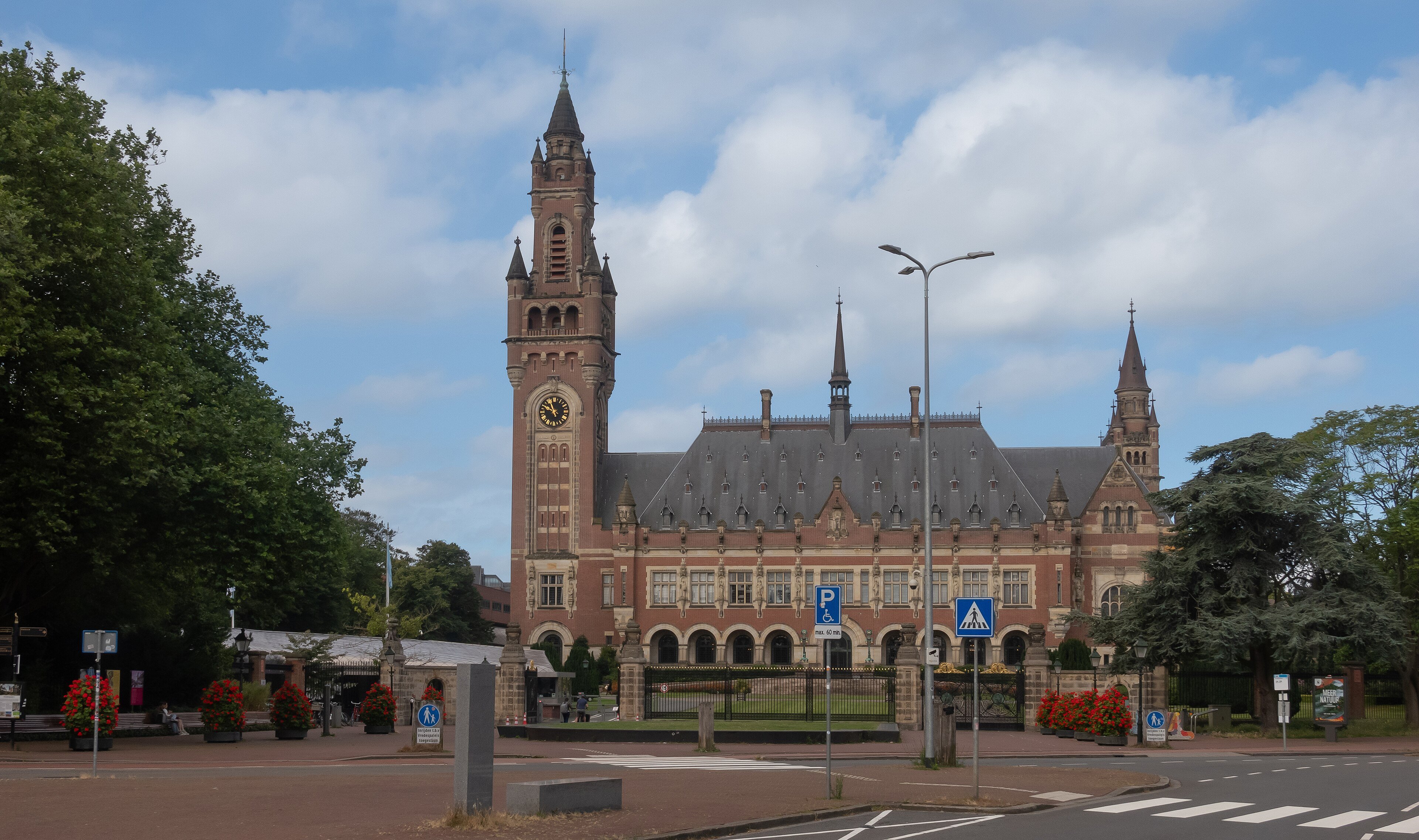
The most instructive case is judicial. In January 2024, the International Court of Justice’s provisional-measures order in South Africa v. Israel was widely reported as a finding that genocide itself was “plausible”. That was not what the Court decided. It held plausible some of the rights invoked by South Africa under the Genocide Convention, including the right of Palestinians in Gaza to be protected from acts of genocide, and found a real and imminent risk of irreparable prejudice to those rights. The merits of South Africa’s claim remained undetermined.
In April 2024 Joan Donoghue, who had presided over the Court when the order was issued, publicly clarified the distinction in a BBC interview. On the opposite side, the order had meanwhile been presented as a substantial rejection of the accusations, a reading no more faithful to a decision that imposed specific provisional obligations on Israel. Donoghue’s clarification was then enlisted as vindication. Even a judicial text drafted with extreme lexical caution was consumed as ammunition before its meaning had settled.
The method this episode suggests is simple to state and laborious to practise: apply the same criterion to every act, whatever the flag under which it is committed. In June 2024, the Independent International Commission of Inquiry established by the UN Human Rights Council concluded that Hamas and other Palestinian armed groups committed war crimes during the attacks of 7 October 2023. It also concluded that Israeli authorities were responsible for war crimes and crimes against humanity in the Gaza operations it examined. In July 2024, the ICJ’s advisory opinion concluded that Israeli policies and practices, including settlement expansion and associated forms of control, were intended to create irreversible effects on the ground and amounted to the annexation of large parts of the Occupied Palestinian Territory. It held that Israel’s assertion of sovereignty over parts of that territory was contrary to international law.
These findings neither offset nor cancel one another. Identity of criterion does not imply equivalence of conduct: applying the same legal categories to different acts does not declare those acts equal in nature, scale, intent or circumstance. Citing such documents selectively destroys precisely what makes them valuable; citing all of them in order to prove substantive symmetry commits the opposite error.
Genocide demands the same discipline. In international law, the category does not simply denote destruction on an enormous scale or a particularly high number of victims. It requires one or more of the acts enumerated in the Genocide Convention, committed with the specific intent to destroy a protected group, in whole or in part, as such. A definitive judicial finding of state responsibility for genocide requires adjudication on the merits; using the category in public debate does not remove the burden of addressing its constituent elements.
In September 2025, the same UN Commission of Inquiry concluded that Israeli authorities had committed genocide in Gaza, identifying both prohibited acts and what it considered evidence of specific intent. Israel rejected the findings and challenged the Commission’s methodology and impartiality. This is the conclusion of an international investigative body, not a final judicial determination on the merits. It may be accepted or contested; either way, serious engagement requires addressing the evidence and reasoning on which it rests. What one should not do is use either the term, or the refusal to use it, as a test of loyalty.
Refusing equidistance without accepting allegiance
The instinctive response to this pressure is equidistance: stand halfway, share out blame equally, locate truth in the middle. It is understandable and intellectually empty, because geometry has no cognitive value. Responsibilities may be asymmetric in one place and at one moment and distributed differently in another; determining which requires analysis rather than a formula. Equidistance also accepts the premise of the ledger and merely balances the books, instead of refusing to enter facts in it at all.
The harder alternative is to reject both equidistance and allegiance, standing at whatever distance each fact requires. Prolonged occupation does not make the massacre of civilians lawful; the massacre of civilians does not make any military response lawful. Terrorism does not legitimise settlements, and settlements do not legitimise terrorism. Israel’s security is a legitimate interest, not an unlimited licence; Palestinian self-determination is a right that does not exempt Palestinian leaderships from responsibility for their own strategic choices. None of these propositions is equidistant. Each follows from applying a criterion without granting exemptions according to identity.
Writing this way invites attack from both sides. Being attacked by everyone proves nothing; the relevant test remains the consistency of the criterion and the quality of the evidence. There is also a risk symmetrical to the partisan’s: the observer who turns detachment from the camps into a new identity, equally self-satisfied and equally impervious to contrary facts.
The limiting case of judgement
Why should any of this concern those with no ties to that land? Because Israel and Palestine are a limiting case of a more general phenomenon: the moment when the observer’s identity begins to determine which facts he is prepared to see. Here the phenomenon is especially intense. The existential stakes make every description sound like a verdict; the strategic value of international consent gives every verdict a price; the erosion of impartiality leaves fewer institutions capable of establishing facts on terms that opposing camps will both accept.
A democratic public sphere presupposes that a fact can be described before one declares a side. When that possibility disappears, what is lost is not only the capacity to understand a distant conflict. It is the minimal condition for disagreement to remain productive rather than tribal. Writing about Israel and Palestine without partisanship is therefore neither an exercise in prudence nor a claim to neutrality. It is an attempt to defend, on the most hostile terrain, the possibility of judgement.
That criterion does not make causes, responsibilities, intentions or circumstances equivalent. It means something more elementary: the identity of the victim does not alter the standard by which we judge the act that struck them. A child killed in a kibbutz on 7 October and a child killed beneath the rubble of Gaza do not ask the observer which flag must authorise the mourning. It is the observer who asks. That is where the war has already recruited him.
An earlier Italian-language version of this essay, "Perché Israele e Palestina ci obbligano a scegliere", appeared on paolocalvi.com on 18 September 2026. This English version has been revised for an international readership.
Comments
No comments yet. Be the first.
Comments are closed on this article.