
The usual way to measure Gulf money in Africa is by the size of the pledge: so many billions announced, so many projects signed. That is the wrong unit. The more revealing measure is position. The United Arab Emirates has built its African presence around the points where African goods change jurisdiction or form: the port where a container leaves the continent, the market where gold loses its origin, the land that feeds a food importer. Value in a commodity chain tends to be captured at those gates, not at the ground the goods come from. A state that hosts a gate without controlling its terms collects fees. The operator of the gate collects the chain. This is not an accusation of wrongdoing, since most of these arrangements are legal, and they bring real capital without the policy conditions attached to Western lending. It is a question about what host states actually capture, and the answer depends less on the size of the pledge than on the contract that governs the gate.
A Number That Depends on Who Is Counting
Headline figures for Emirati investment in Africa vary widely, and the variation is itself informative. UAE Minister of State Saeed bin Mubarak Al Hajeri said the country invested $71.32 billion in sub-Saharan Africa between 2021 and 2025, an official statement and not an audited statistic. Economy Minister Abdulla bin Touq put total investment above $110 billion for 2019 to 2023. Anwar Gargash, the diplomatic adviser to the UAE president, said in September 2026 that Emirati investment across the continent was approaching $150 billion. A Financial Times analysis counted more than $168 billion in projects announced since 2017, a measure of announcements, not of capital invested. These are not the same measurement. They differ in time window, in geography and, above all, in whether they count pledges or capital that has actually been deployed. A pledge is a statement of intent, a deployed dollar is an asset in the ground, and public totals rarely separate the two.
The most careful public mapping covers only part of the continent. The Africa Center for Strategic Studies estimated roughly $47 billion in Emirati projects across East Africa's 12 jurisdictions, about 60 percent of all Gulf capital flowing into the region, and ranked the UAE as the fourth largest source of capital in Africa after the European Union, China and the United States. Its sector breakdown: $19.3 billion in energy, $11.9 billion in agriculture, $7.3 billion in ports, $5.9 billion in infrastructure and $2.7 billion in mining. The figure includes projects later halted or stalled, and Sudan alone accounts for about $22 billion of it, much of it suspended by the war. The gap between announced and operating projects is real, which is why position, meaning what the UAE actually controls, is a sounder guide than the headline total.
Pledges outrun operations because announcements carry political value when they are made, while delivery depends on land, permits, power, security and financing that take years to assemble. Many announced projects are memoranda of understanding, not binding contracts, and the same project can be counted more than once as it moves from intention to agreement to construction. That is why this article looks at contracts and the positions they create, where the evidence is firmer, and treats pledges as context, not as findings.
Gate One: The Port
DP World operates or is developing port terminals in Algeria, Angola, Egypt, Mozambique, Senegal, Somaliland and Tanzania, and AD Ports Group has signed concessions of its own, including in Angola and Egypt.
In Maputo, the operating company MPDC, whose shareholders include the state railway CFM, a Grindrod–DP World consortium and a local partner, had its concession extended in 2024 by 25 years, to 2058. The extension was tied to a business plan of about $2.06 billion, including nearly $1.1 billion by 2033, and would lift nominal capacity from 37 to 54 million tonnes a year. Cargo volumes have already risen, from 22.2 million tonnes in 2021 to 31.2 million in 2023. That is a gain, and the contract contains an investment trigger, which is good design. But one fact frames what kind of gate this is. Transit cargo, overwhelmingly to and from South Africa, makes up most of the port's volume, and African Business reports over 95 percent of throughput. Mozambique hosts a gate that mostly serves a neighbor's trade. Its take is a share of fees and equity through CFM, not the value of the trade itself.
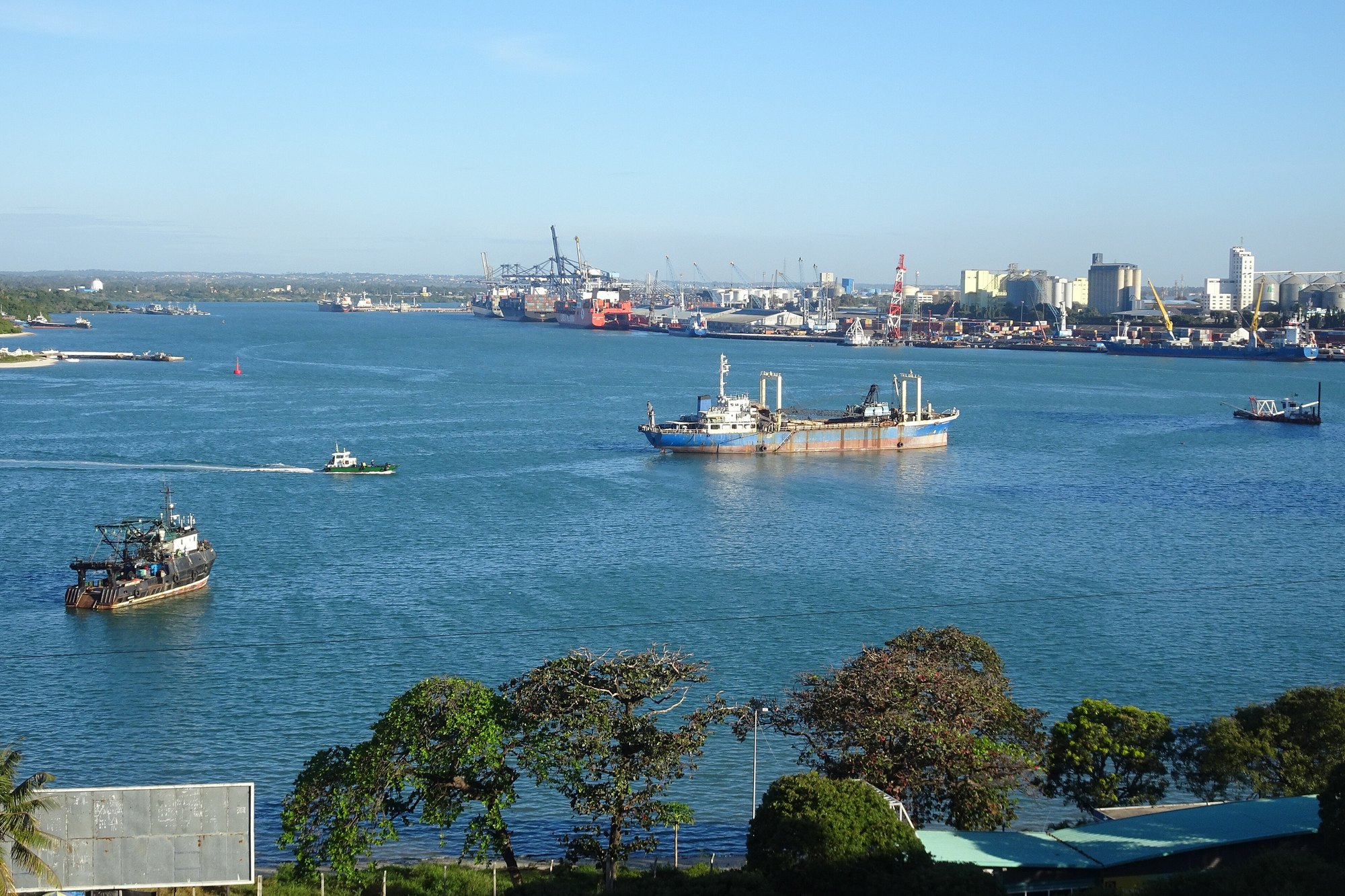
In Dar es Salaam, DP World signed a 30 year concession in October 2023 to run berths four to seven, with an initial commitment of more than $250 million over five years. The company describes the port as the maritime gateway for metals from the Southern-Central African copper belt. The intergovernmental agreement behind the deal drew criticism in Tanzania. Legal experts and opposition politicians argued that some of its clauses favored DP World, including one they said would give the company rights to manage coastal and lakeside ports in perpetuity if a concession followed, and critics cited the absence of an end date and of a termination clause. The government defended the deal, and Tanzania's High Court dismissed a legal challenge in 2023. The point is not that one side was right. It is that the terms of a gate, its duration, exclusivity and dispute rules, decide who captures the value, and those terms were contested in public. International Resources Holding (IRH), an Abu Dhabi-based investment company, acquired a controlling 51 percent stake in Zambia's Mopani copper mines through a subsidiary, committing up to $1.1 billion, of which $620 million was new equity, so the same state appears at both ends of a copper corridor. Whether Mopani's metal actually moves through DP World's berths is a question of logistics that public sources do not settle, and the overlap should not be read as an integrated chain. It does show how a gate and an asset can reinforce each other.
The model is not exclusively Emirati. A second 30 year concession at Dar es Salaam, for Container Terminal 2, which handled about 83 percent of Tanzania's container volume in 2023, went to a consortium led by India's Adani Ports, in which Abu Dhabi's AD Ports Group is a partner. What distinguishes the Emirati approach is the breadth: ports, hubs and land held together across many countries, by state linked companies that can accept long horizons.
Gate Two: The Gold Market
The clearest case of a gate that is not a building is the Dubai gold market. The UAE imported 748 tonnes of gold from African countries in 2024, an 18 percent rise on the previous year, making it the main destination for African gold, according to the Swiss NGO Swissaid, drawing on UN Comtrade data. That was more than half of the UAE's total gold imports of 1,392 tonnes. Togo, Uganda and Rwanda were among the largest African exporters to Dubai, at 52, 31 and 19 tonnes, although none produces gold on a scale that explains such volumes. Swissaid concludes they act largely as transit hubs for gold mined elsewhere, Uganda and Rwanda notably for gold from the Democratic Republic of Congo. It also reported that the UAE imported 29 tonnes directly from Sudan in 2024, up from 17 tonnes in 2023, with more arriving via Egypt, Chad and Libya, the last two of which it describes as exit points for gold from areas controlled by the Rapid Support Forces.
These claims need careful handling. Swissaid says the UAE's 2024 trade figures were published on UN Comtrade on October 31, 2025 and removed from the platform days later. The UAE has denied supporting any warring party in Sudan. Two regulatory facts should not be confused. The UAE was on the Financial Action Task Force list of jurisdictions under increased monitoring from March 2022 to February 2024, and the FATF tied its removal to progress on an anti money laundering action plan. Separately, the UAE introduced responsible gold sourcing regulations, mandatory from 2023, based on OECD guidance, and Swissaid, an advocacy organization, argues that gaps in their implementation remain. What survives the caveats is structural. A refining and trading hub sets the terms on which African producers and traders sell, and once gold is melted and refined its origin becomes very hard to trace. The gate continues downstream: Swissaid reports that Switzerland imported 316 tonnes of gold from the UAE between January and September 2025, more than double its usual annual volumes. The hub converts location specific value, gold in the ground of a particular country, into a fungible product whose margin is captured where it is certified and traded.
Gate Three: Land and Food
The UAE imports about 90 percent of its food, and after the 2007 and 2008 food price spike it pursued agricultural land abroad to secure supply. In East Africa alone, agriculture accounts for $11.9 billion of tracked Emirati projects, although $10.2 billion of that sits in Sudan, where the war has suspended many projects. Egypt's Ras El-Hekma deal in 2024, in which Abu Dhabi committed $35 billion, including $24 billion in cash for development rights to about 170 square kilometers of Mediterranean coastline, with Egypt keeping a 35 percent stake, shows the gate logic applied to land: a sovereign sells the right to develop a location and keeps a minority share. In each case the buyer controls the point where a physical asset becomes a flow that serves the buyer's own needs.
The Security Layer
Gates need protection, and the Africa Center found that the UAE has become one of the most active sponsors of security initiatives in East Africa, through arms transfers, direct funding and military cooperation, in 8 of the 12 countries it studied. The same study found the UAE to be by far the largest single investor among regional actors in Sudan, with an estimated $22 billion of non security initiatives. It would be a mistake to read these findings as proof of a single coordinated plan. Commercial, diplomatic and security engagement can grow together without one directing the others. But they overlap in the same places, and where a port or a trade corridor depends on a stable partner government, security cooperation is one way to protect the position. For host states, this means contracts negotiated as commerce may carry strategic weight that the commercial terms do not reflect.
Why Gates Beat Mines
There is an economic logic to the model. Owning a mine exposes the owner to price swings, local security, tax disputes and political change in one country. Emirati investors do buy assets, and one of the largest confirmed transactions of this kind was the 51 percent stake in Zambia's Mopani copper mines, backed by up to $1.1 billion. But a gate can earn from volume regardless of who mines, is spread across many countries, and is harder to renegotiate than a royalty. Harder, not impossible. In 2018 Djibouti rescinded DP World's concession for the Doraleh terminal, arguing that the contract violated its sovereignty. The terminal is now run by a Djiboutian state-owned company, DP World contests the seizure and has claims against the government and its partner China Merchants, and litigation continues. Djibouti shows that a host can take a gate back, and that doing so is contested and slow. The Emirati position resembles less the classic extractive enclave than a network of toll points, and its durability comes from that. The principle: value capture follows control of the nodes where goods change jurisdiction or form, not ownership of the ground they come from.
A Different Kind of Counterparty
Western institutions, and the IMF among them, have often offered money attached to policy conditions: budgets, exchange rates, subsidies. Chinese state lenders have often offered loans for infrastructure, which leave the borrower with a debt and the lender with a claim on the state. An Emirati operator typically offers neither a program nor a loan. It offers a concession or an equity position, which leaves it as a co owner or long term operator of the asset itself. Debt can be restructured, as several African countries have shown in recent years. A 30 or 55 year concession is much harder to unwind, because it is a property right embedded in a contract, often with investment commitments already made on the strength of it. That also means the bargaining power a state has is at its greatest before signature, and it declines afterward.
What Host States Actually Capture
None of this means African states lose. Maputo's volumes have grown sharply under its concessionaire, Dar es Salaam is being modernized, and Emirati capital comes without the structural adjustment conditions that accompany IMF programs. What decides the split is the contract. Duration is one variable: Maputo's concession now runs 55 years from its 2003 start. Exclusivity is another, and it was the contested point in Tanzania. Investment triggers, as in Maputo's extension, tie a longer concession to delivered capital. Local equity, such as CFM's stake, gives the state a share of the margin and not only of the fees. Transparency is a fifth: whether the terms of an intergovernmental agreement are public, and whether parliaments can scrutinize them before signature. And in gold, the variable is traceability: whether producing states can see and tax what leaves through the hub. States that negotiate these terms hard capture more of the chain. States that treat a gate as a favor capture the fee.
What Would Prove This Wrong
The gate thesis can be tested. If gold exports reported by transit countries converge toward their domestic production as due diligence rules bite, the gold gate is less opaque than described. If a large share of Emirati pledges reach operation, and if Emirati investors shift from gates toward owning mines and processing plants at scale, the model is closer to conventional extraction than to toll collection. If the share of Mozambican, rather than transit, cargo at Maputo rises materially, that port becomes a gate for Mozambique's own trade. If new concessions consistently come with shorter terms, investment triggers and local equity, host states are learning to price gates properly. If more host states follow Djibouti and reclaim gates without lasting cost, gates are weaker than this article argues. If none of this happens, and pledges keep outrunning operations while terms stay opaque, the pattern described here will have held. Each indicator is observable in public data, from port statistics and trade databases to concession documents, within the next several years.
Conclusion
The size of Emirati pledges in Africa is the least informative number about them. What matters is which gates the UAE controls, on what terms, and what host states keep. In Maputo, the answer is a well structured concession over a gate that mostly serves someone else's cargo. In Dar es Salaam, it is a contested agreement over the main door of a copper corridor. In Dubai, it is a market whose margin is captured far from the mines. In each case capital is abundant, but the terms on which a country's goods pass through a gate are not, and those terms are set once and can last for decades. For African governments, the lesson is not to refuse Gulf capital, which brings real capacity and few conditions. It is to remember that whoever owns the gate owns the terms, to demand traceability where the trade is opaque, and to negotiate the gate, not the pledge. Whether a country is enriched by the world's demand for its goods depends less on what lies beneath its soil than on who controls the doors through which that wealth must pass.
Comments
No comments yet. Be the first.
Comments are closed on this article.