
The Middle East is once again facing a dangerous escalation. The conflict between Saudi Arabia and Yemen’s Houthi movement has intensified, while the newly signed Makkah Joint Defence Agreement between Saudi Arabia, Pakistan and Türkiye is facing its first major test.
The situation has become even more complicated after senior Houthi official Mohammed al-Bukhaiti warned Pakistan and Türkiye against intervening on Saudi Arabia’s side. He said that if the two countries became directly involved, the Houthis would respond with an “iron fist”.
This warning directly challenges the strategic purpose of the Makkah Pact. But the central question is not simply whether Pakistan or Türkiye will send troops. The bigger question is whether the Makkah Pact can prevent the Yemen conflict from developing into a wider regional war while also protecting Saudi Arabia.
The Makkah Pact Faces Its First Major Test
Saudi Arabia, Pakistan and Türkiye signed the Makkah Joint Defence Agreement on 7 August, establishing a framework for collective defence and deterrence. Under the agreement, an armed attack against one member is to be regarded as an attack against all three.
Pakistan’s Defence Minister Khawaja Asif later said that if Saudi Arabia faced unprovoked aggression or if the effects of the Yemen conflict spilled over into Saudi territory, the agreement could become operational.
However, this does not mean that Pakistan and Türkiye would automatically have to send combat troops into Yemen. The precise strategy for responding to an attack has not been fully defined publicly. This distinction is important because military assistance can take different forms, including air defence, intelligence-sharing, training, logistics and technical support.
Türkiye has already indicated that it is prepared to meet Saudi Arabia’s military needs under the agreement. Turkish Foreign Minister Hakan Fidan said Ankara could provide technical assistance if required.
Why the Houthi Warning Matters
The Houthi warning is not simply a message to two foreign governments. It also signals that an expansion of the conflict could create new fronts.
The Houthis have already demonstrated their ability to project military pressure beyond Yemen. Their recent attacks have targeted Saudi territory and infrastructure. At the same time, their advances along Yemen’s western coast and around the Red Sea and Bab al-Mandab have strengthened their strategic position.
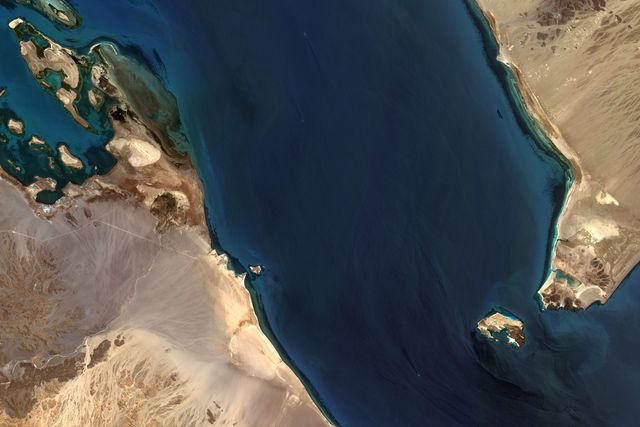
The capture of Mocha and advances around the strategic waterway have increased concerns about international trade and regional energy security. Bab al-Mandab is particularly important because it connects the Red Sea with the Gulf of Aden and serves as a major route for international commerce.
Chatham House has warned that the Houthis’ capture of Mocha and their growing position around Bab al-Mandab have increased their ability to influence maritime shipping and have changed the wider geopolitics of the Red Sea.
This means that the consequences of the Yemen conflict are no longer confined to the battlefield. Any prolonged instability around the Red Sea could affect international trade, energy markets and countries far beyond the Middle East.
Saudi Arabia’s Difficult Choice
For Riyadh, the challenge is becoming increasingly complicated. Saudi Arabia wants to protect its territory and critical infrastructure from Houthi attacks, but at the same time it must consider the consequences of allowing the conflict to spread.
Bringing other regional powers directly into the military confrontation could increase deterrence against the Houthis. However, it could also create new targets, open new fronts and increase the risks to regional stability.
And this is where the Makkah Pact faces its most difficult strategic question.
If the agreement is viewed only as a mechanism for a military response, the risk of escalation could spread across the Middle East. But if it is used as a broader framework for coordinated defence, intelligence-sharing, technological cooperation and deterrence, the three countries could strengthen Saudi Arabia’s security without immediately expanding the battlefield.
The difference between these two approaches could become extremely important in the coming months.
The Dilemma Facing Pakistan and Türkiye
Pakistan has strong security and political ties with Saudi Arabia, while Türkiye has also deepened its strategic relationship with Riyadh. However, both countries have their own regional interests and security considerations.
For Pakistan, becoming directly involved in another Middle Eastern war could create diplomatic complications, particularly given its long border with Iran and its wider regional interests.
Türkiye also faces a difficult balancing act. Ankara has shown a willingness to strengthen Saudi Arabia’s defence capabilities, but direct involvement in Yemen would represent a much larger step.
For this reason, the current situation should not be reduced to the simple question of whether Pakistan and Türkiye will “join the war”. The more important question is what type of support they consider necessary under the Makkah framework.
An analysis published by Al Jazeera noted that although the pact could become operational under certain circumstances, direct Pakistani military involvement inside Yemen was not necessarily the immediate outcome.
The Real Test Is Containment
The history of the Yemen war offers a warning. Saudi Arabia previously led a military intervention against the Houthis, but years of fighting did not produce a final political settlement. Eventually, the conflict moved towards a United Nations-backed truce in 2022, although the underlying political dispute remained unresolved.
Today, the regional environment is even more complicated. The Houthis have developed greater military capabilities, while the strategic importance of the Red Sea and the Gulf has increased considerably for regional security.
As a result, the Makkah Pact faces a strategic dilemma. It must demonstrate that an attack on Saudi Arabia will have consequences, while at the same time avoiding steps that could turn the Yemen conflict into a broader war involving several regional powers.
The real test of the Makkah Pact will not simply be whether its members send troops. Its greater test will be whether it can prevent the conflict from spreading geographically while deterring further aggression.
Conflict does not necessarily mean putting soldiers on the battlefield and creating more bloodshed. In modern geopolitics, the core meaning of collective security is also the ability to prevent a war from spreading geographically.
If the Makkah Pact is to succeed, its signatories will need to use their combined institutional and strategic capabilities to preserve regional stability. Rather than becoming a mechanism for widening the war, the agreement could focus on stronger defence-industrial cooperation, coordinated deterrence, intelligence-sharing and a degree of strategic ambiguity to reduce tensions.
Ultimately, the success of the Makkah Pact will not depend simply on how quickly its members enter the battlefield. It will depend on whether they can protect Saudi Arabia while preventing the battlefield itself from becoming larger.

Comments
No comments yet. Be the first.
Comments are closed on this article.