
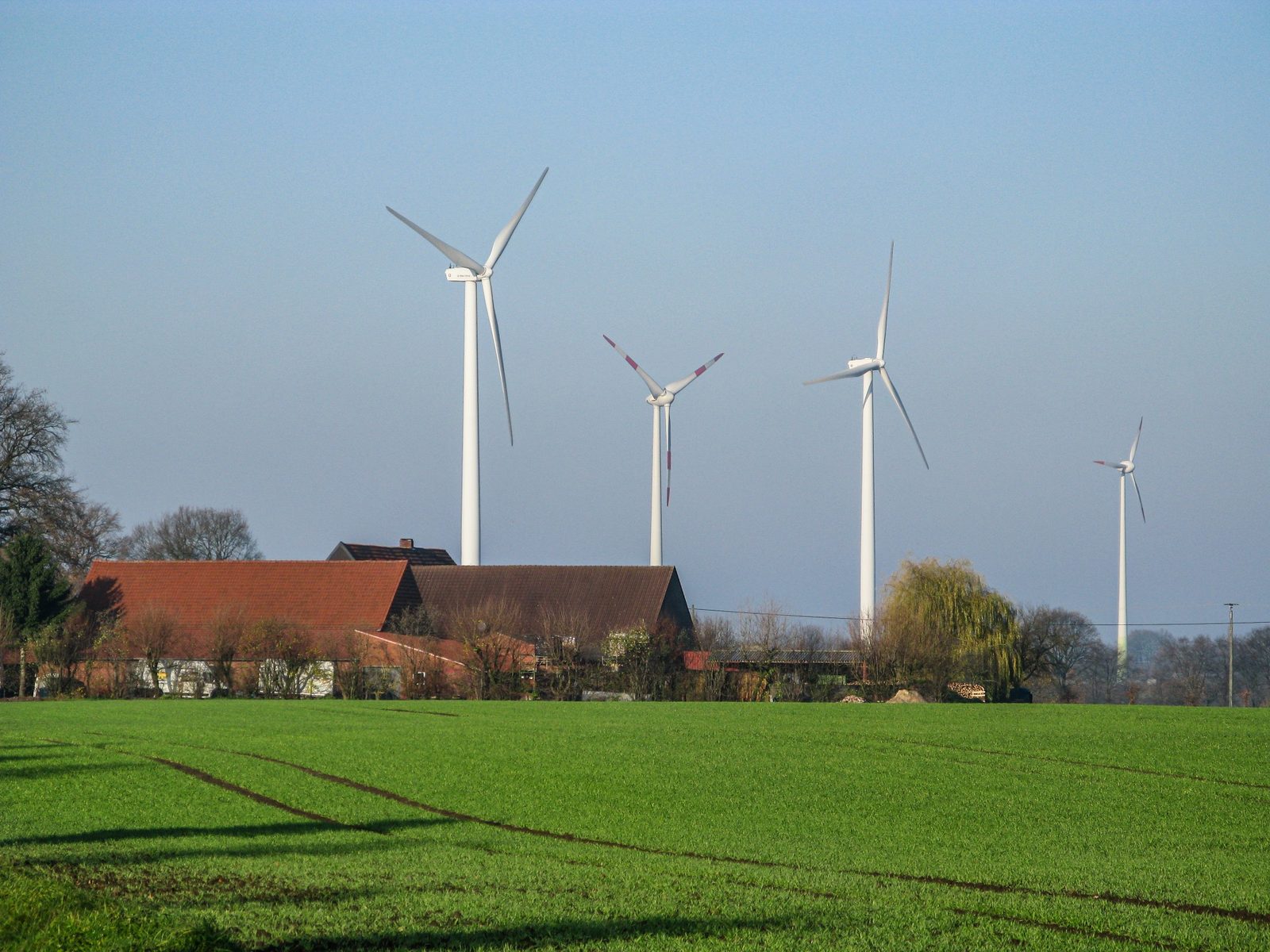
Europe faces a strategic dilemma: while attempting to address a global environmental challenge through costly unilateral measures, it risks weakening its own economic and geopolitical position in a world governed by power competition rather than global solidarity. Climate policy should therefore focus on adaptation to climate change—that is, on enhancing society's resilience to its anticipated consequences.
Saving the Climate vs. Social Reality
Today, most experts agree that the Earth’s climate is warming and that this is having—and, above all, will have—a negative impact on human society. There is also a consensus that human activity likely plays a major, maybe decisive, role in this global warming. The solution therefore seems simple: if humans are responsible, they need only change their behaviour, and everything will be set right.
However, one fundamental argument has been overlooked—one ignored not only by "climate alarmists" but also by their opponents, the "climate sceptics": the crux of the problem lies in geopolitical reality—truly effective measures require global cooperation, yet humanity as a whole is unable (and has never been able) to reach an agreement.
Philosophical Background
According to Heraclitus (535–475 BC), polemos (war, struggle, conflict) is the father of all things, and its disappearance would mean the end of the world (fragment B53). Empedocles later proposed a more promising perspective by supplementing this worldview with philia, the principle of love, cooperation and solidarity.
However, whole historical experience shows that philia prevails only within a narrow circle and for a limited time. Since a "war of all against all" is unsustainable, cooperative groups emerge. Altruism and solidarity thus function only "locally"—primarily within groups united by a strong bond, typically a powerful shared narrative such as religious faith, language, or a rigid ideology. (Does this apply to Europe as a whole?) Conflict, by contrast, reigns globally; it governs and drives the entire living world and, in a sense, the non-living world as well. Evolution itself unfolds through struggle.
Consequently, conflict—including its most brutal form, war—dominates human society. It inflicts significant damage not only on the defeated but also on the victors. It would seem rational, then, to eliminate conflict and form a single cooperative group uniting all of humanity. Yet the belief that “Homo sapiens” is truly "sapiens"—that is, rational—is a dangerous illusion. Socrates himself succumbed to it when he posited that people act wrongly only out of ignorance. (“After all, he who acts wrongly makes himself bad—and surely no one wants that.”) This was the premise adopted by Plato and later by the Stoics, who developed the concept of an ideal community governed by reason and universal cooperation.
Even more illusory is the belief that humanity as a whole can be rational. This belief was held by utopian socialists, and it also formed the basis of the project of “scientific” communism. All these ideals failed. They either never materialized or degenerated into caricatures of themselves. If things worked that way, we would be living in a world without wars and in a perfect communist society.
Yet reason and solidarity do not prevail on a global scale. People, like the rest of the living world, act primarily on instinct—that is, selfishly and shortsightedly. They want to fare better here and now, even at the expense of others.
Climate?
This reality is also reflected in the approach to climate policy. Why should nations with oil, gas, or coal reserves underground voluntarily deprive themselves of those advantages? And why should poorer, less developed nations limit themselves when the wealthy ones did not—and grew rich as a result? Is there even any point in making such sacrifices just so the temperature might be a few degrees lower fifty or a hundred years from now? (God only knows what things will be like in fifty years.)
Moreover, global warming will not affect everyone equally. While it could spell disaster for certain island nations and countries near the equator, regions further away—such as Greenland, Canada, Alaska, Scandinavia, or Siberia—might view the warming trend as beneficial. (Whether that view is justified is another question.) The loss of sea ice could open shipping routes across the Arctic Ocean and provide access to previously hard-to-reach raw material resources in polar regions.
The Situation in Europe
The European Union accounts for only about six percent of global greenhouse gas emissions. Yet it has the ambitious goal of fundamentally shaping global trends through a sweeping "climate transformation." The core argument is that Europe can set standards, accelerate technological progress, and exert pressure on other economies.
These ambitions are admirable—perhaps too admirable—but are they realistic? Can the European climate ideology truly work on a global scale? Is it possible to persuade humanity to unite, transcend local interests, and act in solidarity for the common good—to be "rational"?
Moreover, the impact of climate measures is long-term and depends largely on the actions of China, India, the USA, and other major powers. If Europe drastically cuts its own emissions while these powers fail to do the same, the effect of Europe's measures will be virtually imperceptible.
Where is the Danger?
Within the European Union, the costs of the climate transition are enormous—comparable to defence spending. Is Europe, then, diverting its resources into projects with long-term, uncertain outcomes, while traditional security threats remain immediate and certain? (This can even give rise to speculation that some "climate alarmists" are using their stance to mask the interests of forces seeking to destabilize the world. Certain circumstances might suggest as much.)
Neither Europe nor the majority of countries want war—yet the decision to go to war is not made by those who oppose it, but by those seeking to seize greater power, even at the cost of violence. (Do we want to end up among the subjugated?)
The long period of peace following World War II lulled Europe into a dangerous sense of complacency. Furthermore, the fall of the Iron Curtain and the dissolution of the Warsaw Pact (1991) deepened the naive belief that conflicts between great powers were a thing of the past. One need only recall Havel’s musings on disbanding NATO, or the Budapest Memorandum (1994), in which Ukraine surrendered its nuclear arsenal in exchange for security assurances that later proved hollow. We must wake up from this beautiful dream.
China as our Model?
Should we not, then, abandon unrealistic ambitions to influence the climate and focus instead on local measures that benefit the environment, the economy, and—above all—our security? These include the reduction of energy consumption, robust and secure infrastructure, diversification of sources, energy storage systems, fuel-efficient hybrid vehicles, building insulation, strengthening of the transmission grid, and, above all, research in the field of energy. We could adopt a strategy similar to China’s: building the world’s largest renewable energy system while simultaneously developing the largest fossil-fuel backup system.
And above all, climate policy should focus on preparing for climate change. I am referring not only to technical and infrastructural measures but also to systematic assistance for regions hardest hit by heat, drought, or other climate change impacts. Such aid could help stabilize affected areas, curb humanitarian crises, and thereby mitigate the risk of uncontrolled mass migration. And crucially, we must not lose sight of our own security in the process.
Maintaining the Right Focus
In both personal and public life, it is essential to maintain the right focus. We must not be overly shortsighted—as populist politicians, including various climate change deniers, tend to be. Yet we must not suffer from farsightedness either: seeing a looming "climate catastrophe" in the distance while overlooking the threat of war right on our doorstep. After all, struggle is the father of all things; wars have always existed, and it would be naive to think there will be no more.


Comments
No comments yet. Be the first.
Comments are closed on this article.