
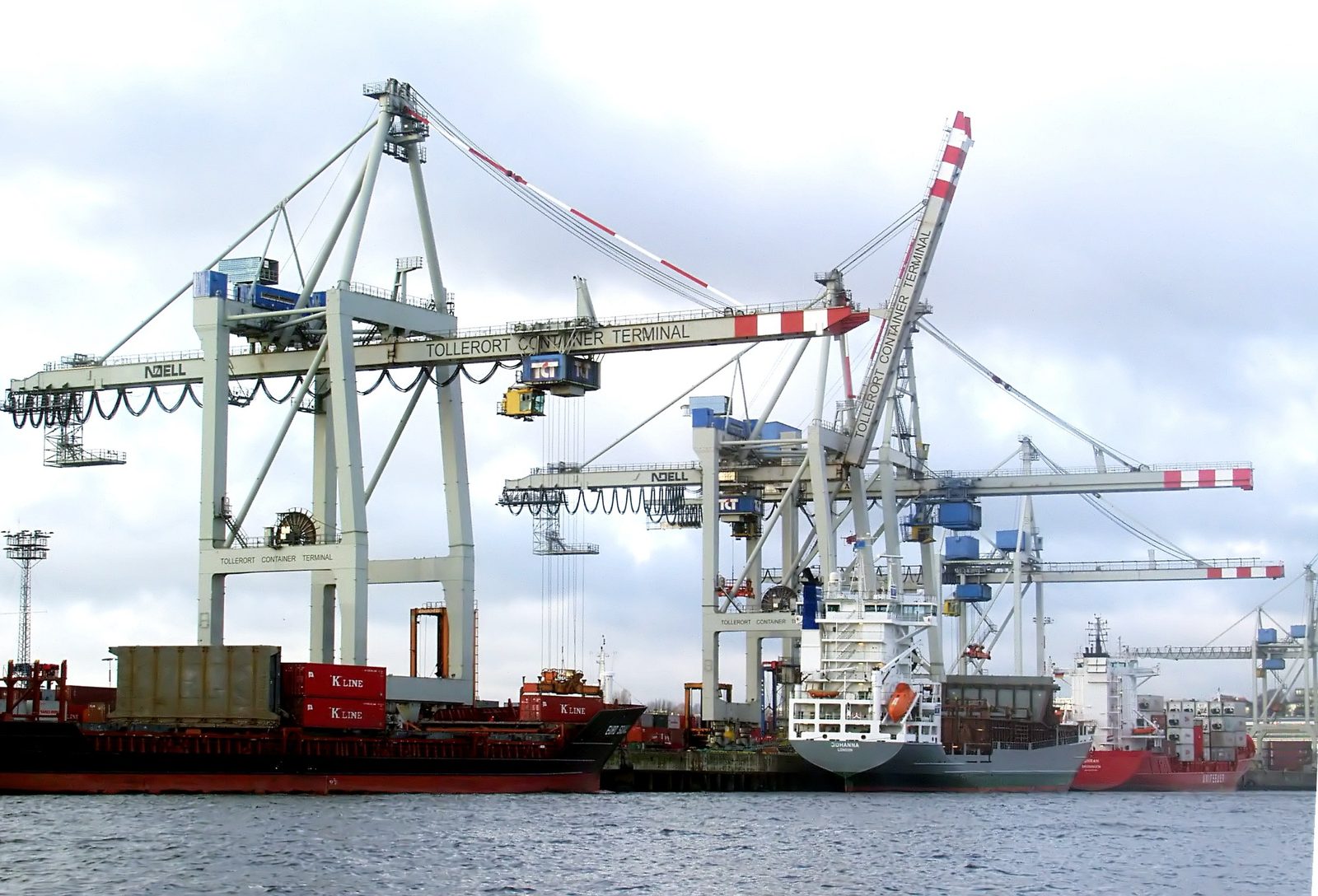
Europe is facing economic challenges that cannot be resolved simply by maintaining stability. As growth slows, inflation rises, and government financing needs increase, economic resilience risks becoming little more than an effort to preserve a stagnant situation. Europe’s challenge is not merely to avoid recession, but to restore its capacity to grow, improve productivity, and safeguard public welfare.
In its October 2026 World Economic Outlook (WEO), the International Monetary Fund (IMF) projects global economic growth of 3.1% in 2026. The euro area is expected to grow by just 1.1%, before improving to 1.2% in 2027. Meanwhile, euro area inflation is projected to reach 3.1% in 2026 and 2.8% in 2027. This combination of weak growth and persistent price pressures suggests that Europe’s recovery continues to face significant obstacles.
The slowdown is driven by several factors, including the effects of the Russia–Ukraine war, conflicts in the Middle East, rising energy costs, trade uncertainty, and changes in global supply chains. At the same time, population ageing, weak productivity, and market fragmentation among European countries are constraining the region’s growth potential.
According to Solow’s (1956) growth theory, long-term economic growth cannot rely solely on increases in capital and labour. Technological progress and productivity are essential determinants of potential output. Therefore, demand stimulus alone cannot resolve the underlying problem if productive investment and innovation remain weak.
These pressures are also affecting households. Inflation erodes purchasing power, while limited income growth encourages more cautious consumption. From a Keynesian perspective, weaker consumption can reduce business revenues and investment, creating a negative multiplier effect. Europe needs new investment to strengthen its industries and accelerate the energy transition. Yet limited fiscal space and global uncertainty are making financing increasingly complex. In this context, expanding international economic partnerships is one possible strategic response.
China as a global economic power
China is an important partner in any discussion about Europe’s future growth. In its October 2026 WEO, the IMF projects China’s economy to grow by 4.5% in 2026, significantly above the euro area’s projected growth of 1.1%. This difference suggests that China continues to offer substantial sources of demand, production capacity, and investment opportunities.
China’s strength lies not only in the size of its economy, but also in its extensive manufacturing, infrastructure, technology, and trade ecosystems. It plays a major role in producing electric vehicles, batteries, solar panels, electronics, industrial machinery, and other components central to the global economic transformation.
China has two important roles for Europe: it is a major market for European goods and services, and a source of technology, intermediate goods, investment, and manufacturing capacity that can support European industrial modernisation. However, cooperation should not be based solely on differences in growth rates. China itself faces structural challenges, including pressures in its property sector, demographic changes, the need to strengthen domestic consumption, and international trade tensions. A partnership must therefore be grounded in long-term economic interests.
Extensive trade, but an unequal balance
Trade relations between China and the European Union reveal both significant opportunities and structural imbalances. According to Eurostat, in 2025 the EU exported approximately €199.6 billion worth of goods to China and imported around €559.4 billion. This resulted in an EU goods trade deficit of approximately €359.8 billion. Compared with 2015, EU exports to China increased by around 37.1%, while imports rose by approximately 89%. This divergence indicates the growing dependence of the European market on Chinese-manufactured goods.
However, trade in goods does not provide the complete picture of Europe’s competitiveness. In trade in services, the EU recorded a surplus of approximately €21.3 billion with China in 2025. European services exports reached around €67 billion, while imports amounted to approximately €45.8 billion. Professional, scientific, and technical services, transportation, telecommunications, and intellectual property contributed to this position.
This demonstrates that Europe has not lost all its competitive advantages. It remains strong in industrial machinery, precision technology, pharmaceuticals, financial services, engineering, and research. China, meanwhile, has advantages in manufacturing scale and several rapidly developing industrial technologies. The trade imbalance cannot be addressed simply by restricting imports or increasing exports. What matters more is building a trade relationship that generates greater value added for both sides.
From competition to productive partnership
Under David Ricardo’s theory of comparative advantage, international trade allows countries to benefit by exploiting differences in relative productivity and production costs. However, comparative advantages can evolve through technology, investment, skills, and industrial policy.
China and Europe should therefore view their economic relationship not merely as a competition for market dominance. They can establish a complementary division of labour through joint investment, research, technological development, and supply-chain integration. China can contribute manufacturing capacity, battery technology, electric vehicles, solar energy, and electronic components. Europe can contribute precision engineering, pharmaceuticals, industrial machinery, financial services, scientific research, and quality standards.
The electric vehicle industry offers a practical example. China has developed a large-scale electric vehicle and battery production ecosystem. Europe has a strong automotive industry, an extensive supplier network, research centres, and a substantial vehicle market. Local production, battery research, and component development could generate value added in Europe while giving Chinese companies greater market access and technological opportunities.
Renewable energy offers another area for collaboration. China has substantial capacity in solar panel and energy storage battery production, while Europe needs these technologies to accelerate its energy transition and strengthen electricity supply security. The EU and China have maintained an energy dialogue mechanism since 1994. This cooperation could be expanded through joint research, energy storage, electricity grids, and low-carbon technologies.
Further opportunities exist in pharmaceuticals, biotechnology, robotics, artificial intelligence, and digital infrastructure. Europe could gain access to China’s production capacity and market, while China could benefit from Europe’s research capabilities, medical technology, and regulatory experience. Cooperation in these strategic sectors must be supported by clear rules on data protection, intellectual property, technology security, and fair competition.
Investment as a driver of growth
Trade alone will not be sufficient to revive Europe’s economic growth. Foreign direct investment and the development of productive capacity are also essential to strengthening potential output. According to European Commission data, the stock of EU foreign direct investment in China reached approximately €239.3 billion in 2024. By contrast, China’s investment stock in the EU stood at around €79.8 billion. European investment in China is concentrated largely in the automotive, pharmaceutical and biotechnology, and basic materials sectors. Chinese investment in Europe covers automotive, media and education, energy, and basic materials.
These figures demonstrate that a substantial investment relationship already exists, although the values remain uneven. Europe could encourage Chinese investment focused on production facilities, research, and local job creation. European companies, in turn, could expand their investments in China through industrial machinery, pharmaceuticals, precision equipment, and professional services.
Foreign direct investment (FDI) theory suggests that cross-border investment can generate technology transfer, skills development, expanded production capacity, and stronger links with local suppliers. However, these benefits do not arise automatically. Investment focused solely on accessing a market, without building connections with domestic industries, may not significantly improve productivity. Europe should therefore encourage Chinese investment that involves local suppliers, develops the domestic workforce, and strengthens joint research. In this way, foreign investment would not merely increase capital flows but also expand Europe’s industrial capacity.
A roadmap for building a China–Europe partnership
The partnership should be developed in stages to ensure that it goes beyond simply increasing trade volumes.
Phase one: trade recovery and market access (2027–2028). The EU should seek broader access for its industrial, agricultural, pharmaceutical, and professional services exports to the Chinese market. China, in turn, should improve regulatory transparency, expand investment opportunities, and provide more equal treatment for European companies. Economic dialogue should focus on resolving trade barriers, protecting intellectual property, establishing product standards, and ensuring investment certainty.
Phase two: industrial integration and technological development (2028–2030). Both sides could expand productive investment in electric vehicles, batteries, clean energy, robotics, pharmaceuticals, and artificial intelligence. Chinese companies could establish production facilities in Europe while involving local suppliers and workers. European companies could expand their investments in China through industrial machinery and engineering technologies. Universities and research institutions could also develop joint programmes to strengthen innovation and workforce skills.
Phase three: a long-term growth partnership (2030–2035). Economic relations could move towards building an innovation ecosystem in low-carbon energy, semiconductors, healthcare technology, artificial intelligence, and digital connectivity. Cooperation with third countries, particularly in Asia, Africa, and other developing regions, could also be expanded. China offers manufacturing and infrastructure capacity, while Europe contributes experience in financing, technology, and governance.
These phases represent a proposed policy direction, not an official agreement between the EU and China. Their success will depend on political commitment, regulatory certainty, and the ability to manage differences in interests.
De-risking and geopolitical challenges
The opportunities for cooperation do not eliminate geopolitical tensions. The EU views China simultaneously as a partner, an economic competitor, and a systemic rival. Its de-risking policy is intended to reduce strategic dependencies, not to sever all economic relations.
European concerns include trade imbalances, industrial subsidies, excess production capacity, restrictions on strategic raw material exports, technology security, and intellectual property protection. China, meanwhile, has an interest in maintaining access to the European market and avoiding restrictions that could constrain its industrial expansion. In their concept of weaponized interdependence, Farrell and Newman (2019) explain how interconnected global economic networks can generate efficiency but also become sources of political power when a country controls critical networks. Dependence on particular components, technologies, raw materials, or payment systems can become a vulnerability during periods of conflict.
A China–Europe partnership must therefore avoid creating new forms of dependency. Europe needs to diversify its suppliers, strengthen strategic industries, and ensure that foreign investment generates domestic benefits. China must also recognise that access to the European market requires transparency, fair competition, and compliance with applicable rules. European strategic autonomy does not have to mean isolation. It can instead be strengthened through partner diversification, domestic technological development, and carefully managed international cooperation.
Benefits for European growth and welfare
If implemented on balanced terms, this partnership could generate several economic benefits. First, increased trade and investment could strengthen aggregate demand. In the Keynesian framework, exports and investment are important components of gross domestic product, supporting production, income, and employment.
Second, technological and industrial integration could improve productivity. Consistent with Solow’s growth theory, technological progress is a key driver of long-term economic growth. Joint research, automation, and industrial development could help Europe increase output.
Third, investment in renewable energy and energy storage could reduce production costs and strengthen energy security. Fourth, production facilities and research centres could create employment and improve workforce skills. Fifth, a more balanced economic relationship could open new markets for European companies, particularly in professional services, technology, transportation, finance, and research.
These benefits, however, should not be regarded as automatic outcomes of increased trade. Investment that generates imports without building local production capacity will have a limited domestic impact. The success of the partnership should instead be measured through labour productivity, domestic value added, research and development investment, the creation of quality jobs, energy costs, and corporate competitiveness.
More than the ability to endure
Europe’s economic slowdown demonstrates that macroeconomic stability and resilience against external shocks are important, but insufficient. Europe needs new sources of growth to improve productivity, strengthen investment, expand markets, and create employment opportunities.
China could be part of the solution, although it is not the only answer. China’s manufacturing scale and technological capacity could complement Europe’s strengths in engineering, research, professional services, and industrial standards. If managed effectively, this relationship could evolve from an imbalanced trade relationship into a productive partnership that benefits both sides.
The future of China–Europe relations should not be determined solely by geopolitical competition. Global challenges, ranging from technological change and the energy transition to population ageing and trade fragmentation, require pragmatic cooperation. Europe does not have to choose between protecting its economic security and maintaining trade relations with China. Both objectives can be pursued through transparency, reciprocity, fair competition, and strategic diversification.
Economic resilience enables a country to withstand crises. Growth, however, requires more than the ability to endure. It requires innovation, investment, productivity, and economic relationships that generate value added. Europe’s challenge is not simply to confront its slowdown, but to restore its position as a global centre of growth, innovation, and economic competitiveness.
Sources: IMF: World Economic Outlook, October 2026 · IMF DataMapper: Real GDP growth · Eurostat: China–EU international trade in goods, 2025 · European Commission: EU trade relations with China (goods, services and investment) · European Commission: EU–China energy cooperation · Henry Farrell and Abraham L. Newman, “Weaponized Interdependence: How Global Economic Networks Shape State Coercion,” International Security 44, no. 1 (2019): 42–79 · Robert M. Solow, “A Contribution to the Theory of Economic Growth,” Quarterly Journal of Economics 70, no. 1 (1956) · David Ricardo, On the Principles of Political Economy and Taxation (1817) · John Maynard Keynes, The General Theory of Employment, Interest and Money (1936).




Comments
No comments yet. Be the first.
Comments are closed on this article.