
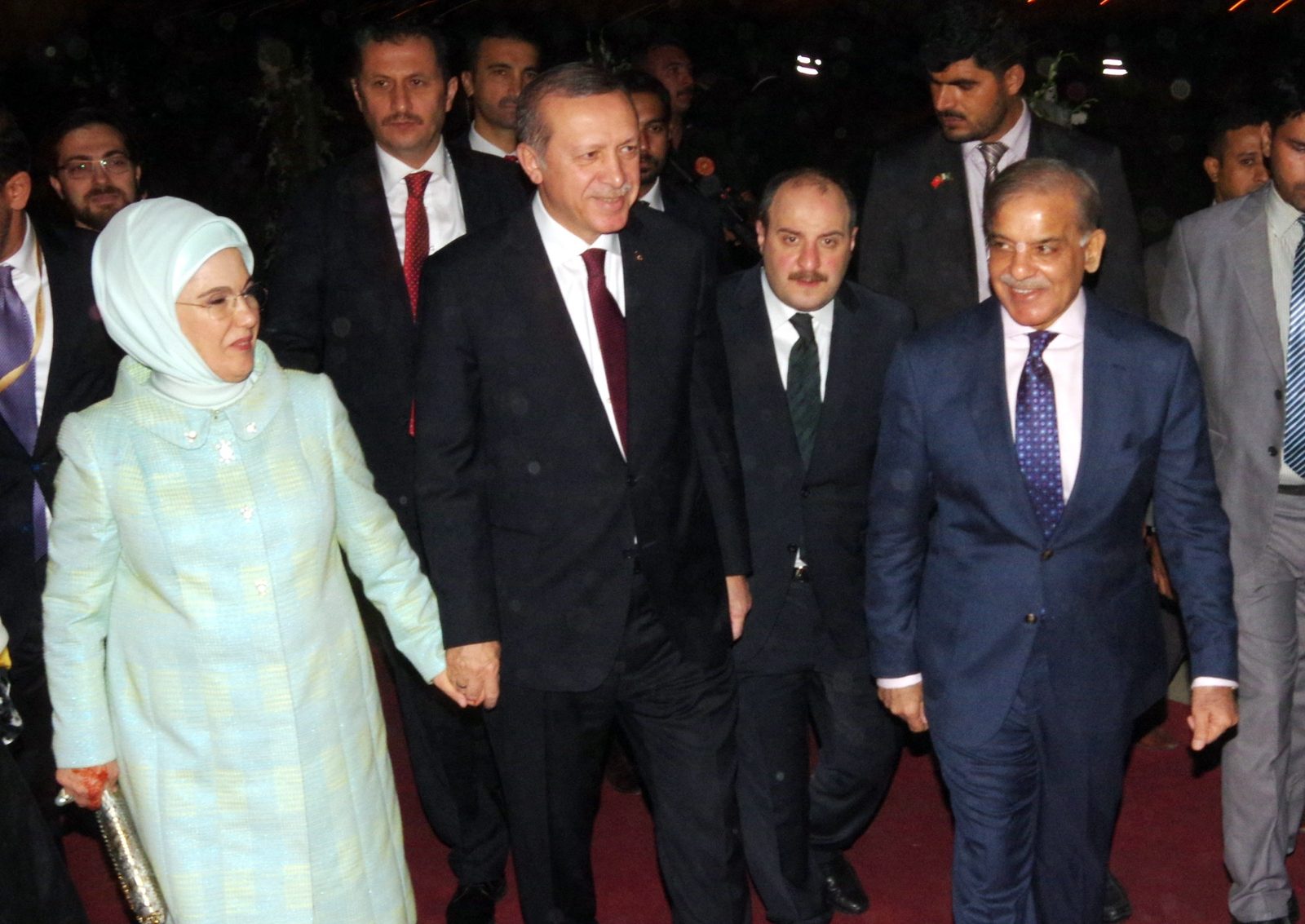
The evolving geopolitical landscape of the Middle East, South Asia and Eurasia is witnessing a potentially significant strategic development: the emerging trilateral defence partnership between Pakistan, Saudi Arabia and Turkey. The ratification of the Makkah Defence Agreement by Turkey's Grand National Assembly has brought this arrangement into sharper international focus.
However, this agreement should not be viewed merely as a military arrangement. It represents a broader convergence of political, economic, technological and security interests among three influential regional powers. Its implications extend beyond conventional defence cooperation to regional stability, strategic autonomy, energy security, economic integration and the changing balance of power.
The central principle of the agreement is collective defence: an external attack against one member is to be treated as an attack against all three, triggering obligations of mutual assistance. Nevertheless, parliamentary ratification and the agreement's formal entry into force are separate legal stages. The required ratification instruments must be deposited through the agreed institutional mechanism before the agreement becomes operational.
Why has Turkey joined? Understanding the domestic opposition
Turkey's foreign policy has increasingly reflected an effort to diversify its strategic partnerships. Although Ankara remains a key NATO member, it has simultaneously expanded its diplomatic and security engagement across the Middle East, Central Asia and the wider Muslim world.
For Turkey, the agreement offers an opportunity to strengthen its regional influence, expand defence cooperation and develop closer strategic relations with Pakistan and Saudi Arabia.
However, the agreement has also generated domestic political debate. Opposition representatives have raised concerns about the possibility of Turkey becoming involved in conflicts that do not directly threaten its national security.
One significant concern relates to tensions between Saudi Arabia and Yemen's Houthi movement. Critics have questioned whether the collective-defence framework could create political or military pressure on Turkey to become involved in a future regional confrontation.
The government's position is that the agreement is not directed against any third country and does not automatically require military intervention in every regional conflict.
This distinction is important. Collective defence does not necessarily mean automatic overseas troop deployment. The nature of assistance, operational decisions and constitutional requirements remain critical considerations.
The central strategic question for Ankara is therefore how to deepen its partnership with Pakistan and Saudi Arabia without compromising its NATO commitments or wider economic relationships with Western countries.
The geopolitical interests of three regional powers
The three countries possess different but potentially complementary strategic capabilities.
Pakistan: nuclear deterrence and strategic geography
Pakistan brings significant military experience, nuclear deterrence, missile capabilities and an established defence infrastructure to the partnership.
Its geographical position connects South Asia, China, Central Asia and the Gulf region. This makes Pakistan strategically important for regional security, trade connectivity and energy transportation.
For Islamabad, the agreement could strengthen its defence diplomacy, institutionalise its longstanding relationship with Saudi Arabia and expand its strategic engagement with Turkey.
Saudi Arabia: energy security, capital and regional stability
Saudi Arabia's interests extend beyond military security. Its position in global energy markets, proximity to critical maritime routes and substantial sovereign investment resources give it considerable regional influence.
Under Vision 2030, Riyadh is attempting to diversify its economy beyond oil revenues by investing in technology, industrial development, infrastructure and advanced manufacturing.
A stronger defence partnership could support these objectives through joint defence production, technology cooperation and strategic investment.
Turkey: defence technology and Eurasian influence
Turkey contributes an established defence-industrial base, drone technology, military training capabilities, aerospace expertise and considerable operational experience.
Its geographical position between Europe, the Middle East, the Black Sea and Asia gives Ankara a distinct geopolitical advantage.
Closer relations with Pakistan and Saudi Arabia could expand Turkey's diplomatic reach and create opportunities for defence exports, industrial partnerships and technological cooperation.
Collectively, Pakistan's defence capabilities, Saudi Arabia's financial and energy resources, and Turkey's industrial and technological expertise create opportunities for complementary cooperation. However, converting these potential advantages into an effective integrated capability will require institutional coordination and long-term investment.
Geo-economics: can a defence agreement become an economic bloc?
One of the most important dimensions of the agreement is its geo-economic potential.
In the twenty-first century, national power is determined not only by military strength but also by trade, investment, energy resources, industrial production, technological innovation and supply-chain resilience.
For Pakistan, Saudi Arabia represents an important source of investment, energy cooperation, employment opportunities and export potential. Turkey offers opportunities in engineering, textiles, construction, manufacturing and defence technology.
Saudi Arabia can benefit from Pakistan's skilled and semi-skilled workforce, agricultural capacity, geographical connectivity and defence expertise. Turkey, meanwhile, can contribute industrial capabilities, machinery, engineering and technological knowledge.
Three areas deserve particular attention:
Defence industrial cooperation
Joint production and research in drones, radar systems, missile defence, electronic warfare, military equipment and advanced training could create opportunities for technological development.
Energy and strategic investment
Saudi investment in Pakistan's energy sector, mining, agriculture, infrastructure, information technology and industrial development could strengthen economic cooperation.
Trade and regional connectivity
Improved commercial links between the Gulf, Pakistan, Turkey and European markets could support logistics, investment flows and supply-chain integration.
The agreement could therefore provide a foundation for a broader economic partnership. However, this would require practical measures, including trade facilitation, investment protection, banking cooperation, customs coordination and private-sector participation.
Without these economic mechanisms, the partnership risks remaining primarily a security arrangement rather than developing into a meaningful geo-economic platform.
Implications for NATO, Iran, the United States and China
The emergence of this partnership raises important questions about the interests of major international actors.
NATO and the United States
Turkey remains an important NATO member. Consequently, the Makkah Agreement should not automatically be interpreted as an alternative to NATO.
Nevertheless, Washington may view the development as part of a wider effort by regional powers to diversify their security partnerships. Saudi Arabia, in particular, has increasingly explored strategic relationships beyond its traditional security arrangements.
The challenge for Turkey will be to maintain its NATO commitments while expanding independent regional defence cooperation.
Iran
Iran will closely consider the implications of a closer defence relationship between Pakistan, Saudi Arabia and Turkey.
The partnership could influence the regional security balance, particularly given existing tensions in the Gulf and Yemen.
For Pakistan, however, maintaining balanced relations with both Saudi Arabia and neighbouring Iran will remain essential. Its geographical position, border security requirements and regional economic interests make diplomatic balance particularly important.
China
China may view greater regional stability as supportive of its Belt and Road Initiative, the China-Pakistan Economic Corridor (CPEC), energy transportation and commercial interests in the Gulf.
Beijing maintains significant relationships with both Iran and Saudi Arabia. Therefore, it will have an interest in ensuring that the emerging partnership contributes to regional stability rather than creating additional geopolitical divisions.
The broader international significance of the agreement will depend on how its members manage their existing strategic relationships.
Pakistan's strategic opportunity: from defence diplomacy to economic sovereignty
For Pakistan, the agreement offers an opportunity to translate its defence relationships into tangible economic outcomes.
Pakistan and Turkey have established a bilateral trade ambition of $5 billion. Meanwhile, Pakistan and Saudi Arabia have explored cooperation in energy, mining, agriculture, information technology, food security and industrial development.
These initiatives could complement the wider strategic partnership.
Pakistan should prioritise:
- Expanding defence exports and joint manufacturing.
- Attracting Saudi investment in productive sectors.
- Strengthening industrial and technological cooperation with Turkey.
- Increasing skilled employment opportunities for Pakistani workers.
- Developing regional trade and logistics connectivity.
- Promoting research, innovation and technology transfer.
The country's challenge is to move beyond diplomatic announcements and establish commercially viable projects with measurable outcomes.
It must also maintain balanced relations with Iran, China, the United States and other Gulf countries. Strategic partnerships should strengthen Pakistan's national interests rather than restrict its diplomatic flexibility.
Conclusion: the future of regional power lies in economic and strategic integration
The Makkah Defence Agreement represents a potentially important development in the evolving geopolitical architecture of the Middle East and South Asia.
Pakistan brings military capabilities and strategic geography; Saudi Arabia contributes financial resources, energy influence and investment potential; while Turkey offers defence technology, industrial expertise and regional connectivity.
Yet the agreement's long-term significance will not be determined solely by its collective-defence provisions.
Its real potential lies in whether these three countries can translate military cooperation into economic integration, industrial development, technological independence and sustainable regional stability.
For Pakistan, the opportunity is particularly significant. It should approach this partnership through economic diplomacy, institutional coordination and a balanced foreign policy.
In the twenty-first century, the strength of an alliance is measured not simply by the commitment to defend one another, but by the ability to build interconnected economies, industries, technologies and strategic capabilities.
If Pakistan, Saudi Arabia and Turkey can transform their shared interests into practical cooperation, the Makkah Defence Agreement could become the foundation of a broader regional partnership. Otherwise, its economic and geopolitical potential may remain considerably greater than its practical achievements.
Sources
The agreement and its ratification
- Anadolu Agency, Turkish parliament approves Mecca joint defense pact with Pakistan and Saudi Arabia (6 November 2026).
- The National, Revealed: Full text of Makkah defence pact between Saudi Arabia, Turkey and Pakistan (21 October 2026).
- Associated Press, Turkish lawmakers approve a 3-nation defense pact with Saudi Arabia and Pakistan (November 2026).
- Reuters, Turkey submits Saudi-Pakistan defence pact to parliament for ratification, sources say (20 October 2026).
- Dawn, Makkah pact ratified by Pakistan, Saudi Arabia, says FO (24 October 2026).
Official government and diplomatic documents
- Ministry of Foreign Affairs, Government of Pakistan, Message to the Nation on the Signing of the Makkah Joint Defence Agreement (7 August 2026).
- Ministry of Foreign Affairs, Government of Pakistan, Strategic Political and Defence Committee of the Makkah Agreement for Joint Defence — Joint Statement (31 August 2026).
- Ministry of Foreign Affairs, Republic of Türkiye, First Meeting of the Strategic Political and Defence Committee Established Under the Makkah Joint Defence Agreement (30 August 2026).
Geo-economics and bilateral trade
- Government of Pakistan, Press Information Department, Pakistan–Türkiye 16th Joint Ministerial Commission: aim to increase bilateral trade to USD 5 billion (9 September 2025).
- Ministry of Foreign Affairs, Government of Pakistan, Joint Statement by the Kingdom of Saudi Arabia and the Islamic Republic of Pakistan (28 October 2025).
- Ministry of Foreign Affairs, Government of Pakistan, Joint Declaration of the 7th Session of the Pakistan–Türkiye High Level Strategic Cooperation Council.
International and regional context
- Associated Press, How the Mecca defense agreement between Turkey, Pakistan and Saudi Arabia will work (2026).
- BBC Urdu, مکہ دفاعی معاہدہ: پاکستان، سعودی عرب اور ترکی کے نئے اتحاد سے متعلق اہم سوالات.

Comments
No comments yet. Be the first.
Comments are closed on this article.