
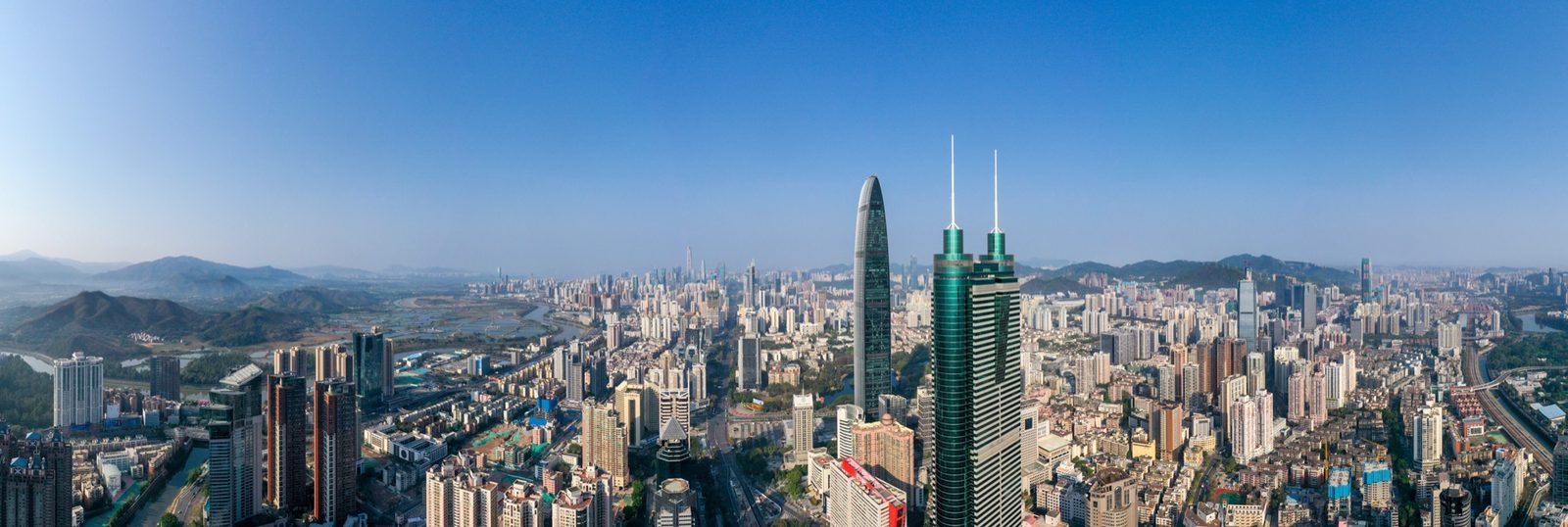
Most of the world is watching the wrong thing in Shenzhen.
The cameras are trained on the three men in the room: Donald Trump, Xi Jinping and Vladimir Putin, sitting down together for the first time in history. The analysts are counting what they might sign — a nuclear number, an Iran clause, a trade line. The verdict is already written, and it is probably right: this will be, as one wire put it, more symbol than substance.
In this article, I want to argue that the substance everyone is missing is not in the communiqué. It is in the address on the invitation.
Eighty-one years ago, three men met to divide a world. They met at Yalta, on Soviet ground, and China — a wartime ally, a nominal great power — was not even in the room. This week, three men meet again. And this time the house is Xi Jinping’s.
That is the story. Not what China wins at the table, but that China now owns the table.
Why does the venue matter more than the deal?
Because power, in the order now taking shape, is increasingly the power to convene.
For eighty years the United States held that power almost alone. It wrote the rules, hosted the conferences, chaired the institutions, and decided who was invited. The summit was an American format. Bretton Woods, Camp David, Reykjavik, Dayton — the great bargains of the postwar era were struck on terms the West set, often on ground the West controlled.
Shenzhen breaks the pattern quietly. The one country that could get a sitting American president and a sanctioned Russian president into the same room this week was neither Washington nor Moscow. It was Beijing. Xi did not broker peace. He did something more revealing: he supplied the venue, the welcome and the frame.
Watch the choreography. Xi personally greeted Trump on the tarmac — the first time a Chinese paramount leader has done so for a foreign guest in decades. The talks are set in a secluded hilltop villa. The three stood shoulder to shoulder in the APEC family photo, Xi at the centre of his own forum.
The deliverables may be thin. The staging is not. And staging, in diplomacy, is a claim about status.
Is this really a new Yalta?
The comparison is everywhere, and it flatters the meeting.
Yalta in 1945 divided a defeated world among allies who had just won a war together. The men there commanded the same enemy’s ruins. Shenzhen divides nothing and settles nothing. Two of its three principals — the United States and China — are open strategic rivals; the third is at war on Europe’s edge. There is no shared victory to carve up, no surrender to administer.
So the Yalta frame gets the mood right and the mechanism wrong. This is not a carve-up. It is a convening. The Financial Times is probably correct that the parallel will be overdrawn, even as it concedes that the image of Trump beside Xi and Putin will reverberate throughout the world.
The sharper historical echo is one Beijing itself prefers. At Yalta, as a Hong Kong editorial bluntly put it this week, China was a “sacrificial pawn” — talked about, not talked to. The model China would rather invoke is the 1943 Cairo Conference, where it sat as an equal of the United States and Britain. Read that way, Shenzhen is not China’s entry into a new division of the globe. It is China’s correction of an old humiliation.
What is China actually building?
Not a bloc. A role.
It is tempting to read this as the founding of a Beijing-led order to replace the American one — a hard, bordered sphere of influence with China at its head. That misreads what Xi has been assembling. He has spent the past two years pitching something looser and, for much of the world, more attractive: an order in which no single power dictates, in which the Global South is courted rather than commanded.
At the Shanghai Cooperation Organisation summit in Tianjin last year, Xi unveiled a “new global order” built around security and development for the Global South — a direct, if gentle, challenge to Washington. When he met Trump in Beijing in the spring, the language was of a world undergoing “changes not seen in a century” and of a “new vision” of stable great-power relations.
The through-line is not conquest. It is indispensability. China’s bid is to be the state no serious conversation can happen without — the convener, the host, the fixed point around which others arrange themselves. Shenzhen is that bid made visible.
The three men, and what each needs from the picture
The same photograph means three different things.
| Leader | What the summit gives him | What it costs |
|---|---|---|
| Xi Jinping | Status as the indispensable convener; proof China can seat America and Russia on its own soil | The risk of looking like it is abetting a great-power carve-up it claims to oppose |
| Vladimir Putin | An end to isolation; a seat “at the pinnacle of global power” despite the war and the sanctions he says have failed | Visible dependence on Beijing as the junior partner in the pairing |
| Donald Trump | A “win” and a history-making image to flex at home | Legitimising two rivals on their ground, and unsettling allies from Kyiv to Tokyo |
Note who carries the lightest cost and the heaviest symbolism. Putin arrives as the rescued man; Trump as the dealmaker chasing a headline. Xi arrives as neither supplicant nor salesman. He arrives as the host — and the host is the only one of the three whose power the meeting does not question but confirms.
The case against my own argument
Here is where I should be honest about the limits of this reading.
The sceptics are not wrong on the facts. The Kremlin itself set aside “no more than an hour” for the trilateral. The United States and Russia let their main nuclear treaty lapse in February, and the readouts from past Xi–Trump meetings have diverged so sharply that the two sides could not even agree on whether arms control was discussed. An hour in a villa does not remake an order.
And hosting is not the same as leading. There is a real danger — the Lowy Institute has flagged it — that convening Trump and Putin backfires on Beijing, that the Global South it has courted sees not a peacemaker but a facilitator of exactly the strongman carve-up China says it rejects. A host can be blamed for what happens under his roof.
So the convening power I am describing is real but fragile. It is a claim China is making, not a position it has secured. Shenzhen is evidence of ambition, not proof of arrival.
But notice what even the sceptical case concedes. Nobody is asking whether China was strong enough to host. That question is already settled. The argument is only about whether hosting will pay off. The frame has moved — and the movement of the frame is itself the news.
What to actually watch
Ignore the number of pages in the communiqué. Watch three slower things.
- Whether the format repeats. A one-off photo is vanity. A second and third trilateral, on Chinese terms, is a pattern — and patterns become institutions.
- How the Global South reads it. If Delhi, Jakarta, Pretoria and Brasília treat Shenzhen as proof of Beijing’s stature rather than evidence of a stitch-up, China’s convening claim strengthens.
- Whether Washington notices what it conceded. The United States flew its president to a Chinese city to be welcomed by Xi. That is a venue choice, and venue choices, repeated, harden into hierarchy.
The real measure of a world order
Orders rarely announce themselves. They reveal themselves in small questions of protocol — who travels to whom, whose flag frames the handshake, whose capital the cameras point at.
For eighty years the answer was almost always Washington. This week, for one carefully staged afternoon, the answer was Shenzhen.
The three men will go home and the headlines will record that little was signed. They will be right, and they will have missed it. The order being built here was never going to be written on paper. It was written the moment an American president and a Russian president agreed to come — to China, as guests.
Yalta decided the fate of a continent. Shenzhen may decide something quieter and larger: not how the world is divided, but who gets to host the room where the question is asked.
Sources
- France 24, “Xi–Trump–Putin talks live”, 19 November 2026.
- CNBC, “Trump arrives in China for historic meeting with Xi, Putin”, 18 November 2026.
- CNBC, “Trump, Xi and Putin gather in China: What happened at APEC”, 18 November 2026.
- The Week, “Trump–Xi–Putin summit: the start of a new world order?”.
- The Standard (Hong Kong), “Beyond the Yalta shadow: the Xi–Putin–Trump Shenzhen summit and the new global paradigm”.
- The Kathmandu Post, “China’s Xi unveils vision for new global order at security forum”, 1 September 2025.
- Anadolu Agency, “Trump, Xi at Beijing summit agree on new vision of China–US ties of strategic stability”.


Comments
No comments yet. Be the first.
Comments are closed on this article.