
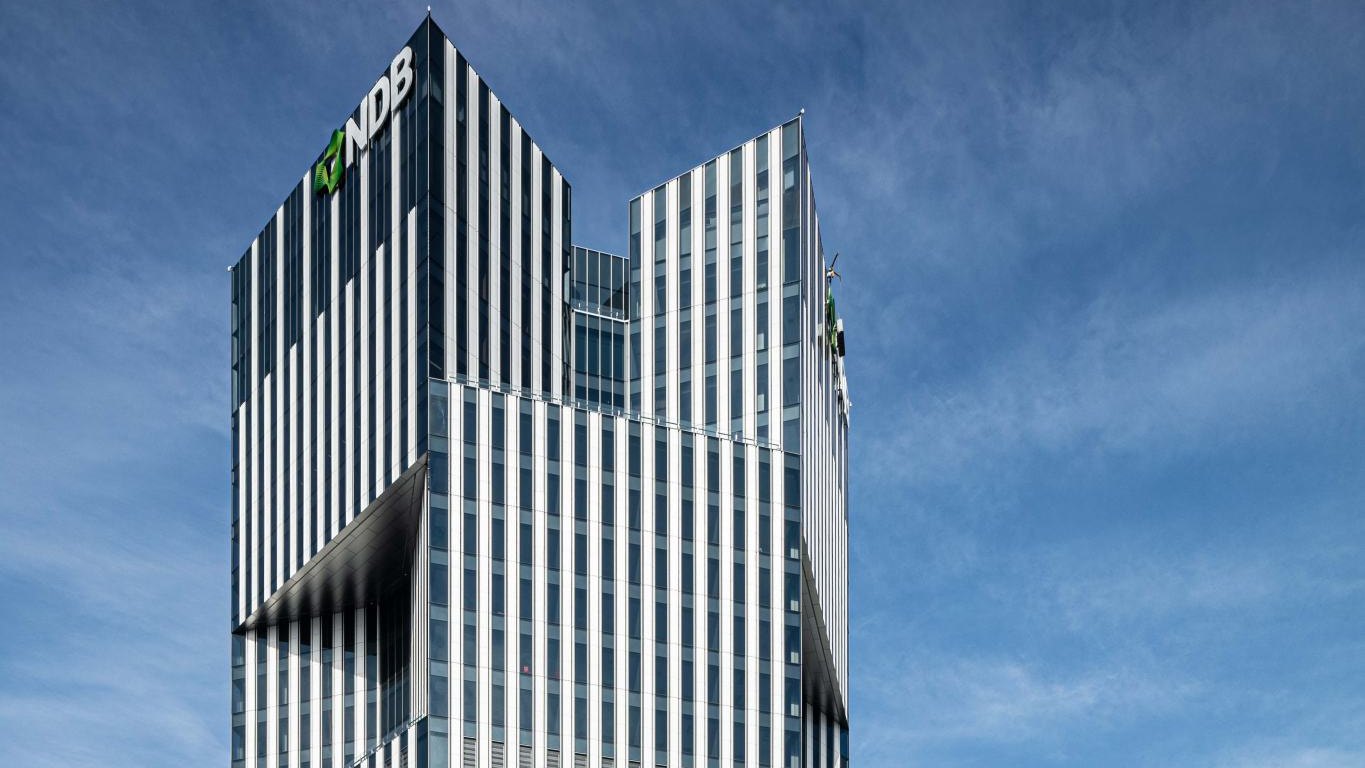
When African finance ministers talk about escaping the IMF and the World Bank, most of the international coverage points to BRICS: to the bloc's New Development Bank, to talk of de-dollarization, to a Johannesburg or Kazan summit communique. But the piece of "Global South financial architecture" seeing the fastest operational change in Africa right now carries no BRICS branding at all, and the institution that does carry that branding remains, on its own numbers, structurally narrow in its African reach. The distinction matters, because it separates two different layers of financial sovereignty that are usually treated as one story: the layer that tries to replace external sources of development capital, and the layer that reduces dependence on external payment intermediaries.
What the BRICS Bank Was Supposed to Do
The New Development Bank was founded in 2015 by Brazil, Russia, India, China and South Africa with an explicit purpose: to give developing countries more control over development finance, without the policy conditionality that has long accompanied IMF and World Bank lending. Each of the five founders holds an equal share, a deliberate contrast with the shareholding structures at the Bretton Woods institutions.
In Africa, the bank's membership remains narrow. South Africa, a founding shareholder, Egypt, which joined in 2023, and Algeria, which joined in May 2025, are its only full African members, three of Africa's 54 UN member states, a membership base smaller than the African Development Bank's regional membership by an order of magnitude. South Africa's own experience shows both the appeal and the scale involved. By December 2025, the NDB had approved 15 projects in South Africa worth a combined $6.62 billion, including two loans of $405 million, signed in 2026, for a hospital in Limpopo and a bulk water scheme, on notably favorable terms: ten-year maturities and four-year grace periods. That is real, growing engagement. It is also a fraction of what the World Bank alone commits to African infrastructure in a given year.
The more precise version of the currency story is more interesting than a simple "still uses dollars" critique. By the end of 2024, the NDB reported that financing denominated in the local currencies of its borrowing members, the Chinese yuan, South African rand and Indian rupee, represented 24.2% of its portfolio, with more than 30% of its South African financing already denominated in rand. The bank's stated strategy for 2027 to 2031 aims to raise local-currency financing further, toward a 40% to 50% target. That is genuine progress on the lending side. The harder problem sits one layer up, on the funding side: increasing the share of loans issued in local currencies does not, by itself, eliminate the bank's dependence on the international capital markets from which it still raises much of the capital it lends out. Its rand bond issuances in South Africa, the largest around $78 million, remain small relative to its overall balance sheet, and its then CFO, Leslie Maasdorp, was direct about why in 2023: the deepest, most liquid capital pools remain dollar-denominated, which is where an institution needs to raise money at scale.
That funding-side dependence turned into a concrete vulnerability once Western sanctions hit Russia, one of the bank's five founding shareholders, after February 2022. Reuters reported that the fallout left the NDB "hobbled," with borrowing costs pushed up by its association with a sanctioned member. This helps explain why an institution built partly to reduce developing countries' exposure to Western financial leverage has instead found part of its own cost of funds shaped by that same leverage, transmitted through one of its shareholders.
What Is Changing Fastest
Set this against the Pan-African Payment and Settlement System, PAPSS, which carries no BRICS affiliation whatsoever. It was built by the African Export-Import Bank, launched in Accra in January 2022, and adopted by the African Union as the payment infrastructure underpinning the African Continental Free Trade Area. Its function is narrower than the NDB's: it does not lend money, it settles payments, moving them between African currencies without requiring the transaction itself to be routed through a dollar-denominated payment. PAPSS now operates in more than 30 African countries across all five regions, connecting 24 national and regional central banks and more than 200 commercial banks and payment service providers, according to its chief executive, speaking in Lagos in September 2026. Roughly ten additional countries joined in 2026 alone. Between comparable periods in 2025 and 2026, transaction volumes across the network rose by approximately 1,000%, while transaction values rose by roughly 120%, with Nigeria alone recording a volume increase of about 1,100%. Nigeria's central bank reported that the dollar value of PAPSS transactions settled by Nigerian participants rose almost fivefold in a year, to $143.4 million, a modest absolute figure but a growth rate no BRICS-linked institution operating in Africa has matched.
That gap between the volume growth (1,000%) and the value growth (120%) is itself informative: it implies the average transaction on the network has fallen to roughly a fifth of its earlier size. That is consistent with PAPSS moving from large, occasional transfers toward smaller, more frequent payments, the kind of everyday use that turns a piece of settlement infrastructure into something businesses and consumers actually rely on, though confirming that shift with confidence would need more granular transaction-level data than is currently public. What is clear is the direction of adoption: a business in Nairobi can pay a supplier in Lagos directly in shillings, with the supplier receiving naira, cutting transaction costs by roughly 92% to 95% and settlement times down to seconds, according to PAPSS, all without requiring any shift in geopolitical alignment, access to global bond markets, or exposure to sanctions on a shareholder.
Two Different Products, Not One Race
The gap between the NDB's incremental growth and PAPSS's rapid expansion is not simply a matter of one institution being better run. It reflects a difference in what each is actually trying to do, and how exposed that function is to external geopolitics. The NDB is a lender, and lending at scale requires raising large pools of capital, which still mostly means accessing dollar-denominated markets, regardless of what currency the resulting loans are issued in. That structural feature leaves the bank exposed to precisely the kind of Western financial pressure, transmitted through a sanctioned shareholder, that a de-dollarization project would ideally reduce. PAPSS solves a narrower problem: not how to raise capital, but how to move money that already exists between African currencies without routing it through a third one. That can be built with regional infrastructure and central bank cooperation alone, without needing access to global capital markets at all, which helps explain the very different scaling trajectories of the institution carrying the BRICS brand and the far less internationally visible African payments system.
None of this means PAPSS is a substitute for what the IMF and World Bank actually do, and the article's own logic should not be pushed further than the evidence supports. PAPSS does not lend money, restructure debt, or provide balance-of-payments support during a currency crisis, the functions at the core of the IMF's role on the continent. Its transaction values, while growing fast, remain small relative to Africa's total trade and financial flows. Its own leadership has described the network's next phase, beginning in 2027, as a shift from building infrastructure to actually driving scaled usage, an acknowledgment that connections between institutions are not the same thing as economically meaningful adoption. The more accurate framing of the underlying idea, then, is not that PAPSS is "the" Global South financial alternative. It is that the most consequential layer of financial-architecture change in Africa right now may not be the institution attempting to replace Western development finance, but the infrastructure reducing dependence on external payment intermediaries, and those are two different projects with two different paths to relevance.
It is worth being specific about what would provide evidence for or against this reading. If the NDB's African membership expands well beyond its current three countries, and if its funding side, not just its lending side, shifts meaningfully away from dollar-denominated capital markets while its borrowing costs decouple from the sanctions status of individual shareholders, that would suggest the bank is overcoming the structural exposure described here. If instead African membership stays limited, funding remains dollar-dependent regardless of lending-currency mix, and borrowing costs stay sensitive to shareholder-specific sanctions risk, that would support the more limited reading of the NDB's African relevance. On the PAPSS side, if transaction values grow at something closer to the pace of transaction volumes over the next two to three years, and the 2027 shift toward usage, not just connectivity, converts registered institutions into regular, high-frequency users, that would support PAPSS as the more consequential piece of infrastructure. If growth instead stalls once the current base of early adopters is exhausted, that would suggest the 1,000% volume figure reflects a low starting base more than durable momentum. Both sets of outcomes should be visible within the next two to three years.
Conclusion
The idea of a "Global South financial architecture" challenging the dominance of the IMF and World Bank is usually told as a single story, with BRICS institutions at its center. The evidence from Africa suggests two separate stories are being conflated. One is explicitly geopolitical: an attempt, led by BRICS, to build alternative development-lending institutions, which in Africa remains narrow in membership and still structurally dependent, on the funding side, on the dollar-denominated capital markets it was meant to reduce reliance on. The other is operational and homegrown: African-built payment infrastructure solving a narrower problem, moving money across the continent's own currencies, that does not require geopolitical alignment with any external bloc to keep growing. The part of the story that dominates the geopolitical narrative is not necessarily the part where Africa is seeing the fastest operational change.
Comments
No comments yet. Be the first.
Comments are closed on this article.