
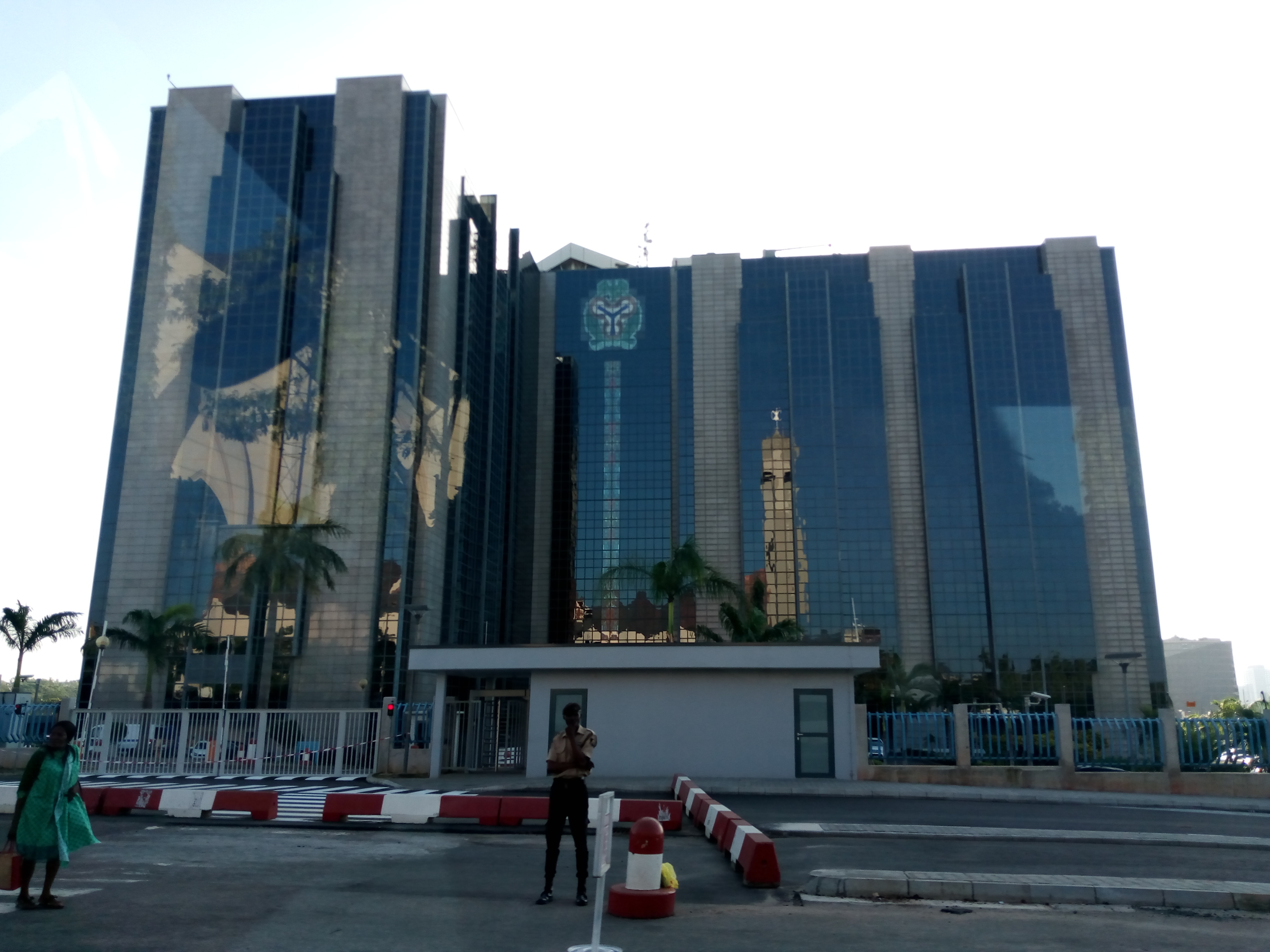
Nigeria's sovereign credit rating upgrade is being presented as proof that three years of painful reform have finally paid off. Some of it has. But part of the improvement traces back to an oil price spike tied to a war Nigeria did not start, and the same policies credited with the upgrade have intensified the cost-of-living pressures most likely to test their continuity before the next election. The question is not whether Nigeria's reforms worked. The more useful question is how much of the improvement visible to rating agencies would survive if the external oil-price shock disappeared.
A Fourteen-Year Wait, Compressed Into Thirteen Months
Fitch Ratings raised Nigeria's long-term foreign-currency issuer default rating to B from B- in April 2025. Moody's followed in May 2025, lifting the country one notch from Caa1 to B3, a near-distressed level. S&P Global Ratings completed the sweep on May 15, 2026, upgrading Nigeria's long-term foreign and local currency sovereign ratings to B from B-, its first upgrade of the country in 14 years. All three agencies moved within thirteen months of each other, an unusually tight cluster for a sovereign that had spent most of the preceding decade drifting toward distressed territory.
The reforms behind this are substantial and well documented. The 2023 liberalization of the foreign exchange market and the removal of fuel subsidies form the anchor of S&P's own explanation for the upgrade. Gross foreign exchange reserves rose to $50 billion by March 2026, up from $33 billion in 2023. The debt-to-revenue ratio fell to 338% in 2026 from 500% in 2023, a large improvement even if the absolute level remains high by international standards. Government revenue as a share of GDP is projected to reach 12.4% in 2026, up from 7.3% in 2023. Investor demand has followed. A $2.35 billion Eurobond issue in November 2025 attracted several times the amount offered, and Nigeria's Eurobond yields subsequently compressed by roughly 250 basis points between the Fitch and Moody's upgrades that year.
| 2023 | 2026 (projected) | |
|---|---|---|
| Sovereign rating (S&P) | B- | B |
| FX reserves ($ billion) | 33 | 50 |
| Debt-to-revenue ratio | 500% | 338% |
| Government revenue (% of GDP) | 7.3% | 12.4% |
| Current account surplus (% of GDP) | — | 5.8% |
| S&P Brent crude assumption ($/barrel) | — | 100 |
The War Behind the Numbers
None of this is in dispute. What is worth separating out is how much of the current account improvement behind the latest upgrade comes from reform, and how much comes from a war. S&P itself attributed the upgrade to a combination of factors: higher oil production, the ramp-up of domestic refining capacity, currency liberalization, and an improved macroeconomic profile. Among those factors, the agency also raised its Brent crude price assumption to $100 a barrel for the remainder of 2026, citing the effective closure of the Strait of Hormuz following a Middle East conflict that began in February 2026. Nigeria's current account surplus is projected to widen to 5.8% of GDP in 2026, from 4.8% in 2025, and crude still accounts for more than 90% of Nigeria's foreign exchange earnings, according to strategists at Morgan Stanley, which turned positive on Nigerian sovereign bonds this year. The war did not create Nigeria's reform story. It changed the external conditions under which that reform story was being assessed, at exactly the moment the rating agencies were assessing it.
This matters because the reforms and the war dividend do not carry the same risk profile going forward. A reform that has been implemented and sustained for three years, as the fuel subsidy removal has been, is reasonably assumed to persist unless a government actively reverses it. An oil price assumption tied to an active regional conflict is, by construction, contingent on that conflict's duration and outcome. If the Strait of Hormuz reopens to normal shipping, or the conflict resolves faster than markets currently expect, Brent could retreat from the $100 level S&P has built into its 2026 forecast, and Nigeria's current account surplus would narrow correspondingly, independent of anything the Nigerian government does or does not do domestically.
What the Reforms Cost
The domestic side of the ledger carries its own fragility, and it is the more consequential one, because it is where the agencies' own numbers point toward political risk rather than market risk. Poverty in Nigeria has risen to affect roughly 50% of the population, up from about 30% before 2020, and the IMF has published estimates ranging as high as 63% depending on which national poverty line is applied. Food insecurity affects an estimated 31 million people, up from approximately 4 million in 2019. Nigeria's labor market remains deeply underutilized in a different sense: the pre-2023 unemployment methodology put the rate at around 30%, while the revised official measure, based on a narrower definition of employment, reported 4.3% in the most recent national labour force survey. Inflation averaged 18.6% annually over the past decade and, despite projected declines, is not expected to fall below 10% until 2028. None of these figures are buried in a critical outside report. They appear inside S&P's own rating rationale, presented alongside the reserve and debt figures that justify the upgrade.
S&P draws the connection directly. The same subsidy removal and naira depreciation that anchor the upgrade have also intensified short-term cost-of-living pressures, and S&P flags them as a risk to reform continuity ahead of Nigeria's 2027 general election, particularly if rising fuel costs linked to the Middle East war generate enough public pressure to force a reversal of the subsidy decision. This is an unusual thing for a rating action to contain: an acknowledgment, from the agency doing the upgrading, that the policies earning the higher rating are also creating political pressure that could threaten their own continuity.
The government's own budget trajectory adds to this picture rather than easing it. The general government deficit is expected to widen to over 4% of GDP in 2026 and 2027, driven in part by election-related spending ahead of the 2027 polls, according to S&P's own projections. A government preparing to spend more heading into an election, against a backdrop of severe cost-of-living pressures, faces a more difficult environment for maintaining the reform course intact through the vote. It is worth being clear about what this does and does not mean. Nigeria's rating remains five notches below investment grade, so this is not a case of markets ignoring risk. The question is not whether markets see Nigeria as risk-free. It is whether the specific risk they have most reason to watch, the durability of subsidy removal through an election cycle under conditions of rising poverty, is being weighted as heavily as the reserve and debt-ratio improvements that dominate the upgrade headlines.
The Dangote Test
There is a domestic industrial story that illustrates the same tension between headline improvement and underlying fragility. A $20 billion refinery near Lagos, which has since moved toward its 650,000 barrel-per-day nameplate capacity after running at roughly two-thirds of that level through mid-2025, has been credited by S&P as a factor supporting Nigeria's improving balance of payments, by reducing the country's historic reliance on imported refined fuel. That is a genuine structural gain. But the refinery has simultaneously become a growing importer of crude oil from the United States, because domestic crude deliveries from Nigeria's state oil company have consistently fallen short of the volumes the refinery needs, despite a supply arrangement intended to prioritize local refiners. In July 2025, American crude overtook Nigerian crude in the refinery's own import mix for the first time, at roughly 60% of total intake, according to shipping-data firm Kpler. The refinery was built to reduce Nigeria's dependence on imported fuel. It has not yet eliminated Nigeria's dependence on imported crude to make that fuel, which is a narrower and less complete version of the energy independence story that features in the case for Nigeria's improved external position.
What Changed Between the Last Upgrade and This One
A comparison with the last time Nigeria's ratings moved this quickly is useful. Moody's May 2025 upgrade followed a World Bank assessment that Nigeria had recorded its fastest annual GDP growth in a decade in 2024, and the agency's language at the time pointed to a strengthened balance of payments and rising reserves from the 2023 FX reform, alongside easing inflation and lower borrowing costs. That earlier upgrade rested more squarely on domestic reform mechanics, before the Middle East conflict began and before Brent assumptions were revised upward. The most recent S&P upgrade, by contrast, arrives after eighteen months in which both a war and a reform program have been pushing in the same direction. Disentangling how much of the current improvement is attributable to each is difficult using public data alone, but the direction of the difficulty is instructive: it is easier to find evidence of the war's contribution, because S&P states its revised price assumption directly, than to isolate how much of the reserve build and current account gain would have occurred at, say, a $70 Brent price rather than $100.
What Would Prove This Wrong
If Nigeria holds its subsidy removal and FX liberalization intact through the 2027 election, without reversal or significant dilution, even as fuel costs linked to the Middle East conflict continue to weigh on households, that would indicate the reforms have become politically durable independent of the oil price environment that accompanied them, and the rating agencies' confidence in structural change would be vindicated. If, instead, the government reintroduces fuel subsidies, slows the pace of further FX liberalization, or increases election-related spending sufficiently to widen the deficit beyond what S&P currently projects, that would provide evidence consistent with the more fragile interpretation: that Nigeria's upgrade cycle depended on a political window that a war-driven oil price helped keep open, and that window narrows once oil prices normalize or the election approaches. Both outcomes should be visible within the next twelve to eighteen months, well before the 2027 vote itself.
Conclusion
Sovereign ratings are, by design, forward-looking judgments about a government's capacity and willingness to keep meeting its obligations. Nigeria's recent upgrade cycle correctly rewards real, multi-year reform: a floated currency, removed subsidies, rebuilt reserves, and a debt-to-revenue ratio cut by nearly a third from its 2023 level. But a rating built partly on a geopolitically contingent oil price, and resting on policies the rating agency's own analysts flag as a risk to their own durability, is not the same thing as a rating built on reform that has already survived its hardest political test. Nigeria has not yet faced an election under the conditions these reforms created. Whether the upgrade reflects where the country has arrived, or simply how favorable the last eighteen months happened to be, is a question the 2027 vote may provide a more revealing test of that durability than any rating action can.
Sources: Bloomberg: Fitch upgrades Nigeria to B (April 2025) · Nairametrics: Moody's upgrades Nigeria to B3 (May 2025) · Dabafinance: S&P upgrades Nigeria to B (May 2026) · TheCable: Nigeria's FX reserves hit $50 billion · Yahoo Finance: Nigeria issues $2.35 billion Eurobond · Arise TV: Morgan Stanley positive on Nigerian sovereign bonds · World Bank: Nigeria overview · IMF: Nigeria 2026 Article IV Consultation · WFP: 33 million Nigerians face food insecurity · Arise TV: Nigeria's revised unemployment methodology · Wikipedia: Dangote refinery · Kpler: US crude overtakes Nigerian barrels in Dangote's import mix · Forbes Africa: Nigeria's GDP growth hits 10-year high (World Bank).


Comments
No comments yet. Be the first.
Comments are closed on this article.