
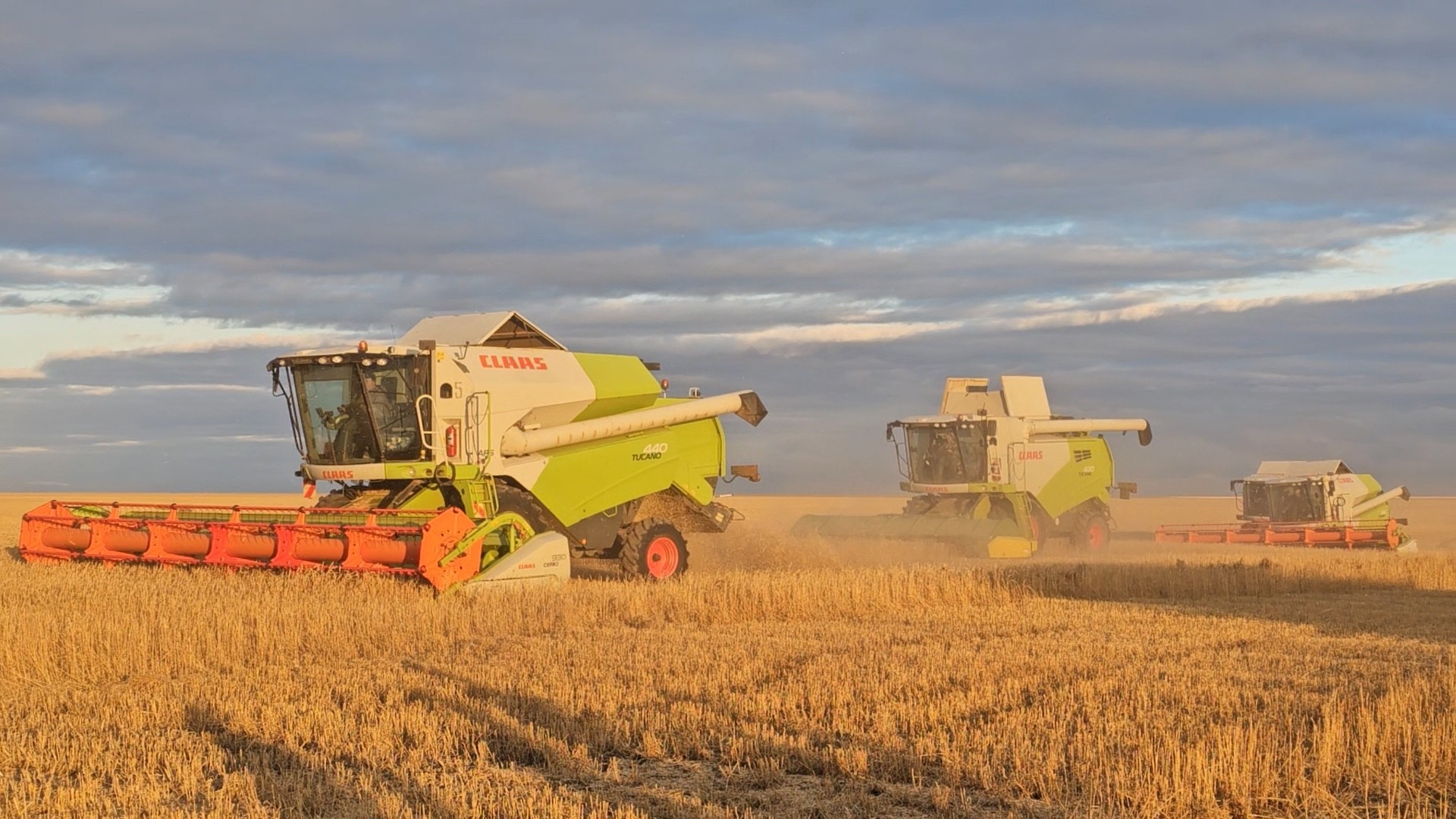
For years, Kazakhstan was primarily known as an exporter of raw materials and agricultural commodities. That picture is changing.
The country is now attempting to move up the value chain by attracting foreign manufacturers, localising production and using state-backed financing to modernise its agricultural sector. What may initially appear to be a straightforward agricultural policy is in fact part of a broader economic strategy: Kazakhstan is using access to its domestic market to attract technology, capital and industrial know-how from competing foreign powers.
Agricultural machinery provides an unusually clear window into this transformation.
The question facing international manufacturers is no longer simply whether Kazakhstan needs modern equipment. It clearly does. The more important question is who will manufacture that equipment, where it will be produced, and under what financing conditions it will reach Kazakh farmers and local agro-industrial players.
The answers reveal much about Kazakhstan’s increasingly sophisticated attempt to balance relations with China, Russia, Türkiye and Western economies while strengthening its own industrial base.
From agricultural modernisation to industrial policy
Kazakhstan’s agricultural sector has enormous potential, with more than 24 million hectares of sown area, according to Kazakhstan’s Ministry of Industry and Construction in a September 2024 overview of the country’s agricultural machinery sector. Yet despite its status as a major grain producer—the U.S. Department of Agriculture (USDA) ranked Kazakhstan 11th globally in wheat production for the 2025/26 marketing year—productivity and infrastructure remain uneven. Modernising the agricultural machinery fleet is therefore a strategic priority.
The state plays a decisive role in financing this process.
To accelerate fleet renewal, the government offers preferential financing for locally manufactured agricultural machinery, with interest rates as low as 5% and repayment periods of up to 10 years, according to the Ministry of Agriculture (August 2026). This compares with average commercial bank lending rates of around 20–25%. Under the government’s 2021–2030 Agro-Industrial Complex Development Concept, agricultural machinery can be financed through preferential leasing at rates of up to 6% over terms of up to 10 years, with subsidies of up to 25% of the machinery cost. Investment subsidies can cover 15% to 30% of the cost of agricultural machinery, depending on the equipment’s priority, while subsidised lending and leasing further reduce the cost of financing. In 2025, KazAgroFinance financed 10,393 units of agricultural machinery worth KZT 268.9 billion, while Kazakh farmers purchased around 25,000 units overall. Together, these measures substantially reduce both the upfront cost of machinery and the cost of financing agricultural investment.
At this stage, however, “local production” should not be understood as complete domestic manufacturing. Kazakhstan’s industrial base is not yet capable of supplying all the components required to manufacture sophisticated agricultural machinery. For many international manufacturers, localisation therefore initially means assembly in Kazakhstan using imported components, combined with a limited share of locally sourced parts.
This is where the experience of Russia offers an interesting precedent. Local content requirements initially tend to be relatively modest, focusing on basic components and assembly operations. As these requirements are progressively raised by the authorities, manufacturers are compelled to source an increasing share of their components locally. This, in turn, creates a growing demand for specialised suppliers and encourages foreign component manufacturers to establish production facilities in the country.
Rather than waiting for a sufficiently developed industrial ecosystem to emerge, the government uses localisation requirements to create the demand that drives its development.
Over time, this process can create an increasingly dense industrial ecosystem. Local manufacturers gain access to higher-quality components, while foreign suppliers bring technologies, production standards and technical expertise. Domestic companies can progressively integrate these capabilities, improve their own production and become suppliers themselves.
The result is a potential virtuous cycle of industrialisation: localisation attracts manufacturers; manufacturers attract component suppliers; component suppliers raise the technological capabilities of the domestic industrial base; and a stronger local ecosystem, in turn, makes Kazakhstan more attractive to the next generation of foreign investors.
This is arguably the long-term objective behind the country’s localisation strategy. Kazakhstan is not simply seeking to assemble imported machinery on its territory. It is attempting to use foreign investment to build an industrial ecosystem that can gradually become more autonomous, competitive and technologically sophisticated.
But this industrial policy also has an immediate and powerful effect on the way agricultural equipment is bought and sold in Kazakhstan. By linking preferential financing to local assembly and production, the government is effectively turning industrial policy into a commercial advantage for companies willing to localise.
This system creates a powerful competitive advantage for locally assembled equipment. A foreign manufacturer selling directly from abroad is not merely competing against a lower-priced machine; it is competing against an entire state-supported financing mechanism from which its equipment is excluded.
Kazakhstan draws on Russia’s experience
Kazakhstan’s current approach bears important similarities to Russia’s earlier localisation strategy.
Russia initially used state-backed financing to stimulate agricultural machinery purchases. Over time, however, Moscow increasingly tied public support to domestic production and localisation, as part of a broader effort to strengthen the country’s own agricultural machinery industry.
Kazakhstan appears to have drawn an important lesson from this experience: after years of also subsidising imported machinery, in 2024 it stopped subsidising imported tractors and combines that have locally made equivalents, and now ties public support to local production. Foreign manufacturers are therefore encouraged to assemble or manufacture equipment locally if they want to benefit from the country’s subsidised market.
This policy simultaneously addresses several objectives. It reduces dependence on imported machinery, creates industrial employment, encourages technology transfer and develops domestic supply chains.
The strategy is already producing visible results.
In August 2026, Kazakhstan’s Ministry of Agriculture reported that AGROMASH, the country’s major agricultural machinery plant in Kostanay, had attracted seven international companies to localise machinery and component production: Sweden’s Väderstad, Belgium’s Dewulf, the United States’ Lindsay Corporation, US-based Amity Technology, the Netherlands’ Vervaet, France’s Kuhn Group and Canada’s Brandt Agricultural Products. These projects complement existing cooperation with John Deere, Deutz-Fahr and China’s Lovol, as well as domestic production of ESSIL combines.
Kostanay is consequently evolving into something more ambitious than a conventional assembly plant.
It is becoming a multi-brand agricultural machinery cluster.
Western manufacturers are coming back but localisation is increasingly part of the deal
For Western manufacturers, the development is significant.
In November 2025, John Deere signed a strategic partnership with AgromashHolding worth US$2.5 billion, with plans to produce at least 3,000 John Deere agricultural machines in Kazakhstan over five years, according to Baiterek National Managing Holding and KAZAKH INVEST.
The message from Astana is clear.
Kazakhstan remains open to Western technology and investment. But the preferred model is no longer simply to import finished products.
For manufacturers, this changes the economics of market entry. Establishing a local assembly operation requires investment and creates additional operational complexity. But it can also unlock access to preferential financing and provide a platform for regional expansion.
This is particularly relevant because Kazakhstan occupies a strategic position between China, Russia and the wider European market. As a member of the Eurasian Economic Union (EAEU), alongside Russia, Belarus, Armenia and Kyrgyzstan, Kazakhstan can also use its territory as a production base for accessing a wider regional market. Goods meeting the Union’s rules can circulate within the EAEU without customs duties, giving manufacturers based in Kazakhstan a significant advantage over competitors exporting finished equipment from outside the bloc.
China: financing, equipment and food security
If Kazakhstan’s strategy were simply about replacing imports with Western localisation, the geopolitical picture would be relatively straightforward.
It is not.
Conversations with industry participants in Kazakhstan’s agro-industrial sector suggest that Chinese competition cannot be understood simply in terms of equipment prices. Chinese companies can approach agro-industrial projects as integrated systems, including grain storage and handling facilities, flour mills, pasta factories, feed mills and other food-processing plants. Rather than selling individual pieces of equipment, they can offer turnkey solutions combining engineering, equipment, construction and financing.
This is where Chinese competition becomes particularly difficult for Western companies to match.
Chinese financing can complement Kazakhstan’s state-backed financing mechanisms by providing capital for much larger industrial projects that may otherwise be beyond the financial capacity of local operators.
In such arrangements, Chinese institutions can provide the financing while Chinese companies supply the complete industrial solution. The resulting facility then produces agricultural or food products that can eventually contribute to repaying the investment.
This model creates an alignment of interests that is difficult for a conventional equipment exporter to reproduce. The Kazakh operator gains access to financing and a complete production facility without having to mobilise the full investment upfront. The Chinese partner, meanwhile, secures both a long-term industrial relationship and a potential source of agricultural commodities.
A Chinese tractor assembled in Kazakhstan is not simply another imported Chinese product. It can become part of Kazakhstan’s industrialisation strategy and potentially benefit from the same mechanisms designed to support domestic production.
Likewise, a Chinese-built grain terminal or food-processing plant is not merely an equipment sale. It can become a long-term financial and commercial relationship linking Chinese capital, Chinese technology, Kazakh production capacity and Chinese demand.
It helps explain why Chinese companies can be particularly difficult competitors in Kazakhstan’s agro-industrial sector: they are not necessarily competing for a place within an existing market.
They are capable of financing and building the market itself.
Türkiye: the third model
Türkiye occupies a different position.
Its agricultural machinery industry has benefited from a large domestic agricultural and food- processing sector and decades of export-oriented industrial development. Turkish manufacturers are particularly competitive in equipment for grain storage, processing and agricultural infrastructure.
Their competitive advantage in Kazakhstan is often based less on technological differentiation than on the combination of acceptable quality, competitive pricing, financing and commercial adaptability.
That combination is particularly powerful in a market where customers remain highly sensitive to investment costs.
Türkiye also benefits from a political dimension.
Ankara has spent years strengthening its relations with the Turkic states of Central Asia. Kazakhstan is a key partner in this strategy, and bilateral economic ties have expanded accordingly.
The scale of cooperation is no longer marginal. A US$320 million integrated agro-industrial complex in Astana, led by Turkish group Tiryaki Agro together with Qatari partner Hassad Food, is one example of the growing depth of Kazakhstan–Türkiye agricultural ties, according to KAZAKH INVEST. The project focuses on the deep processing of wheat and peas and is designed to produce higher-value agricultural products rather than simply export raw commodities.
A geopolitical market disguised as an agricultural one
This is where Kazakhstan’s agricultural machinery sector becomes particularly revealing from a geopolitical perspective.
Astana is effectively asking competing external powers to invest in the country’s own industrial development.
China offers manufacturing scale, technology and capital.
Türkiye offers competitive manufacturing, financing and political proximity.
Western manufacturers offer high-end technology, established brands and industrial expertise.
Russia remains deeply embedded in Kazakhstan’s economic environment and benefits from geographical proximity and the institutional framework of the Eurasian Economic Union.
Kazakhstan’s current strategy is not to choose a single external partner, but to engage multiple competing sources of capital, technology and industrial expertise.
This is consistent with the country’s broader multi-vector foreign policy. Kazakhstan has strong economic and security ties with Russia, an increasingly important relationship with China, close cultural and political links with Türkiye and continuing efforts to attract European and American investment.
Agricultural machinery provides a particularly clear example of this balancing act because the government can encourage all these partners to compete within a common localisation framework.
The result is a form of competitive economic diplomacy.
Foreign companies compete with one another, while Kazakhstan uses that competition to accelerate its own industrial development.
From commodity exporter to regional manufacturing hub?
The ultimate objective goes beyond agriculture.
Kazakhstan has long sought to reduce its dependence on the export of commodities and increase the domestic value added generated by its economy. Agriculture is an obvious candidate.
The country is already promoting projects in food processing, grain processing, irrigation and agricultural machinery. The scale of this investment is significant: Kazakhstan’s Ministry of Agriculture reports that investment in the agro-industrial complex exceeded KZT 1.1 trillion in 2024, including KZT 919 billion in agriculture and fisheries and KZT 181 billion in food production. Hundreds of additional projects are planned across the sector for 2025–2027.
The emergence of a multi-brand machinery cluster in Kostanay therefore fits into a much broader strategy.
Kazakhstan is attempting to build not merely farms, but agricultural value chains.
Machinery manufacturing supports farming. Farming supplies processing industries. Processing creates higher-value exports.
That is the real strategic significance of localisation.
The implications for Western companies
For Western manufacturers, the lesson is uncomfortable but straightforward.
The question is no longer whether Kazakhstan is an attractive market.
It is.
The question is whether a company is prepared to participate in the country’s industrial strategy.
For some manufacturers, this may mean full-scale production. For others, assembly, joint ventures, local partnerships or component manufacturing may provide a more realistic entry point.
Kazakhstan is no longer simply a market waiting to be supplied.
It is becoming a market that demands to be part of the supply chain.
That transformation has consequences far beyond agricultural machinery. It illustrates how a country occupying a pivotal position between Russia, China, Türkiye and the West can use industrial policy to convert geopolitical competition into economic leverage.
For Astana, the objective is to make foreign companies compete for a place in Kazakhstan’s future and, in doing so, to make their competing interests contribute to the country’s own industrial ambitions.
The author conducted a market study of Kazakhstan’s agricultural machinery sector for a French agricultural machinery company, and was Export Manager at Matrot Equipment from 2008 to 2012. He used AI to help translate the text from French into English.
Comments
No comments yet. Be the first.
Comments are closed on this article.