
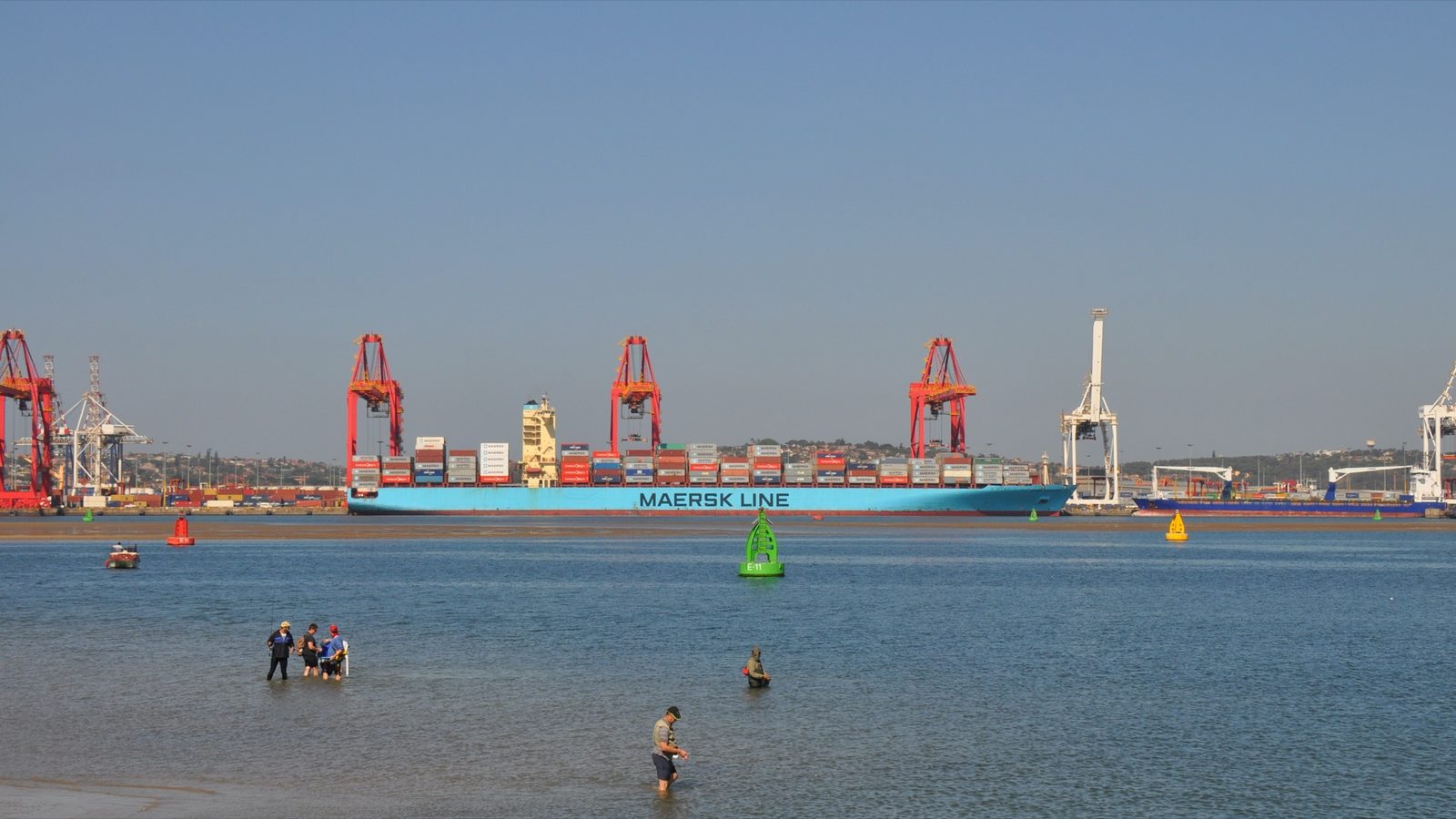
The fragmentation of the global economy is prompting countries to reorganize their trade, investment, and global supply chain relationships. Competition between the United States and China not only affects capital flows but also increases the need for developing countries to expand their economic partners. In this context, Africa and ASEAN have an opportunity to build a more structured economic relationship, not to replace the US or China, but to broaden their options and strengthen the economic resilience of both regions.
Existing foundations of cooperation
Relations between ASEAN and Africa are not an entirely new idea. On 29 April 2024, ASEAN Secretary-General Kao Kim Hourn met with Wamkele Mene, Secretary-General of the African Continental Free Trade Area (AfCFTA) Secretariat, in Riyadh. The dialogue discussed the economic potential of Southeast Asia and Africa, as well as the role of both secretariats in supporting cooperation among their members. This was an important initial step, although it did not constitute a formal economic agreement between the two regions.
ASEAN also established sectoral dialogue partnerships with South Africa in 2023 and Morocco in the same year. The agendas covered trade, investment, micro, small, and medium-sized enterprises, energy, critical minerals, food security, the digital economy, and the energy transition. These developments indicate that the foundations for interregional relations already exist, but they remain dispersed across bilateral relations and sectoral partnerships rather than forming an integrated Africa–ASEAN economic network.
In Africa, AfCFTA began trading in January 2021, with the aim of creating a continental market covering goods, services, investment, and the development of regional value chains. Meanwhile, ASEAN has established a relatively mature foundation for economic integration. The ASEAN Annual Report 2024 recorded regional merchandise trade worth US$3.5 trillion and foreign direct investment inflows of US$229.8 billion in 2024.
Is Africa–ASEAN cooperation feasible?
Economically, such cooperation is feasible because the two regions have complementary interests. ASEAN has a manufacturing base, logistics networks, processing capabilities, and experience in developing regional supply chains. In contrast, many African countries possess mineral resources, agricultural potential, substantial infrastructure needs, and expanding markets.
Both regions face similar structural challenges: increasing domestic value added, expanding productive employment, reducing dependence on raw commodity exports, and strengthening their positions in global value chains. Although these challenges differ across individual countries, they provide a relevant foundation for a shared agenda.
From the perspective of Solow's growth theory, capital accumulation alone is insufficient to guarantee long-term productivity growth. Technological progress and the efficiency with which production factors are used also matter. Therefore, Africa–ASEAN cooperation should go beyond increasing trade volumes and instead promote technology transfer, skills development, and stronger industrial capacity.
Economic resilience requires cohesion
The concept of economic resilience emphasizes an economy's ability to absorb shocks, adapt, and build new capabilities after experiencing disruptions. In a world facing geopolitical uncertainty, logistical disruptions, and changing trade policies, resilience cannot be built by individual countries in isolation. Diversifying economic partners and strengthening regional production links can expand available options when one trade route is disrupted.
However, connectivity alone is not enough. Cooperation requires intergovernmental cohesion: a willingness to align interests, build trust, and maintain shared commitments. Without policy cohesion, cross-regional investments risk becoming fragmented projects, while their benefits may remain concentrated in a limited number of countries.
AfCFTA seeks to reduce fragmentation within African markets, while ASEAN has advanced integration through various trade agreements and investment facilitation initiatives. These experiences can provide a foundation for exchanging knowledge on standards harmonization, trade facilitation, small-business development, and stronger supply chains. Africa–ASEAN integration does not have to begin with a comprehensive free trade agreement. Instead, gradual cooperation with measurable targets could provide a realistic starting point.
Four priorities for cooperation
There are at least four areas that deserve priority.
First, critical mineral processing and battery industry development. Africa can increase the domestic value added of its mineral resources, while ASEAN has experience in manufacturing, processing, and developing electric vehicle ecosystems. This cooperation should include technology investment and local capacity building to avoid repeating the pattern of exporting raw materials without substantial domestic value creation.
Second, food security and agro-industry. Cooperation could focus on agricultural processing, fertilizers, storage facilities, irrigation, and logistics.
Third, trade connectivity and cross-border payments. Africa has developed the Pan-African Payment and Settlement System (PAPSS) to facilitate intra-African trade payments. This experience could provide a basis for dialogue with ASEAN on transaction settlement, cost efficiency, and payment system interoperability, without assuming that the two regions already share a common system.
Fourth, small and medium-sized enterprises and the digital economy. Exchanging experiences in digital payments, e-commerce, business financing, and skills development could help extend the benefits of integration to smaller businesses.
Ultimately, the Africa–ASEAN Economic Partnership should be viewed as an effort to broaden economic options amid the dominance of major powers and global fragmentation. Its objective is not to establish a bloc that confronts the US or China, but to create a more diversified, productive, and shock-resistant network of cooperation.
The opportunities are already visible, but the results will depend on the ability of both regions to translate dialogue into concrete programs, build policy cohesion, and ensure that trade and investment generate domestic value added. New economic resilience does not emerge simply from having more partners, but from transforming interregional relationships into productive capacity and shared prosperity.
Dr Eko Setiobudi is an Indonesian economist, lecturer and business practitioner specialising in international trade and economic policy. He teaches at STIES Mitra Karya, Bekasi.
Sources
- ASEAN Secretariat, Overview of ASEAN–South Africa relations.
- ASEAN, ASEAN, Morocco launch sectoral dialogue partnership.
- UN Africa Renewal, Africa’s free trade area opens for business.
- ASEAN, ASEAN Annual Report 2024.
- Pan-African Payment and Settlement System, About PAPSS.



Comments
No comments yet. Be the first.
Comments are closed on this article.