
Strategy begins with geography, and geography separates states that can be squeezed from those that cannot. India can be squeezed to a degree. Partition in 1947 left it facing hostile neighbours on two flanks, with a contested Himalayan frontier and a trade lifeline running through the Indian Ocean. A rival who controls chokepoints and neighbourhoods has real leverage over such a country. Russia has 11 time zones, the largest territory on earth, a nuclear arsenal that guarantees survival, and exports of energy, grain, fertiliser and metals that others need. It sits on both Europe and Asia. A strategy built for the first kind of state fails against the second.
The arteries of Asia
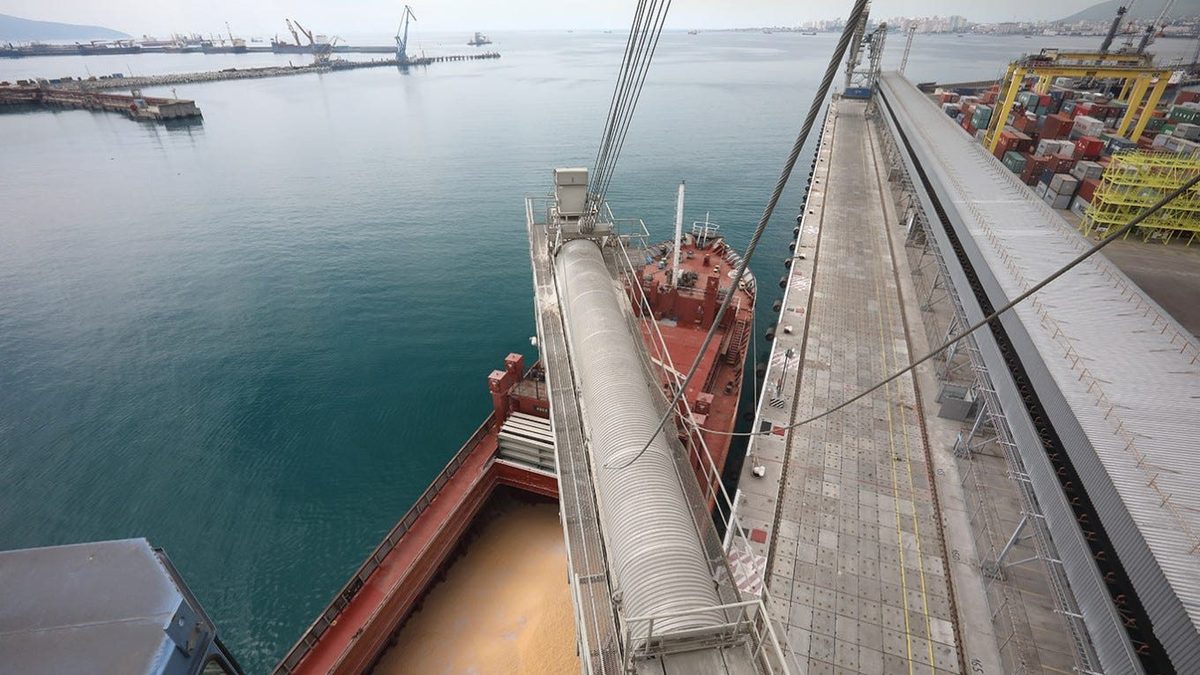
The post-2022 sanctions regime assumed that Europe was Russia's market and that closing it would force a change of course. Moscow instead redirected oil to India and China, built payment channels outside the dollar, and developed the North-South corridor through Iran, the Caspian routes and the Northern Sea Route. This was costly and inefficient, but it was not strangulation. The deeper result is geopolitical: pressure on a continental power drives it into the arms of the continent's other great power. Washington spent the 1970s peeling China away from Moscow, and the present policy reverses that achievement. The West can impose costs, but it cannot convert costs into political outcomes, and the two are different things.
The plain
Russia's security thinking was shaped by repeated invasions. Napoleon came in 1812, imperial Germany in 1914 and the Wehrmacht in 1941, each across the North European Plain, which has no natural barriers. The result is a permanent preference for depth, buffers and the absence of hostile military power near the core. Tsarist, Soviet and post-Soviet governments have all held this preference, which suggests it is structural rather than ideological. Every great power holds a version of it. Washington has never tolerated a hostile alliance in its own hemisphere, as the Cuban missile crisis showed. The question is whether the West will apply to Russia the logic it applies to itself.
What enlargement meant
In February 1990, Secretary of State James Baker floated to Gorbachev the idea that NATO would not move "one inch eastward". The remark was never codified, and the realist case does not depend on it. It depends on what followed. The Clinton administration decided in 1994 to enlarge the alliance, and George Kennan called it the gravest error of American policy in the post-Cold War era. Poland, Hungary and the Czech Republic joined in 1999, the same year NATO bombed Serbia without a UN mandate, which showed Moscow what the alliance did with its freedom of action. Seven more states joined in 2004, including three Baltic republics that were once Soviet territory. In 2008 the Bucharest summit declared that Ukraine and Georgia would become members, though Germany and France had blocked a formal path to membership. That produced the worst combination: a standing provocation with no actual protection. Russia fought Georgia four months later. In December 2021 Moscow tabled draft treaties on limiting enlargement, and the West declined to negotiate them seriously.
Western governments also signed the principle that Russia invokes. The 1997 NATO-Russia Founding Act and the 1999 OSCE Istanbul Charter both commit signatories to indivisible security, meaning no state strengthens its own security at another's expense. NATO officials say enlargement was defensive. In international politics, though, intentions are unobservable and capabilities are not. Russia was bound to read the movement of a military alliance towards its frontier by what it could do rather than by what it said. Mearsheimer's argument that NATO enlargement is the root of the Ukraine crisis rests on exactly this reasoning.
Lectures buy nothing
Pressing human rights, religious freedom and press freedom is a legitimate position. As a tool of security policy, however, it fails on its own terms. Great powers do not accept foreign supervision of their domestic arrangements, least of all from a rival who is simultaneously expanding military alliances and imposing sanctions. The West's credibility on these questions was also damaged by Iraq in 2003 and by Libya in 2011, where a UN mandate to protect civilians became regime change. Russia and China have since vetoed accordingly (e.g., on the UN mandate to monitor Iran sanctions). Past settlements were made between rivals regardless of their domestic systems: Roosevelt with Stalin, Nixon with Mao, Reagan with Gorbachev. Tying security talks to political conformity narrows the space for any agreement.
A durable settlement
A stable European order needs Russia inside the calculation. A country with Russia's arsenal, resources and geography cannot be excluded from it. The neighbours' sovereignty is equally real, and any settlement must secure it. But sovereignty and alliance membership are different things. Finland and Austria kept their independence through the Cold War as neutral states, and both thrived. Verified limits on deployments and missiles near borders, a neutral Ukraine with security guarantees from outside the alliance, and phased sanctions relief tied to compliance would take both sets of fears seriously. This is the logic of the 1975 Helsinki Final Act: accept the other side's security as a condition of your own.
The West can keep treating Russia as a problem to be solved or learn to treat it as a power to be managed. Only the second approach has ever produced a lasting European peace.
Sources
- JSTOR, The Sino-Soviet split and the opening to China.
- The English Historical Review, on Russia's history of invasion and strategic culture.
- Carnegie Endowment, Etched in Stone: Russian Strategic Culture and the Future of Transatlantic Security.
- National Security Archive, Memorandum of conversation between Baker and Gorbachev, February 1990.
- University of Oxford, Reconsidering NATO Expansion: A Counterfactual Analysis of Russia and the West in the 1990s.
- National Security Archive, NATO expansion: the Budapest blow-up 1994.
- Brookings, The US decision to enlarge NATO: how, when, why and what next?.
- NATO Allied Command Transformation, 25 years of the Czech Republic, Hungary and Poland in NATO.
- Deutsche Welle, 1999 NATO intervention against Serbia.
- Los Angeles Times, Seven nations join NATO, 2004.
- Der Spiegel, How Merkel prevented Ukraine's NATO membership at Bucharest.
- Common Dreams, Ukraine, NATO and the OSCE.
- Brookings, Russia's draft agreements with NATO and the United States: intended for rejection?.
- Financial Times, on indivisible security and the NATO-Russia Founding Act.
- NATO, Press conference, 12 January 2022.
- John Mearsheimer, Why the Ukraine Crisis Is the West's Fault.
- Council of Europe, Russian Federation: freedom of expression and peaceful assembly.
- News18, Regime change in Iraq and Libya: was it effective?.
- Al Jazeera, Russia and China veto UN mandate to monitor Iran sanctions.
- The Strategy Bridge, Great strategic rivalries and the return of geopolitics.
- Springer, Neutrality in the Cold War: Finland and Austria.
- Centre for European Reform, The Helsinki Final Act at 50: relevant or relic?.


Comments
No comments yet. Be the first.
Comments are closed on this article.