
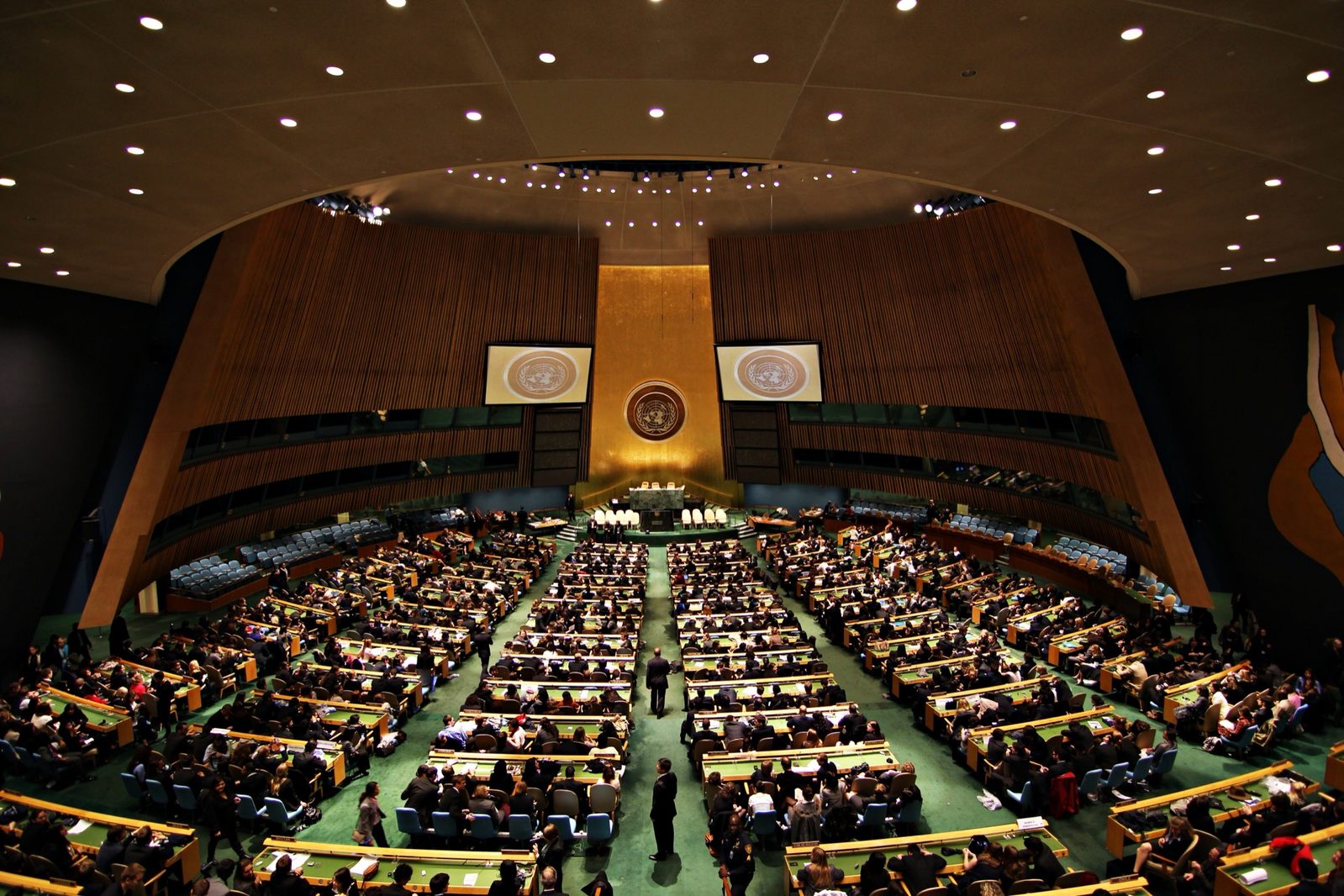
The world has made extraordinary progress in technology, finance, communication, trade and scientific development. Nations are more connected than ever before. Capital moves across borders within seconds, businesses operate internationally, information travels instantly, and people communicate across continents through a mobile phone. We proudly describe this interconnected world as a Global Village.
But an important question remains: Have we actually become a global village in terms of humanity, social responsibility and collective welfare, or have we merely become an interconnected marketplace?
In a traditional village, people share their difficulties. When one family faces hunger, neighbours offer food. When someone becomes ill, others help arrange treatment. Children grow up within a community where social relationships, collective responsibility and mutual assistance are essential elements of everyday life.
Yet, in our modern global village, millions of people are struggling with hunger, displacement, unemployment, inadequate education and the absence of basic healthcare, while governments continue allocating enormous financial resources to military expansion, weapons procurement and geopolitical competition.
We have globalised markets, but we have not globalised compassion.
This contradiction deserves serious economic, political and moral examination.
Growth without shared prosperity
Macroeconomic growth is generally measured through Gross Domestic Product (GDP), inflation, unemployment, public debt, investment, international trade and productivity. These indicators help us understand the economic performance of nations. However, GDP growth alone cannot explain whether ordinary citizens are living better lives.
A country may report economic growth while its population experiences rising food prices, declining purchasing power, unemployment, poor-quality education and deteriorating public healthcare.
At the microeconomic level, the consequences are even more visible. A household must decide how to distribute its limited income among food, housing, electricity, transportation, education and medical treatment. When inflation rises and employment opportunities decline, families sacrifice essential needs.
For a wealthy household, inflation may mean reduced savings or fewer luxuries. For a poor household, it may mean a child leaving school, a patient delaying treatment or a family going without adequate food.
This is the difference between economic statistics and economic reality.
Development should therefore be evaluated not only through GDP growth but also through poverty rates and household purchasing power; employment opportunities and decent wages; access to quality education; the availability and affordability of healthcare; food security and nutritional standards; income distribution and social mobility; and housing, sanitation, clean water and social protection.
Economic development has limited meaning if its benefits remain concentrated among a small proportion of society.
War economies: when weapons matter more than human development
One of the most disturbing contradictions of the modern international economic system is the enormous amount of money allocated to military expenditure while millions of people lack basic necessities.
According to the Stockholm International Peace Research Institute (SIPRI), global military expenditure reached approximately US$2.887 trillion in 2025, representing an 11th consecutive annual increase. Military spending accounted for approximately 2.5% of global GDP.
Military expenditure is not automatically wasteful. Every sovereign state has legitimate security responsibilities, and defence can protect citizens, territory and institutions. However, the central economic question is whether the scale and priorities of military expenditure are compatible with the urgent requirements of human development.
Consider the alternative possibilities. What if a greater share of public resources were invested in schools, universities, technical education and research; hospitals, preventive healthcare and maternal health; clean drinking water, sanitation and nutrition; employment generation and small-business development; affordable housing and social protection; or climate resilience, agricultural productivity and infrastructure?
The objective is not to suggest that every defence dollar can immediately become a development dollar. Rather, it is to question an international system in which security is frequently measured through military strength while human security is measured through the survival of ordinary people.
A nation is not secure simply because it possesses advanced weapons. Its security also depends on educated citizens, healthy communities, functioning institutions, economic opportunity and social stability.
Poverty: the human cost of global inequality
Poverty is not merely a shortage of money. It is a condition in which people are denied meaningful choices and opportunities.
The World Bank's October 2025 Poverty and Inequality Update estimated that approximately 831 million people were living in extreme poverty in 2025, using its then-applicable international poverty measurement. It also highlighted that extreme poverty had become increasingly concentrated in Sub-Saharan Africa and fragile and conflict-affected countries.
The World Bank's subsequent 2026 assessment, using its updated international poverty line of $3 per day in 2021 purchasing-power-parity terms, estimates that 811 million people remain in extreme poverty. These estimates use different poverty thresholds and should not be interpreted as a direct year-on-year decline.
This raises a fundamental question: why does economic progress remain so unequal?
In some countries, people debate investment portfolios, luxury housing and international holidays. In others, families struggle to purchase flour, medicine and school uniforms.
A child born into a wealthy household may have access to private education, modern hospitals, digital technology and international opportunities. A child born in a conflict-affected village may face school closures, malnutrition, displacement and the absence of basic medical facilities.
Both children are human beings. Both deserve dignity. Yet their opportunities are determined, to a considerable extent, by the economic and political circumstances into which they are born.
This is not simply an economic gap. It is a gap in human opportunity.
Africa, Asia and the geography of human suffering
Poverty and conflict are not restricted to one continent. They exist across different political systems, economic structures and geographical regions.
Africa. Countries and communities affected by prolonged conflict, institutional fragility, climate shocks and economic instability face serious development challenges. Sudan, South Sudan, the Democratic Republic of the Congo and parts of the Sahel demonstrate how conflict can undermine agriculture, trade, education, healthcare and public administration.
South Asia. Pakistan and Afghanistan face interconnected challenges involving poverty, unemployment, institutional capacity, education, healthcare, displacement and regional instability. Their economic problems cannot be understood exclusively through domestic indicators; regional security, trade relations, climate vulnerability and international economic conditions also matter.
The Middle East. Prolonged conflicts have damaged infrastructure, disrupted economic activity and displaced populations. The humanitarian consequences extend beyond immediate casualties, affecting generations through interrupted schooling, psychological trauma, loss of employment and the destruction of economic assets.
Europe and other regions. The Russia–Ukraine war has demonstrated that even countries with relatively developed institutions and infrastructure can experience enormous economic disruption, displacement, energy insecurity and rising defence costs.
War does not end when the guns become silent. Its economic consequences continue through damaged infrastructure, lost investment, weakened institutions, interrupted education and long-term healthcare needs.
Pakistan and Afghanistan: the price of regional instability
Pakistan and Afghanistan provide an important example of the relationship between geopolitics, economic vulnerability and human development.
Both countries have experienced prolonged political and security challenges. Their populations have faced terrorism, displacement, economic uncertainty, unemployment and pressure on already limited public services.
In Afghanistan, decades of conflict have affected institutional development, economic opportunities, educational infrastructure and healthcare provision. Ordinary families continue to face difficult economic and humanitarian circumstances.
In Pakistan, security challenges, fiscal constraints, inflation, debt servicing, unemployment and weaknesses in public service delivery place additional pressure on households.
The relationship between the two countries should therefore be examined through a broader development perspective. Border instability and insecurity affect trade, transportation, investment, employment and regional connectivity. When economic relations deteriorate, the consequences are not limited to governments or political institutions. Traders, transporters, farmers, students, patients and ordinary households bear the costs.
A peaceful and economically connected region could create opportunities through cross-border trade and regional markets; energy and transport connectivity; educational and research cooperation; healthcare collaboration; agricultural development; and employment and investment opportunities.
The people of Pakistan and Afghanistan need economic opportunities, functioning institutions, education, healthcare and peace. These are not competing national interests; they are interconnected human development priorities.
Education and healthcare: the first casualties of war
A country's future is not determined only by its natural resources, military capacity or geographical position. It is also determined by the quality of its human capital.
Education develops knowledge, skills, productivity, innovation and social mobility. Healthcare protects human capacity, reduces economic vulnerability and improves the quality of life.
When war destroys schools, the immediate damage is visible. But the long-term consequences are even more serious. A generation deprived of education may experience reduced employment opportunities, lower productivity and greater vulnerability to poverty.
Similarly, when hospitals are destroyed or medical supplies become unavailable, the consequences extend beyond the immediate conflict. Maternal mortality, preventable diseases, malnutrition and untreated chronic conditions can create lasting social and economic damage.
The United Nations Sustainable Development Goals Report 2025 acknowledges that global progress in education and health has been real but fragile and unequal. It identifies escalating conflicts, climate pressures, inequality and debt servicing costs as significant obstacles to achieving the 2030 development agenda.
We must recognise a basic economic principle: an educated and healthy population is an investment in national productivity, not merely an expense in the government budget.
A missile may change the military balance of a conflict, but a teacher can change the future of an entire generation. A hospital may save thousands of lives, while a functioning education system can transform the economic prospects of millions.
Human rights and the United Nations: where is the international responsibility?
The establishment of the United Nations in 1945 represented a historic commitment to international peace, collective security, human dignity and cooperation.
The UN Charter identifies the maintenance of international peace and security as one of the organisation's central purposes. The Universal Declaration of Human Rights recognised fundamental rights, including the rights to life, education, healthcare-related social well-being and an adequate standard of living.
Yet, the international community continues to witness wars, civilian casualties, forced displacement, destruction of infrastructure and humanitarian emergencies.
This raises difficult questions about the effectiveness of international institutions. Where is the protection of children caught in armed conflicts? Where is the international responsibility when hospitals, schools and residential areas are destroyed? Where is the collective response when millions of people are displaced?
The United Nations has humanitarian agencies, peacekeeping operations, diplomatic mechanisms and international legal institutions. Its humanitarian organisations provide essential assistance in many conflict zones. It would therefore be inaccurate to say that the UN does nothing.
However, its capacity to prevent or stop wars is constrained by the political interests of member states, particularly the veto power of the five permanent members of the Security Council. This institutional structure raises a fundamental challenge: the countries entrusted with exceptional authority in maintaining international peace can also disagree on how that authority should be exercised.
International law must not become selective. Human rights should not depend on the geographical location, political identity, religion, nationality or strategic importance of victims. The protection of civilian lives must remain a universal responsibility.
Connected economies, disconnected societies
Let us return to the idea of the global village. A village is not defined merely by its geographical boundaries. Its identity is shaped by relationships, mutual assistance, collective responsibility and the willingness of people to stand beside one another during difficult times.
If a family experiences poverty, neighbours help. If a child becomes sick, the community tries to arrange treatment. If a house is damaged, people contribute their labour and resources.
But what happens when an entire country faces hunger? What happens when millions of people are displaced? What happens when children lose their schools and families lose their homes? Can we genuinely call ourselves a global village if we are unable to establish a comparable sense of collective responsibility at the international level?
Globalisation has connected financial markets, supply chains, technology and communication systems. A financial crisis in one major economy can affect employment and prices across continents. A war in one region can disrupt global energy markets, food supplies, transportation and investment.
Yet our social and political institutions have not developed an equally strong system of international solidarity. We are economically interconnected, but our humanitarian responsibilities remain fragmented.
The concept of a global village should therefore mean more than international trade and digital communication. It should represent a commitment to shared human welfare.
The economics of peace
Peace should not be understood only as the absence of armed conflict. It should also be understood as an economic and social condition in which people can live with dignity, security and opportunity.
An effective development model requires a balance between national defence, economic stability and human development. Governments need to reconsider the relationship between their fiscal priorities and the needs of their populations. A stronger human development framework would include:
- Fiscal responsibility: transparent public expenditure, sustainable debt management and better allocation of national resources.
- Human capital investment: greater attention to education, technical training, research and healthcare.
- Poverty reduction: targeted social protection, employment opportunities and support for vulnerable households.
- Regional economic cooperation: trade, infrastructure, energy and educational partnerships between neighbouring countries.
- Conflict prevention: investment in diplomacy, institutional cooperation and peaceful dispute resolution.
- International accountability: consistent protection of civilians and stronger mechanisms for implementing international humanitarian law.
Military security and human development are not necessarily mutually exclusive. Every country has legitimate security needs. However, a sustainable security framework must also protect people from hunger, disease, illiteracy, unemployment and economic exclusion. The ultimate purpose of economic growth should be to improve human lives.
What kind of world are we building?
Human civilisation has reached a remarkable stage of technological and scientific advancement. We can explore space, develop artificial intelligence, manufacture sophisticated weapons, transfer billions of dollars electronically and communicate instantly across the planet.
But can we ensure that every child has access to education? Can we guarantee that a sick person receives medical treatment? Can we create an economic system in which families do not have to choose between food and medicine? These questions should be at the centre of international economic discussions.
We measure national strength through GDP, foreign exchange reserves, military expenditure, industrial capacity and international influence. But perhaps we should also measure it through the number of children attending school, the affordability of healthcare, the reduction of poverty, the quality of life and the opportunities available to ordinary citizens.
A world that can spend trillions of dollars on military capabilities must also seriously examine its ability to provide basic human necessities. The responsibility does not belong to governments alone. International institutions, multinational corporations, financial organisations, civil society, universities and individuals all have roles in creating a more equitable global society.
We cannot eliminate every conflict overnight. Nor can we expect all countries to abandon their security interests. But we can demand stronger diplomacy, greater accountability, better development policies and a consistent commitment to human rights.
The people of Africa, Asia, Europe and the Middle East may live under different political systems, speak different languages and follow different cultures, but their fundamental human needs are remarkably similar. Every mother wants her children to live safely. Every father wants to provide for his family. Every child deserves education, healthcare and the opportunity to build a future. These aspirations are universal.
Humanity before competition
The world economy cannot achieve sustainable prosperity while large populations remain trapped in poverty, conflict and deprivation. Economic growth without social justice creates inequality; military strength without human security creates vulnerability; and globalisation without collective responsibility creates an interconnected but deeply divided world.
Perhaps the most important question of our time is not how powerful our nations have become, but how much humanity we have preserved in the process. If a village cannot stand beside its vulnerable families, it loses its social identity. If the global village cannot stand beside its vulnerable nations, what exactly does globalisation mean?
We need a world where the budget for education is not treated as less important than the budget for weapons, where hospitals receive the resources they need, where children are protected from war, and where international institutions serve humanity rather than becoming instruments of competing geopolitical interests.
Peace is not merely a political agreement. It is an economic opportunity, a social necessity and a moral responsibility. The world does not need only stronger economies and more powerful armies. It needs healthier societies, educated generations, reduced poverty and stronger human relationships.
Ultimately, the real measure of civilisation is not how efficiently humanity can prepare for war, but how successfully it can preserve life.
Sources: SIPRI: Trends in World Military Expenditure, 2025 · World Bank: Poverty and Inequality Update, October 2025 · World Bank: Poverty, Prosperity and Planet Report 2026 · United Nations: The Sustainable Development Goals Report 2025 · UNHCR: Global Report 2025 · SIPRI: Rebalancing Military Spending Towards Achieving Sustainable Development.
Comments
No comments yet. Be the first.
Comments are closed on this article.