
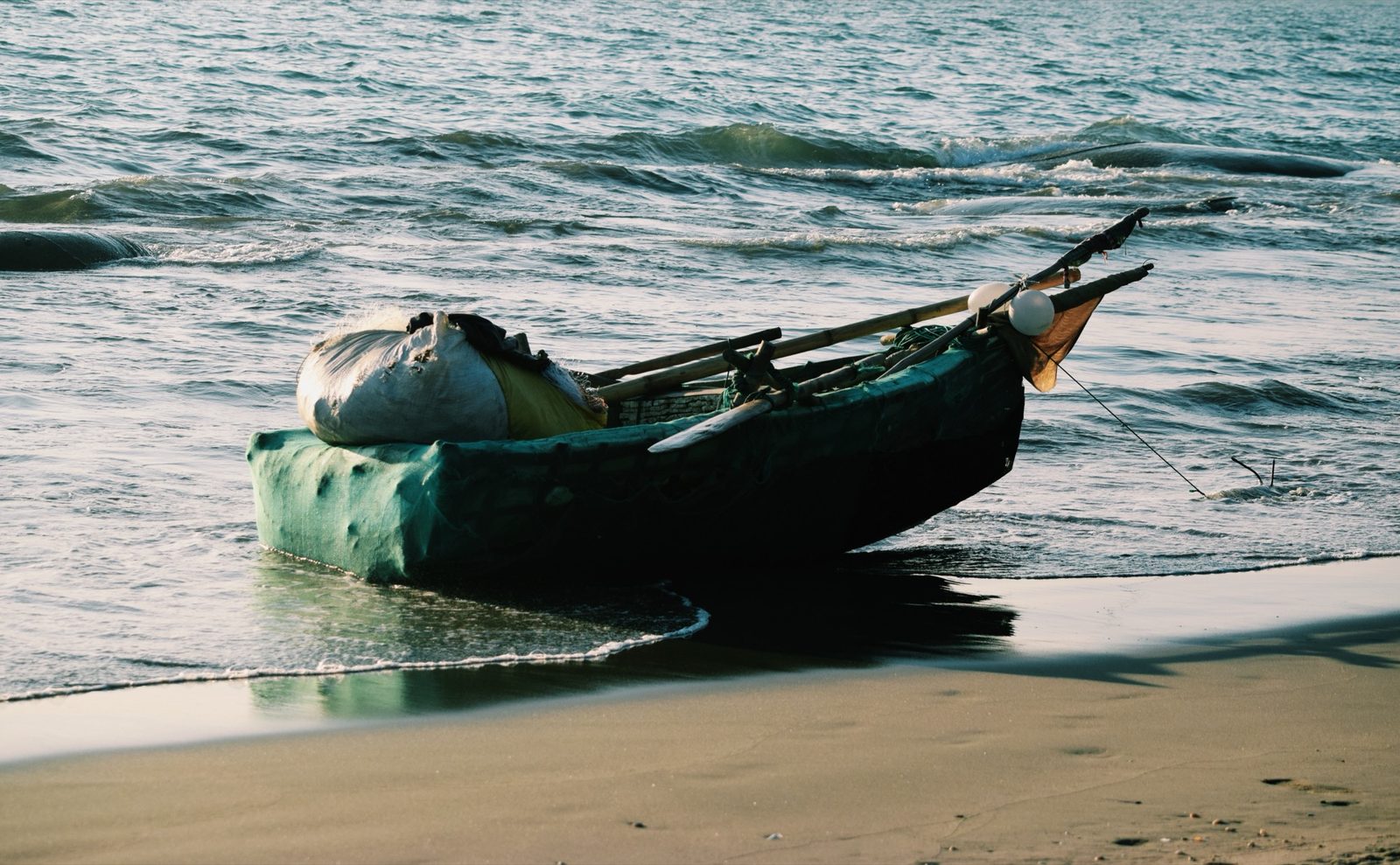
Washington and Dhaka signed a reciprocal trade agreement in February 2026. It’s all about tariffs and market access for U.S. goods (including energy purchases), with both sides putting the value of that at nearly $15 billion over the 15-year period. That’s a good beginning. The real opportunity is offshore in the Bay of Bengal.
Bangladesh has about 118,813 square kilometers of sea under its control. This was achieved via maritime settlements with Myanmar in 2012 and India in 2014, which in turn has led to a considerable boost in investment. Progress has been very gradual indeed. The combination of overlapping institutions, lack of scientific capacity and simply not enough finance and technology has been the major inhibitor. A strategic partner could help to address some of these issues. The U.S. has the capital, the research agencies and the companies with experience at sea.
Start with fish
The sardine fishery is fully exploited, with the 2020 catch of 38,051 tonnes being very close to the estimated sustainable yield. Stock assessments indicate they are depleted and overfished. One model estimates a sustainable yield of 5,110 tonnes per year, which is less than the 7,017 tonnes caught in 2022. The authors state that these species are under-researched and under-managed. Bangladesh needs better catch data, better stock assessments and better enforcement. The U.S. agencies have been managing these fisheries for decades. It would be entirely reasonable to ask for the sharing of methods and training of analysts. This would also be of benefit to the coastal communities.
Energy is another area with real potential
A recent review has identified very good offshore wind potential close to Cox’s Bazar and the Sandwip Islands. There are major hurdles to overcome: Bangladesh has no offshore wind policy, the region is prone to cyclones and the humid, salty atmosphere will take a toll on the turbines. The researcher suggests the creation of a national offshore wind authority and the use of cyclone-resilient designs, backed by financial incentives. They also reference a U.S. National Renewable Energy Laboratory study which found very good offshore wind potential near Cox’s Bazar and Matarbari and which stressed the importance of port and grid upgrades. Washington can help by funding feasibility studies and providing financing to de-risk the first generation of projects.
Ports are another area of focus
Bangladesh has four main ports which form the country’s trade gateways (Chattogram, Mongla, Payra and Matarbari). A study into the Bay’s trade potential points to governance inefficiencies and a lack of technology as the key constraints. American terminal operators and logistics companies could go some way toward resolving these. American importers would also benefit from more reliable supply chains.
Climate is the through line
Cyclones and storm surges are a disaster for the coast, with the resultant impact on fisheries and agriculture. Storms are both more intense and more frequent. Infrastructure (turbines, ports, fish landing sites, etc.) has to be designed to withstand the threat of storms if it is to survive. Joint projects need to be designed with resilience in mind from the outset, utilizing the shared early warning data and building storm-resilient infrastructure.
A model does exist
A comparison of blue economy practices in the U.S. and four other developed countries has yielded some lessons for Bangladesh. The importance of public-private partnerships and community involvement is highlighted. The study also notes that the blue economy in Bangladesh is relevant to 12 of the 17 SDGs as opposed to just 6 in the developed countries under review. In other words, blue economy initiatives in Bangladesh are contributing to a much broader range of the SDGs. The lessons from the study point to the value of a partnership based on joint projects.
The skeptics have a point
Skeptics have that absolutely right. The February deal with the U.S. was met with domestic resistance and Bangladesh is always going to be in a position where it has to balance its relationship with the bigger powers. A maritime arrangement could be structured to take that into account. You could deal with issues of mutual interest (fish stocks, storm data etc.) without any need for a security agreement at all.
A proposed plan
Here’s a proposed plan. Both governments could go ahead and launch a Bay of Bengal Blue Economy Partnership this year with a small joint secretariat and a public work plan. The U.S. could bring its science agencies and development finance to the partnership. Dhaka could appoint a single lead agency. Initial pilot projects could be a fisheries data program and an offshore wind feasibility study, with public results in two years. That would give investors and coastal communities something tangible to see that actually works.
Those who invest in the Bay of Bengal will be determining its rules for decades to come. Washington and Dhaka should be working together to establish those rules this year. Moreover, the U.S.A. should have a strategic presence in South Asia.
Arafatur Rahaman is a Research Analyst at Southeast University and the founder and executive director of the Center for Governance, Economy, and Environmental Studies (CGEES). His work focuses on political economy, governance, and development policy, with research spanning finance, migration, and digital transformation.
Sources
- Office of the United States Trade Representative, U.S.–Bangladesh Agreement on Reciprocal Trade, 9 February 2026.
- UISCBD, “How Bangladesh won 118,813 sq km of sea without a shot”.
- Journal of Marine Science and Engineering, stock assessment study (MDPI, 11(5), 944).
- Journal of Marine Science and Engineering, sustainable yield study (MDPI, 13(6), 1126).
- Oxford Open Energy, offshore wind review (doi:10.1093/ooenergy/oiaf015).
- Observer Research Foundation, “Bangladesh’s seaports: securing domestic and regional economic interests”.
- Discover Sustainability, blue economy comparison study (doi:10.1007/s43621-024-00551-5).


Comments
No comments yet. Be the first.
Comments are closed on this article.