
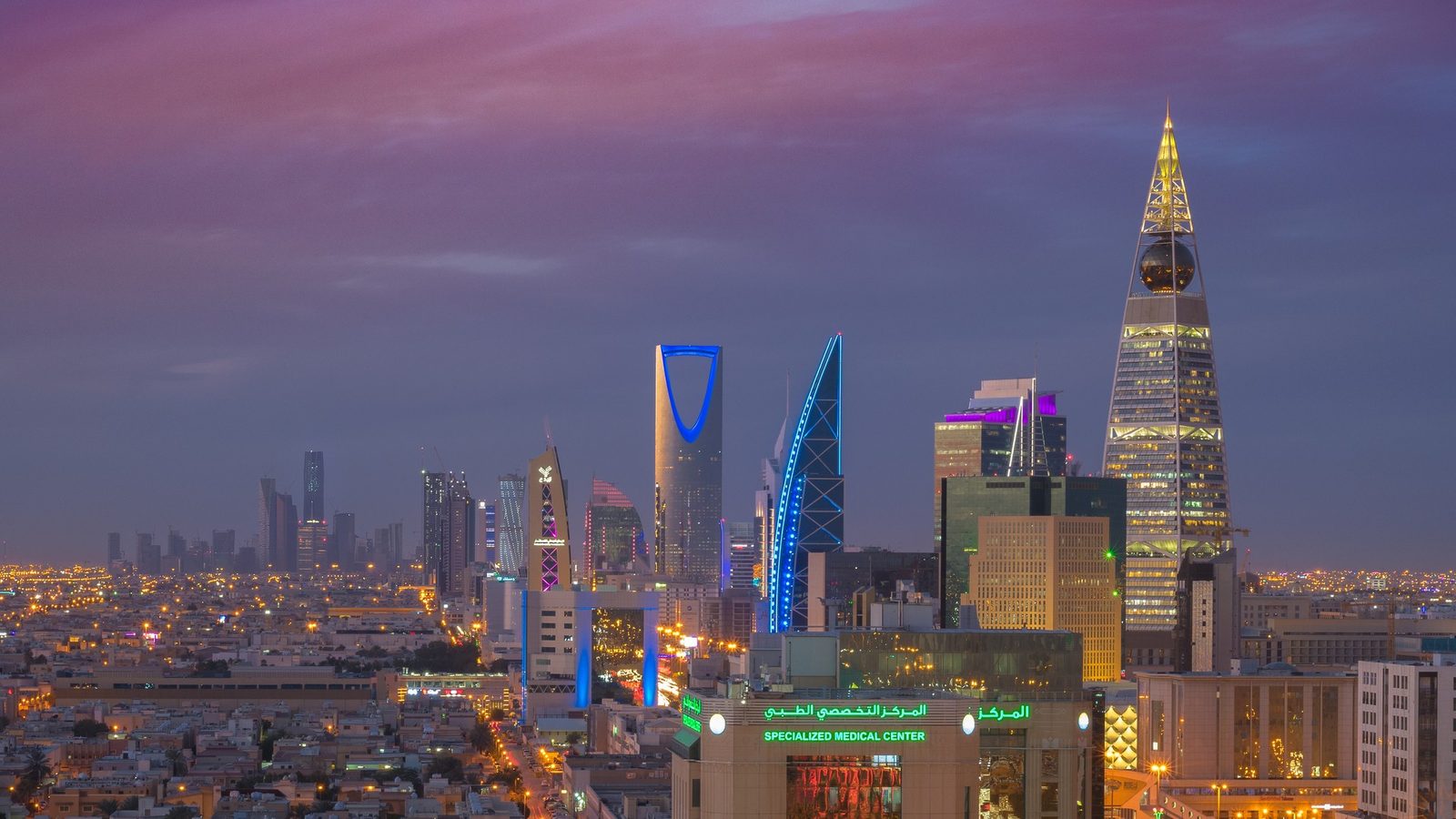
The U.S. Department of Defense (Pentagon) has officially appointed Elon Musk, together with Anduril founder Palmer Luckey and former U.S. House Speaker Newt Gingrich, to help lead Project Meridian, an initiative to study the future battlefield and the technologies that will shape modern warfare. At the same time, the Pentagon has also announced plans for an Autonomous Warfare Command, a new command focused on autonomous systems, robotics, drones, and artificial intelligence.
Musk's appointment to the Pentagon project is only one entry point for understanding a much broader transformation. The world is moving toward a situation in which technology can no longer be clearly separated from defense, industry, and geopolitics. Whether it involves AI, semiconductors, satellites, robotics, or data, these technologies are increasingly becoming components of national power, prompting countries to secure and strengthen their own technology ecosystems.
This development could also create two increasingly distinct technology ecosystems: one centered on the United States and its allies, and another developing around China. The signs of this division began to emerge with the U.S.-China trade war in 2018. However, amid this rivalry, a more interesting question is emerging for many countries, including Saudi Arabia. Should countries such as Saudi Arabia choose one side, or can they instead build an independent technological position of their own?
From Vision 2030 to AI
One important development marking Saudi Arabia's journey toward Vision 2030 is the government's significant spending on technology. The International Data Corporation (IDC) had estimated that Saudi Arabia's information and communications technology (ICT) spending would reach US$39.6 billion in 2025. The Saudi government itself spent around SAR31.9 billion on ICT services in 2025 through more than 6,100 contracts. Spending on cloud computing increased by 42 percent, while expenditure on AI and emerging technologies rose by around 20 percent.
These figures demonstrate the Saudi government's commitment to making technology an important component of its economic transformation strategy, rather than merely a supporting tool for government administration. This transformation has become increasingly visible through the role of the Public Investment Fund (PIF), which has been given an important mandate in the development of technology.
In 2025, PIF launched HUMAIN, a company intended to build Saudi Arabia's AI ecosystem, ranging from data centers, cloud infrastructure, and high-performance computing to the development of AI models. HUMAIN is important because it reflects a shift in Saudi Arabia's ambitions. The Kingdom is not only seeking to acquire technology from abroad, but is also beginning to build domestic technological capabilities.
To achieve this objective, Saudi Arabia and NVIDIA have partnered with HUMAIN to develop AI factories in the Kingdom, with planned capacity of up to 500 megawatts and the deployment of hundreds of thousands of GPUs. Amazon Web Services (AWS) and HUMAIN have also announced plans to invest more than US$5 billion together in developing an AI Zone in Saudi Arabia. Qualcomm has also partnered in the development of AI data centers and the semiconductor ecosystem. This demonstrates an important reality: Saudi Arabia still relies significantly on American technology for advanced computing, AI infrastructure, cloud services, and semiconductor capabilities.
At the same time, Saudi Arabia has not severed its technological ties with China. China has already played a significant role in trade and investment across the Gulf, while Chinese companies are also active in telecommunications, cloud computing, AI, and digital infrastructure.
Saudi Arabia could use chips developed by American companies, cloud infrastructure provided by Western companies, and at the same time take advantage of open-source AI models developed by Chinese companies. In such a situation, the choice between “the United States or China” becomes too simplistic.
Saudi Arabia has a strong interest in maintaining access to as many technologies, sources of capital, expertise, and markets as possible as part of its economic diversification under Vision 2030. However, this strategy also faces risks, particularly because of U.S. export controls on certain semiconductor and AI technologies involving China.
If technological fragmentation deepens, countries such as Saudi Arabia may face increasing pressure to determine clearer technology standards, chip suppliers, cloud systems, and data security regulations. In other words, maintaining relationships with both ecosystems could become increasingly difficult.
A Gateway to a Third Pole?
Saudi Arabia possesses a combination of advantages that few other countries in the world can match: substantial financial support through PIF, abundant energy resources, a strategic geographic location, a large regional market, the ambition of Vision 2030, and the ability to attract global technology companies.
Data centers and AI infrastructure require enormous amounts of electricity. Saudi Arabia's energy advantage could therefore provide an important foundation for the development of large-scale computing infrastructure.
If these advantages are combined with investment in AI, cloud computing, semiconductors, data centers, and digital talent, Saudi Arabia does not necessarily have to remain merely a technology consumer for the world's largest companies, whether from the United States or China. Saudi Arabia could become a regional technology hub capable of working with multiple technology ecosystems simultaneously.
However, building a “third pole” will not be easy. Capital alone is not enough. Saudi Arabia needs talent, research capabilities, universities, domestic technology companies, data protection frameworks, a startup ecosystem, and the ability to develop technologies that can compete globally.
Therefore, the success of this strategy will ultimately be determined not by the size of the investment, but by how far those investments can generate technological capabilities that are genuinely developed and retained within the country.
The technology rivalry between the United States and China may continue for many years. But the global technology landscape does not necessarily have to end with only two choices: the U.S. bloc or the Chinese bloc.
Looking at Saudi Arabia's development, including its major investments in technology infrastructure and AI, the direction of this transformation will be worth watching. The key question is whether Saudi Arabia can turn its financial and energy advantages into technological power, so that it does not merely become a market for the world's two technology giants, but instead develops into a technology center that both of them must take seriously at the global level.
Sources: MITRE: Project Meridian · US Army / Pentagon News: Planned Autonomous Warfare Command · US International Trade Administration: Saudi ICT market · Saudi Press Agency / Digital Government Authority: 2025 ICT spending · PIF: Launch of HUMAIN · NVIDIA: Saudi AI factories · AWS: Joint AI Zone investment · Qualcomm: HUMAIN partnership · Huawei Cloud: Saudi activities · US Commerce Department: Saudi chip export conditions


Comments
No comments yet. Be the first.
Comments are closed on this article.