
Geopolitical fragmentation has driven major changes in the global geoeconomic order and supply chains. Many multinational companies have begun diversifying their supply chains. This change is increasingly evident in the growth of trade, investment and production capacity within the ASEAN region.
The ASEAN Economic Ministers Meeting on 19 September 2026 stated that the ASEAN economy grew by 4.9% in 2025. This figure was higher than the global growth estimated by the IMF at 3.5% in 2025. Asian Development Bank (ADB) data, in September 2026, raised its growth projection for Developing Southeast Asia to 4.7% in 2026, from 4.6% in the July projection. For 2027 it is projected at 4.9%.
The trend in ASEAN's economic development is also reflected in increasingly close trade and cooperation between ASEAN and neighboring countries. ASEAN data show a trend of growing ASEAN–China economic relations. Two-way trade between ASEAN and China reached US$913 billion in 2025, an increase of 18.2% compared with the previous year. China remains ASEAN's largest trading partner.
At the same time, ASEAN is increasingly becoming an important destination for global investment. The ASEAN Investment Report 2025, jointly prepared with the United Nations Conference on Trade and Development (UNCTAD), shows that trade tensions and the need for multinational companies to reduce supply chain risks have also encouraged investment into the ASEAN region. ASEAN manufacturing FDI even increased by nearly 150% to US$44 billion in 2024.
China+1 Strategy
ASEAN is one of the regions benefiting from these changes. For multinational companies, supply chains are being reconfigured through various approaches, such as China+1, friend-shoring, and near-shoring. This is an opportunity for ASEAN to play an increasingly important role in global production networks. The China+1 strategy itself developed among Japanese companies in the early 2000s and came into use around 2003. The SARS outbreak during that period increased the risks of concentrating production in China, prompting Japanese companies to diversify their production bases to other countries in Asia.
Initially, the China+1 strategy was widely understood as an effort by companies to have alternative production facilities outside China. Vietnam became one of the main beneficiaries of this change, particularly in the electronics, manufacturing, and export sectors. Vietnam is an example of how a combination of trade, technology exports, manufacturing and investment can create much stronger growth momentum amid changes in global supply chains. Its economy grew 8.39% in the second quarter of 2026. Exports also continued to increase by 22.7%, for electronic products, machinery and mobile phones. Its productivity and industrial capacity also experienced strong growth, with industrial growth reaching 11.2% and the manufacturing sector 11.3% during the same period.
Thus, China+1 does not have to be understood as a strategy of leaving China. In many cases, the strategy instead creates a more diversified production network, with China remaining an important hub while ASEAN gains new roles as a production, export and investment base. Subsequent developments show that supply chain diversification should not stop at just one country. Multinational companies are instead continuing to expand and build production networks spread across several ASEAN countries. In this context, economic integration among ASEAN member states is becoming increasingly important.
For example, while Vietnam serves as a base for electronics manufacturing and assembly, Malaysia serves as a center for semiconductors and technology components. Meanwhile, Thailand serves as an automotive base, and Indonesia as a supplier of raw materials as well as a large market. Financing, logistics, trade, and regional services support come from Singapore.
With this complementary division of functions, the China+1 strategy can develop beyond simply shifting part of production from China to one ASEAN country, into the formation of a regional production network connecting various economic strengths across Southeast Asia.
Connectivity and Harmonization as the Key
This is the important strategic change taking place in ASEAN amid the transformation of the geoeconomic landscape and the diversification of global supply chains. However, this momentum is not sufficient merely by attracting investment to each member state. ASEAN needs to ensure that it does not stop at building factories in one country, but instead creates a multiplier effect for all member states and the entire region.
And this can be done through:
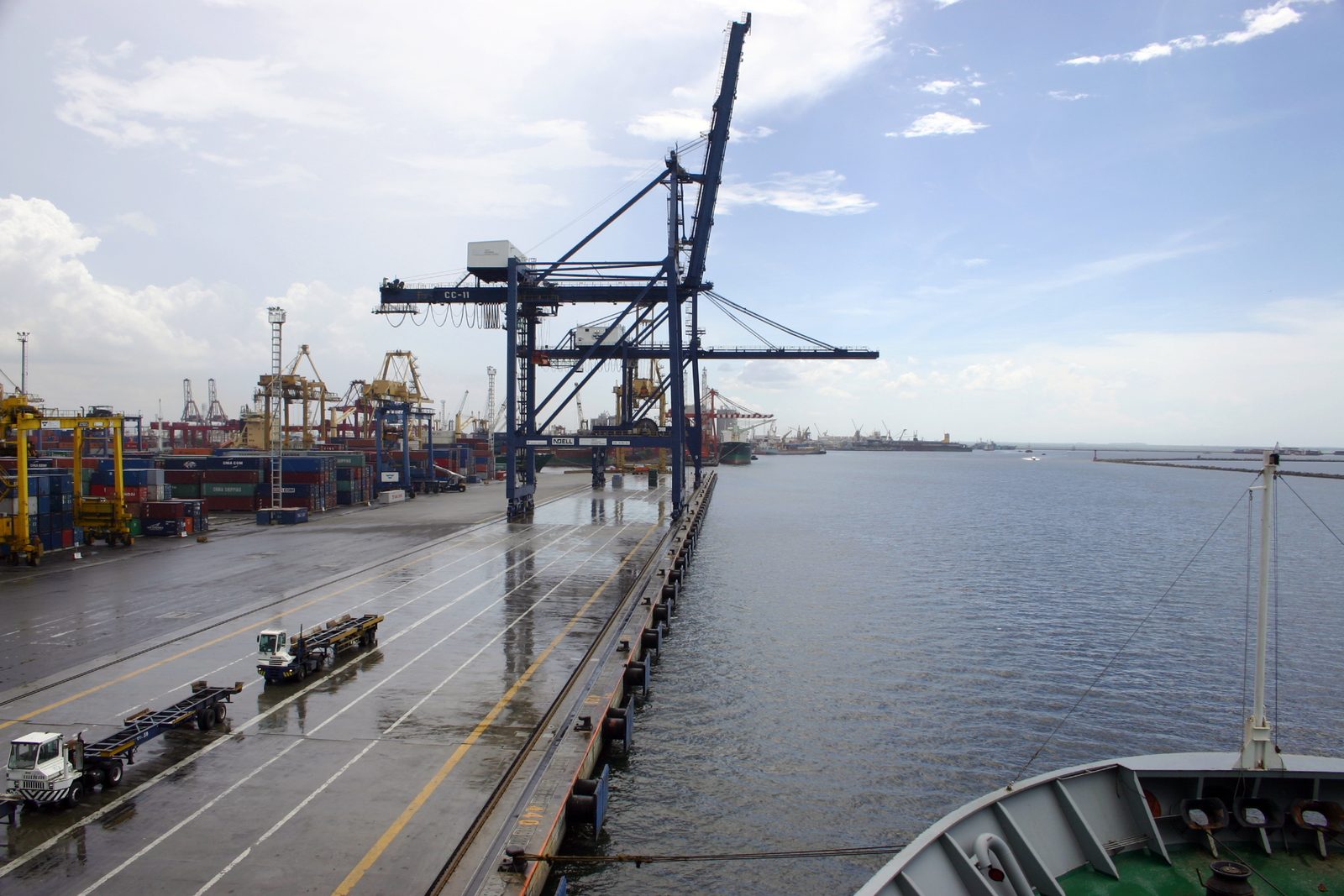
First, strengthening regional infrastructure connectivity. ASEAN needs to reduce logistics costs, improve the quality of port infrastructure, increase energy availability, expand digital connectivity, and improve regulatory certainty and efficiency. Therefore, ASEAN infrastructure development must become increasingly integrated. Indonesian ports, Vietnamese industrial zones, Malaysian electronics centers, Singapore's logistics networks and Thailand's manufacturing bases, for example, should not be viewed merely as the national infrastructure of individual countries. Instead, they are all part of a regional economic architecture designed to increase ASEAN's competitiveness in global markets.
Second, building an integrated business ecosystem connected to regional supply chains. The challenge is not only to build roads, ports, industrial zones, and production facilities, but to create a system that enables goods, capital, data, and skilled labor to move more efficiently. Such connectivity requires more coordinated regional policies. ASEAN needs to strengthen regulatory harmonization, simplify trade procedures, strengthen regional supply chains, and increase the mobility of skilled labor. All of this requires a regional roadmap capable of connecting national interests with the broader economic interests of ASEAN.
If these two agendas are implemented well, global economic fragmentation can become an opportunity for ASEAN to deepen its economic integration. Thus ASEAN can offer something that is difficult for a single country to offer, namely a regional market with a large population, a diverse production base, complementary economic resources, and a strategic geographic position among the world's major economic centers. This is a major opportunity for ASEAN.
Update, 20 October 2026: for an Indonesian view of whether Islamic finance is strengthening productive businesses, see Riza Abditya Wijaya's Islamic Finance Must Deliver More Than Transaction Figures.
Update, 23 October 2026: for the author's analysis of how Indonesia's planned commodity exchange could turn nickel output into pricing power, see BMKS: Can Indonesia Turn Nickel Power into Leadership in Asia’s Electric Motorcycle Battery Market?.

Comments
No comments yet. Be the first.
Comments are closed on this article.