
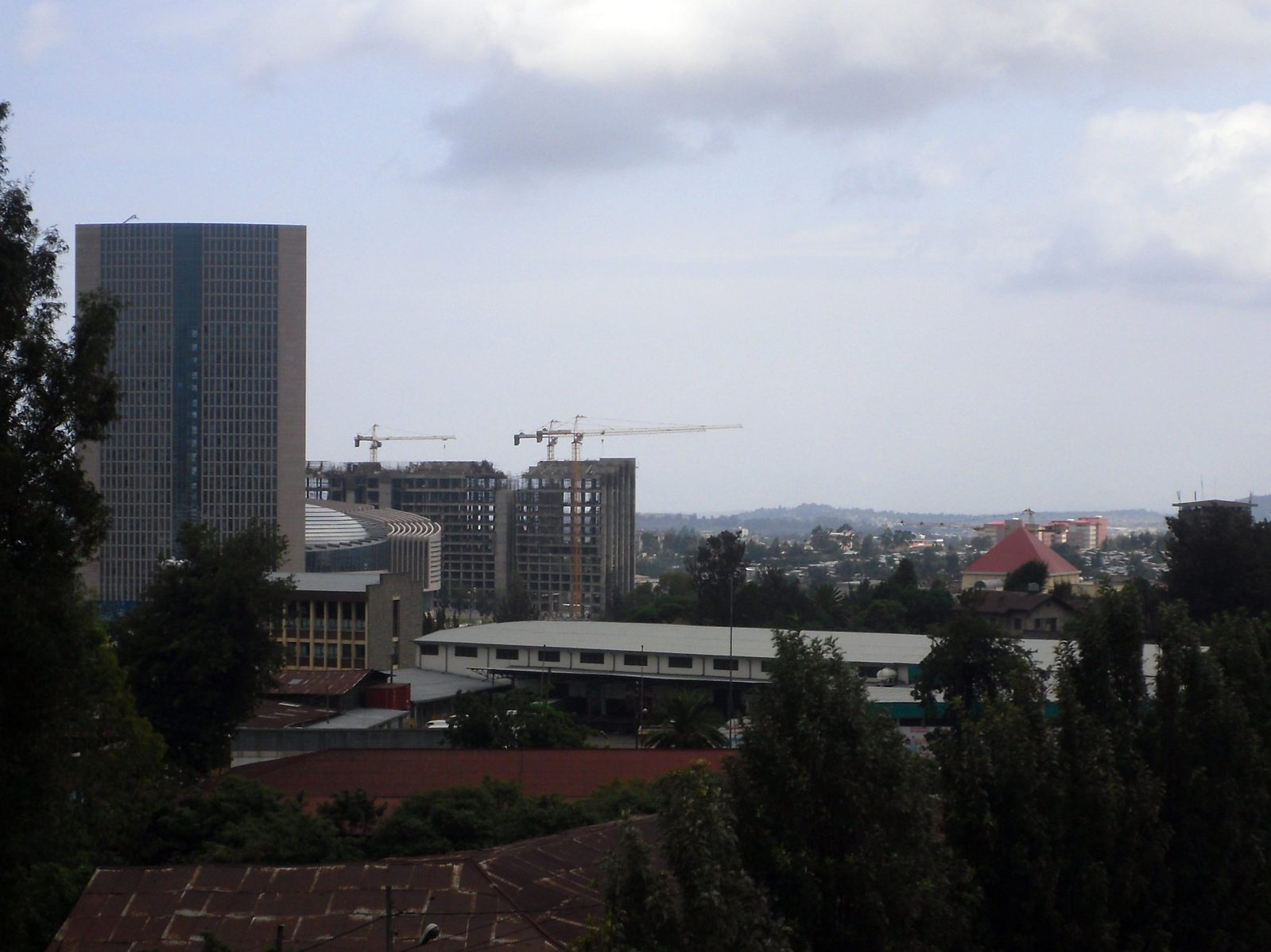
Sub-Saharan Africa’s economic growth is entering an interesting phase. At a time when the global economy is facing geopolitical uncertainty, trade fragmentation, and rising financing costs, the region is showing relatively strong growth prospects. The question is not simply why Africa is growing faster, but whether this momentum can become a foundation for structural transformation and a stronger position for Africa in the global economy.
According to the IMF World Economic Outlook (WEO) October 2026, real GDP growth in Sub-Saharan Africa is projected to reach 4.5 percent in 2026, compared with global economic growth of 3.1 percent. The IMF also projects regional growth to remain at 4.5 percent in 2027. These figures demonstrate the region’s economic resilience, although they do not necessarily guarantee income and welfare convergence.
Among the countries with high growth rates, Ethiopia is projected to grow by 9.2 percent, Rwanda by 7.4 percent, Guinea by 7.2 percent, Benin by 7 percent, Uganda by 6.2 percent, Tanzania by 6 percent, and Ghana by 5.7 percent. Meanwhile, Nigeria and South Africa remain important because of the size of their economies, although their growth rates are not as high as those of several other countries in the region.
This distinction matters. High growth indicates changes in output, while GDP size reflects the scale of an economy. Smaller countries can grow rapidly without immediately possessing the industrial capacity, domestic markets, and global influence of the region’s major economies.
Africa’s growth is not driven by a single factor. Macroeconomic reforms, infrastructure investment, commodity exports, agriculture, services, and the expansion of private-sector activity contribute in different ways across countries. Ethiopia and Nigeria, for example, have benefited from domestic policy adjustments, while several other countries are taking advantage of demand for strategic minerals and the development of processing industries.
However, Solow’s growth theory reminds us that capital accumulation and labour alone are not sufficient to sustain long-term growth. Rising productivity and technological progress determine an economy’s ability to increase output per worker. Endogenous growth theory, meanwhile, places innovation, skills, and knowledge at the centre of growth drivers that can be developed from within an economy.
Therefore, Africa’s challenge is not only to sustain GDP expansion, but to transform its mineral wealth, agriculture, and human resources into productivity gains, higher-value industries, and better jobs. The IMF has also warned that weak labour productivity and excessive dependence on commodities could constrain long-term income growth.
Regional Integration as a Growth Lever
The next momentum comes from economic integration. Through the African Continental Free Trade Area (AfCFTA), African countries are seeking to build a more connected market, expand trade in goods and services, and develop regional value chains. The agreement entered into force in 2019, while trading under the AfCFTA framework began in January 2021.
In theoretical terms, this is consistent with Béla Balassa’s stages of economic integration: from a free trade area toward deeper market integration and potentially broader coordination of economic policies. However, these stages do not occur automatically. Tariff reductions must be accompanied by the simplification of customs procedures, mutual recognition of product standards, improved logistics connectivity, greater certainty in investment rules, and the removal of non-tariff barriers.
The AfCFTA can also expand the scale of production. Fragmented markets often make it difficult for industries to achieve economies of scale. If trade barriers are reduced, companies can serve consumers across borders, attract investment, and build regional supply chains.
The Digital Economy and LCT
Integration does not have to begin with expensive physical infrastructure. The digital economy enables small businesses to reach regional markets through e-commerce, digital financial services, and cross-border payment systems. The AfCFTA Digital Trade Protocol provides a framework for reducing barriers to digital trade, strengthening interoperability, and developing common rules.
This is where local currency transactions, or LCT, become relevant. Through the Pan-African Payment and Settlement System (PAPSS), cross-border payments can be made using the local currencies of participating countries without every transaction having to be individually converted into a major currency such as the US dollar. The system has the potential to reduce transaction costs, accelerate payments, and broaden participation by small businesses.
Nevertheless, LCT is not an automatic solution to all of Africa’s financial challenges. The system requires liquidity in local currencies, confidence in financial institutions, exchange-rate stability, and mechanisms for settling trade imbalances. Without these foundations, the use of local currencies does not automatically eliminate the need for foreign exchange.
Towards the Global Economy
Above-global-average growth, trade integration, cross-border payments, and digitalisation can provide a foundation for greater economic cohesion across Africa. In an increasingly fragmented global economy, a more connected regional market can strengthen bargaining power, reduce dependence on a single partner, and expand investment options.
However, describing this as a transition towards global economic power still requires evidence. Debt pressures, financing costs, differences in national capacities, and weak productivity remain significant constraints. The IMF has also warned that the region’s growth resilience is occurring alongside rising inflation risks and limited fiscal space.
Ultimately, Africa’s prospects will not be determined by the difference between its GDP growth rate and the global average alone. The real measure of success will be its ability to transform growth into industrialisation, productive employment, intra-African trade, and technological capacity. If institutional integration progresses alongside productive transformation, Sub-Saharan Africa could move from being merely a region with relatively high growth to becoming one of the increasingly significant economic centres in the global order.
Sources: IMF: World Economic Outlook, October 2026 · IMF DataMapper: 2026 country growth forecasts · IMF: Sub-Saharan Africa Regional Economic Outlook Update, October 2026 · IMF: African Department press briefing, 15 October 2026 · African Union: AfCFTA implementation timeline · African Union: Protocol on Digital Trade · PAPSS: payments, pre-funding and settlement


Comments
No comments yet. Be the first.
Comments are closed on this article.