
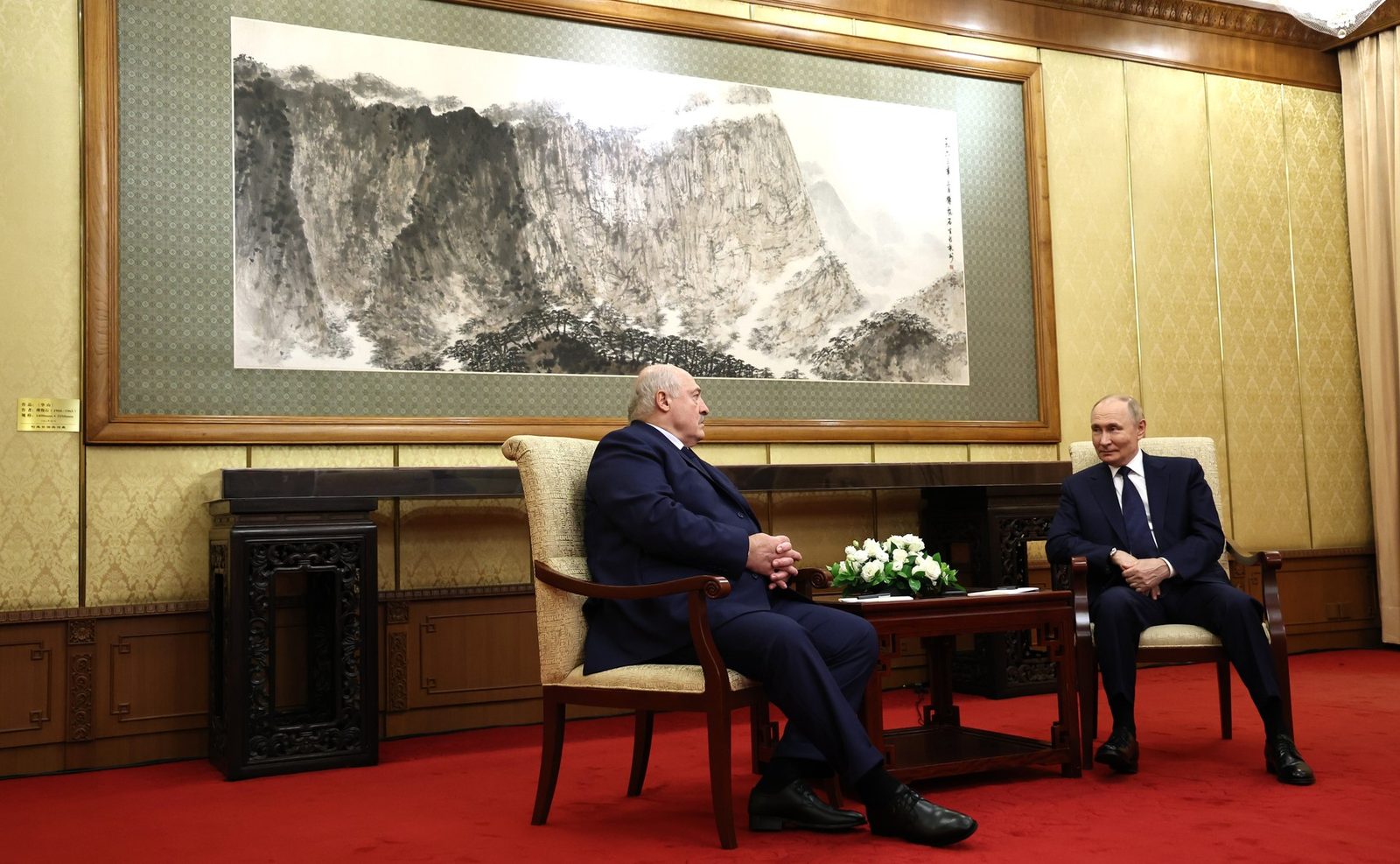
In early 2025, Washington began restoring direct contact with Belarus’s authoritarian regime. The United States initially viewed Lukashenko as an additional channel to Putin in efforts to end the war in Ukraine.
Over the next year and a half, the agenda expanded considerably. The United States discussed targeted sanctions relief, the resumption of air links and operations at the U.S. Embassy, access to frozen funds, trade in Belarusian potash, military contacts, and the release of political prisoners. Most U.S. sanctions against the Belarusian regime, however, remained in place.
As the negotiations expanded, they began to change not only U.S. relations with the Lukashenko regime but U.S. interests themselves. Access for Belarusian potash to the U.S. market initially represented a concession to the regime. By September 2026, Donald Trump was considering purchases of Belarusian potash as a way to lower costs for American farmers.
How Negotiations With Lukashenko Turned Into Sanctions Deals
Lukashenko offered to relay U.S. messages to Putin. On August 15, 2025, Trump used that channel ahead of his meeting with Putin in Alaska. On his way to the talks, he called Lukashenko and later said that Lukashenko believed Putin was ready to make a deal.
In January 2025, the Belarusian regime released a U.S. citizen. In February, after another round of talks, three more people were released. In June, following Lukashenko’s meeting with a U.S. presidential envoy, the regime released 14 people.
On September 11, another 52 prisoners were released. At the same time, the United States began easing restrictions on the state-owned airline Belavia. The negotiations gave Washington direct access to Lukashenko. Russia and Ukraine were discussed through this channel. The two sides also began discussing the restoration of diplomatic ties and economic relations. U.S. military officers were allowed to observe the Russian-Belarusian Zapad-2025 military exercises.
The releases were followed by specific sanctions decisions. On September 11, the United States authorized certain transactions involving Belavia. On November 4, the airline was removed from the U.S. sanctions list. On December 15, the United States authorized transactions involving the Belarusian Potash Company, Belaruskali, and Agrorozkvit.
On December 13, the Belarusian regime released 123 people. By then, Washington’s main goal was to secure prisoner releases, while the regime wanted sanctions relief.
On March 19, 2026, the Belarusian regime released 250 people. Of those, 235 remained in Belarus and 15 were transferred to Lithuania. As part of the deal, the United States agreed to expand sanctions relief for the financial sector and remove the remaining restrictions on Belaruskali, the Belarusian Potash Company, and Agrorozkvit. The Office of Foreign Assets Control formally implemented those decisions on March 26.
Over the course of a year, the talks moved from individual prisoner releases to a deal involving 250 people and major sanctions decisions in the financial and potash sectors. Most U.S. sanctions against the Belarusian regime, however, remained in place.
Washington was lifting restrictions sector by sector, turning different parts of the sanctions regime into separate bargaining assets.
The United States tied further sanctions relief not only to prisoner releases but also to an end to new politically motivated arrests. Yet by the end of June 2026, more than 950 political prisoners remained in Belarus, and new politically motivated cases continued. The scale of the releases therefore does not by itself demonstrate a lasting humanitarian result. While negotiations free some prisoners, the machinery of repression continues to put others behind bars.
Repeated deals with the United States have given political prisoners bargaining value for the Belarusian regime, while continuing repression allows the regime to replenish that resource.
Lifting Sanctions Does Not Reveal the Cost of a Concession
Restrictions on a small company and a major exporter have very different economic effects. The cost of a concession also depends on why the sanctions were imposed and what happens when they are lifted.
In March 2026, the United States removed the remaining restrictions on Belaruskali, while the European Union kept its sanctions in place. The EU describes the company as a major source of state revenue and foreign currency. Its sanctions justification also cites repression against workers and Belaruskali’s involvement in the transfer of Ukrainian children from Russian-occupied territories. Dubrava, a children’s health camp owned by the company, has hosted more than 2,050 Ukrainian children.
U.S. and European sanctions against Belaruskali have different legal bases. But by the March deal, European authorities had already linked the company to the transfer of Ukrainian children. By lifting its restrictions in exchange for Belarusian political prisoners, Washington reduced pressure on an entity its allies continued to sanction over another serious abuse.
Releasing political prisoners has clear humanitarian value. But here, that result came at the cost of reducing pressure over abuses against another group. The cost of the deal therefore cannot be measured solely by the number of prisoners released. Lifting U.S. sanctions did not restore Belaruskali’s previous access to international markets. EU restrictions remained. Nor did the U.S. decision require banks, insurers, carriers, or buyers to resume business with the company. The legal scope of the U.S. concession and its actual economic value to the Belarusian regime could therefore differ substantially.
Negotiations Created an American Economic Interest
When the talks began, there was little significant U.S. commercial interest in Belarus. In 2025, bilateral trade totaled about $37.4 million: $18.3 million in U.S. exports and $19.1 million in imports.
But the United States relies heavily on imported potash. In 2025, import reliance reached 92%. Canada supplied 79% of U.S. potash imports in 2021–2024.
On September 21, 2026, Trump said the United States was working on a major deal to buy Belarusian potash, which he said could lower costs for American farmers.
Potash had changed roles in the negotiations. At first, access to the U.S. market was a concession from Washington. Then buying Belarusian potash became an economic interest for the United States itself. Commercial interest did not open the diplomatic channel. The diplomatic channel created the commercial interest.
But Washington cannot realize that interest on its own. The European Union kept restrictions on Belarus’s potash sector. Lithuania opposed easing EU sanctions, and the old transit route through its territory remains closed.
The United States can allow American companies to buy Belarusian potash. It cannot lift EU sanctions or reopen the Lithuanian route on its own. The U.S. economic interest created by the negotiations therefore also depends on decisions by European allies.
U.S. sanctions policy treats restrictions as reversible where possible. But once the United States develops an economic interest of its own, restoring sanctions becomes more costly. If American companies begin benefiting from the new trade, renewed sanctions would impose costs on the U.S. side as well.
A new U.S. economic interest does not necessarily give Washington more leverage over Lukashenko. His regime retains close military, political, and economic ties with Russia. Lukashenko has said he will not develop relations with the United States at Russia’s expense. If Washington hopes the restored channel will give the Lukashenko regime greater autonomy from Russia, the outcome will depend on the regime’s decisions, not the number of meetings or contacts.
How Lukashenko Is Trying to Link U.S. and Russian Interests
Eight days after Trump said the United States was considering a major purchase of Belarusian potash, Lukashenko proposed that the United States join Russia’s Gazprom in building a new nitrogen fertilizer complex. He proposed using U.S. technology and said he had already agreed with Putin on Gazprom’s participation.
The project dates back at least to 2013, when Belneftekhim and Gazprom entities began exploring a joint venture. In 2014, the Lukashenko regime began seeking investors. Potential partners included Chinese, Italian, and South Korean companies. An Italian company was selected in 2020. In 2021, the contract was still being prepared, while Lukashenko again proposed involving Gazprom to Putin. By September 2026, the complex had still not been built.
Lukashenko said he had reached an agreement with Putin, but no agreement with Gazprom had been announced publicly. Lukashenko’s overriding goal is to preserve and strengthen his own rule. To do so, he needs sanctions lifted, economic and political relations with the West restored, and other states to see value in working with his regime. Prisoner releases, negotiations with the United States, and economic proposals are tools toward that goal.
At the same time, Lukashenko wants broader relations with the United States and less dependence on Russia. But his regime’s dependence on Moscow is so extensive that a break with Russia would threaten his own hold on power. He therefore needs relations with the United States that strengthen his position without requiring an open choice against Russia.
The nitrogen complex proposal brings these objectives together. Lukashenko is offering U.S. participation and technology for a project his regime has failed to complete for thirteen years, while keeping Gazprom involved. He is trying to secure U.S. participation, preserve relations with Russia, and give both countries a material interest in the same project in Belarus.
He is trying to give both Russia and the United States, despite their confrontation with each other, reasons of their own to work with his regime. The more such interests each side develops, the more costly pressure on Lukashenko becomes for them - and the stronger his own position becomes.
Each Deal Changes the Terms of the Next
Over a year and a half of negotiations, hundreds of people were released from prison, and the United States restored direct political contact with the Lukashenko regime.
The cost of those results depends on which sanctions are lifted and why they were imposed. If freeing one group means easing pressure tied to serious abuses against another, the humanitarian value of the releases does not erase the cost of the concession.
Lifting sanctions also changes U.S. interests. Access to the U.S. market initially represented a concession from Washington. After restrictions were partially lifted, buying Belarusian potash became an economic interest for the United States itself.
Lukashenko can use that interest to seek further sanctions relief. A U.S. concession in one deal can therefore create an American interest in the next.
That is how each deal changes the terms of the next: by lifting sanctions to achieve its objectives, Washington can create its own interest in lifting more.
Sources: Congressional Research Service: Belarus—An Overview (28 January 2026) · Reuters: US envoy discusses embassy reopening and normalisation (11 September 2025) · Reuters: Trump discusses Belarusian potash purchases (21 September 2026) · Roll Call / Factba.se: Trump interview with Bret Baier (15 August 2025) · Reuters: three detainees released (12 February 2025) · Reuters: release of Siarhei Tsikhanouski and other prisoners (21 June 2025) · Stars and Stripes: US observers at Zapad-2025 (16 September 2025) · OFAC: Belavia general licence (11 September 2025) · OFAC: Belavia designation removal (4 November 2025) · OFAC: potash general licence (15 December 2025) · ABC News: release of 123 prisoners (13 December 2025) · Reuters: release of 250 prisoners and sanctions relief (19 March 2026) · Reuters: continuing repression and sanctions policy (29 June 2026) · OFAC: potash delistings and financial-sector measures (26 March 2026) · Council Decision (CFSP) 2024/769: EU sanctions grounds (26 February 2024) · US Census Bureau: trade in goods with Belarus · Atlantic Council: US potash supply and import dependence (17 July 2026) · Reuters: Lithuania opposes easing EU sanctions (21 September 2026) · US Treasury: sanctions review (18 October 2021) · Reuters: Lukashenko on US ties and Russia (18 December 2025) · Reuters: proposed US participation in a Gazprom fertiliser project (29 September 2026) · bne IntelliNews: Belarus and Gazprom investment proposals (17 September 2013) · Fertilizer Daily: Grodno Azot contractor selection (17 February 2020) · REFORM.news: Grodno Azot contract preparations (9 March 2021) · USGS: Mineral Commodity Summaries 2026—Potash

Comments
No comments yet. Be the first.
Comments are closed on this article.