
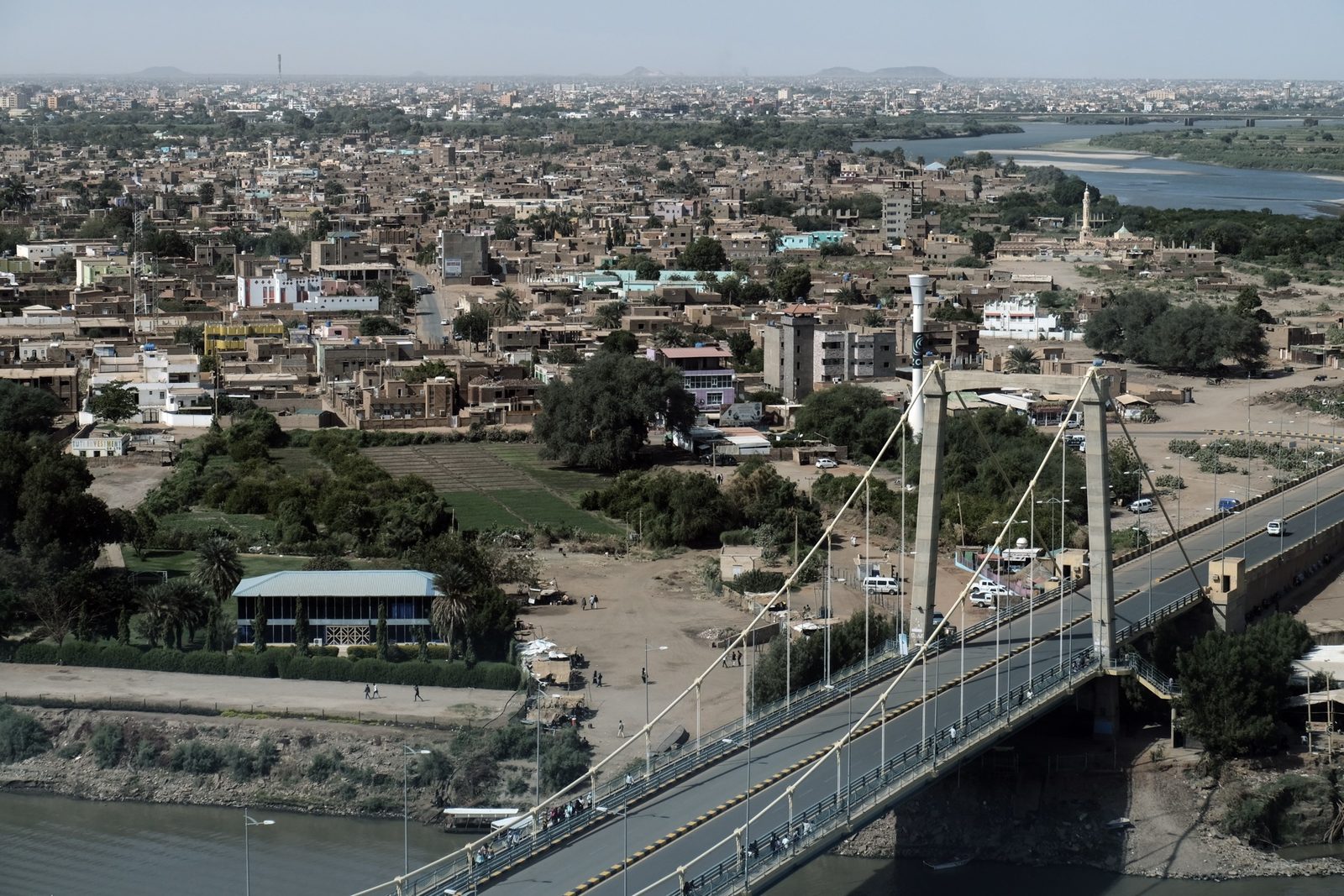
Since its beginning in April 2023, the conflict in Sudan has caused mass casualties, displaced millions of people internally and to neighboring countries and contributed to regional diplomatic fragmentation among states across the Middle East, according to the UNHCR. Unlike other ongoing conflicts like the Russia-Ukraine War, or the conflict between the US and Iran, the Sudanese War has proven especially difficult to mediate. This is because the combatants, the Sudanese Armed Forces (SAF), and the Rapid Support Forces (RSF) consistently resist negotiations as they refuse to treat each other as legitimate counterparts, based on reporting by Reuters. As a result, regional actors were drawn into Sudan, based on their strategic interests. Reuters also reported that Saudi Arabia repeatedly pushed for negotiations in 2023, 2024, and 2026 along with regional actors such as Egypt and the US, but without producing a durable ceasefire.
At the same time, AP reports have been circulating about both sides of the conflict receiving external support from some of the actors involved in mediation, suggesting that regional actors could be shifting from mediators to external backers and potentially parties to the conflict based on the developments in the region and the progression of the war. The purpose of the report is to analyze how Sudan's war evolved from a local conflict to a potential regional strategic war and provide recommendations on bringing a sustainable end to the conflict.
Implications of the Conflict: Humanitarian Fallout and Regional Spillover
Like other conflicts, Sudan's war forced a mass exodus to neighboring states in addition to waves of internal displacement as fighting expands across the country. What's different about the Sudanese displacement crisis is that it placed additional economic strain on states that face serious economic challenges. According to Aljazeera, Egypt, Chad, South Sudan, Libya, and Ethiopia collectively host over four million Sudanese refugees despite suffering from high inflation and debt issues, in addition to South Sudan and Libya which have limited capacity to host refugees. This increases security concerns for states that border Sudan, fearing a rise in arms trafficking, cross-border militant activity, and a wider insecurity in a region already affected by armed groups. As a result, Sudan's neighbors Egypt, and Kenya took the initiative to host Sudanese factions to reconcile their differences, hoping to end the conflict before it burdens their economies and jeopardize their security. Fearing for its security, Sudan Post confirmed that Ethiopia moved to secure its border with Sudan, which is currently controlled by the SAF.
However, a visual investigation by Reuters shows that Ethiopia trains and provides support for RSF forces through an alleged camp within Ethiopian borders. Furthermore, Kenya appears to be offering diplomatic backing for RSF after hosting RSF Leader Hemedti, causing significant diplomatic friction with the internationally recognized Sudanese government, According to AP. Reuters also confirmed the use of Libyan airfields to support RSF troops in Sudan and coinciding with RSF's capture of the border area between Libya and Sudan. Chad has also reportedly served as a logistics hub for RSF fighters through the capital N'Djamena, based on a Reuters investigation. On the other hand, Egypt maintained its diplomatic support to the SAF, despite RSF chief Hemedti claiming that Egyptian Air Force carried out multiple attacks against his troops signaling direct Egyptian involvement in the war. These claims came after reports by Reuters on the use of an Egyptian base close to the border in Sudan to support SAF operation. These developments show that Sudan's conflict is already expanding into a regional competition rather than a local conflict.
The Proxy Conflict and Regional Scrambling: Different Battles on A Single Battlefield
The conflict which began between the Sudanese Armed Forces, and the Rapid Support Force over the failure to implement the power-sharing agreement of Juba, may resemble a proxy arena between two rising regional alignments in the Middle East; The alliance comprising Saudi Arabia, Turkey, and Pakistan – who have already signed the Mecca Joint Defensive Agreement (MJDA) in August 2026 – and an alignment potentially comprising UAE, Israel, and Ethiopia. In this regard, Egypt occupies a complicated position between both alignments given the variance of its strategic and economic interests between both sides. On one hand, Egypt remains politically adjacent to the MJDA due its presence in the framework meetings and its continued coordination with Turkey, Saudi Arabia, and Pakistan in the Gaza War and the Iranian American Conflict. On the other hand, Egypt's economic standing could seriously deteriorate without Emirati investments and bonds, in addition to the presence of the Emirati-backed Libyan National Army (LNA) on Egyptian borders. This dilemma could constrain Egypt's strategic decisions in Sudan between being at odds with its main economic partner (UAE) and its main security partners (Saudi Arabia, Pakistan, and Turkey).
GERD Crisis
The crisis surrounding the Grand Ethiopian Renaissance Dam is entering its second decade and while it remains strictly localized to Egypt, Sudan, and Ethiopia; government statements show that Israel appears to have elevated their engagement with Abiy Ahmed's Ethiopian government, without taking public positions on the GERD crisis. While the Egyptian government considers its position on the GERD a matter of national security that is not going to be compromised, Israel's and UAE's continued support to Abiy Ahmed's Ethiopian government may indirectly constrain Egypt's strategic maneuvers in the region, especially in Gaza and Sudan. While UAE supports both governments, As an Arab nation, UAE's engagement with Ethiopia's government may be considered more damaging for Egypt's government than UAE's support for Egypt is for Ethiopia.
In the end, the GERD crisis represents another dilemma that increases Egypt's incentive to support the SAF as a way of expanding Egyptian influence in Ethiopia's neighbor, Sudan, and limit Ethiopia's regional leverage. However, this could complicate Egypt's water security calculations and economic standing given UAE's and Ethiopia's reported alignment with the RSF.
UAE Vs Saudi Arabia (KSA)
While Yemen remains the main source of dispute between Saudi Arabia, and the UAE. The war in Sudan emerged as a new source of dispute between the two Gulf powerhouses. On the one hand, Saudi Arabia provides strong diplomatic cover for the SAF, while Reuters reported possible Saudi-backed military procurement channels benefitting the SAF through Pakistan. At the same time, UAE is reportedly providing a number of equipment supply lines for the RSF through Chad, and Libya. Human rights organizations also reported that Colombian mercenaries have been hired and trained by UAE to fight alongside RSF in Sudan. This represents another development in the growing policy rift between two of the most influential states in the region which already clashed in Yemen over UAEs alleged support for the Southern Transitional Council in January. While a similar clash in Sudan is unlikely given the proximity of Sudan to both UAE and Saudi Arabia, the war may strain diplomatic relations between them if the conflict does not reach a diplomatic settlement in the future.
Ethiopia's Red Sea Ambitions
Ethiopian ambitions to regain access to the Red Sea have existed ever since the Eritrean Independence War ended with Eritrea's independence and turning Ethiopia into a landlocked state. However, these ambitions were usually met by resistance from States that lie geographically on the Red Sea; Eritrea, Somalia, Sudan, and Egypt. These states sidelined Ethiopia's Red Sea ambition citing security concerns given Ethiopia's willingness to build a military base and port, as reported by The Gurdian while already establishing a naval force while being landlocked. However, current situation in the region provides Ethiopia with a unique chance to pursue its ambition with concrete steps given Sudan's and Somalia's internal conflicts, and Egypt being directly facing Ethiopia's water leverage through the GERD. This leaves Ethiopia – which has upped its defense production in imports in recent years – with a unique opportunity to overcome the Eritrean challenge and establish a foothold in the region. So far, Reuters reports that Ethiopian officials seem to have set their sights on Eritrea's Assab city/port. If successful, Ethiopian forces could be within less than one hundred kilometers from Yemeni shore at Mokha. This potential scenario could prove useful for UAE, which invested in Ethiopia's government and could capitalize on that investment in if Ethiopia, with access to the Red Sea supports the fight against the Houthi militia, which controls large parts of Yemen, and threaten energy infrastructure in the region. Therefore, a conflict-ridden Sudan could mean more opportunities and better strategic positioning for Ethiopia, explaining Ethiopia's involvement in the Sudanese War.
The MJDA as a Constraint on Abu Dhabi's Regional Maneuvering
Finally, the signing of the Mecca Joint Defense Agreement, which comes at a time of rising security concerns for Middle Eastern states after the Gaza War and with the ongoing conflict between the US and Iran, in addition to the situation in Sudan, Libya, and Yemen. While the signatories announced the pact is defensive and is not directed against any state. The pact is likely aimed at enhancing collective deterrence in the region, especially given Israel's military strategy in the region after the events of October 7th and the offensive postures of the US and Iran. At the same time, the UAE's foreign policy, which appears to align with the polices of the US under the Trump Administration and the Israeli Administration under Prime Minister Netanyahu, especially after UAE's signing of the Abraham Accords with Israel, lead to a rise in economic and security cooperation between UAE and Israel.
Therefore, on the one hand, Israeli officials and media denounce Turkey for its harsh tone on Israeli policy in Gaza and Syria and disparage Saudi Arabia for tying normalization with Israel to establishing a Palestinian state. While on the other hand, we have a growing all-sector cooperation between UAE and Israel, notably while UAE appears to be at crossroads with Saudi Arabia over Yemen and Sudan, and Turkey over Sudan and Gaza. Eventually, the MJDA states could limit UAE's reported influence on the Sudanese War.
Sudan: A Potential Lebanon in Africa
The ongoing trajectory of conflict in Sudan suggests the conflict could produce an outcome where both sides freeze the front lines while retaining de facto control over separate zones, this will create a situation similar to the current situation of Lebanon where the central government and the Lebanese army appear virtually powerless against Hezbollah's fire and manpower. This trajectory would be more dangerous for Sudan given its vast size and the large number of local power structures stretching across the country, which could provide a fertile ground for cross-border militant activity in the region.
The American Role
Earlier this year, President Trump's Africa envoy Massad Boulos presented a five-step plan to permanently end the conflict in Sudan, the plan is to be supported by UAE and was not rejected by Egypt or Saudi Arabia. This plan involves an immediate humanitarian truce with UN supervision to monitor relief corridors, announcing a permanent ceasefire, launching an internationally facilitated political transition process to establish a civilian transitional government to announce democratic elections, and finally a period of reconstruction. The plan appears coherent on paper. However, it doesn't specify the fate of RSF fighters or leaders or SAF leaders either, leading to the plan being rejected by the chief of SAF General Abdelfattah AlBurhan, citing bias towards the RSF especially given the involvement of UAE in the negotiations. Generally, the US administration appears to favor an immediate ceasefire over which side emerges dominant in Sudan, given the entanglement of many strategic US allies in the conflict.
Conclusion
If the war freezes into separate zones of control, Sudan risks developing a long-term divided security order in which no single authority can monopolize the use of force. Such an outcome could deepen institutional paralysis, expand space for arms trafficking and militant activity, and make Sudan a permanent arena for external competition, like Lebanon and Yemen. Ending the conflict would require more serious measures than a temporary ceasefire. Measures such as restrictions on weapons flows, a clear framework for the future of SAF and RSF combatants, and a political transition grounded in Sudanese state authority could pave the way for a sustainable end to the conflict.
Comments
No comments yet. Be the first.
Comments are closed on this article.