
Research brief, version 1, 7 October 2026. It introduces the Third-Country Sanctions Monitor, which is updated every week. A listing records what a government did; it is not a finding by this publication. Not legal advice.
Western sanctions on Russia and Iran are now, to a large degree, sanctions on firms in other countries. The US, the EU and the UK list traders in Dubai, shipping managers in Mumbai, electronics distributors in Hong Kong and machine-tool suppliers in Türkiye because, they say, those firms help Russia or Iran get what their own sanctions deny them.
We found no free public record that sorts these measures by the country where the listed firm sits and links each one to its source. Each authority publishes its own list in its own format, and none is arranged by the listed firm's country. This monitor does that for four pilot countries: India, the United Arab Emirates, Türkiye, and China with Hong Kong.
What does the monitor count?
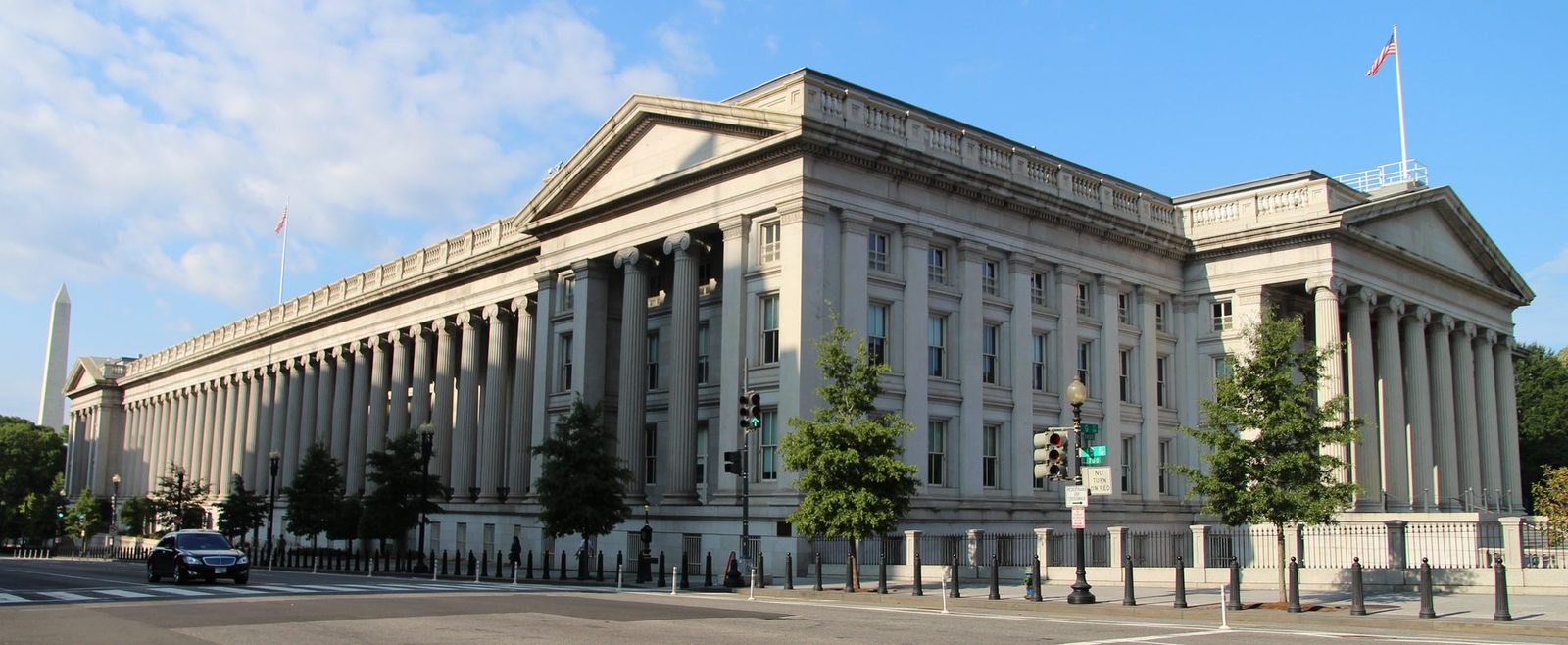
One record is one measure by one authority against one firm or person: a US listing on the Treasury's Specially Designated Nationals (SDN) List, an EU asset freeze or export restriction, or a designation on the UK Sanctions List. It counts only measures under the Russia and Iran programmes, as each authority tags them, dated from 1 January 2024 (method). A firm counts in a country when the authority gives an address there.
By that count the three authorities have taken 1,674 measures (every record, CSV): 1,159 by the US, 242 by the EU and 273 by the UK. By country of address, the UAE has 541, Hong Kong 450, mainland China 369, Türkiye 198 and India 116. 157 of the records concern people; the pages name firms and count people.
Every record links to the official page or act, and every record was checked a second time against an official source before publication.
What do the numbers show?
The US acts most, and mostly over Iran. Of the 1,159 US measures, 721 are under Iran programmes. In India 69 of 96 US measures are Iran-related; in the UAE 247 of 326; in Hong Kong 221 of 337. In mainland China and Türkiye the US measures divide more evenly between Russia and Iran.
The EU's main tool in China and Türkiye is export control, not asset freezes. 157 of the EU's 242 measures are listings in Annex IV of Regulation 833/2014, which restricts the sale of dual-use goods and advanced technology to firms the EU says support Russia's military and industrial complex. 108 of them are in mainland China and Hong Kong, and 29 in Türkiye.
The UK acts in large packages. Its biggest single action, on 24 February 2026, listed 182 firms in the four countries, 142 of them in the UAE. 269 of the UK's 273 measures are under its Russia regime.
India's most visible case is a refinery. The EU froze the assets of Nayara Energy in July 2025, saying its refinery is 49% owned by Rosneft, and the UK listed Nayara in October 2025.
Which rules reach these countries?
Listings name firms. Rules reach everyone. The monitor records twelve of them, with their legal text and their status as checked on 6 October 2026. Among them:
- the US order that lets the Treasury cut off foreign banks dealing with Russia's military-industrial base (E.O. 14114), used against Kyrgyzstan's Keremet Bank in January 2025;
- the US decisions of 24 August and 1 October 2026 that open seven more sectors of Iran's economy to US sanctions on any person, wherever located;
- the US Iran listing of Russia's VTB Bank on 14 September 2026, with a warning to foreign banks;
- the EU ban, since 21 January 2026, on fuels refined from Russian crude in third countries, and the UK ban since 20 May 2026;
- the EU ban on transactions with "Sberbank India" and "India VTB" from 13 August 2026;
- the oil price cap, $44.10 a barrel for Russian crude in the EU and the UK since 1 February 2026;
- and the Graham Act, signed on 18 September 2026.
The Graham Act requires what the Congressional Research Service calls secondary tariffs: duties of up to 100% on all goods from countries that were among the five largest importers of Russian crude, or of Russian gas, in the 12 months before it became law and keep buying, and from the "top 5 countries facilitating Russian oil sanctions evasion" (Public Law 119-111, Sec. 113). It names no country. The monitor's Graham Act page sets out the test, the public estimates of the largest buyers, and the dates.
What did building it show?
Two things about the official data matter for anyone who relies on it.
First, the EU's own consolidated sanctions file is incomplete. The file, generated on 22 September 2026, does not hold the listings made by ten EU implementing regulations adopted between March and August 2026. The monitor checks the file against the EUR-Lex record of every EU listing act and reads the missing acts directly. One of them, Implementing Regulation 2026/1361 of 15 June 2026, lists twelve firms in the four countries; the method page lists all ten, and three more adopted after the file was generated.
Second, all three authorities file Hong Kong under China. A Hong Kong address usually appears with the country "China" (see, for example, OFAC's entries of 1 October 2026). The monitor shows Hong Kong separately when the address names Hong Kong or one of its districts or streets, and never codes a mainland address as Hong Kong, even where a place name such as Shenzhen's Qianhai Shenzhen-Hong Kong Cooperation Zone contains the words.
What comes next?
The monitor is updated every week, with a free email each Monday from 12 October listing every new measure in the four countries. A note on the Graham Act decision will follow by 18 October. Countries five to twelve are planned from November.
The full database, the workbook with every check, and the method are free to download from the monitor. Corrections are made within two working days and logged on the method page.
Method and sources
What counts and how it was checked. The method page sets out what counts as a record, how each one is coded, the official files and their versions, and every check. Each record links to its official list entry or act.
Version and corrections. Version 1, 7 October 2026. Corrections are welcome at [email protected], with the record ID and your source; each is logged on the method page.


Comments
No comments yet. Be the first.
Comments are closed on this article.