
When foreign investment increases, governments usually celebrate it as a sign of market confidence in the national economy. New factories are built, industrial estates expand, exports are expected to grow, and jobs are created. However, from a political economy perspective, the more important questions are not simply how much capital enters the country, but who controls the production process, who benefits from the profits, and how far investment strengthens the bargaining position of the host country.
These questions have become increasingly relevant for Indonesia as capital from Asian countries flows into mineral processing, industrial estates, logistics infrastructure, and other strategic sectors. Such investment creates opportunities to transform natural resource wealth into industrial capacity. At the same time, it can create new forms of dependence if technology, financing, market access, and strategic decisions remain controlled from abroad. Therefore, the increase in foreign direct investment (FDI) from Asia must be understood as a political economy issue, not merely an economic one.
Asian Capital and the Changing Investment Landscape
The latest data from Indonesia’s Ministry of Investment and Downstream Industry/BKPM show that Indonesia’s total investment realisation reached IDR 1,931.2 trillion in 2025, representing growth of 12.7 per cent compared with the previous year. FDI contributed IDR 900.9 trillion, or 46.6 per cent of total investment. Meanwhile, in the first half of 2026, total investment realisation reached IDR 1,010.6 trillion, with FDI amounting to IDR 507.6 trillion, or 50.2 per cent. These figures demonstrate that foreign capital remains an important component in building Indonesia’s productive capacity. However, a more interesting picture emerges when the countries of origin are examined.
In 2023, Indonesia’s five largest sources of FDI were Singapore at US$15.4 billion, China at US$7.4 billion, Hong Kong at US$6.5 billion, Japan at US$4.6 billion, and Malaysia at US$4.1 billion. In 2024, Singapore remained in first place with US$20.1 billion, followed by Hong Kong at US$8.2 billion, China at US$8.1 billion, and Malaysia at US$4.2 billion. In 2025, Singapore again led with US$17.4 billion, followed by Hong Kong at US$10.6 billion, China at US$7.5 billion, Malaysia at US$4.5 billion, and Japan at US$3.1 billion.
These figures reveal two things. First, Singapore plays a leading role as the recorded source of FDI in Indonesia. Second, Hong Kong and China are important components of this investment landscape, while Malaysia and Japan remain significant regional investors.
In the second quarter of 2026, Hong Kong ranked first with approximately US$5 billion in investment, followed by Singapore, China, Japan, and Malaysia. According to BKPM, these five economies accounted for 79.6 per cent of total FDI during that quarter. The change in rankings shows that the composition of investment can shift from one period to another, rather than indicating that one country has replaced the role of all the others.
Nevertheless, the recorded country of origin must be interpreted carefully. Singapore and Hong Kong are financial centres and locations for the incorporation of various international holding companies and investment entities. Consequently, the country recorded in investment statistics does not necessarily correspond to the country of origin of the capital’s ultimate beneficial owner. Investment recorded through Hong Kong, for example, does not automatically mean that all the capital originates from companies in mainland China. This distinction is important to avoid reducing cross-border capital flows to competition between countries alone.
The Interests Behind FDI Destination Sectors
The choice of investment sectors reveals a close relationship between Indonesia’s development strategy and the industrial interests of capital-exporting countries. Throughout 2025, the basic metals and metal products sector recorded investment realisation of IDR 262 trillion, followed by transportation, warehousing, and telecommunications at IDR 211 trillion, mining at IDR 199.6 trillion, and other sectors. These figures include both FDI and domestic investment, so they should not be interpreted as FDI figures alone. In the first half of 2026, BKPM again identified basic metal industries, other services, mining, transportation and warehousing, and housing and industrial estates as leading investment sectors.
The dominance of basic metal industries cannot be separated from Indonesia’s mineral downstreaming policy, particularly in nickel, bauxite, copper, and iron and steel. The government is seeking to reduce dependence on raw material exports by encouraging domestic processing. For investors, this policy offers access to raw materials, industrial estates, supporting infrastructure, and opportunities to enter supply chains for batteries, electric vehicles, and processed metal products.
For companies with processing technology, substantial capital, and international market networks, Indonesia offers an attractive combination: natural resources, a large domestic market, labour, and a strategic geographical position in the Indo-Pacific. Meanwhile, investment in transportation, warehousing, and telecommunications helps connect production centres with ports, domestic markets, and export networks.
In John Dunning’s eclectic paradigm, decisions by multinational corporations to invest abroad are explained in terms of firms’ ownership advantages, location advantages, and the benefits of internalising business activities. In Indonesia’s context, mineral resources and the domestic market form part of its location advantages, while technology, capital, and global networks constitute advantages held by foreign companies. However, this theory also helps explain why the arrival of investment does not automatically guarantee technology transfer or stronger domestic industries. The outcome ultimately depends on the relationship between investors, government policy, and the capabilities of domestic firms.
The Shifting Economic Pendulum
Geographical data provide important clues. In 2025, investment outside Java reached IDR 991.2 trillion, or 51.3 per cent of total investment realisation, while Java received IDR 940 trillion, or 48.7 per cent. In the first half of 2026, the share outside Java remained slightly higher at 50.2 per cent, compared with 49.8 per cent for Java. Thus, the annual predominance of investment outside Java was not a phenomenon confined to a single quarter, although the difference remained relatively small.
Does this mean that Java is no longer important? The answer is not that simple. Java continues to have a large market, relatively mature infrastructure, financial centres, skilled labour, and industrial and service networks built over decades. In the second quarter of 2026, Jakarta and West Java remained the two provinces with the highest investment realisation. In 2025, West Java also ranked first by investment location.
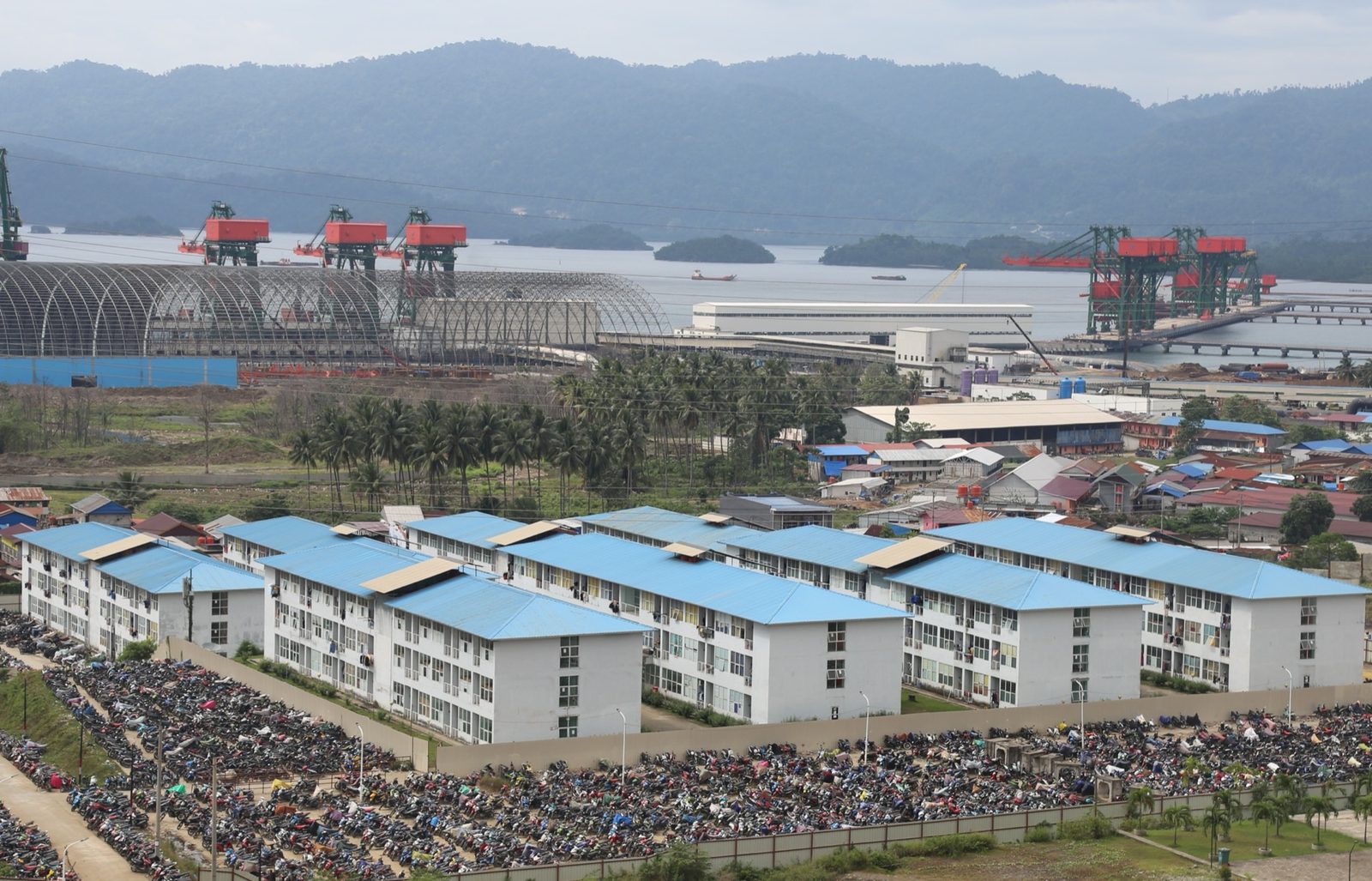
What is changing is the emergence of strategic production centres outside Java, particularly in regions close to mineral resources and logistics routes. Central Sulawesi and North Maluku, for example, have become important to mineral processing and battery supply chains. Investment locations are increasingly determined by proximity to raw materials, energy requirements, port access, and corporate strategies to establish integrated production zones.
Therefore, the shift in the economic pendulum is better understood as an expansion of the geography of industrialisation rather than a complete relocation of the economic centre from Java to the outer islands. Java remains a hub for markets, services, and decision-making, while several regions outside Java are assuming a greater role as resource-based production centres.
The political economy issue is whether these new industrial centres will develop linkages with local economies. If machinery, technology, intermediate inputs, skilled experts, and financing continue to be sourced largely from outside the region, while products are primarily directed towards export markets, growth outside Java may produce industrial enclaves: rapidly developing zones with limited economic connections to surrounding communities.
Between Cooperation and Dependence
Asian investment in Indonesia is not a process free from strategic interests. Capital-exporting countries and their companies have different objectives, although those interests can intersect with Indonesia’s development agenda.
For Chinese companies, investment in mineral processing and electric vehicle supply chains can expand access to raw materials, connect production facilities with international markets, and strengthen their position in emerging industries. For Japan, investment in manufacturing and supplier networks may be linked to the need to maintain industrial competitiveness and expand its regional production base. Meanwhile, Singapore-based companies can act as direct investors, owners of holding companies, or intermediaries in cross-border financing and investment. Malaysia and other Asian economies also participate through manufacturing, services, infrastructure, and trade.
These interests do not necessarily conflict with Indonesia’s interests. Foreign investment can bring capital, expand exports, create jobs, improve skills, and help develop industries that would be difficult to establish using domestic resources alone. However, investors’ interests do not automatically coincide with national development objectives. Companies seek to maximise profits and manage risks; the Indonesian government must ensure that these activities generate broader economic benefits.
This is where dependency theory and the global value chains approach become relevant. Dependency theory reminds us that integration into the global economy can perpetuate inequality when developing countries merely supply resources or undertake low-value-added stages of production. The global value chains approach, meanwhile, helps us understand that economic value is created across multiple stages—from research, technology, and design to processing, logistics, and marketing. A country that owns mines or factories does not necessarily control the most profitable parts of the value chain.
Therefore, the success of downstream processing cannot be measured solely by the number of smelters, export values, or the amount of FDI. Indonesia must assess the extent of local supplier participation, whether Indonesian workers acquire improved skills, whether technology can be learned and developed domestically, and whether local firms can enter more sophisticated stages of production.
Indonesia in the Indo-Pacific Pendulum
Growing interest from Asian investors must also be understood in the context of changing global economic geography. The Indo-Pacific is becoming increasingly important because the region connects East Asian manufacturing centres, maritime trade routes, large consumer markets, and strategic resources. Trade tensions and corporate efforts to diversify supply chains are prompting countries and companies to reassess their production locations.
Indonesia has several advantages: a large domestic market, natural resources, a strategic position along maritime routes, and membership in ASEAN. This combination makes Indonesia relevant to production and trade strategies that extend beyond individual national borders. However, Indonesia is not the only option. Vietnam, Thailand, Malaysia, and other Southeast Asian countries are also competing to attract investment, particularly in manufacturing, technology, and electric vehicles.
In this situation, Indonesia has the potential to become one of the Indo-Pacific’s investment magnets, but that potential does not automatically translate into bargaining power. An attractive market and abundant resources are only initial assets. Bargaining power emerges when Indonesia has a diverse range of partners, domestic capabilities to process resources and develop technology, and policies that encourage investors to build long-term relationships with the local economy.
Indonesia does not need to choose between closing itself off from foreign capital and accepting every investment without conditions. The challenge is to build mutually beneficial relationships. The government can strengthen the benefits of investment through domestic supplier development, vocational education, joint research, technological capacity-building, enforceable environmental standards, and transparency regarding the fiscal and economic benefits of strategic projects.
Policy must also distinguish between large investment values and high-quality investment. A project may bring substantial capital, but its impact on the local economy may remain limited if it creates few skilled jobs, relies on imported suppliers, or fails to develop domestic technological capabilities. Conversely, a smaller investment can generate long-term benefits if it strengthens supplier networks, improves skills, and creates opportunities for national companies to move up the value chain.
The government must also maintain partner diversification. When capital, technology, or markets become too concentrated among a small number of countries or companies, Indonesia’s negotiating space may narrow. Diversification does not mean rejecting investment from particular countries; rather, it means ensuring that Indonesia has alternatives and can negotiate cooperation terms according to its national interests.
Thus, increasing FDI from Asia represents both an opportunity and a test. The opportunity lies in transforming resources, markets, and geographical advantages into more advanced industrial capabilities. The test is whether Indonesia can avoid new forms of dependence, ensure that investment benefits are distributed across society, and develop growth centres outside Java without losing their connections to the national economy. Foreign capital does not automatically make Indonesia better off, just as dependence is not an inevitable consequence of every investment. The outcome is determined by institutions, domestic industrial capabilities, and the state’s ability to negotiate its relationships with investors. The most important question is not whether Indonesia should accept Asian capital, but whether Indonesia can transform investors’ interest into greater economic and political power for itself.
Sources: Infobanknews: 2025 investment realisation reaches IDR 1,931.2 trillion · Investortrust: 2025 investment realisation and the share outside Java · RRI: first-half 2026 investment realisation of IDR 1,010.6 trillion · Bisnis.com: Hong Kong overtakes Singapore as largest investor in Q2 2026.
Related: From China+1 to ASEAN+1: Building a Regional Production Network · Danantara’s Global Ambition: From Sovereign Fund to Investment Network



Comments
No comments yet. Be the first.
Comments are closed on this article.