
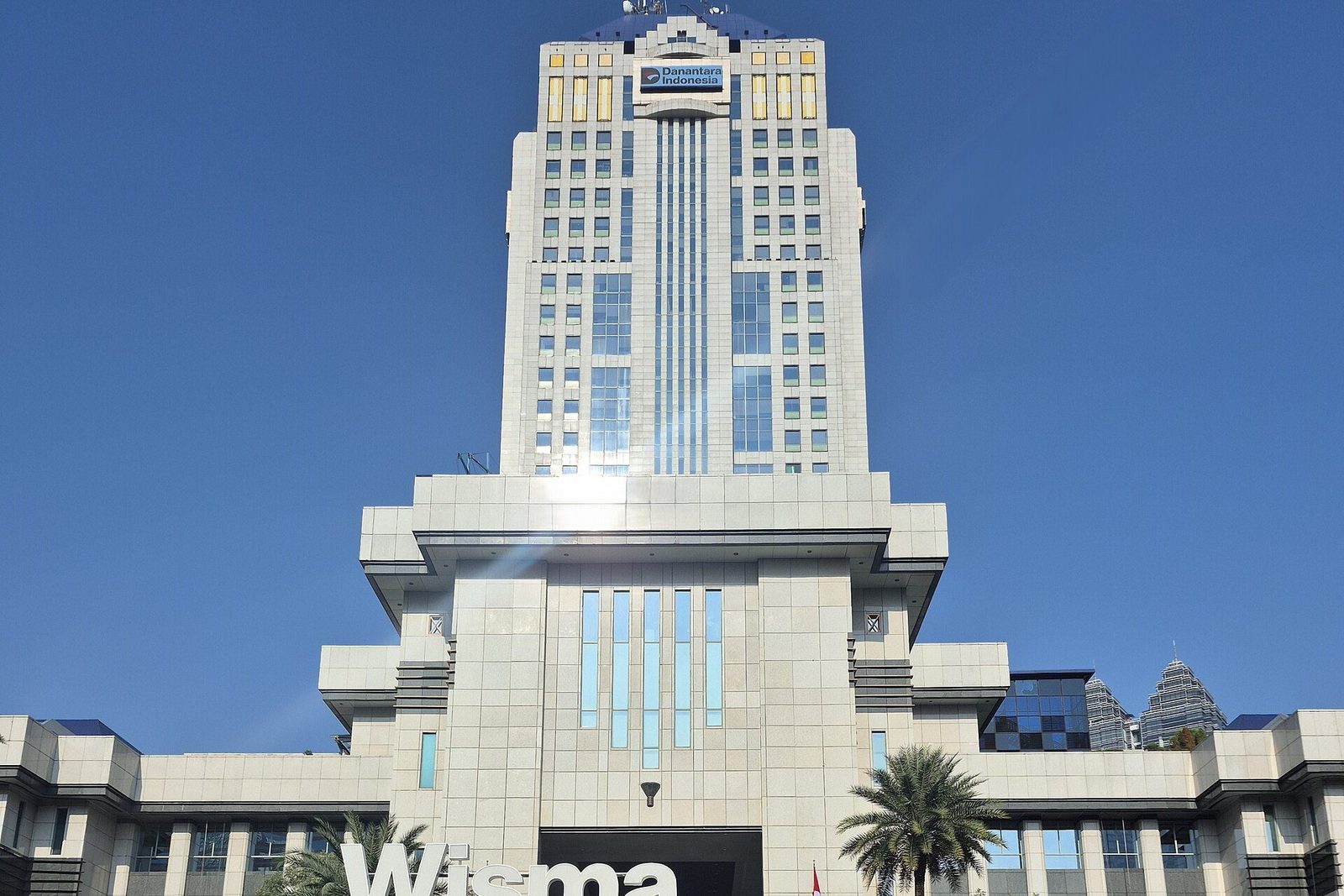
Fitch Ratings has once again maintained Danantara’s rating through Danantara Investment Management (DIM) at “BBB” with a negative outlook. The Fitch Ratings report published on 21 September 2026 also maintained the rating of the Global Medium-Term Note (GMT) program and DIM’s senior unsecured debt at “BBB”. Meanwhile, DIM’s long-term national rating stands at AAA(idn) with a Stable outlook.
Fitch Ratings’ BBB rating for Danantara certainly provides a greater degree of credibility regarding Danantara’s ability as a global investment entity to repay its debt. More broadly, it represents a vote of confidence in Danantara as it builds its expansion toward becoming a global-level sovereign wealth fund. At the same time, it serves as a warning that there are still risks that must be managed. In the context of global expansion, this credibility is important for broadening access to financing as well as building market and investor confidence.
Fitch Ratings itself maintained the “BBB” rating amid Danantara’s increasing and massive involvement in expanding its global investment network. This is reinforced by Danantara’s record during its first year of operation, when it successfully established 11 strategic global partnerships (MoUs) with investment commitments reaching approximately Rp346 trillion. It also expanded national investment capacity by creating an additional financing capacity of around Rp150 trillion through financial instruments such as loans, equity participation, the issuance of patriot bonds, as well as revolving credit facility (RCF) facilities from global institutions.
In its overseas investment expansion, Danantara has also provided a private credit mandate, disbursing an investment of US$1 billion or approximately Rp 17 trillion into Swiss asset management company Partners Group in August 2026. This is one of Danantara’s largest investments in the global market.
According to a Bloomberg report, Danantara provided Partners Group with US$600 million or approximately Rp 10.6 trillion to be invested in direct lending. The remaining US$400 million or approximately Rp 7.1 trillion will be fully managed by Partners and serve as co-investment capital.
Credibility support for Danantara’s portfolio has grown stronger after Fitch Ratings also stated that extraordinary support from the Government of Indonesia to Danantara is considered “virtually certain”, with a support score of 55 out of a maximum of 60. Fitch also equated DIM’s rating with Indonesia’s sovereign rating (the Indonesian government) because it assessed that there is a strong linkage between DIM and the government. This credibility support will certainly further open Danantara’s roadmap going forward. Thus, Danantara’s challenge is not merely how to obtain capital, but how Danantara can transform that confidence into a productive global investment network.
Strong government support does not mean that Danantara is free from risk. On the contrary, increased access to global capital markets makes the quality of governance, investment discipline, and risk management capabilities increasingly important. Fitch itself noted that Danantara is a key funding pillar for the group, and DIM’s failure could potentially weaken investor confidence and disrupt access to financing. Fitch also stated that DIM has Rp68.4 trillion in subordinated debt, a US$1 billion multicurrency RCF facility, and US$1.5 billion in global bonds. The size of these obligations shows that Danantara’s credibility is not only related to its ability to gain access to global capital, but also to its ability to manage obligations, maintain liquidity, and meet payment obligations sustainably.
These developments also place Danantara in a broader perspective, namely as a hub connecting Indonesia with the global capital network. This includes other countries’ sovereign wealth funds, pension funds, private equity, global asset managers, multinational companies, development finance institutions, and strategic investors.
Thus Danantara will have three roles simultaneously:
- Danantara as an investor that brings Indonesian capital to various global opportunities through both financing and investment.
- Danantara as an investment partner that brings global capital and technology to strategic projects in Indonesia.
- Danantara as an economic diplomacy instrument aimed at bringing the capacity of Indonesia’s business ecosystem to global markets.
These three roles of Danantara are in line with Dunning’s (1988) thinking through the Eclectic or OLI (Ownership, Location and Internalisation) paradigm, which explains that the decision of a company or institution to invest abroad is influenced by three advantages.
Although Dunning’s OLI paradigm was initially developed to explain international investment decisions by multinational companies, this framework can be used adaptively to interpret Danantara’s investment expansion strategy at the global level.
Where the three OLI advantages, when adopted in Danantara’s expansion, mean that Ownership advantages can be translated as Indonesia’s access to capital, SOE assets, resources, networks and institutional capacity, Location advantages relate to strategic opportunities in destination countries, while Internalisation advantages explain the benefits of direct control or management over investment activities compared with relying solely on market mechanisms.
Thus, global investment expansion along with its risk exposure is ultimately not merely a matter of seeking financial returns, but also of building control over strategic assets, strengthening positions in international value chains, and increasing a country’s economic bargaining power. And Danantara has a major opportunity to play this role because it has access to capital, investment networks and relationships with various strategic global partners. This is where the international rating issued by Fitch Ratings becomes an important factor. Global investors look not only at the size of assets under management, but also at governance, the ability to meet obligations, transparency, funding structure and the relationship with the sovereign.
Related: BMKS: Can Indonesia Turn Nickel Power into Leadership in Asia’s Electric Motorcycle Battery Market? · Islamic Finance Must Deliver More Than Transaction Figures


Comments
No comments yet. Be the first.
Comments are closed on this article.