
The China-Pakistan Economic Corridor (CPEC) is approaching its most consequential moment—not because another highway is being built or another power plant inaugurated, but because the central question is changing.
For over a decade, debate centred on connectivity: how China could reach the Arabian Sea and Pakistan could overcome infrastructure and energy constraints. Now the question is deeper: can Pakistan turn strategic geography into economic sovereignty, or will CPEC remain a corridor through which opportunities pass without transforming the country?
This is CPEC 2.0’s defining challenge: shifting from infrastructure to industrialization, government-led investment to business-to-business integration, and geopolitical symbolism to measurable productivity. Success could make Pakistan a regional manufacturing, agricultural, technology, and logistics economy. Failure would leave strategic importance alongside economic vulnerability.
The Corridor at a Crossroads
The first phase was built on a simple proposition: Pakistan needed energy, roads, and infrastructure; China had capital, technology, and strategic vision. Pakistan’s August 2026 official progress review reported approximately US$25 billion invested during Phase I, nearly 8,000 megawatts of added generation capacity, and major infrastructure, energy, and digital projects completed. The government reported 43 completed projects in its March 2026 review.
These achievements should not be dismissed. Energy shortages and connectivity bottlenecks genuinely constrained development. Yet infrastructure is not an economic miracle. Highways do not automatically generate exports, power plants do not guarantee competitiveness, and ports do not become commercial hubs simply because they possess deep water.
Industrialization: The Real Test
Industrialization is an economic necessity. Growth repeatedly increases import demand, pressures foreign-exchange reserves, widens current-account deficits, and triggers stabilization. This cycle reflects an economy that consumes foreign exchange faster than productive sectors consistently generate it.
CPEC 2.0 could interrupt the pattern. Business-to-business cooperation may create a commercially sustainable partnership: Chinese enterprises bring capital, technology, production systems, and market access; Pakistani firms contribute local knowledge, labour, land, entrepreneurship, and regional connections.
But investment must build productive capacity, not simply relocate low-value activities. Pakistan does not need industrial zones assembling imported components for a protected domestic market. It needs industries that develop local suppliers, transfer technical knowledge, raise productivity, and export.
Attracting capital is not enough. Pakistan needs predictable regulation, competitive taxation, reliable energy, efficient customs, skilled labour, and macroeconomic stability. Investors respond to commercial conditions, not diplomatic relations alone.
The Digital Corridor
Economic power increasingly depends on data, computing, artificial intelligence, automation, and converting information into value. CPEC’s digital dimension could connect infrastructure with cloud computing, data centres, software, AI, digital finance, and technology-enabled manufacturing.
Pakistan has a young population and an expanding technology workforce; China has experience in digital infrastructure, automation, advanced manufacturing, and technology deployment. Their capabilities could complement one another. Yet a Digital Corridor cannot mean fibre-optic cables and data centres alone.
Pakistan must develop software engineers, AI specialists, cybersecurity professionals, data analysts, digital entrepreneurs, and technical workers. It also needs credible data governance, intellectual-property protection, cybersecurity, and a competitive environment for technology businesses.
Agriculture and Minerals: Creating Value
Agriculture remains central to employment, rural livelihoods, food security, and industrial supply chains. Productivity is constrained by water inefficiency, fragmented landholdings, weak storage, limited research commercialization, and inadequate access to modern technologies.
Mineral development requires the same discipline. Extracting raw materials is not equivalent to creating a mineral-based industrial economy. Pakistan should pursue processing, refining, mineral engineering, advanced materials, and downstream manufacturing where commercially and environmentally feasible.
Resource development must not leave communities with few benefits. Environmental safeguards, transparent contracts, local employment, community participation, and fair distribution are essential. The objective is to export value, not merely volume.
Gwadar: Geography Is Not Commercial Success
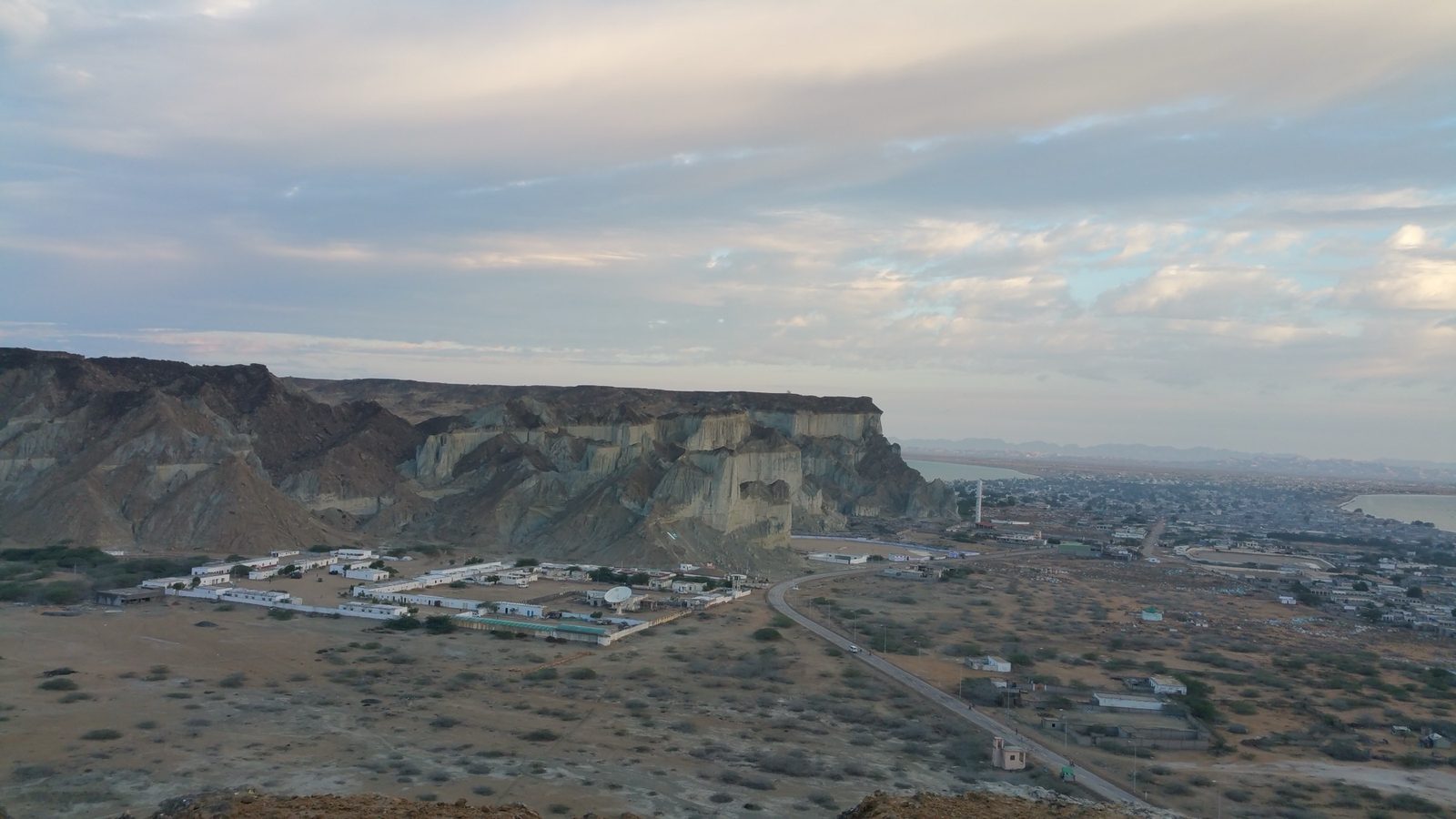
Gwadar is presented as a gateway linking China, Pakistan, the Gulf, and Central Asia. Its location offers strategic advantages, but commercial performance has remained limited.
Reports indicated that the port handled approximately 11,000 containers in April 2026, compared with around 8,300 throughout 2025. The increase was associated with disruptions around the Strait of Hormuz and changing maritime routes. These figures indicate potential, but a temporary surge does not prove sustainable port economics.
Long-term competitiveness depends on regular shipping services, efficient cargo handling, competitive charges, customs, inland transport, storage, demand, and shipping-company confidence. Geopolitical disruption can create an opening; it cannot guarantee enduring business.
The Human Corridor
CPEC requires workers able to operate sophisticated industrial and technological systems. Mandarin-language education can improve communication, but language alone cannot bridge workplace differences. Cooperation also requires technical communication, management systems, occupational standards, cultural understanding, and professional development.
Research on Chinese-invested enterprises in Pakistan identifies communication gaps, differing leadership styles, and workplace expectations as factors affecting employee relationships and performance. These challenges are common in multinational organizations, but matter greatly for integrated industrial ecosystems.
Security, Financing, and Geopolitics
Security of Chinese personnel and infrastructure remains a concern following militant attacks, particularly in Balochistan. Security cooperation is essential, but sustainable protection also requires political stability, governance, community engagement, institutional coordination, and economic inclusion. Security is not simply an infrastructure expense; it is a condition for investor confidence.
Pakistan must also confront financing constraints. The proposed 1,733-kilometre Main Line-1 railway modernization remains in the CPEC pipeline but has faced financing and implementation difficulties. These delays reflect changing Chinese investment priorities and Pakistan’s fiscal and foreign-exchange limitations.
Who Captures the Gains?
CPEC 2.0 is often described as a new chapter in Pakistan-China friendship. Partnerships, however, are judged by outcomes: sustainable jobs, additional exports, domestic value addition, Pakistani firms entering international supply chains, technology transfer, and community benefits.
A New Economic Geography—or Another Missed Opportunity?
China seeks resilient supply chains, connectivity, and productive investment. Pakistan seeks industrialization, exports, employment, technology, and stability. These goals complement one another, but are not automatically identical.
The China-Pakistan Action Plan for 2025–2029 provides a framework aligning CPEC’s five corridors—Growth, Livelihoods, Innovation, Green Development, and Openness—with Pakistan’s URAAN 5Es and China’s development priorities. Yet policy alignment must become institutional performance.
Pakistan must strengthen industrial policy, improve its business environment, expand technical education, support domestic firms, and implement projects effectively. China must recognize that the partnership’s sustainability depends on a more productive Pakistan. A financially fragile partner cannot indefinitely sustain an ambitious regional relationship.
Pakistan should establish a joint monitoring mechanism tracking commitments against outcomes, publishing progress reports, and identifying bottlenecks. Provincial governments, businesses, and communities must participate in planning and oversight. This would ensure investments respond to local needs, remain commercially realistic, and contribute to national resilience rather than isolated project success.
Conclusion: The Corridor Must Become an Economy
CPEC’s first phase demonstrated that Pakistan and China could mobilize resources and deliver infrastructure of strategic importance. The second must prove something harder: infrastructure can become industrial capacity, investment can become exports, technology can become domestic capability, and geography can become shared prosperity.
Success will not be measured by highway length, power capacity, or agreements signed, but by Pakistan’s productive strength. If CPEC 2.0 succeeds, Pakistan could become a regional manufacturing, agricultural, technological, and logistics platform linking China with the Arabian Sea, the Gulf, and Asian markets. If it fails, strategic importance may coexist with the economic vulnerabilities constraining development.
The choice is not between China and the world. It is between merely occupying a strategic location and possessing the productive capacity to shape Pakistan’s economic future. The corridor has been built. The next challenge is to build the economy that gives it meaning.
References: CPEC Secretariat: The 92nd CPEC progress review meeting (31 August 2026) · Ministry of Planning: CPEC agreements at the annual awards ceremony 2026 (31 March 2026) · CPEC Secretariat: Rashakai Special Economic Zone · ProPakistani: Shipping companies turn to Gwadar Port with Hormuz closed (29 April 2026) · Geo News: Hormuz bottleneck and Gwadar’s fortunes (13 August 2026) · Hu & Obaid (2025), Journal of Management Science Research Review 4(4) · CPEC Secretariat: Transport infrastructure projects · China–Pakistan Action Plan 2025–2029 (4 September 2025) · ISDP: China’s strategic corridor in Pakistan (June 2026).
Related: Three Myths the West Gets Wrong About CPEC · The Iran War: Another Costly War on America’s Head

Comments
No comments yet. Be the first.
Comments are closed on this article.