
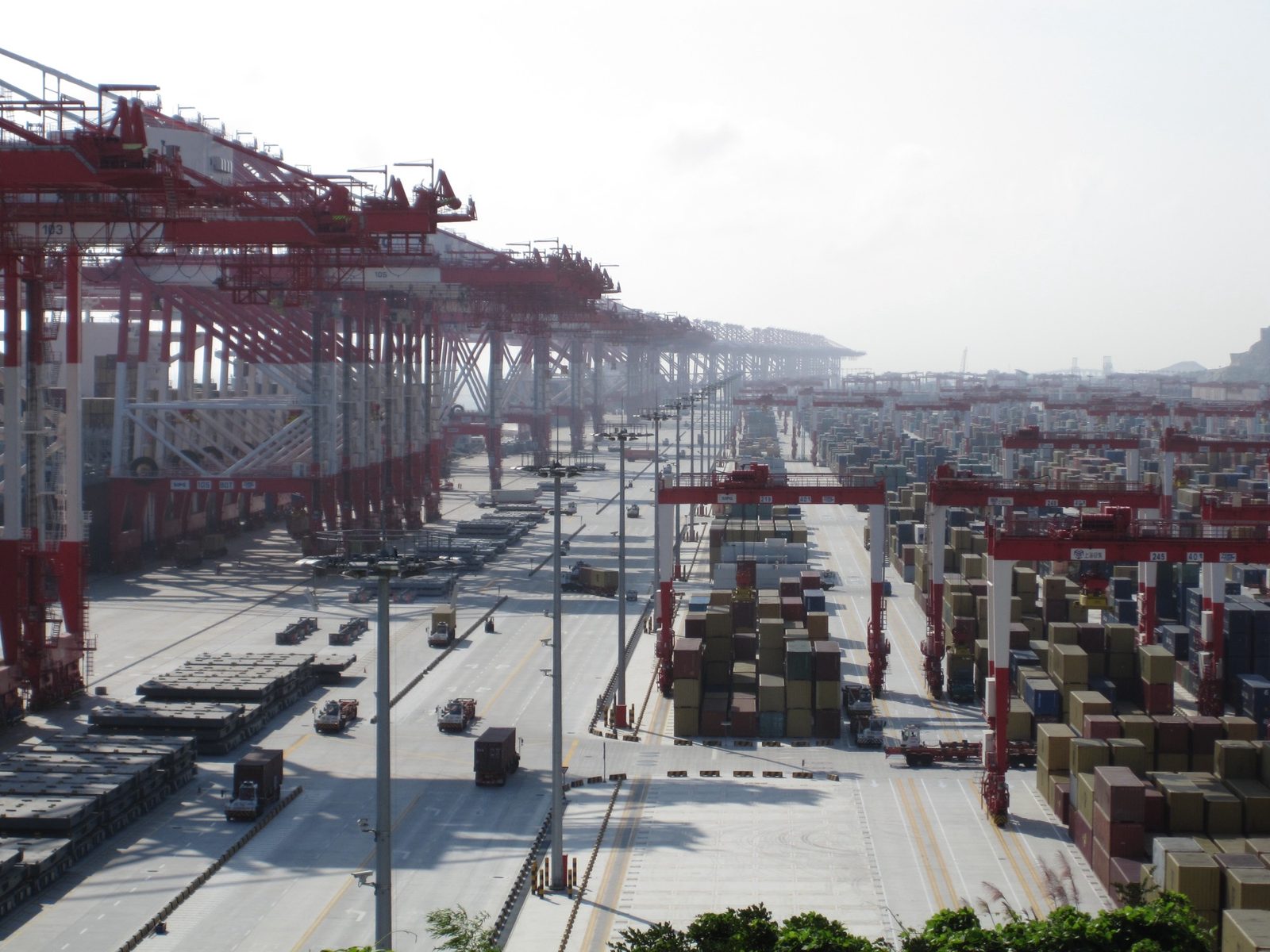
The global economic balance of power is shifting eastward. Asia is no longer simply the manufacturing centre of the world; it has become the principal arena where industrial supremacy, technological leadership, financial influence and geopolitical power are being contested. At the centre of this transformation stands China, whose economic rise has fundamentally altered the international system.
However, China's growing economic influence is not an isolated achievement. It is deeply connected to the economic activities of other Asian powers, the expanding markets of the Global South and the increasingly interconnected global production system. The question is not merely whether China is winning the economic competition, but who is helping Beijing strengthen its position and who is preparing to challenge it.
The Big Five: Asia's Economic Powerhouses
Asia's economic landscape is dominated by five major economies: China, India, Japan, South Korea and Indonesia. Their economic structures, technological capabilities and demographic characteristics differ significantly, but together they represent the continent's strategic economic core.
According to 2025 GDP estimates, China's economy stood at approximately $19.5 trillion, followed by Japan at $4.4 trillion, India at nearly $4 trillion, South Korea at $1.9 trillion and Indonesia at approximately $1.45 trillion. These figures demonstrate the extraordinary concentration of economic power in the region.
| Economy | Approx. 2025 nominal GDP | Strategic strength |
|---|---|---|
| China | $19.5 trillion | Manufacturing, exports, technology |
| Japan | $4.4 trillion | Advanced technology, capital, machinery |
| India | $4.0 trillion | Services, demographics, digital economy |
| South Korea | $1.9 trillion | Semiconductors, electronics, shipbuilding |
| Indonesia | $1.45 trillion | Natural resources, domestic market, minerals |
Figures are approximate and based on 2025 estimates. Rankings can vary by source and measurement method.
China's advantage is its ability to combine manufacturing scale, infrastructure, industrial policy and export competitiveness. India possesses a demographic advantage and a rapidly expanding services sector. Japan and South Korea remain indispensable in advanced technology, while Indonesia offers strategic resources and a large consumer market.
These economies are competitors, but they are also interconnected participants in the same industrial ecosystem.
China: The Manufacturing Engine of Asia
China's economic strategy has evolved beyond low-cost manufacturing. It is increasingly focused on electric vehicles, batteries, renewable energy, electronics, machinery and advanced industrial production.
In 2025, China's merchandise exports reached approximately $3.77 trillion, while its trade surplus approached $1.19 trillion—a record that demonstrated the resilience of its export-oriented economy.
The significance of this achievement extends beyond the United States.
China has diversified its export markets, strengthening commercial relationships with Southeast Asia, Europe, Africa and Latin America. Its economic resilience increasingly depends on the ability to sell goods across a broad network of international markets rather than relying excessively on one major trading partner.
This diversification has become particularly important amid rising tariffs, technology restrictions and geopolitical tensions with Washington.
Who Is Helping China Strengthen Its Economic Position?
1. ASEAN: The Regional Economic Lifeline
The Association of Southeast Asian Nations (ASEAN) has emerged as one of China's most important economic partners.
China-ASEAN merchandise trade reached approximately $1.05 trillion in 2025, according to Chinese customs data. ASEAN has also remained China's largest trading partner since 2020.
Vietnam, Malaysia, Indonesia and Thailand are increasingly integrated into regional manufacturing networks.
These economies purchase Chinese machinery, electronics and industrial inputs while supplying components, resources and finished products to international markets.
This integration benefits both sides. ASEAN economies gain investment, infrastructure and access to Chinese production networks, while Chinese companies gain access to expanding markets and alternative manufacturing locations.
The relationship is not simply one of dependency; it is a complex system of mutual economic interests.
2. India: A Competitor That Also Creates Opportunities
India represents China's most significant long-term Asian competitor.
With a population exceeding 1.4 billion, India possesses a vast domestic market, an expanding technology sector and substantial potential for industrial development.
Nevertheless, India remains deeply connected to Chinese supply chains, particularly in electronics, machinery, chemicals and industrial components.
The challenge for New Delhi is to reduce strategic dependence without undermining economic growth.
India's expanding manufacturing ambitions may eventually challenge China's dominance, but its current economic relationship with Beijing illustrates an important reality: geopolitical rivalry does not automatically eliminate commercial interdependence.
3. Japan and South Korea: Technology Partners and Strategic Rivals
Japan and South Korea are among the world's most technologically advanced economies.
Japan supplies sophisticated machinery, industrial equipment and materials. South Korea is a global leader in semiconductors, memory chips, electronics, batteries and shipbuilding.
Their industrial capabilities have contributed to the development of Asian manufacturing networks in which China occupies a central position.
However, both countries are also competitors in critical technologies.
Japan and South Korea are strengthening their economic security strategies, diversifying supply chains and cooperating with the United States to reduce vulnerabilities associated with excessive dependence on China.
Their relationship with Beijing is therefore contradictory: they contribute to the broader Asian industrial ecosystem while simultaneously attempting to limit China's strategic advantage.
4. The Global South: China's Expanding Economic Frontier
Perhaps the most important development is China's growing engagement with developing economies.
Africa, Latin America, the Middle East and Southeast Asia are becoming increasingly important destinations for Chinese exports.
In 2025, Chinese exports to ASEAN increased by approximately 13.4%, while exports to the European Union rose by 8.4%. China's exports to Africa also expanded significantly.
These markets provide China with opportunities to diversify trade, expand industrial influence and develop new commercial relationships.
Infrastructure investment, energy cooperation, digital connectivity and industrial partnerships further strengthen these relationships.
However, this expansion also raises concerns about debt sustainability, trade imbalances, local industrial competition and economic dependency.
Is China Really Winning the Economic War?
China's economic position is powerful, but victory is not guaranteed.
Its economy faces structural challenges, including a prolonged property-sector crisis, weak domestic consumption, demographic pressures and increasing trade tensions.
A record trade surplus may demonstrate export competitiveness, but it can also reflect insufficient domestic demand and an imbalance between production and consumption.
Meanwhile, India is expanding its industrial capacity, Japan and South Korea are advancing technological innovation, and ASEAN economies are strengthening their manufacturing capabilities.
The economic competition is therefore not a simple contest between China and the United States. It is a broader struggle involving industrial policy, technological innovation, market access, financial influence and economic resilience.
The Future: Cooperation, Competition or Fragmentation?
Asia's economic future will depend on whether its major economies can manage their strategic rivalries while preserving regional economic integration.
China benefits from the scale of its manufacturing system and the growing demand of emerging markets. India benefits from demographics and services. Japan and South Korea retain technological advantages, while Indonesia possesses valuable natural resources and industrial potential.
The paradox is that China's economic strength is partly sustained by countries that are simultaneously competing against it.
The real winner of Asia's economic race may not be the country with the largest GDP, but the economy that controls the most critical connections between technology, production, capital, resources and markets.
China is building that influence—but the race remains open.
Sources: StatisticsTimes: Asian countries by GDP (IMF estimates) · Associated Press via Star Tribune: China had a record $1.2 trillion trade surplus in 2025 (14 January 2026) · Vietnam+: China's exports-imports with ASEAN surpass $1 trillion in 2025 · The Star: As China's US exports plunge in 2025, Beijing banks on diversification (14 January 2026).


Comments
No comments yet. Be the first.
Comments are closed on this article.