
A second crisis can arrive before the first has been paid for
The most important cost of a military operation may be the options it leaves unavailable afterwards. CBO estimates that operations against Iran added about $38 billion to US defence costs through 1 August 2026. Its assessment also points to a longer problem: rebuilding the interceptor inventories covered by its analysis would probably take at least five years, even with higher production. (1)
That recovery period overlaps the years in which Washington must sustain commitments in Europe, the Middle East and East Asia. The question is whether a new emergency arrives before weapons have been replaced, ships repaired and crews rested. It is also whether allies can take on enough of the work to reduce the competition for American support.
Our members' report, Can America Sustain Its Global Defence Commitments?, examines those questions through 2030. Its central judgment is that the main commitments can endure, but recurring crises are likely to require expensive choices over forces, deliveries and responsibilities. The outcome depends on practical delivery and political agreement, rather than defence budgets alone.
Three findings that change the assessment
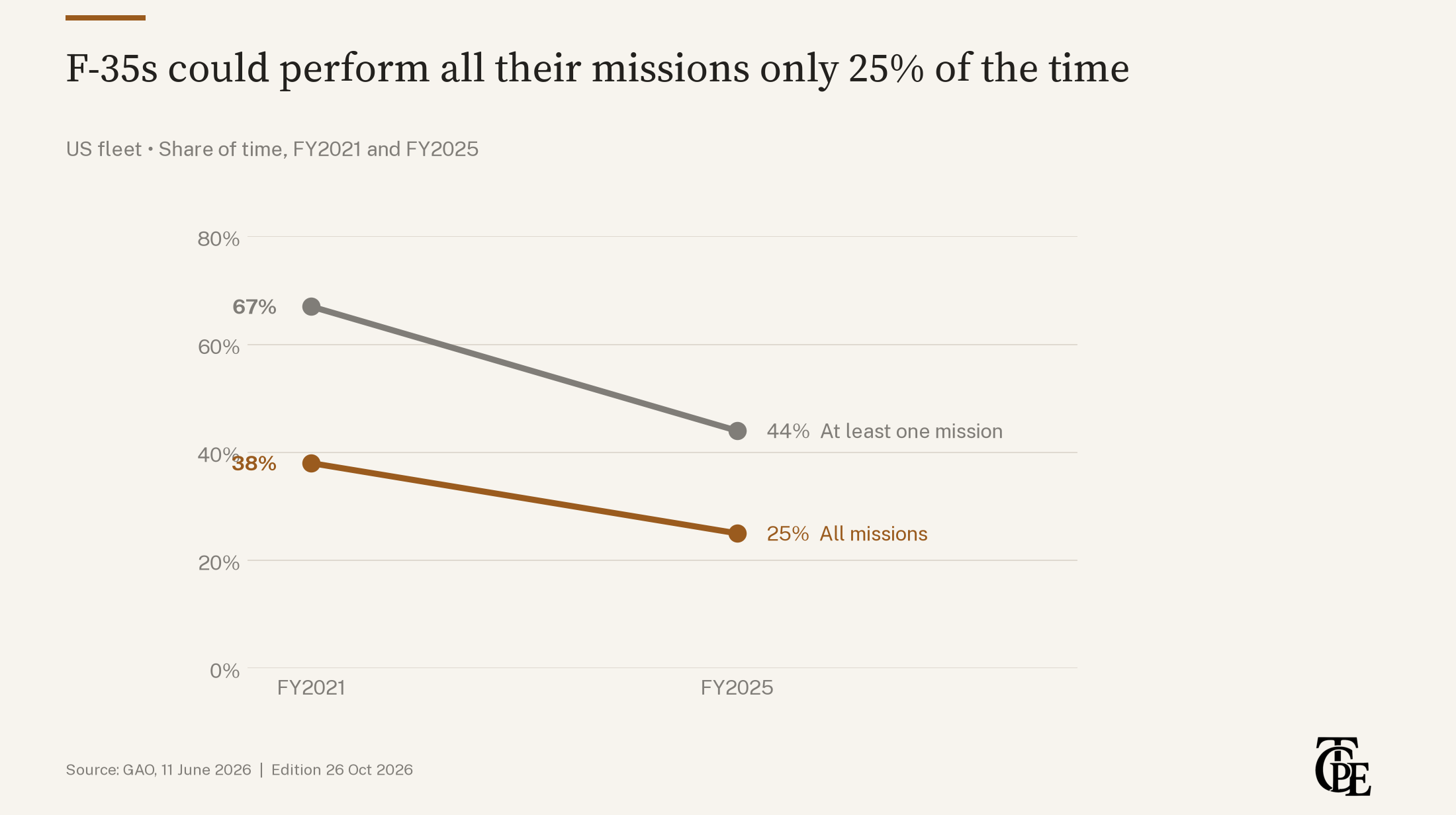
First, the force on paper is larger than the force ready for every mission. GAO found that the US F-35 fleet could perform all assigned missions for 25% of the time in FY2025, down from 38% in FY2021. Time able to perform at least one assigned mission fell from 67% to 44%. These fleet-wide measures show why buying aircraft and making them available are separate tasks. (2)
Maintenance also affects the Navy. GAO reports more than 15,000 operational days lost by attack submarines during FY2016-FY2025 because of maintenance delays and active idle time. That gives repair performance strategic importance alongside new construction. A submarine awaiting work cannot provide the presence its hull count might suggest. (5)
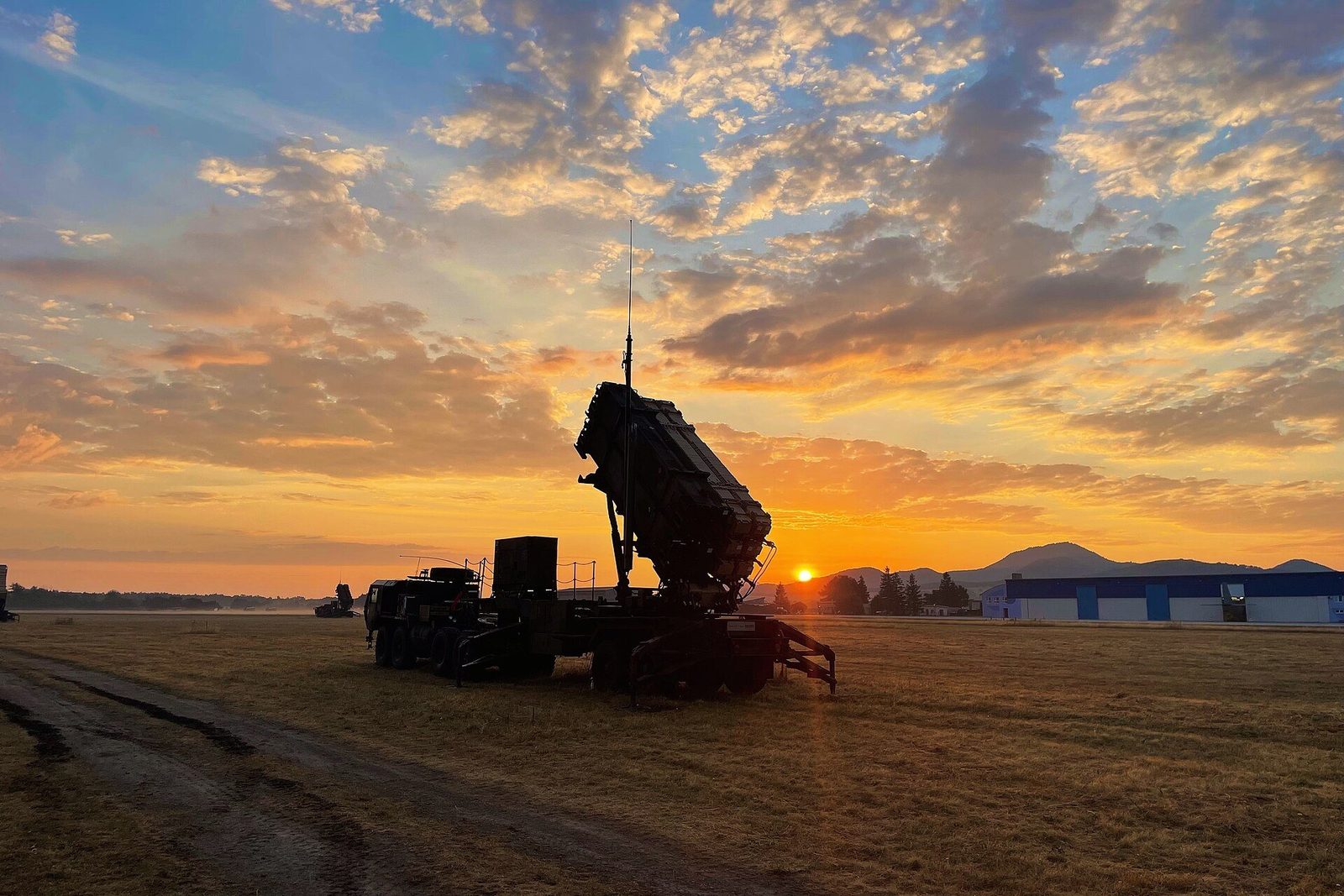
Second, industrial expansion improves the outlook, but its timing matters. Lockheed Martin delivered 620 PAC-3 MSE interceptors in 2025. The expansion toward roughly 2,000 units of annual capacity by end-2030 now has a multiyear contract award. The next test is how quickly factories deliver and how much output rebuilds reserves after continuing consumption and customer commitments. (3, 4)
This distinction changes the policy argument. Governments have committed resources to production. A credible assessment must now follow accepted deliveries, supporting equipment and allocation. Contract values and future factory capacity cannot be counted as missiles already available to a commander.
Third, a war can constrain another region without a military redeployment. EIA estimates that Hormuz oil transit fell from 21.6 million barrels a day in Q4 2025 to 4.9 million in Q2 2026. LNG transit fell from 10.5 to 0.8 billion cubic feet a day. Fuel, freight and agricultural-input costs transmit that disruption to countries with very different positions on the war. These are quarterly estimates through June, not current shipping readings. (6)
India illustrates the connection. In March, its petroleum minister described rapid diversification away from Hormuz alongside disruption to Gulf gas supplies. Alternative sourcing can sustain imports while leaving buyers exposed to longer routes and competition for replacement cargoes. Maritime resilience in the western Indian Ocean therefore matters to the wider Indo-Pacific assessment. (44)
What the full report adds
The five chapters connect military readiness to regional choices, economic transmission and policy. They examine what Europe can deliver, how Asian access and treaty arrangements differ, why India has a distinct role, and what commercial recovery in the Gulf would need to achieve.
The report also makes its judgment explicit: a 50% editorial likelihood for recurring crises managed through trade-offs, with 25% each for managed adjustment and overlapping escalation that forces sustained retrenchment. These are subjective assessments of the dominant trajectory by end-2030, not model-generated probabilities or forecasts of a particular war. Each scenario explains its reasoning and the evidence that would change it.
Members receive the complete PDF (47 pages), the web edition, an editable data workbook, a dated chronology of the 2026 conflict and an indicators dashboard. The dashboard separates official release dates from proposed editorial checks, so a monitoring date is never mistaken for an agency announcement.
The practical conclusion: stronger deterrence requires equipment delivered, forces repaired, partners assigned clear tasks and enough recovery between crises. Spending promises become strategic capacity only when those conditions are met.

Comments
No comments yet. Be the first.
Comments are closed on this article.