
637 Ukrainian drones just hit Moscow. Russia threatened to bomb Britain. NATO’s Patriot missiles are “beyond critical.”
And Trump says Europe’s problem isn’t his problem. Something is about to break.
On August 16, 2026, Ukraine launched 637 drones at Moscow.
It’s not just a random attack by the UK at the heart of the Russian capital Moscow. The city of 13 million people where Vladimir Putin sits.
Russia’s Defence Ministry claimed it destroyed 822 Ukrainian drones overnight across all regions.
But the numbers tell a different story. Despite intercepting roughly one-third of the Moscow region, at least six people were killed.
A Wildberries logistics warehouse in Podolsk caught fire.
An 83-year-old man died when a drone hit his house. Over 5,000 customers and 46 socially significant facilities lost power. All four Moscow international airports were disrupted.
This was one of the largest aerial attacks of the entire war. The second massive salvo in two days.
And it came just eight days before Ukraine’s Independence Day — when things got much, much worse for Russia.
resulted russian peopel start feeling the same threat in their own region, for which the ukrinaes where in the last 3 years, that not just problematic for the people but the putin too
as it will eventually lead to his hwo he is going to manage all the things
24 August: The Day Britain Crossed Russia’s Red Line
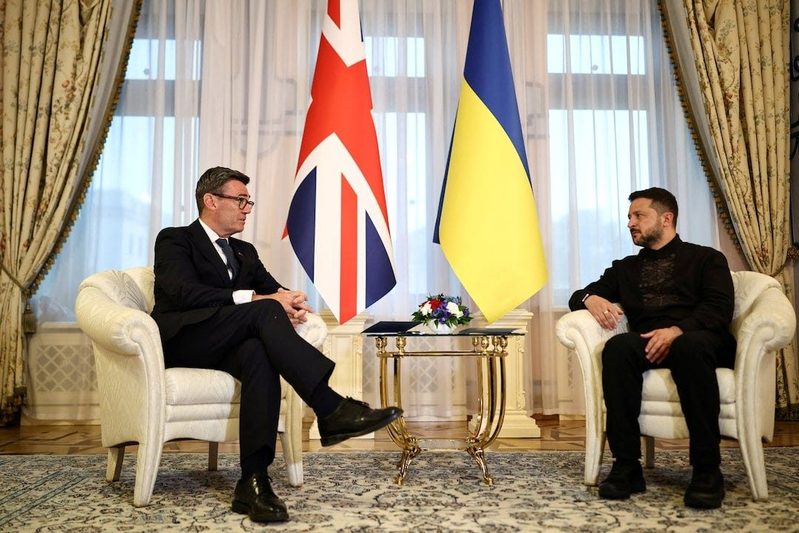
On Ukrainian Independence Day, 24 August 2026, British Prime Minister Andy Burnham flew to Kyiv on his first international trip as PM — and announced a move that changed the calculus of this war.
He authorised defence contractor MBDA to declassify the blueprints for Storm Shadow cruise missile components.
Not just send more missiles. but give Ukraine the ability to build them.
The Storm Shadow can strike targets approximately 155 miles inside Russian territory.
Britain and France would partner to establish production facilities inside Ukraine — what Burnham called Project Brakestop — alongside France’s commitment to share SCALP missile technology.
Burnham pledged £25 billion in total support: £16 billion military, £5.6 billion non-military.
“Ukraine’s security is our security,” Burnham declared. “Our support will not waver.”
Hours later, the Kremlin responded.
Dmitry Peskov, Putin’s spokesman, said the UK was “taking part in this war on the side of the Kyiv regime” and that Russia’s armed forces were already “doing the relevant work to identify missile production sites.
Russia announced — on the same day — that it was hunting for the factories before they were even built.
But it did not stop here
On 27 August: The Threat That Changed Everything
Three days later, Maria Zakharova, Russia’s Foreign Ministry spokesperson, delivered the most serious direct threat to a NATO member since the war began.
“We have repeatedly warned that any British military installations and equipment in Ukraine and beyond its borders could be targeted in response to Ukrainian strikes on Russian territory carried out using British weapons.”*— Maria Zakharova, Russian Foreign Ministry, August 27, 2026*
“In Ukraine and beyond its borders.”
That phrase is doing extraordinary work. Zakharova warned of “catastrophic consequences” unless Britain reversed course.
She accused London of being “one step away” from complicity in terrorism, the legal framing Russia uses to justify military strikes.
Moscow’s trigger? It accused Ukraine of using Storm Shadow missiles to strike a shopping centre in Donetsk on August 26, injuring civilians, including children.
Britain’s Ministry of Defence rejected the threat, stating London stood “shoulder to shoulder” with Ukraine. PM Burnham condemned Russia’s “outrageous threats.”
But here’s the question nobody in London, Washington, or Brussels wants to answer: What happens if Russia actually does it?
The Article 5 Dilemma: Will Anyone Actually Fight?
It has been invoked exactly once — after 9/11.
If Russia strikes a British military logistics hub in Cyprus. Or a training facility in Poland. Or an intelligence relay in Estonia.
Does Article 5 trigger?
In theory, yes. In practice, Donald Trump has made it clear he considers NATO a “one-sided path” where America pays, and Europe freeloads.
At the July 2026 NATO summit, Trump called it “ridiculous” for America to support the alliance “when the relationship is not reciprocal.” He cited U.S. spending of $999 billion compared to allies like Germany spending far less. Defense Secretary Pete Hegseth labeled European allies’ refusal to grant base access during the Iran war “shameless.”
A U.S. military review of troop deployments in Europe is underway. The message from Washington is unmistakable: if Europe won’t defend itself, America won’t do it for them.
Russia sees this. Of course, Russia sees this.
On August 27, 2026 — the same day Zakharova threatened to bomb British targets — U.S. officials told the Associated Press that Patriot missile stocks in Europe are “beyond critical.”
Before the Iran war (Operation Epic Fury, launched February 2026), the United States had approximately 2,330 Patriot interceptors. By the April ceasefire, roughly 1,030 remained.
By late July 2026, only 759 to 827 rounds were left.
That’s a 65% collapse in six months.
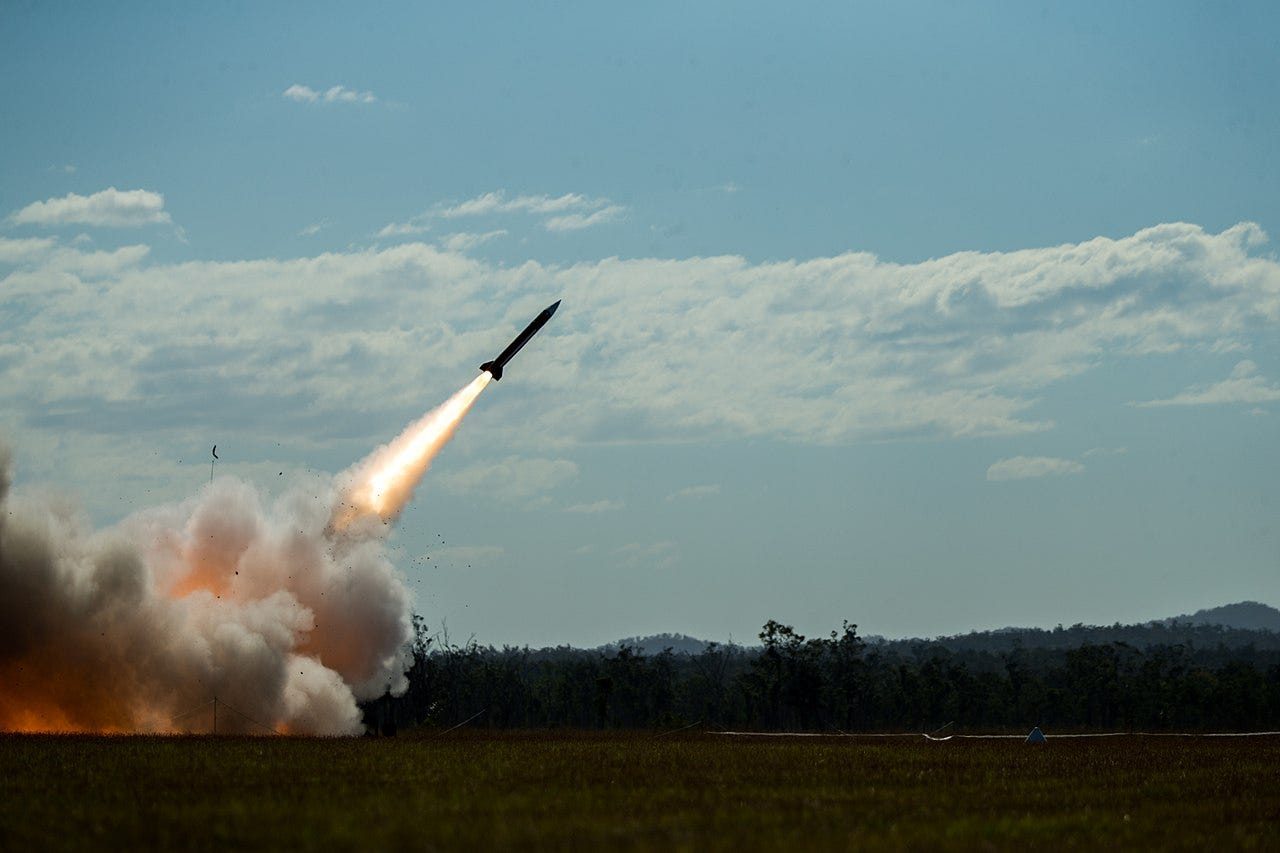
THAAD interceptors dropped 38% — from 452 to roughly 234–278.
Where did they go? Three sequential drains emptied the reserves:
- Roughly 600 Patriot interceptors were transferred to Ukraine under the Biden administration.
- Batteries were redeployed from European garrisons to Gulf and Levant nodes during the Iran conflict.
- Combat expenditure against Iranian ballistic missiles and drones consumed the remainder.
Current production? About 600 missiles per year. The target of 2,000 annually isn’t scheduled until 2030.
Restoring pre-war stockpile levels could take until mid-2029 — at best.
A U.S. defence official in Europe described the capability to defend against even a single Russian ballistic missile strike as “very limited.”
RUSI analyst Ed Arnold called the situation of European states having Patriot launchers without interceptors “ridiculous.”
Germany has the launchers. It doesn’t have the ammunition.
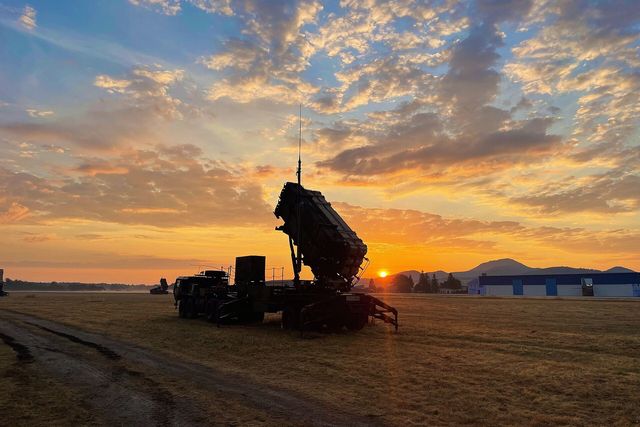
Let me put this in plain language. Europe’s missile shield is empty. The Patriot is the only Western system capable of defeating high-speed threats like Russia’s Iskander-M and Kinzhal missiles — weapons that travel above Mach 5. Without PAC-3 interceptors, Europe takes every punch in the face.
Russia Calculates This Is the Moment
Just try to look at the Russian perspective that
Ukrainian drones are hitting the capital. Russia claims 11,236 Ukrainian drones were intercepted in August alone.
Ordinary Russians — the people Putin promised would never feel this war — are now experiencing the same terror Ukrainians have endured for four and a half years. Airports are shutting down. Power outages. People are dying in their homes.
Britain is handing Ukraine the blueprints to build the very missiles that strike Russian cities. France is doing the same. Zelenskyy has confirmed priorities for deep strikes “in the coming weeks and in September.”
On the other side, America is thinking whether to pull troops from Europe or not. NATO’s interceptor stockpile is hollowed out by the Iran war. And European allies, for all their rhetoric about spending 5% of GDP on defence by 2035, haven’t figured out how to pay for it.
A cornered state with nuclear weapons and diminishing options is the most dangerous thing in international relations.
For those who study IR theory, this is what John Mearsheimer calls the “tragedy of great power politics.” When a state perceives its survival is at risk, rational calculations about escalation change. What was unthinkable becomes thinkable. What was a red line becomes a dare.
Russia does not have to invade Poland. It doesn’t have to launch a nuclear weapon.
All it has to do is strike one British military facility — in Ukraine, in Cyprus, anywhere — and the entire Western alliance faces a question it has avoided for 77 years: does Article 5 actually work?
We are watching three simultaneous crises converge into one.
First: Russia is frustrated, domestically exposed, and being attacked at home with escalating intensity. A government that told its people this war would never touch them is now scrambling to explain the dead civilians in Moscow suburbs.
Second: Europe’s missile defence stockpile — the one thing that stands between Russian Iskanders and European cities — has been drained by a war America fought in the Middle East without consulting Europe about the consequences. Germany has launchers with no ammunition. That is not a defense posture. That is a prop.
Third: The transatlantic alliance is fracturing at the precise moment it needs to be strongest. Trump sees NATO as a billing dispute. Europe sees it as a survival pact. Those two visions cannot coexist in a crisis.
Chancellor Friedrich Merz says Germany is “doubling its defense budget within four years.” NATO Secretary General Mark Rutte is lobbying the White House. European allies have reportedly filled most gaps created by U.S. force reductions.
But budgets take years. Interceptors take years. Factories take years.
Russia’s frustration is measured in days.
In the end, this isn’t about one drone attack or one diplomat’s threat. It’s about the gap between the world Europe built — a world of institutions, alliances, and collective defence and the world that actually exists right now, where the shield is empty, the guarantor is wavering, and the adversary is being pushed into a corner with nothing left to lose.
Something is going to break. The only question is whether it breaks in a negotiating room or on a battlefield.
Comments
No comments yet. Be the first.
Comments are closed on this article.