
The problem behind India’s agricultural trade policy
India’s agricultural trade policy is often seen as a choice between protecting farmers and opening markets to foreign products. Farmers fear that cheaper imports could reduce the prices they receive. Businesses that use agricultural products as inputs, however, may want more imports to increase supply and control costs.
Both concerns are real, but they do not affect everyone in the same way.
A farmer who grows maize wants to sell the crop at a good price. A poultry business that buys maize for animal feed wants to purchase it at a lower price. The first benefits from a higher selling price, while the second may benefit from a lower buying price. Both are part of the same agricultural economy, but their interests can conflict.
This problem is important in India’s trade talks with the United States.
On 7 February 2026, India and the United States announced a framework for an interim trade agreement. The official India–US joint statement included dried distillers’ grains (DDGs) and red sorghum for animal feed among the products on which India would reduce or remove tariffs under the proposed arrangement.
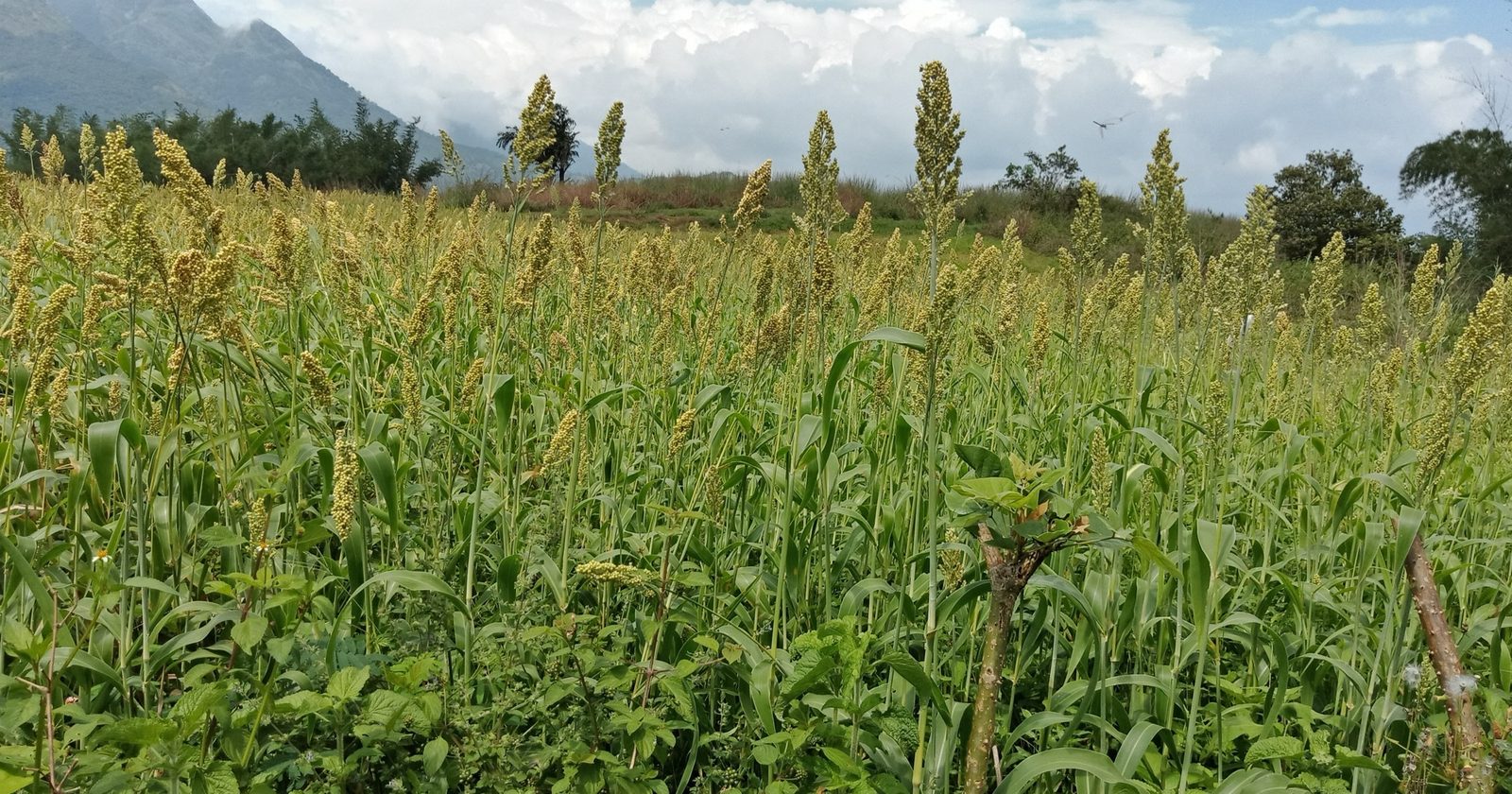
These products matter because they can be used in animal feed. Their entry into the Indian market could give feed producers more options. However, the effect on Indian farmers would depend on the amount imported, the products being replaced and the prices at which imports enter the market.
India’s challenge is therefore more complex than choosing between protection and free trade. It must decide how to meet the needs of different groups without ignoring the costs that some of them may face.
Why protecting farmers is politically difficult
Agriculture is important to India’s economy and society. The Government of India’s Agriculture Census for 2015–16 recorded about 146.45 million operational landholdings.
Many farmers have limited choices when market conditions change. They may not be able to switch crops quickly because they depend on local soil, water, credit, storage and access to markets. A sudden fall in the price of a crop can therefore create serious problems for farmers who cannot easily change what they produce.
This helps explain why agricultural trade is politically sensitive. The benefits of cheaper imports may be spread across many businesses and consumers. At the same time, the losses may fall heavily on farmers who grow a particular crop.
However, keeping foreign products out of the market does not automatically mean that domestic farmers receive strong economic support.
The OECD’s Agricultural Policy Monitoring and Evaluation 2025: India reported that India’s average producer support estimate was negative 14.5% of gross farm receipts during 2022–24. This measure looks at the effects of government policies on farmers, including the effect of policies on the prices they receive. It does not mean that every Indian farmer loses 14.5% of their income.
The OECD’s finding points to an important difference between protecting farmers from foreign competition and supporting their earnings. Trade restrictions may protect some domestic markets, but other policies can still put pressure on prices received by farmers.
This means that agricultural protection cannot solve every problem. Farmers may also need better technology, storage, transport and access to buyers.
The political need to protect vulnerable farmers is understandable. But the economic results of that protection must still be examined.
Why feed demand changes the debate
The conflict becomes clearer when we look at the industries that depend on agricultural crops.
Maize and soyabean are not only crops sold by farmers. They are also important inputs in animal feed. The cost of feed affects poultry, dairy, livestock and aquaculture businesses. If feed becomes expensive, these businesses may face higher production costs.
The United States Department of Agriculture’s Economic Research Service studied this issue in its March 2025 report, The Growing Demand for Animal Products and Feed in India.
Under its moderate scenario, India’s maize consumption could rise from 34.7 million tons in 2022–23 to 62.8 million tons in 2040 and 93 million tons in 2050. The report also projects that soybean-meal consumption could rise from 6.2 million tons to 17.7 million tons by 2040.
These figures are projections, not guaranteed results. They also do not tell us how much India will import from the United States. However, they show why the future supply of animal feed is an important issue.
If demand for feed grows faster than domestic supply, businesses may face higher costs or look for additional supplies from abroad. Imports could help increase the amount of feed available, but their effects would depend on the products imported and their relationship with domestic crops.
This creates a conflict within Indian agriculture. Crop farmers may want to protect the prices of their products, while businesses that use those crops may want more supply at lower prices.
A policy that helps one group may create difficulties for another. That is why the interests of crop farmers and feed producers need to be considered together.
Why the type of import matters
Not all agricultural imports have the same effect. The product being imported is important.
Red sorghum used for animal feed and DDGs are different from maize and soyabean. DDGs are a by-product of making ethanol from grains and can be used as an animal-feed ingredient.
These products may give Indian feed producers more choices. However, it would be wrong to assume that their imports will always reduce feed costs or harm Indian farmers.
The effect depends on several questions. How much will India import? Will the imported product replace something already produced in India? Will it reduce demand for domestic crops? Will the lower cost of an input be passed on to businesses or consumers?
For example, a poultry business may benefit if an imported ingredient gives it access to a cheaper source of feed. But if that ingredient replaces a product bought from Indian farmers, those farmers may face greater competition. The size of this effect will depend on the market and the amount imported.
This is the main reason to examine each product separately. Opening access to a selected feed ingredient is not the same as opening the entire agricultural market to foreign competition.
India’s trade framework also needs to be understood in terms of its actual commitments. The February 2026 joint statement described a framework for an interim agreement. The announcement alone does not prove that every proposed tariff change has taken effect or that large volumes of these products are already entering India.
India therefore needs to examine whether these imports can help meet real supply needs and what they may mean for domestic producers.
What India’s soybean-meal experience tells us
India’s experience with soybean-meal imports in 2021 shows why these decisions matter.
According to the USDA’s Economic Research Service, India allowed a one-time import of about 1.2 million tons of soybean meal and soy cake during a poultry-feed shortage. Domestic soybean prices declined after the policy change, although they later rose again. The USDA explains this episode in its article, Easing of India’s soybean import policy helped lower domestic soybean prices.
This example shows that additional supplies can affect prices when businesses face a shortage. More supply may help feed buyers, but it can also put pressure on prices received by domestic sellers.
However, the example does not prove that every import decision will have the same result. The outcome depends on the amount imported, the timing of imports and the market conditions at that time. Soybean meal also differs from DDGs and red sorghum, so the same price effect should not be assumed for all three products.
The episode nevertheless offers a useful lesson. Import policy can affect several groups at once, and the benefits may not be shared equally.
For India, the important question is when additional imports are needed and how their effects on domestic producers should be managed. A temporary response to a shortage may also have different effects from a long-term change in trade policy.
Who gains and who bears the cost?
Selective market opening can create benefits, but it can also create costs. The key is to identify who may gain, who may lose and what evidence is available.
Feed producers may gain from access to additional ingredients. If these imports increase supply or reduce the cost of suitable inputs, they may help businesses manage production costs. Consumers could benefit if lower costs lead to lower prices for products such as eggs, poultry or dairy goods. However, these benefits are possible outcomes, not guaranteed results.
Domestic crop farmers may face greater competition if imported products replace crops they already sell. The effect may be stronger for farmers who have fewer options to change their production. But not every import will compete directly with every domestic crop, so the likely effect must be assessed product by product.
The government must also consider food and feed security. Relying only on domestic supply can create problems when production is not enough to meet demand. Relying too heavily on imports can expose businesses to changes in global prices and supply disruptions.
There is no simple answer that removes all these risks. The government needs reliable information about domestic production, feed demand, import prices and the effect of trade changes on farmers and businesses.
This is also why the debate should not focus only on the total amount of agricultural imports. Their type, timing and purpose matter just as much.
Moving beyond the protection debate
India’s agricultural trade policy faces a difficult task. Keeping markets closed may protect some farmers from foreign competition, but it cannot guarantee enough feed for growing industries. Opening markets may increase supply, but it may also put pressure on some domestic producers.
The answer is not to assume that all imports are good or that all protection is necessary. Each proposed concession should be examined on its own merits.
India should ask whether domestic supply is enough, whether an import can fill a real gap, which local products may face competition and how the costs will be shared. It should also check whether the benefits reach the businesses and consumers that are expected to gain.
At the same time, better technology, storage, transport and access to markets can help Indian farmers become more productive. Trade protection alone cannot solve these problems.
The India–US trade framework brings these issues together. It shows why agricultural trade decisions cannot be judged only by the amount of market access offered to foreign producers. Their effects within India also matter.
India’s challenge is not simply to choose between protecting farmers and opening markets. It is to decide which restrictions are needed, where selected imports can help meet real supply needs, and how to manage the costs for domestic producers.
That is the real question behind selective agricultural opening. The success of this approach will depend not only on what India agrees to import, but also on how the government measures the results and responds when the costs and benefits fall unevenly across the agricultural economy.
AI disclosure, from the author: AI tools were used to assist with grammar, spelling, and language editing. The analysis, interpretation, and conclusions are the author’s own.

Comments
No comments yet. Be the first.
Comments are closed on this article.