
President of the Republic of Indonesia Prabowo Subianto plans to establish the Strategic Minerals and Commodities Exchange (BMKS). Prabowo stated that the establishment of BMKS is important to strengthen Indonesia’s position in commodity trade, where Indonesia’s position so far has been limited to that of a producer, without yet being involved in determining the prices of various commodities. BMKS is planned to be launched precisely on January 1, 2027.
Indonesia is a country with very abundant natural resources, such as nickel, coal, palm oil, rubber, tin, and various other strategic commodities. However, being rich in resources does not necessarily make a country a major player in trading these commodities in the global market.
Indonesia is the world’s largest nickel producer. The IEA recorded that its share of global nickel production increased from 34% in 2020 to 52% in 2023. For refined nickel, it rose from 23% to 37%. According to the U.S. Geological Survey (USGS), Indonesia’s mined nickel production is estimated to reach 2.31 million tons of nickel content, up from 2.03 million tons in 2023.
With this production, Indonesia accounts for around 62% of global mine production, making Indonesia the world’s largest nickel producer. In 2025, based on data from Indonesia’s Ministry of Energy and Mineral Resources (ESDM), there were 79 smelters actively operating, 74 under construction and 17 still in the planning and licensing process. In terms of processed and derivative products, Indonesia contributes 37% of global refined nickel and derivative production, or an increase of 14% compared with its 2020 contribution of 23%.
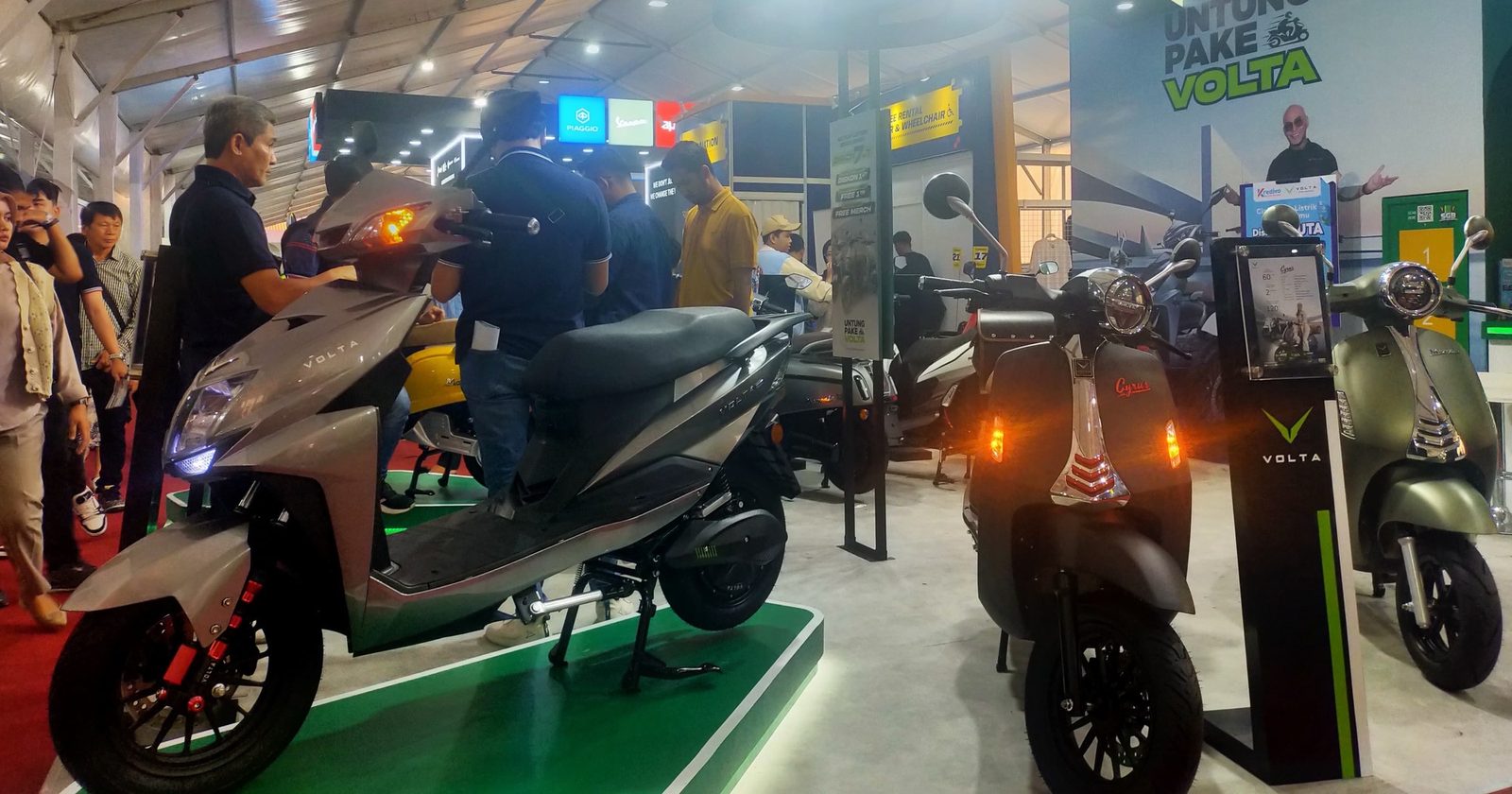
The increase in Indonesia’s production and contribution is directly proportional to the increase in electric vehicle sales. The IEA stated that in 2025, electric car sales reached more than 20 million units. For electric motorcycles, the figure was nearly 10 million units, or an increase of around 15%. China itself accounted for around 7 million units in sales and India around 1.3 million units.
Currently, Indonesia has begun moving from merely being a raw material exporter toward becoming a country with large nickel processing capacity. However, this position does not automatically make Indonesia the controller of final products and the electric vehicle market in Asia. Therefore, the plan to establish BMKS is part of Indonesia’s strategy that is not only about increasing production capacity, but also about transforming production strength into market strength.
Therefore, the establishment of BMKS must accommodate two main pillars, namely as a supporting pillar for industrial policy instruments and as a strategy to strengthen the business ecosystem. Thus, the presence of BMKS should be able to create; consolidation of Indonesia’s commodity strength, strengthening downstream processing, building national industries, and increasing Indonesia’s bargaining position in the world market.
In the context of the electric motorcycle market, BMKS has substantial capital, namely nickel producers, which are the main raw material for electric motorcycle batteries. Therefore, we do not need to be overly ambitious about dominating Asia’s electric motorcycle industry, but simply focus on the electric motorcycle battery product segment at the Asian level. The target market is Asian countries that to this day remain champions of the electric motorcycle industry, such as China, South Korea, India, Japan and several Central Asian countries.
Therefore, several strategies that BMKS can implement as a pillar of supporting instruments for industrial policy are; (1) becoming a commodity exchange that continues to operate under OJK supervision for the mineral and strategic commodity sectors, (2) establishing strict Domestic Component Level regulations, (3) consolidating assets and working capital, (4) conducting research and development to produce technology while also encouraging technology transfer, (5) building and strengthening national brands and their industries, (6) creating a regulatory ecosystem to strengthen the competitiveness of industries and their component industries.
In microeconomic theory, the ability to determine prices is not solely determined by a position as a producer. Market structure, bargaining power, the level of market concentration, demand and supply elasticity and the availability of price information instead become price variables. Therefore, being the largest producer does not automatically make Indonesia the price setter in the global market.
This is where BMKS becomes important, not merely to administratively set the prices of nickel and electric motorcycle batteries, but to encourage BMKS to build a credible price discovery mechanism so that prices formed in Indonesia can become one of the global market references.
Meanwhile, as a strategy to strengthen the business ecosystem, there are several agendas that need to be promoted. First, ensuring the availability and sustainability of nickel as the main raw material for electric motorcycle batteries, second, mastering high-value-added products by building Indonesian brands, so that they have a reputation and identity in the Asian market, third, making Indonesian companies a line of economic diplomacy, by building supply chains, distribution networks in Asia, attracting investment, building industrial cooperation through joint ventures, and strengthening bilateral trade cooperation with Asian countries.
Thus, BMKS should not stop merely as a place for commodity transactions and trade. Instead, BMKS must be able to become part of an ecosystem that connects natural resources, downstream processing, industry, technology, market formation, investment, and the expansion of Indonesian products into the Asian market. Therefore, instruments are needed to create market confidence, starting from administrative standards, transparency, governance, commodity standardization, data integrity, and supervision, legal certainty and policy consistency are the main prerequisites.

Comments
No comments yet. Be the first.
Comments are closed on this article.