
Nearly six years after the Group of Twenty created the Common Framework for Debt Treatment in November 2020, the mechanism has produced a real and underappreciated achievement: for the first time, it placed the Paris Club of traditional bilateral creditors and China, now the largest single bilateral creditor to many low income countries, under one coordinating structure for sovereign debt restructuring. That achievement, however, has been overshadowed by a separate and much more damaging failure. According to the G20's own 2024 review of the framework's first cases, Chad, Zambia, Ghana and Ethiopia took between roughly one and more than four years to reach an agreement in principle with their official creditors after requesting treatment, a delay with no fixed ceiling built into the framework's design. The Common Framework solved a seating problem. It never solved a timing problem, and the cost of that unsolved problem is paid almost entirely by the debtor economy, in the form of frozen investment, currency pressure and stalled growth during the interval when no one yet knows what the restructured debt will look like.
What the Common Framework Was Built to Fix
Before 2020, sovereign debt restructuring for low income countries ran through two separate, uncoordinated channels. The Paris Club, a group of mostly Western bilateral creditors formed in 1956, handled official bilateral debt under its own long standing principles, including comparable treatment across its own members. Private bondholders negotiated separately, often after a country had already reached an agreement with the Paris Club, in a sequence that assumed official creditors moved first. That sequence broke down over the 2010s as China became, by some IMF and World Bank estimates, the largest single bilateral creditor to many low income countries, operating entirely outside the Paris Club's membership and its disclosure norms. A restructuring process built for a world of Paris Club dominance no longer matched a world in which China alone could hold a comparable or larger share of a country's official debt. The G20's answer, launched in November 2020 as COVID-19 pushed several low income economies toward default simultaneously, was the Common Framework: a structure under which a debtor's request triggers the convening of an Official Creditor Committee that explicitly includes China and other non-Paris Club lenders alongside traditional ones, negotiating under a shared comparability of treatment standard, with the joint IMF–World Bank debt sustainability analysis as the technical anchor determining how much relief was needed.
This design solved the coordination problem the pre-2020 system could not. It did not, by itself, solve the problem of how quickly that coordination would happen once a country requested treatment, and the framework's own text left the timeline essentially open ended, dependent on creditors' willingness to agree rather than on any binding deadline.
The Clock, Case by Case
Chad was the first test, requesting treatment in January 2021. Its Official Creditor Committee gave the IMF financing assurances in June 2021, but an agreement in principle covering all creditors, including the commodity trader Glencore, did not follow until November 2022, roughly twenty-two months after the request. Even then the treatment was contingent rather than deep: the IMF–World Bank debt sustainability analysis tied the relief to oil-price triggers rather than to a reduction in the debt stock itself, and the World Bank's president complained that the deal provided no immediate debt reduction, meaning Chad's eventual agreement came together with relatively shallow relief.
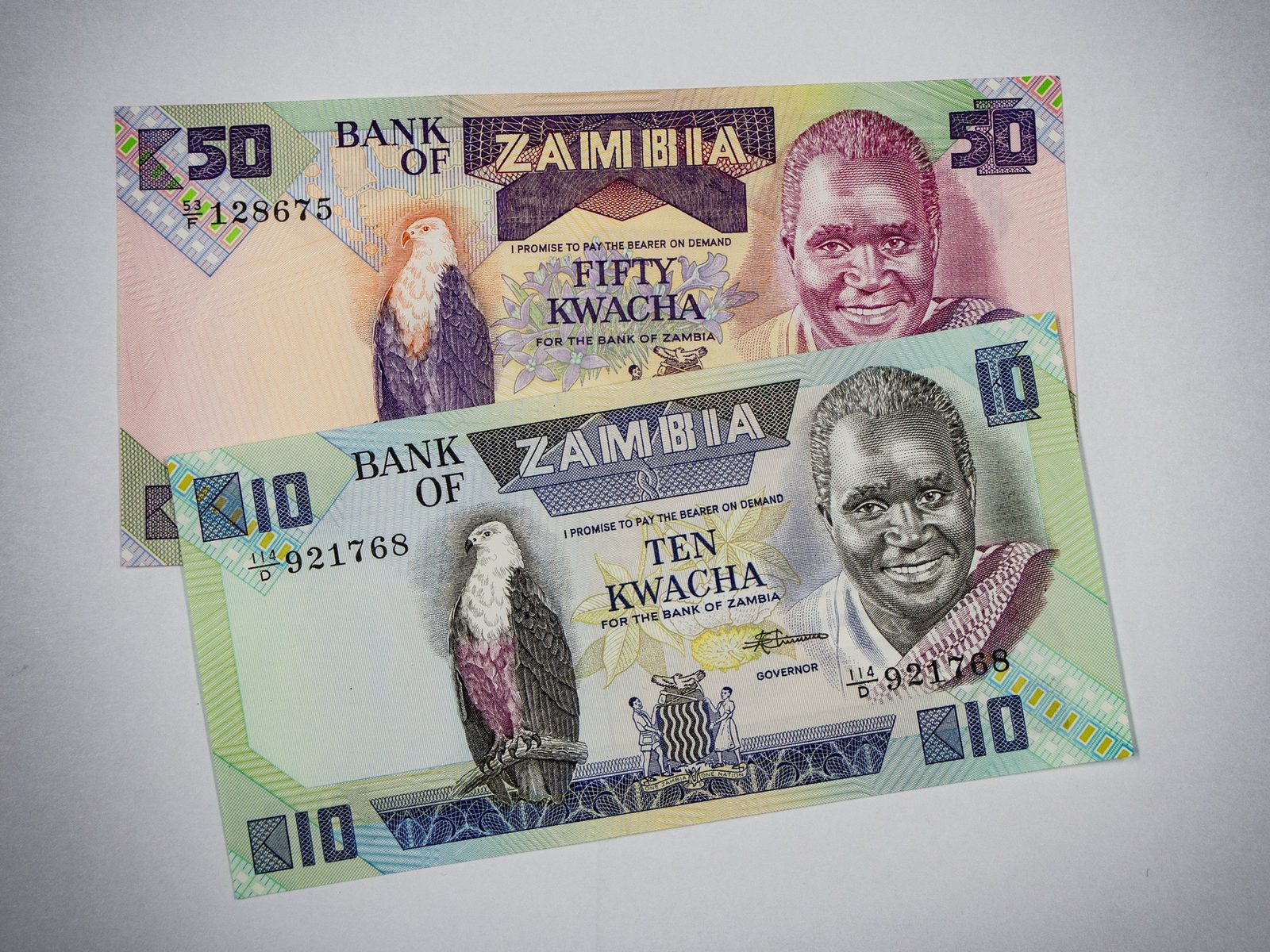
Zambia requested treatment in February 2021, shortly after defaulting on its Eurobonds in November 2020. Its Official Creditor Committee, co-chaired by France and China, reached an agreement in principle only in June 2023, roughly two years and four months after the request. A full agreement in principle with Zambia's private Eurobond holders followed in March 2024, and the formal exchange of bonds did not complete until mid-2024, close to three and a half years after the original default. The IMF and World Bank's own programme documents for Zambia in 2022 and 2023 cited delays in the restructuring as having "adversely affected confidence", weakening the kwacha and keeping non-resident investors away from the domestic bond market, since neither the government nor prospective investors could price a sovereign risk that remained legally and financially undefined.
Ghana defaulted on most of its external debt in December 2022 and requested Common Framework treatment in January 2023. Its Official Creditor Committee reached an agreement in principle in January 2024, roughly one year later, a materially faster official creditor timeline than Zambia's. Ghana's domestic debt exchange, covering local currency bonds and not part of the Common Framework process itself, closed in 2023, while its Eurobond restructuring with private creditors was agreed in principle in June 2024, after an earlier proposal was rejected by the IMF in April, and formally completed in October 2024. Ghana's experience shows the framework can move faster when creditor composition and political alignment cooperate, but even its comparatively quick one year official track still left Eurobond holders and the broader market pricing Ghanaian risk under prolonged uncertainty for more than a year after the original default.
Ethiopia had requested Common Framework treatment in February 2021, within weeks of Zambia, and its Official Creditor Committee was formed in September 2021. Yet it defaulted on its sole outstanding Eurobond in December 2023, after securing an interim debt service suspension from its official creditors but failing to agree a standstill with bondholders. An agreement in principle with the Official Creditor Committee came only in March 2025, more than four years after the request, and was formalised in a memorandum of understanding in July 2025. The Eurobond took longer still: a January 2026 deal with bondholders was rejected by the official creditors on comparability grounds, and a replacement agreed in June 2026 was approved by them only in August 2026. Ethiopia illustrates that even a government requesting treatment early does not control how quickly its creditors, rather than the debtor itself, choose to conclude.
Why the Clock Keeps Running Long
The mechanism linking these delays to the framework's actual design, rather than to bad faith by any single creditor, runs through three specific gaps. First, the Common Framework contains no automatic standstill on debt service once a country requests treatment. Unlike some corporate insolvency regimes, where filing triggers an immediate freeze on creditor claims, a Common Framework request does not by itself stop a government's obligation to keep paying some creditors while others negotiate, which both prolongs liquidity pressure on the debtor and removes much of the time pressure on creditors to conclude quickly, since slower negotiation does not automatically cost them anything either.
Second, the comparability of treatment principle, while necessary to prevent official creditors from offering deep relief only to see private bondholders refuse equivalent terms and extract a better deal later, created recurring deadlock precisely because private Eurobond holders now hold a much larger share of these countries' external debt than they did during the Paris Club era the framework's procedures were partly modeled on. In Zambia's case, the dispute over whether a given private sector offer was truly comparable to the official creditors' terms was a documented, specific source of the delay between the 2023 official agreement in principle and the 2024 private bondholder agreement, since each side needed to see the other's committed terms before finalizing its own.
Third, the framework never defined a binding timeline for forming or concluding an Official Creditor Committee, so the one to four year range observed across these first four cases is not an implementation failure within an otherwise fast system. It is the predictable range of outcomes from a system whose procedural steps have no clock attached to any of them, only a sequence that must be completed before relief is finalized.
This is not solely an external critique. The IMF and World Bank's own joint paper on debt, presented to their Development Committee in April 2022, explicitly identified the absence of a debt service standstill and the lack of "clear and time-bound steps" in the process as the first two of four priorities for fixing the framework, rather than attributing the delays primarily to the particular circumstances of individual debtors. The World Bank's president went further at the same Spring Meetings, proposing specific fixes directly targeted at the gaps identified here: that a creditor committee be formed within six weeks of a staff level agreement with the IMF, and that debt service payments be suspended for the duration of negotiations. That both institutions proposed remedies aimed precisely at the standstill and timeline gaps is itself evidence that the delay traces to the framework's design, not merely to the particular difficulties of Chad, Zambia, Ghana or Ethiopia individually.
The Cost of the Interval Itself
This delay has an economic cost distinct from the eventual size of debt relief, and that cost is not well captured by how generous or ungenerous a final restructuring agreement looks once signed. A country mid restructuring cannot reliably plan its fiscal space, since it does not yet know its post restructuring debt service obligations. Its currency typically trades under sustained pressure, since investors price continued uncertainty about eventual creditor losses into the exchange rate. New investment, both domestic and foreign, tends to wait for clarity on the country's medium term financing position rather than commit capital into an unresolved sovereign risk.
Zambia's kwacha depreciated substantially against the dollar across the restructuring period, and the IMF and World Bank's own programme documents for Zambia explicitly cited delays in the restructuring as having damaged confidence and weakened the currency. That IMF characterization is a documented institutional assessment, not an inference drawn here. It does not, however, isolate the restructuring delay as the sole cause of currency or investment weakness: copper price movements, the global interest rate environment and Zambia's underlying fiscal deficit were concurrent factors over the same period, and the IMF's own surveillance work on Zambia discussed these pressures alongside, not instead of, the unresolved restructuring. The more defensible claim is that the restructuring interval was one documented, IMF acknowledged contributor to a weak investment and currency picture, operating alongside these other pressures rather than instead of them.
None of these costs appear in the headline terms of a restructuring deal once it closes, yet they are a direct function of how long the Common Framework's procedural steps took to complete in each case, which means they belong in any honest accounting of the framework's overall economic effect, not only the comparatively visible question of how much principal was eventually written down.
What Would Prove This Wrong
This analysis would be substantially weakened if the pattern observed across these first four cases does not hold going forward. First, if a future Common Framework case, whether a renewed Ethiopian timeline or a new sovereign request, reaches an agreement in principle with its Official Creditor Committee in under twelve months from request, consistently and not as an isolated exception, that would indicate the framework is genuinely accelerating through institutional learning rather than carrying a structural design flaw. Second, if the G20 or the IMF formally adopts a binding timeline or an automatic standstill mechanism, closing the specific procedural gap identified above, and subsequent cases show materially shorter intervals as a direct result, that would confirm the delay was a fixable design choice rather than an unavoidable feature of coordinating diverse creditors. Third, if future comparability of treatment disputes between official and private creditors are resolved within months rather than years, as happened in Ghana, where the bondholder deal followed the official agreement within six months, that would suggest the deadlock observed in Zambia was case specific rather than structurally embedded in the framework's comparability principle itself. None of these three conditions had clearly and consistently materialized as of the most recent reviews available, although the G20's own 2024 and 2025 notes record that the official creditor stages have shortened with each case, from staff level agreement to financing assurances in seven months for Zambia and five for Ghana; what has not shortened is the interval from a country's request to a settlement with all its creditors, which for Ethiopia ran from February 2021 to at least August 2026. That is why the timing failure described here should be read as a structural feature of the framework's current design rather than a transitional problem specific to its first few cases.
Conclusion
The Common Framework achieved something genuinely new: it brought China and the Paris Club into the same negotiating structure for the first time, replacing a sequence that had already broken down. That achievement should not be minimized. But across Chad, Zambia, Ghana and Ethiopia, the mechanism took between roughly one and more than four years to convert a debt crisis into a finalized restructuring, with no automatic standstill and no binding deadline built into its design, a gap the IMF and World Bank have themselves identified and proposed to fix. That interval carries a real cost, paid in frozen investment, currency pressure and stalled growth, that does not appear in the final terms of any agreement and is therefore largely absent from how the framework's success is usually judged. Until the G20 closes the specific procedural gaps identified here, future debtor countries should expect the same range of delay, regardless of how fair the eventual settlement turns out to be.
Comments
No comments yet. Be the first.
Comments are closed on this article.