
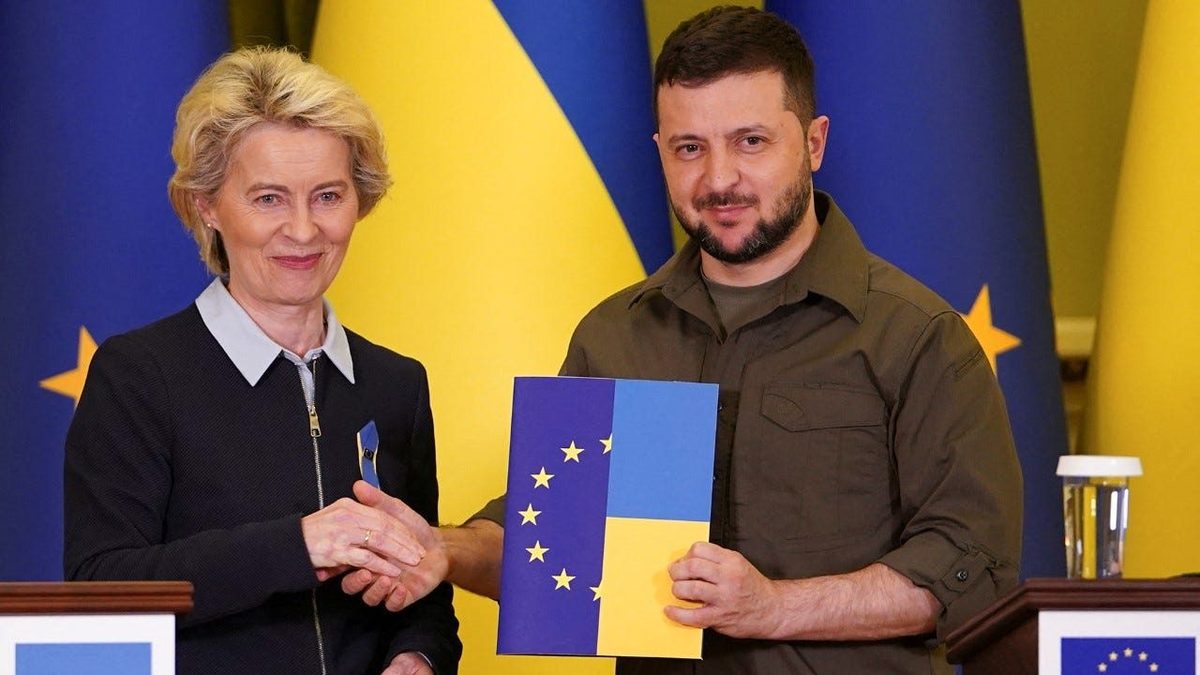
The European Union was created on a simple but powerful idea: all member states are equal.
Whether a country is big or small, rich or poor, once it joins the EU, it has the same legal status, the same voting rights, and the same obligations as every other member.
This principle has guided European integration for decades and has been central to the EU’s identity as a rules-based political project rather than a power hierarchy.
Yet today, that principle is under pressure. Brussels is reportedly considering a major change to the EU’s accession system that could introduce a two-tier model of membership.
Under this proposal, countries could join the EU with limited rights before fully meeting all membership criteria.
This approach is being discussed largely in the context of fast-tracking Ukraine into the EU as part of a broader effort to end the war with Russia.
While the idea sounds radical, it is not new. The concept of a tiered or multi-speed Europe has existed since the end of the Cold War. When communist regimes collapsed across Central and Eastern Europe in the late 1980s and early 1990s, the EU faced a historic challenge.
Many newly independent countries wanted to “return to Europe” by joining the EU. While Western European leaders supported this ambition in principle, they also worried about the consequences of rapid enlargement.
At the time, some policymakers feared that bringing in too many new members too quickly would weaken political unity and slow down decision-making.
The EU already struggled to reach consensus among its members, and adding more states with different political systems, economic levels, and historical experiences raised concerns about paralysis. In this context, German policymakers proposed the idea of a “Europe of concentric circles,” where a core group of countries would integrate deeply, while others would participate more loosely.
These ideas became more visible in the early 1990s, particularly in policy debates in Germany and France.
The argument was that countries like Germany, France, and the Benelux states should form a tightly integrated core that would guide the EU’s direction. Other countries could join the outer layers, benefiting from economic cooperation without full political influence.
But, smaller states strongly opposed this vision, fearing permanent second-class status. As a result, the EU chose a different path: enlargement based on uniform rules and equal membership.
For many years, this approach seemed successful. The EU expanded eastward in the 2000s, integrating countries from Central and Eastern Europe into its legal and political system. However, over time, new problems emerged. The global financial crisis, the eurozone crisis, the migration crisis, and growing political polarization exposed deep internal divisions. Decision-making became slower, and unanimity rules allowed individual states to block major policies.
The situation became even more complex after the United Kingdom left the EU. Brexit forced European leaders to rethink how the Union should function in a more unstable world. It was in this environment that Emmanuel Macron revived the idea of a multi-speed Europe. Macron argued that the EU needed flexibility. Countries willing to move faster on integration should not be held back by others.
At the same time, EU enlargement had effectively stalled. The last country to join the EU was Croatia in 2013.
Since then, several candidate countries have waited for years without real progress. Some have been stuck for more than a decade, losing public faith in the EU process.
This stagnation weakened the EU’s credibility, especially in the Western Balkans.
Russia’s full-scale invasion of Ukraine in February 2022 changed everything. Enlargement suddenly became a geopolitical tool rather than just a technical process. Granting Ukraine candidate status was a strong political signal that the EU saw Ukraine as part of Europe’s future. However, translating that promise into actual membership quickly ran into reality.
Ukraine became an official EU candidate shortly after the invasion and formally opened accession negotiations in June 2024. But progress soon stalled. In June 2025, Hungary blocked further talks, citing concerns over the treatment of Ukraine’s Hungarian minority. Because EU enlargement decisions require unanimity, Hungary’s veto froze the process.
Even without Hungary’s objections, Ukraine faces serious internal challenges. Corruption, judicial reform, and governance remain major issues. According to internal EU assessments, Ukraine could need up to a decade of reforms before meeting full membership criteria. This reality clashes with political ambitions to bring Ukraine into the EU sooner, especially as part of a peace settlement.
This is where the idea of a two-tier Europe has returned to the center of debate. Reports suggest that drafts of a US-backed peace framework include a reference to Ukraine joining the EU by 2027. Under current rules, this would be almost impossible. A two-tier system is being discussed as a way to bridge that gap.
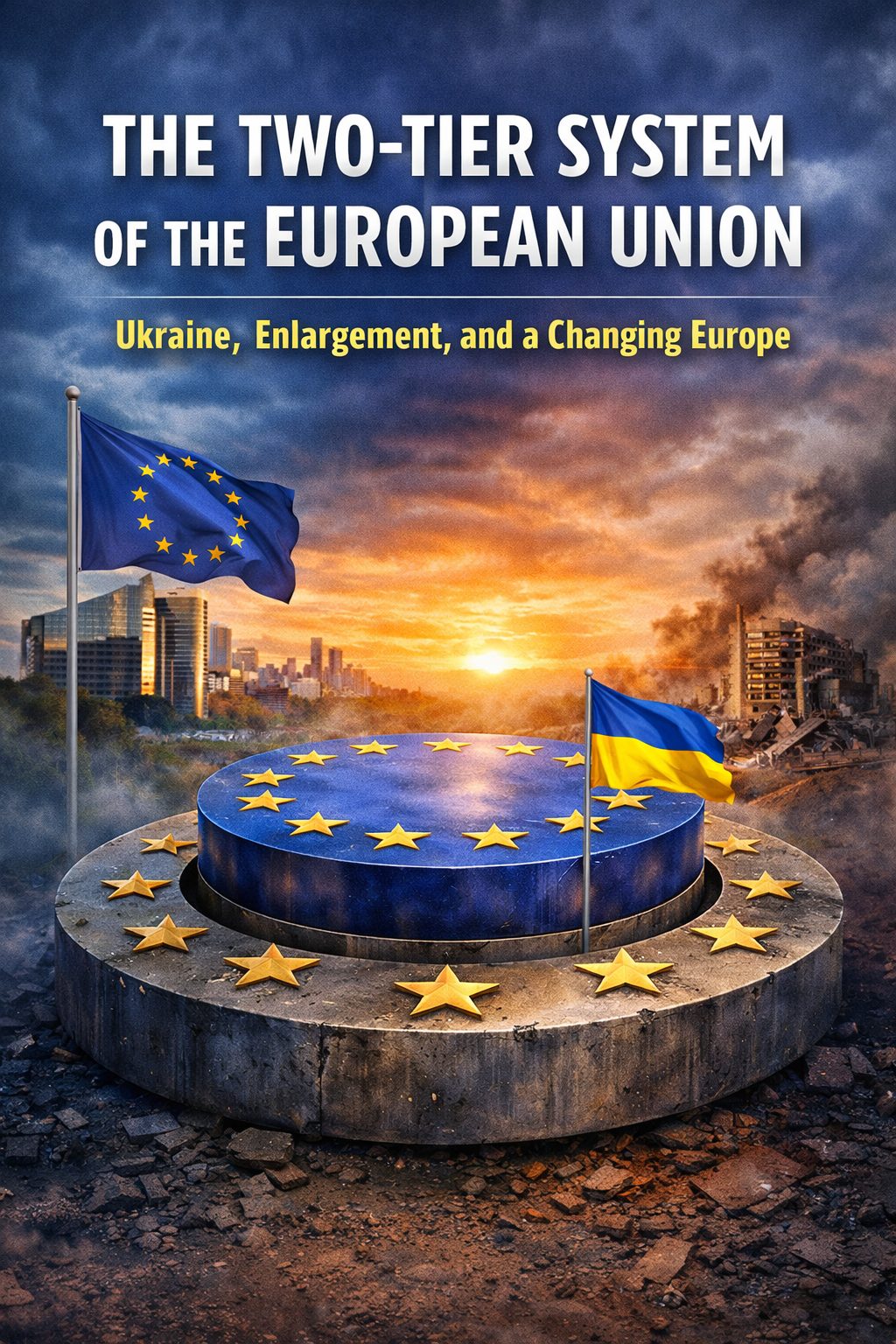
Why Fast-Tracking Ukraine Is So Controversial
Under the proposed two-tier model, Ukraine would formally join the EU but without full rights.
This approach is sometimes described as “EU membership light.” Ukraine would have limited voting power and reduced influence over key EU decisions, especially in areas like foreign policy and budget matters.
In return, it would gain gradual access to the EU’s single market, agricultural subsidies, and development funds. Each step would be linked to meeting post-accession reform targets.
Supporters argue that this model is practical and realistic. They say it allows the EU to deliver political benefits to Ukraine quickly without abandoning standards altogether.
For Ukrainian leaders, EU membership — even in a limited form — could be presented as a major victory that justifies difficult compromises in peace negotiations. For EU leaders, it avoids rewriting the entire accession process while responding to urgent geopolitical pressures.
However, the proposal has triggered strong resistance, including from Volodymyr Zelenskyy himself.
Zelenskyy has stated clearly that EU membership must be full and equal, not partial. From Ukraine’s perspective, accepting second-class status after fighting a devastating war for its European future would be deeply humiliating.
It would also be politically risky for any Ukrainian leader to sell such an arrangement to the public.
Inside the EU, critics worry that a two-tier system could permanently damage the Union’s unity. Once the idea of unequal membership is introduced, it becomes difficult to contain.
If Ukraine joins with limited rights, what prevents future members from being treated the same way? Over time, the EU could turn into a hierarchy rather than a union of equals.
There are also concerns about fairness. Other candidate countries have followed the rules for years, often making painful reforms with little reward. Fast-tracking Ukraine under a different system could anger these countries and weaken trust in the EU’s promises.
Montenegro, the most advanced candidate, fears that changing the rules now could delay its long-awaited full membership.
Moldova, whose EU application is closely linked with Ukraine’s, has also expressed doubts. Moldova worries that a two-tier system could trap it in a permanent grey zone — inside the EU in name but without real influence.
At the same time, not all candidates oppose the idea. Albania has shown openness to partial integration.
Albania has opened all negotiation clusters and sees gradual integration as better than endless waiting. Prime Minister Edi Rama has even suggested that Albania would accept limited representation, acknowledging that large states like France and Germany ultimately shape EU decisions.
The divide among candidates highlights a deeper problem. Some countries remain strongly committed to EU reforms, while others have drifted away. Serbia, Bosnia and Herzegovina, and Georgia have struggled to meet EU standards or align their foreign policies with Brussels.
There is growing fear that a two-tier system could discourage these countries further, leaving them vulnerable to Russian influence rather than anchoring them to Europe.
Beyond individual countries, the two-tier debate raises fundamental questions about what the EU wants to be. Is it primarily a geopolitical actor that adapts rules to strategic needs? Or is it a legal and political community built on strict standards and equality? A two-tier Europe might offer flexibility in the short term, but it could weaken the EU’s moral authority and internal trust in the long run.
There is also the risk that partial members would have obligations without real power. They could be required to follow EU rules without having a meaningful say in shaping them. This could fuel resentment and democratic frustration rather than integration.
Ultimately, the push for a two-tier Europe reflects the extraordinary pressure created by the war in Ukraine. European leaders are trying to balance solidarity with realism, urgency with institutional stability. Fast-tracking Ukraine may seem attractive today, but the consequences will shape the EU for decades.
The EU now stands at a crossroads. It can preserve its traditional accession model, accepting slow progress and geopolitical frustration. Or it can embrace a new, more flexible system that risks redefining membership itself. Whichever path Brussels chooses, it will not only determine Ukraine’s future but also the future character of European integration.
Update, 14 September 2026: the two-tier logic described here is now being tested from outside the Union. See our research brief on what an EU "associate" status for Canada could contain.
Comments
No comments yet. Be the first.
Comments are closed on this article.