
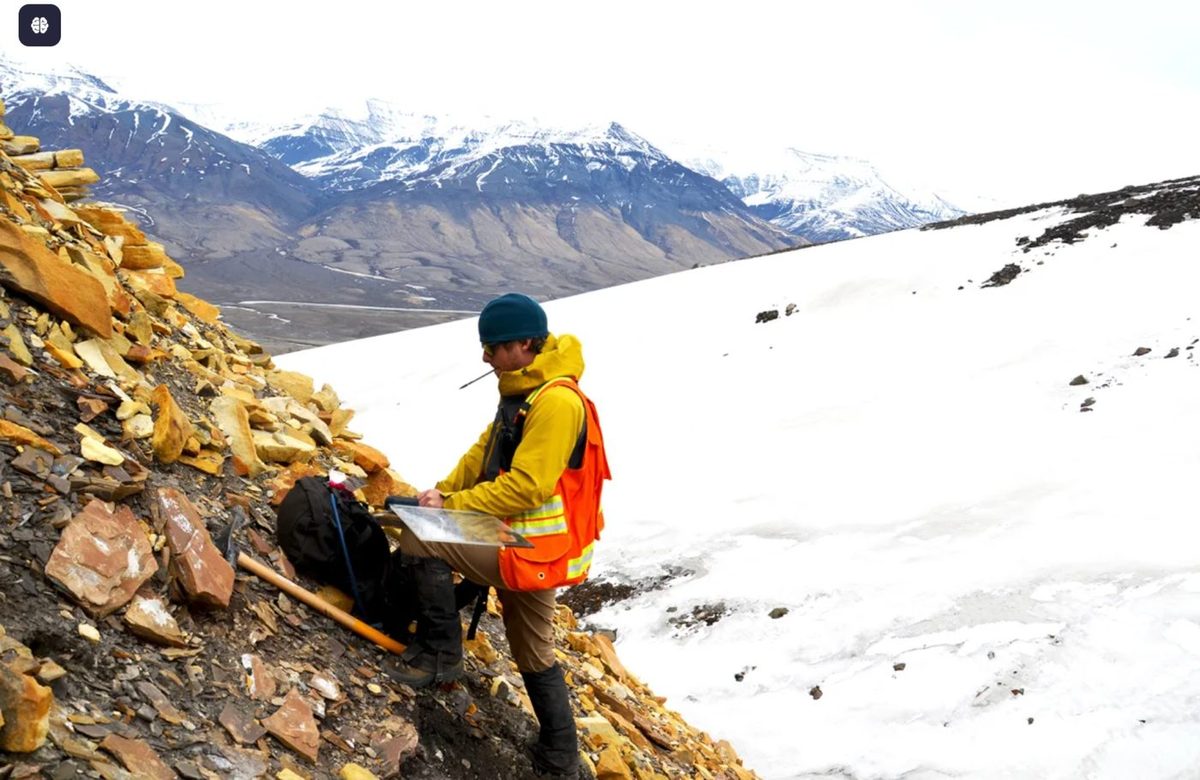
When Trump talks about Greenland, we all know that there is nothing to do with the russia or China, instead
He just wants the resources of the greenland.
Rare earth elements. Critical minerals. Oil and gas. Strategic location.
In Trump’s worldview, Greenland looks less like a self-governing territory and more like a locked warehouse filled with materials the United States might one day need.
At a time when China dominates in the rare earth supply chains so this did not seems be very reduclus idea rather sems to be very rational.
But what Trump sees as a simple deal — or even a strategic necessity — collides with reality at almost every level.
If we look carefully at the facts, it becomes clear that Greenland is not worth it for Trump, not because it lacks value, but because trying to take or coerce it would cost far more than it could ever deliver.
The Resource Temptation: Why Greenland Looks So Attractive
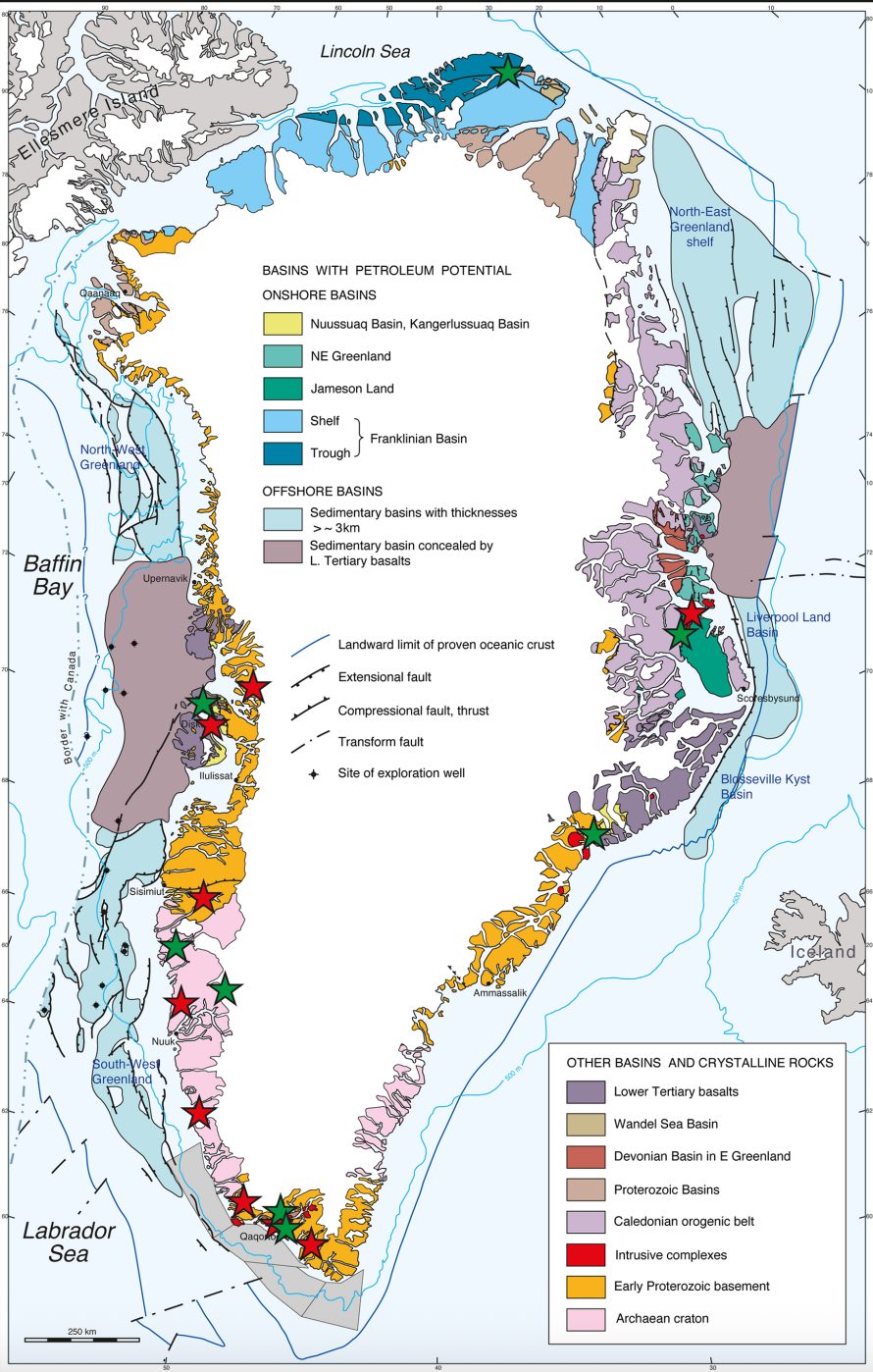
Greenland’s underground wealth is real. Geological surveys show deposits of rare earth elements, uranium, zinc, graphite, and other critical minerals.
Some estimates suggest that Greenland contains occurrences of 25 out of the 34 critical raw materials identified by the European Union.
In a world racing toward green energy, electric vehicles, advanced weapons systems, and digital infrastructure, these materials are extremely important.
There are also estimates — often repeated in political debate — suggesting that Greenland’s offshore basins may contain billions of barrels of oil and vast quantities of natural gas.
Add to this the melting Arctic ice, which is opening new shipping routes and exposing previously inaccessible areas, and it is easy to see why Greenland appears, on paper, like a future treasure island.
For Trump, who tends to think in transactional and territorial terms, the logic is straightforward:
China controls rare earths. Greenland has rare earths. Therefore, Greenland must be secured.
But this is where paper value and real-world value diverge sharply.
Resources in the Ground did not meant the Resources in the Market
Having minerals underground does not mean they can be easily mined, processed, or sold.
Greenland’s environment is among the harshest on Earth. Mining there is slow, expensive, and technically difficult.
Infrastructure is minimal. Roads, ports, power plants, housing for workers, and processing facilities would all need to be built almost from scratch.
Environmental politics also matter.
though trump did not care about it but for the local population it matters a lot
Greenland’s population is small — around 56,000 people — but local opposition to mining projects is strong, especially where uranium or environmentally damaging extraction is involved.
In 2021, Greenland’s government imposed a moratorium on new oil exploration, reflecting both climate concerns and public pressure.
These realities explain a crucial fact: despite decades of exploration, Greenland currently has only one active mine.
This alone should caution against fantasies of quick resource exploitation.
Even optimistic studies acknowledge that only a fraction of Greenland’s mineral wealth is commercially extractable under current conditions. Ownership would not change this. A US flag flying over Greenland would not make Arctic winters milder, infrastructure cheaper, or environmental resistance disappear.
Rare earth security, in particular, is not just about mining. China’s real power lies not only in extraction but in processing and refining, where it dominates global capacity.
Greenland cannot replace China unless massive downstream investment occurs — something that would take years, if not decades.
The US Already Has What It Needs
Another uncomfortable truth for Trump’s argument is that the United States already enjoys extraordinary strategic access to Greenland.
Under a defence agreement signed with Denmark in 1951, Washington operates Pituffik Space Base (formerly Thule Air Base).
This base is a cornerstone of US missile warning, space surveillance, and Arctic monitoring.
It plays a critical role in detecting potential missile launches and tracking objects in space.
The same agreement allows the US to expand its military presence in Greenland if necessary. In other words, from a national security perspective, the United States does not need to own Greenland to defend itself. It already has eyes, ears, and boots on the ground.
This raises a basic question Trump never answers:
what concrete security benefit does sovereignty provide that cooperation does not?
The honest answer is very little.
NATO: The Cost Trump Underestimates the Most
Greenland is part of the Kingdom of Denmark. Denmark is a NATO member. This fact alone turns Trump’s interest into a geopolitical nightmare.
If the United States were to coerce, seize, or annexe Greenland — by force or threat — it would amount to one NATO ally attacking the territory of another.
That would strike at the heart of the alliance.
NATO is not just a military organisation. It is a system of trust. Smaller states accept US leadership because they believe Washington will defend them, not dominate them.
If that belief collapses, NATO collapses with it.
Trump has shown before that he is willing to treat alliances as transactional. But even from a cold strategic perspective, destroying NATO would be an extraordinary act of self-harm.
It would leave Europe fragmented, push countries to seek alternative security arrangements, and create openings for Russia and China to expand their influence.
Ironically, a US takeover of Greenland would hand Moscow and Beijing one of their biggest propaganda victories in decades. Russia could point to it as proof that NATO is meaningless. China could use it to justify its own territorial ambitions by arguing that the US ignores sovereignty when it suits its interests.
Russia and China: Real Competition, Exaggerated Threats
Trump often frames Greenland as a race: if the US does not act, Russia or China will take over. This narrative sounds dramatic, but it is not supported by evidence.
Yes, the Arctic is becoming more contested. Yes, Russia has increased its military presence in the High North.
Yes, China calls itself a “near-Arctic state” and has scientific and economic interests in the region. But there is no credible evidence that either country is preparing to seize Greenland.
Danish intelligence assessments directly contradict claims of Chinese warships “all over the place.” What we see instead is long-term positioning, research missions, limited naval activity, and economic interest — precisely the kind of challenges NATO was created to manage collectively.
Turning Greenland into a US possession would not reduce these tensions. It would escalate them. It would transform the Arctic from a zone of managed competition into one of open confrontation.
The Will of the Greenlandic People Cannot Be Ignored
Perhaps the most morally and politically damaging aspect of Trump’s approach is how little it accounts for the people who actually live in Greenland.
Greenland is largely self-governing and has the right to pursue independence.
All major political parties support independence in principle, though economic realities mean it is a long-term goal.
What Greenlanders do not support is becoming part of the United States.
Polling shows overwhelming opposition to joining the US.
Even proposals for direct payments to Greenlanders — reports suggest figures between $10,000 and $100,000 per person — have been widely rejected as insulting and colonial in tone.
Self-determination is not a technicality. It is a cornerstone of modern international politics. Any attempt to override it would provoke global backlash and permanent resentment inside Greenland itself.
A territory that does not want to be governed cannot be governed peacefully.
Domestic Limits: Trump Is Not an Emperor
Even if Trump wanted to push ahead, he would face serious constraints at home.
Any change to Greenland’s status would require congressional approval. Funding military expansion, buying territory, or paying Greenlanders would involve billions of dollars and fierce political opposition.
Public opinion in the US is strongly against using force to take territory from an ally.
Recent events have also made Congress more sensitive to presidential overreach. Courts, lawmakers, and institutions would challenge any attempt to turn rhetoric into action.
This is not the nineteenth century. Modern power operates within legal and political limits.
Europe’s Likely Response: Concessions Without Surrender
European leaders understand the danger of escalation. That is why they are likely to offer Trump something he can present as a win without touching sovereignty.
This could include expanded US military presence, joint NATO deployments, and greater access for American companies to Greenland’s mineral sector. All of this can be done within existing agreements. Trump could claim he strengthened US security and countered China — without destroying NATO.
The key question is not whether Europe will offer concessions, but whether Trump will accept cooperation instead of control.
Greenland is not just about minerals or bases. It is about how power is exercised in a changing world.
Trump’s instinct is to own, dominate, and compel.
But the Arctic rewards a different approach:
Trying to force control over Greenland would reveal not American strength, but American insecurity.
Greenland is valuable. Its resources matter. Its location matters.
But it is not worth the damage Trump would cause by trying to take it — to alliances, to international norms, and to America’s own credibility.
On that scale, a coerced Greenland would be a strategic loss, not a gain.
And that is why, despite all the talk of minerals, money, and military force, Greenland is simply not worth it for Trump.
Comments
No comments yet. Be the first.
Comments are closed on this article.