
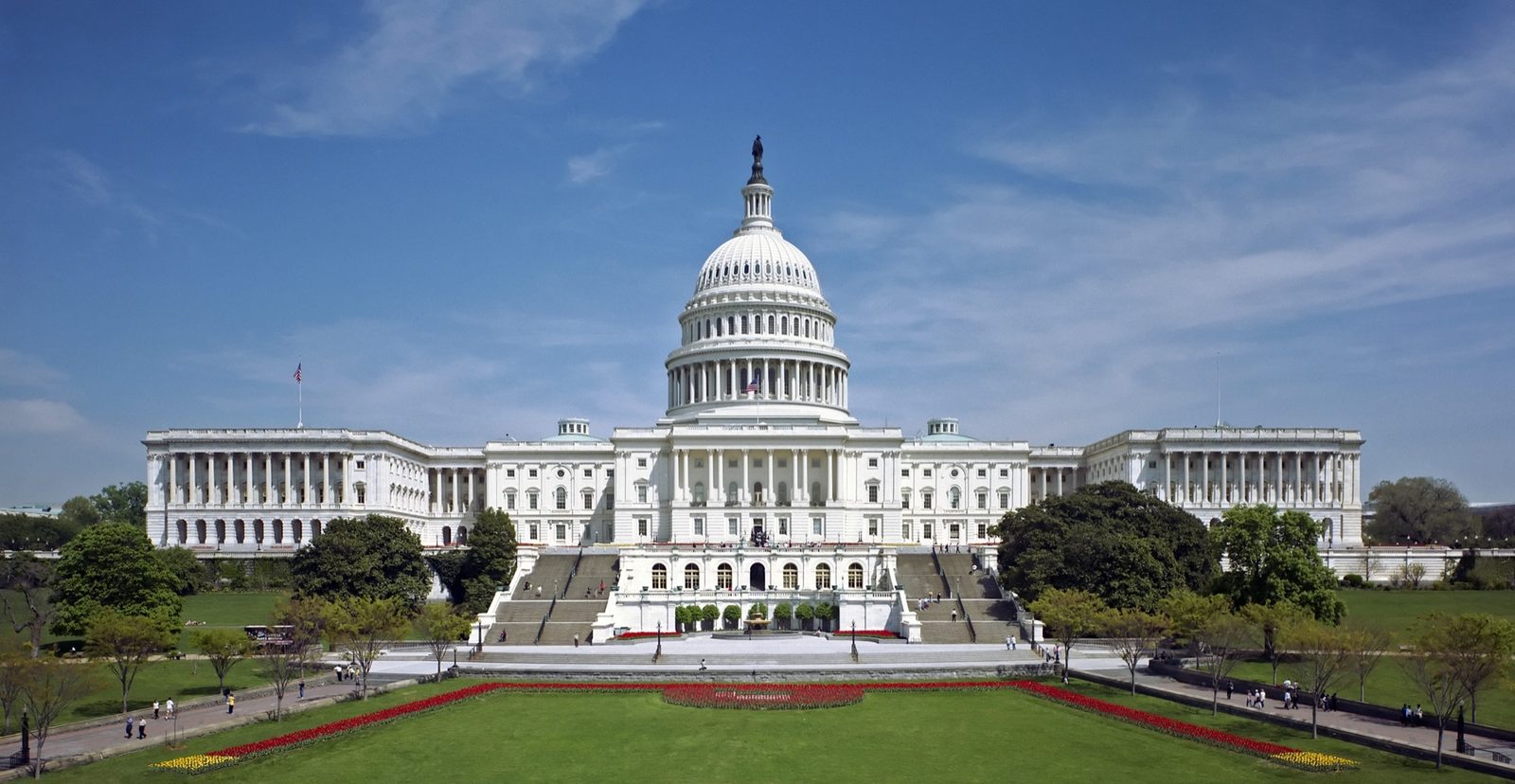
The U.S. midterm elections, which drew global attention, have largely concluded. This intense international interest underscores the United States' global influence and comprehensive national power.
A notable phenomenon emerged in these elections: the winning candidates represent a level of diversity—across race, ethnicity, religion, gender, and sexual orientation—rarely seen before in high-level American political institutions. Some of these victors have even achieved "firsts" in U.S. political history. This is not only a point of interest but also a development with global implications.
Social consciousness and national power
I believe this phenomenon warrants attention precisely because of the comprehensive power the United States wields as a major nation. This power encompasses not only economic, military, and technological capabilities—most notably in the field of modern artificial intelligence—but also "soft power," which includes social consciousness.
The United States is undeniably a nation of significant influence and leadership in science and technology, particularly in artificial intelligence and other tangible sectors. The striking diversity among the winners of these midterm elections serves as a powerful manifestation of this evolution in social consciousness. This carries important, positive implications for both the United States and the world, as historical development dictates that social consciousness must align with economic strength. Should a misalignment occur, history may seek to correct it—a process that could unfold peacefully and rationally, or through less harmonious means.
Abundance and who should share in it
Today, massive investments from major technology companies worldwide have propelled artificial intelligence to unprecedented levels of development. This signals a qualitative leap in human science and technology, promising an era of unparalleled production efficiency and, consequently, immense material abundance. Objectively, such abundance should benefit every individual on the planet. Why should it benefit everyone? There are two primary reasons: first, artificial intelligence is the culmination of humanity’s long-term accumulation of knowledge and creative endeavor; second, all human activity—economic activity included—is fundamentally rooted in and directed toward humanity itself.
Furthermore, it should be noted that, to date, human productive activity has largely operated on the principle of remuneration based on labor. In other words, the remuneration you receive for your labor is based on your contribution. This reward system emerged as a distribution mechanism at a time when human production could not yet fully satisfy everyone’s survival needs; one of its primary purposes is to incentivize participation in productive activities.
However, if the advent of artificial intelligence brings about immense material abundance—to the point where material resources are no longer the primary factor constraining human survival and development—then this reward system must evolve accordingly.
Specifically, the basis for determining how much material wealth an individual receives should no longer depend solely on their contribution to material production. Instead, greater emphasis should gradually be placed on the fact that being human itself constitutes the fundamental qualification for access to such resources.
What this means for global integration
In this context, consider the World Trade Organization (WTO).
The WTO welcomes the accession of other nations because they contribute resources, markets, labor, and—in some cases—technology. For many developing countries, a key advantage in participating in the international division of labor has historically been the provision of relatively inexpensive labor and natural resources. Such cooperation is mutually beneficial: participating nations provide labor, resources, and markets—thereby expanding global production scales and market reach while improving price efficiency—all while fostering their own domestic economic development.
Yet, as artificial intelligence advances, if material production becomes less dependent on low-cost labor, global economic integration organizations like the WTO should, in principle, still welcome all eligible nations. A mutually beneficial outcome would persist—not only because these nations provide natural resources, human capital, and markets, but also due to a new, significant, and objectively necessary factor: the citizens of these participating nations would collectively share in the material abundance generated by artificial intelligence. This, in essence, represents a further evolution of global integration.
The contemporary global economy is an interconnected system shaped by a complex array of factors—including history, culture, politics, geopolitical relations, demographic structures, resource distribution, and varying levels of national development. Consequently, achieving true global economic integration entails far more than the simple removal of tariffs and trade barriers; it requires addressing and adjusting many deep-seated issues within existing international relations. Only by gradually addressing these issues can we create the conditions for deeper global economic integration in the future, and ensure that the immense productivity and material abundance generated by artificial intelligence truly benefit every individual on Earth.
To this end, we should re-examine current trade frictions, trade barriers, and trends toward de-globalization within the international economy—viewing them as part of the historical adjustment process that humanity is undergoing to achieve a more profound form of global integration.
The development of artificial intelligence will shift the focus of international cooperation; it will no longer be primarily about seeking cheap labor or new markets, but rather about welcoming more nations into the fold of global economic integration, allowing them to share in the fruits of AI-driven progress. This means inviting others to participate—not merely for what they can contribute to the global economy, but so that they, too, may share in the benefits of AI—benefits that ought to be enjoyed by all of humanity. This is a significant dimension of future global economic integration, and it points toward a path that is genuinely mutually beneficial.
A historical imperative
In summary: the profound changes and material abundance brought about by artificial intelligence objectively demand that its benefits reach every human being. This, in turn, necessitates that our collective self-perception—our social consciousness—evolve to align with these new productive forces and material conditions. We must cultivate greater tolerance, understanding, and inclusivity. This is not merely a moral slogan; it is a historical imperative.
From this perspective, shouldn't the social pluralism—as evidenced by the recent election in the United States, a nation with global influence across the economic, political, military, and scientific-technological spheres—be seen as a significant and welcome development, both for the U.S. and for the world at large?
Related: Why Trump Can't End the Iran War After the Midterms · The Global Gen Z Protest Wave



Comments
No comments yet. Be the first.
Comments are closed on this article.