
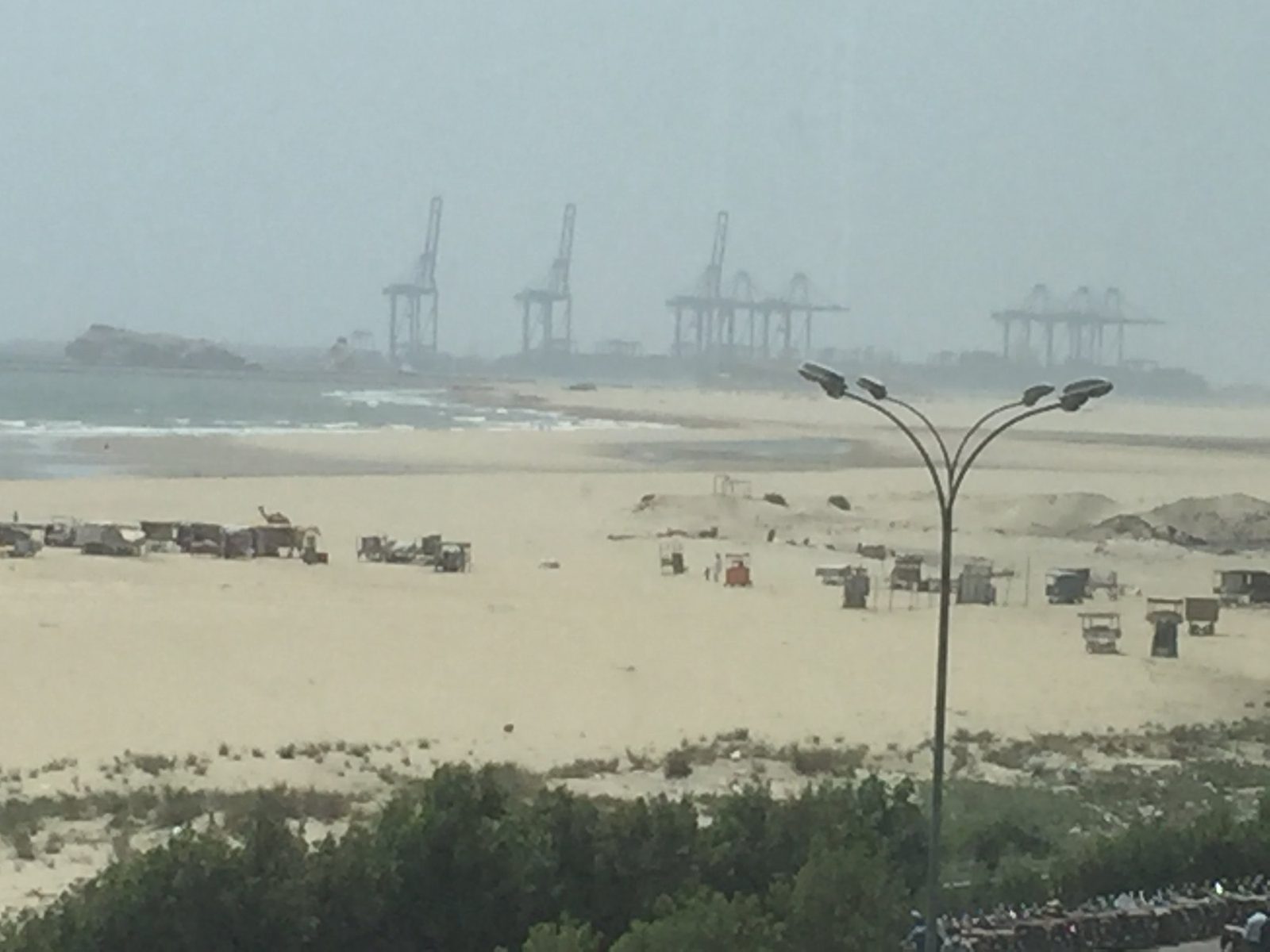
Western coverage of the China-Pakistan Economic Corridor follows a remarkably predictable script.
Predatory loans. Hidden military bases. A total loss of local sovereignty.
It makes for dramatic news. It fits neatly into black and white Cold War tropes. The problem? It completely misreads modern geoeconomics.
When you strip away the sensationalised soundbites and look at balance sheets, maritime transit geometry and domestic political realities, that mainstream narrative quickly falls apart. Having spent considerable time analysing trade datasets, regional supply chains and South Asian geopolitical shifts, I have seen how surface-level headlines obscure the actual strategic game being played.
Here is why the three biggest Western myths fail under real scrutiny.
Myth 1: "It's just debt-trap diplomacy"
People love to point at Sri Lanka's Hambantota Port and claim Beijing is using the exact same playbook in Pakistan. The story goes that China intentionally floods a developing country with unpayable loans, waits for a default, and then swoops in to seize strategic physical assets.
Look at the actual numbers.
In the early, heavy investment phases of CPEC, the bulk of incoming money was not sovereign borrowing at all. The roughly $33 billion energy portfolio was built in independent power producer mode: about a quarter equity from Chinese and partner investors, the rest loans from China's policy banks to the project companies, with Islamabad guaranteeing the power purchaser's payments rather than borrowing itself. Project-level data from AidData confirm these were commercially priced loans, but to companies, not to the state.
Why was that money targeted where it went? Because Pakistan was facing a crippling domestic crisis: chronic electricity blackouts that were shutting down industrial textile mills, destroying local manufacturing and wiping out annual GDP growth. Chinese-led independent power producers such as the Port Qasim Electric Power Company and China Power Hub Generation Company came in to rapidly build generation capacity and stabilise the national grid.
More importantly, who holds Pakistan's actual external debt stack? When you break down the IMF and State Bank data, roughly half of Pakistan's external public debt is owed to multilateral lenders, the World Bank, the Asian Development Bank and the IMF, and under 7 per cent to Eurobond holders. China, counting its bilateral loans, central bank deposits and commercial banks, holds about 27 per cent: the largest single creditor, but nowhere near a majority.
Does Pakistan face real, severe balance of payments pressures and fiscal distress? Absolutely. But blaming those struggles entirely on a "Chinese debt trap" ignores decades of structural domestic tax deficits, unaddressed fiscal policies and broader macroeconomic shocks.
Myth 2: "Gwadar is a covert naval fortress"
Mention Gwadar Port in a room of Western security analysts and someone will instantly label it an active, imminent naval staging ground for the Chinese military in the Arabian Sea.
Evaluating the deep-sea port solely through a military lens misses Beijing's single biggest strategic headache: the Malacca Dilemma. Right now, roughly 80 per cent of China's imported oil squeezes through a channel just 1.7 miles wide at its narrowest point in the Strait of Malacca. In any future maritime conflict or regional crisis, that narrow trade lane can be blockaded in hours. It represents a massive, structural vulnerability for an energy-dependent economy.
Gwadar is not about projecting military force into the Indian Ocean. It is about supply chain survival. The plan to connect Gwadar to Xinjiang by road, and eventually by rail and pipeline, up the Karakoram Highway would give Beijing an overland backdoor. Only the highway exists so far; the pipeline was shelved and the rail link never left feasibility. It is an expensive insurance policy against sea lane blockades, not yet an operating bypass.
When you frame Gwadar as a commercial trade bypass and logistics hub rather than a naval fortress, the geometry of the Belt and Road Initiative suddenly makes complete sense.
Myth 3: "China controls everything"
The media often depicts Belt and Road projects as one-way directives from the top, imposed by Beijing and followed passively by host countries as silent bystanders. But this is not the way domestic politics works.
The execution of CPEC is an ongoing, opaque and occasionally contentious process of negotiation between two sovereign governments, ever-changing political constellations and influential local institutions. From changes in routes between the eastern and western provinces to employment quotas, local tax privileges and Special Economic Zone alignments, all significant decisions have been influenced by the political hotspots in Pakistan.
If CPEC projects come to a standstill or see multi-year delays, it is rarely because someone failed to follow orders from Beijing. Rather, it is the inevitable friction that occurs when one tries to build multi-billion-dollar, multi-layer, multi-part infrastructure initiatives over the span of multiple political administrations, changing fiscal priorities and complicated local bureaucracies.
Real agency is vested in host country institutions, and it is exercised all the time.
What is the future of global trade?
If CPEC is not a total economic takeover, or a perfect miracle, what is it?
It is a hedge.
Beijing is looking to protect its sea routes against blockade in the Indian Ocean. Islamabad is worried about the possibility of losing power supplies in the event of any grid failure, and of being cut off from regional trade hubs.
Unfortunately, as in so many other instances, Western writers and commentators resort to soundbites and slogans to quickly moralise on complex mega-infrastructure projects while missing the point of what is really going on.
The future of 21st-century global trade will not be decided by who writes the loudest headlines. It will be decided by who builds the supply corridors, energy grids and trade routes that can withstand global friction.
Comments
No comments yet. Be the first.
Comments are closed on this article.