
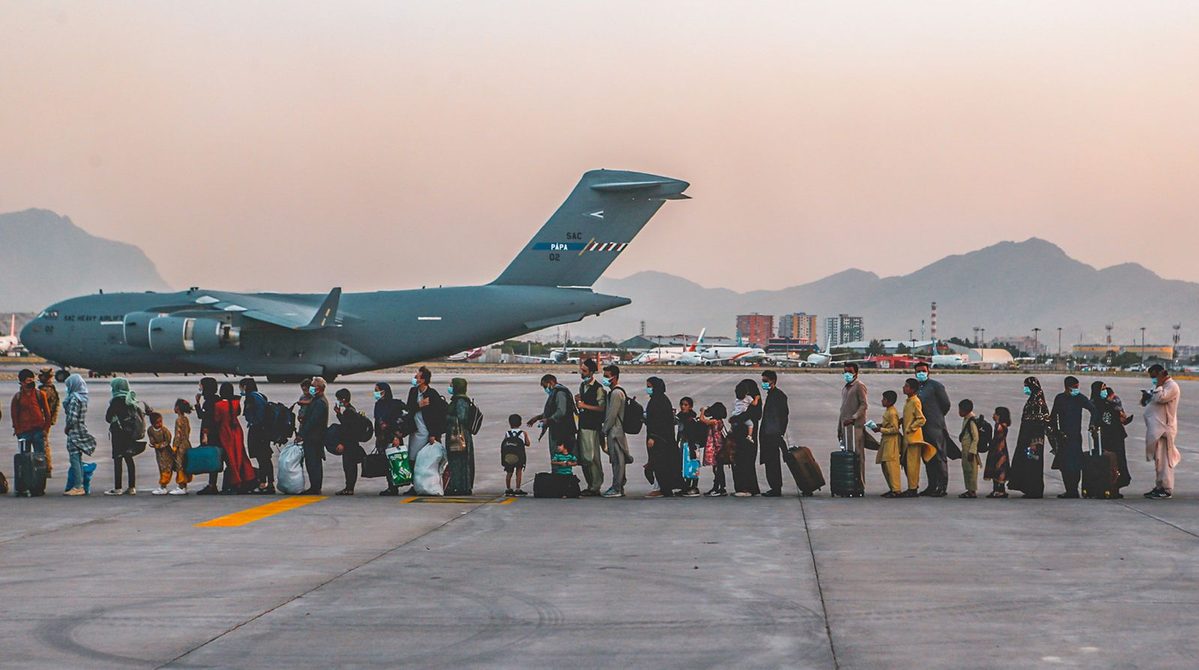
Twenty years of war. Two decades of consequences. One difficult question: Did the United States win the war it started—or did it achieve military objectives at a cost that undermined its strategic goals?
The US-led war in Afghanistan was one of the longest, most expensive, and most consequential military interventions of the twenty-first century. It began in October 2001 after the September 11 terrorist attacks and ended with the withdrawal of US forces in August 2021.
Yet the departure of American troops did not bring the political order Washington had spent two decades trying to establish. The Taliban returned to power, the Afghan government collapsed, and the world witnessed scenes at Kabul airport that raised fundamental questions about military power, nation-building, and the limits of foreign intervention.
The Afghan war was not simply a conflict between an international military coalition and an insurgency. It was a human tragedy, a financial burden, a political turning point, and a regional security crisis. Its consequences extended far beyond Afghanistan—affecting American society, European allies, Pakistan, Iran, Central Asia, China, and the wider Middle East.
The central lesson: Military superiority does not automatically produce political success.
What Was America’s Main Objective?
The war’s objectives changed over time. What began as a counterterrorism operation gradually expanded into a long-term project of state-building, democratic governance, and regional security.
| Objective | Description |
|---|---|
| Destroy al-Qaeda’s operational base | Following 9/11, Washington sought to dismantle al-Qaeda and capture or kill its leadership, including Osama bin Laden. The Taliban government was targeted for sheltering al-Qaeda. |
| Remove the Taliban government | US forces rapidly overthrew the Taliban in 2001. Washington subsequently tried to prevent the movement from returning to power. |
| Build a stable Afghan state | The mission expanded to include elections, public institutions, an Afghan army and police force, education, healthcare, and greater participation of women in public life. |
| Prevent another major terrorist attack | The broader strategic purpose was to ensure Afghanistan could not again become a secure base for international terrorist operations threatening the US and its allies. |
The distinction between initial and later objectives is crucial. A Stanford analysis concludes that the United States and its allies substantially achieved their initial goals of disrupting al-Qaeda’s Afghan infrastructure and removing the Taliban from power. However, they did not eliminate the Taliban, and the wider threat of transnational terrorism persisted.
The strategic mistake was allowing a comparatively focused counterterrorism campaign to become an open-ended attempt to transform an entire country’s political and social order. This required sustained foreign financing, military protection, and political legitimacy that the Afghan government never fully secured.
The Economic Cost to the United States
| Metric | Figure |
|---|---|
| Estimated US spending (operations in Afghanistan and Pakistan) | $2.313 trillion |
| Estimated direct deaths from the war | 243,000 |
Source: Brown University’s Costs of War Project (2021 estimate for costs through FY2022)
These figures require careful interpretation. The $2.313 trillion estimate covers US war-related expenditure in Afghanistan and Pakistan—it is not simply a reconstruction budget or the amount spent inside Afghanistan alone. It also excludes some future interest costs and the full lifetime cost of veterans’ care.
The Opportunity Cost: What Else Could That Money Have Achieved?
War expenditure has an economic cost beyond the immediate government payment. Borrowing to finance prolonged military operations adds interest obligations, while spending on war competes with other public priorities.
The same resources could, in principle, have supported:
- Modern infrastructure, transport, and energy systems
- Research, advanced manufacturing, and technological innovation
- Public healthcare, universities, and vocational education
- Domestic economic development and long-term fiscal resilience
- Diplomacy, intelligence cooperation, and targeted counterterrorism
This does not mean every dollar spent on war could have been transferred directly to civilian programs. Military expenditure also supports jobs and production. The central economic question is whether the security achieved justified the total cost and the alternatives sacrificed.
The Hidden Bill: American Veterans and Families
The financial consequences did not end when the last US combat troops departed.
American veterans have faced physical injuries, traumatic brain injuries, post-traumatic stress disorder, chronic illness, and difficulties returning to civilian life. Families have carried the emotional and financial burden of caregiving, bereavement, and repeated deployments.
Brown University’s Costs of War research estimates that care for US veterans of the post-9/11 wars could cost between $2.2 trillion and $2.5 trillion by 2050 across those wars. This is a broader estimate covering multiple conflicts, not Afghanistan alone.
The lesson: The true cost of war extends well beyond the battlefield and the government’s annual defense budget.
The Human Cost: Who Paid the Highest Price?
The most painful contradiction of the Afghanistan war is that its greatest human burden fell on people who had little influence over the decisions that prolonged it.
| Group | Estimated Deaths | Context |
|---|---|---|
| Afghan civilians | 47,245 | Families lost homes, livelihoods, relatives, and access to essential services. These figures do not capture all indirect deaths or the full long-term effects of displacement. |
| Afghan security forces | ~66,000 | Afghan military and police personnel killed (2001–2021 estimates). They fought for a government that depended heavily on foreign financing, air support, logistics, and maintenance. |
| US military personnel | ~2,400 | US service members killed in Afghanistan, depending on reporting cut-off and inclusion criteria. Thousands more experienced serious injuries. |
The figures above are historical estimates, not a complete accounting of every death. Precise totals vary with the period covered and the treatment of contractors, civilians, and indirect mortality.
The war also affected education, public health, employment, and family structures. Millions of Afghans experienced displacement inside their own country or sought refuge abroad. Children grew up amid violence, interrupted schooling, and insecurity.
Women gained opportunities in education, employment, and public life during parts of the international intervention, but many of these gains became vulnerable after the Taliban returned.
The human tragedy cannot be measured only in deaths. It must also include the years of fear, lost education, damaged institutions, interrupted livelihoods, and opportunities that never materialized.
The Cost to America’s Allies: A Shared War, Unequal Sacrifices
The United States did not fight alone. NATO allies and partner nations deployed troops, provided military assistance, financed development programs, and supported the Afghan government.
The United Kingdom, Germany, France, Italy, and Canada were among the leading contributors. For several countries, participation was also a way to maintain the transatlantic alliance and demonstrate solidarity with Washington.
The Costs Included:
- Human losses: Allied soldiers and police officers were killed, wounded, or traumatized
- Financial burdens: Governments diverted defense resources and public funds to the Afghan mission
- Domestic political pressure: Public support for a seemingly endless conflict weakened as casualties and costs continued
- Strategic credibility: The 2021 withdrawal raised difficult questions about alliance planning, evacuation coordination, and the sustainability of military interventions
The fall of Kabul was particularly damaging because it exposed the difference between possessing overwhelming military power and creating a political order capable of surviving without that power.
For European allies, the experience reinforced an uncomfortable reality: participation in a US-led military campaign does not necessarily guarantee that Washington’s long-term political objectives will be achieved.
Pakistan: The Neighbor That Paid a Heavy Price
Pakistan experienced the Afghanistan war differently from distant NATO countries. Its long border, refugee communities, trade links, and domestic security challenges made it directly vulnerable to the conflict.
Pakistan became an important logistical and security partner for the United States after 2001. Its cooperation included transit routes, intelligence support, and military operations against militant groups. However, relations between Washington and Islamabad were frequently strained by mutual accusations, conflicting priorities, and disputes over militant sanctuaries.
Pakistan’s Reported War-on-Terror Burden
| Metric | Figure |
|---|---|
| Casualties | 80,000 |
| Economic losses | $150 billion |
Source: Pakistan’s Press Information Department, 26 August 2021. These are the Pakistan government’s reported estimates for the broader war on terror, not independently verified Afghanistan-only totals.
The Economic and Social Consequences
First, insecurity damaged investment. Terrorist attacks, military operations, and uncertainty affected tourism, business confidence, infrastructure, and economic activity—particularly in the former tribal districts and parts of Khyber Pakhtunkhwa.
Second, displacement disrupted communities. Military operations and violence forced people to leave their homes. Pakistan also hosted large Afghan refugee populations over decades, placing pressure on housing, public services, and local employment in some areas.
Third, the security burden diverted resources. Money and administrative capacity that could have supported development had to be directed toward counterterrorism, security, and the management of conflict-related disruption.
Fourth, Pakistan’s strategic position became more complicated. Islamabad needed working relations with Washington while managing its border with Afghanistan and its own militant threats. The return of the Taliban did not automatically resolve Pakistan’s security concerns.
Did Pakistan Achieve Its Strategic Objectives?
Pakistan gained international importance as a partner in the Afghan conflict, and the Taliban’s return initially appeared to some observers to offer Islamabad greater strategic influence in Kabul. But influence is not the same as security.
The relationship between the Taliban authorities and Pakistan has remained vulnerable to disputes over the Tehrik-e-Taliban Pakistan (TTP), cross-border militancy, border management, and competing political interests. The Taliban deny Pakistani allegations that they provide sanctuary to the TTP.
The broader lesson: A change of government in a neighboring country cannot guarantee strategic benefits if the new government has independent interests and its own internal power structure.
Pakistan’s future gains will depend less on who rules Kabul and more on whether both countries can prevent cross-border violence, expand legitimate trade, manage refugees humanely, and establish durable diplomatic arrangements.
The Regional Cost: Afghanistan’s Instability Did Not Remain Inside Afghanistan
The war affected a wider region extending from Iran and Pakistan to Central Asia, China, and the Gulf.
| Country/Region | Impact |
|---|---|
| Pakistan | Refugee pressures, militant violence, border insecurity, and the economic costs of counterterrorism complicated domestic development and regional relations. |
| Iran | Refugee pressures, drug trafficking concerns, border security challenges, and uncertainty over Afghanistan’s political direction and water resources. |
| Central Asian Republics | Uzbekistan, Tajikistan, and Turkmenistan have had to balance border security, concerns about militancy, trade opportunities, and the possibility of energy and transport links through Afghanistan. |
| China | Beijing has opportunities in regional connectivity and resource investment but must consider terrorism risks, infrastructure limitations, and the security of Chinese personnel and projects. |
| The Wider Region | Refugee movements, trafficking, humanitarian needs, and the risk of militant networks operating across borders have created costs for multiple countries. |
These regional effects are interconnected. Weak governance and economic isolation in Afghanistan can encourage illegal economies, migration, and militant recruitment. Conversely, stable trade, infrastructure investment, and cooperation on water, energy, and border management could create shared benefits.
The withdrawal also changed the regional balance of influence. China, Russia, Iran, Pakistan, and Central Asian states have each pursued their own approaches to dealing with the Taliban. Their interests overlap in some areas but diverge in others. The United States is no longer able to shape events through a large military presence on Afghan territory.
What Did the United States Achieve—and What Did It Fail to Achieve?
A balanced assessment must distinguish operational achievements from durable strategic outcomes.
| Objective | Assessment |
|---|---|
| Remove the Taliban government in 2001 | Achieved initially; reversed in 2021 |
| Disrupt al-Qaeda’s Afghan base | Substantially achieved, but the global terrorist threat was not eliminated |
| Kill or capture key al-Qaeda leaders | Major successes, including Osama bin Laden’s death in Pakistan in 2011 |
| Establish a new Afghan political system | Achieved for two decades, but it collapsed in 2021 |
| Build Afghan security forces capable of independent defense | Failed to produce a sustainable force able to preserve the government after US support ended |
| Expand education and women’s public participation | Important gains during 2001–2021, many subsequently restricted or reversed |
| Prevent Afghanistan from becoming a terrorist sanctuary | Incomplete; terrorist groups remain a concern |
| Achieve a durable peace acceptable to major Afghan factions | Not achieved |
Why Did the Project Fail?
- Military victory was mistaken for political legitimacy. Removing an incumbent government is not the same as building institutions that citizens trust or that can survive without foreign protection.
- The Afghan state became too dependent on external support. Its security forces relied on foreign funding, intelligence, air power, maintenance, logistics, and contractors. These dependencies proved decisive when support was withdrawn.
- Corruption weakened public confidence. Patronage, waste, and poor governance damaged the credibility of state institutions and undermined the effectiveness of reconstruction spending.
- The Taliban were never decisively eliminated. The movement retained the capacity to recruit, reorganize, and wage an insurgency, making a purely military solution increasingly elusive.
- Political reconciliation remained insufficient. The United States negotiated its withdrawal agreement with the Taliban in 2020, but the process did not produce a durable power-sharing settlement between the Taliban and the Afghan government.
- Timelines and objectives were unrealistic. Reconstruction programs often prioritized short-term outputs and spending targets over locally sustainable institutions. A US reconstruction watchdog concluded that unrealistic timelines and unsustainable goals undermined the possibility of a successful outcome.
The failure was not that every investment was wasted or every achievement disappeared. Millions of Afghans experienced improved access to education, healthcare, and economic opportunities during the international intervention. The deeper failure was that these gains were not secured within a political and institutional system resilient enough to withstand the withdrawal of its principal external backer.
The Future of Afghanistan: Five Possible Directions
Strategic outlook—scenarios, not predictions
Scenario 1: Authoritarian Stability
The Taliban maintain control, prevent a major internal challenge, and gradually expand practical relations with neighboring states. Security may improve in some areas, but political exclusion and restrictions on women continue to constrain social and economic development.
Scenario 2: Pragmatic International Engagement
The authorities make verifiable changes on girls’ education, women’s employment, counterterrorism, and inclusive governance. These steps could create greater opportunities for humanitarian assistance, investment, trade, and diplomatic normalization.
Scenario 3: Renewed Regional Conflict
Cross-border militancy, tensions with Pakistan, internal factional disputes, or competition among regional powers could undermine stability and increase the danger of renewed violence.
Scenario 4: Economic Stagnation
Limited employment, inadequate investment, humanitarian need, and restrictions on women’s participation could trap the country in persistent poverty and dependence on aid, remittances, and informal economic activity.
Scenario 5: Regional Economic Integration
Afghanistan becomes a functioning bridge linking Central Asia, Pakistan, Iran, and wider Asian markets through transit, energy, mining, and trade. This would require more predictable security, infrastructure, investment protections, and cooperation among neighboring countries.
The present baseline is difficult. The Congressional Research Service’s March 2026 assessment describes a country with continuing humanitarian needs, severe restrictions on women and girls, and a persistent terrorist threat. It also notes that Afghanistan has receded as a US foreign policy priority.
Afghanistan’s natural resources, agricultural potential, and geographic location offer economic opportunities, but these advantages cannot substitute for human capital, reliable institutions, transport infrastructure, financial systems, and political stability.
The most promising future is not another foreign military intervention. It is a gradual transition toward a more inclusive political order, productive employment, education for both sexes, regional trade, and credible security arrangements.
What Is America Afraid of Now?
The question is not whether the United States fears Afghanistan as a country. The strategic concern is what might emerge from instability, weak governance, and the presence of militant organizations.
The Five Principal Concerns
- A terrorist sanctuary. The US remains concerned that al-Qaeda or other transnational groups could use Afghan territory to plan or support attacks. The Islamic State–Khorasan Province (ISKP), which opposes the Taliban, also presents a regional and international threat.
- Limited intelligence and operational access. Without a permanent US military presence or diplomatic mission inside Afghanistan, Washington has fewer direct options for gathering intelligence and responding to emerging threats. This increases reliance on regional partnerships and other intelligence methods.
- A new strategic foothold for competitors. China and Russia have pursued engagement with the Taliban, while Iran, Pakistan, and Central Asian states have their own security and economic interests. Afghanistan could become a site of diplomatic competition, although regional cooperation is also possible.
- The consequences of withdrawal. The collapse of the Afghan government raised questions about US intelligence assessments, the durability of institutions built with foreign support, and the credibility of American commitments to partners. These are lessons for future interventions, not evidence that every American alliance has lost credibility.
- Renewed instability and humanitarian crises. Economic collapse, repression, displacement, and internal conflict could generate regional insecurity and create opportunities for militant recruitment.
There is also an important limit to this analysis: Washington’s strategic priorities change over time. Afghanistan is no longer the center of American military planning that it was during the war. The US must weigh its concerns about terrorism, the protection of its citizens and former Afghan partners against the financial and political costs of renewed involvement.
What Should Pakistan, Afghanistan, and the United States Learn?
The war’s legacy suggests a different approach to security and development.
| Actor | Key Lesson |
|---|---|
| For the United States | Set limited and measurable objectives, distinguish counterterrorism from nation-building, and do not confuse military dominance with political legitimacy. |
| For Pakistan | Prioritize border stability, counterterrorism, regional diplomacy, and economic integration rather than assuming that political influence in Kabul will automatically deliver security. |
| For Afghanistan’s Authorities | Build legitimacy through effective administration, economic opportunity, protection of basic rights, and a political order that can accommodate the country’s diversity. |
| For Neighboring Countries | Coordinate on trade, infrastructure, refugees, water management, and militant threats rather than allowing Afghanistan to become another arena for proxy competition. |
| For the International Community | Preserve humanitarian assistance and support education, health services, and livelihoods while demanding meaningful progress on women’s rights and counterterrorism. |
These are not easy solutions. They require diplomacy, sustained engagement, and realistic expectations. But the alternative—permanent isolation, economic stagnation, and recurring conflict—would impose costs on Afghanistan and its neighbors for decades.
Conclusion: A Superpower Can Win Battles and Still Lose Its Strategic Purpose
The Afghanistan war began with a clear and widely supported objective: prevent another attack like September 11 by dismantling al-Qaeda’s base and removing the Taliban government that sheltered it.
The United States achieved important early military successes. It disrupted terrorist networks, removed the Taliban from power, and helped create a period in which millions of Afghans gained access to education, healthcare, and public life.
Yet those achievements did not produce a durable political settlement.
After approximately two decades and more than $2 trillion in estimated US war-related expenditure, the Taliban returned to power in August 2021. Afghanistan remained vulnerable to terrorism, political exclusion, and economic distress, while Pakistan and other neighbors continued to face serious security challenges.
The war’s cost was not borne equally. American families lost loved ones and continue to support veterans. Allied countries lost soldiers and spent public resources. Pakistan absorbed enormous security and economic burdens. Afghan civilians suffered the most sustained destruction of homes, livelihoods, and social stability.
The greatest strategic error was not simply withdrawing in 2021. It was the failure to create a sustainable political settlement before withdrawal became unavoidable. A war can remove an enemy government, but it cannot indefinitely manufacture legitimacy, institutional capacity, and social consensus from outside.
For America, the lesson is one of strategic restraint. For Pakistan, it is the need to place national security on a more sustainable economic and diplomatic foundation. For Afghanistan, it is that a country cannot prosper by excluding much of its population from education and productive life.
The ultimate test of power is not how long a superpower can remain at war, but whether it can achieve lasting security without making the costs of war greater than the benefits of peace.
References
Brown University, Watson Institute, Human and Budgetary Costs to Date of the U.S. War in Afghanistan, 2001–2022. Brown University, Costs of War Project, The Costs of the War to United States Allies Since 9/11. Stanford University, Center for International Security and Cooperation, The US Withdrawal from Afghanistan and the Fall of Kabul. Special Inspector General for Afghanistan Reconstruction (SIGAR), findings on the sustainability of reconstruction and the withdrawal. Congressional Research Service, Afghanistan: Background and U.S. Policy in Brief, updated March 2026. Pakistan Press Information Department, National Security Adviser Briefs UK Think Tank on Pakistan’s Perspective on the Afghan Situation, 26 August 2021.

Comments
No comments yet. Be the first.
Comments are closed on this article.