
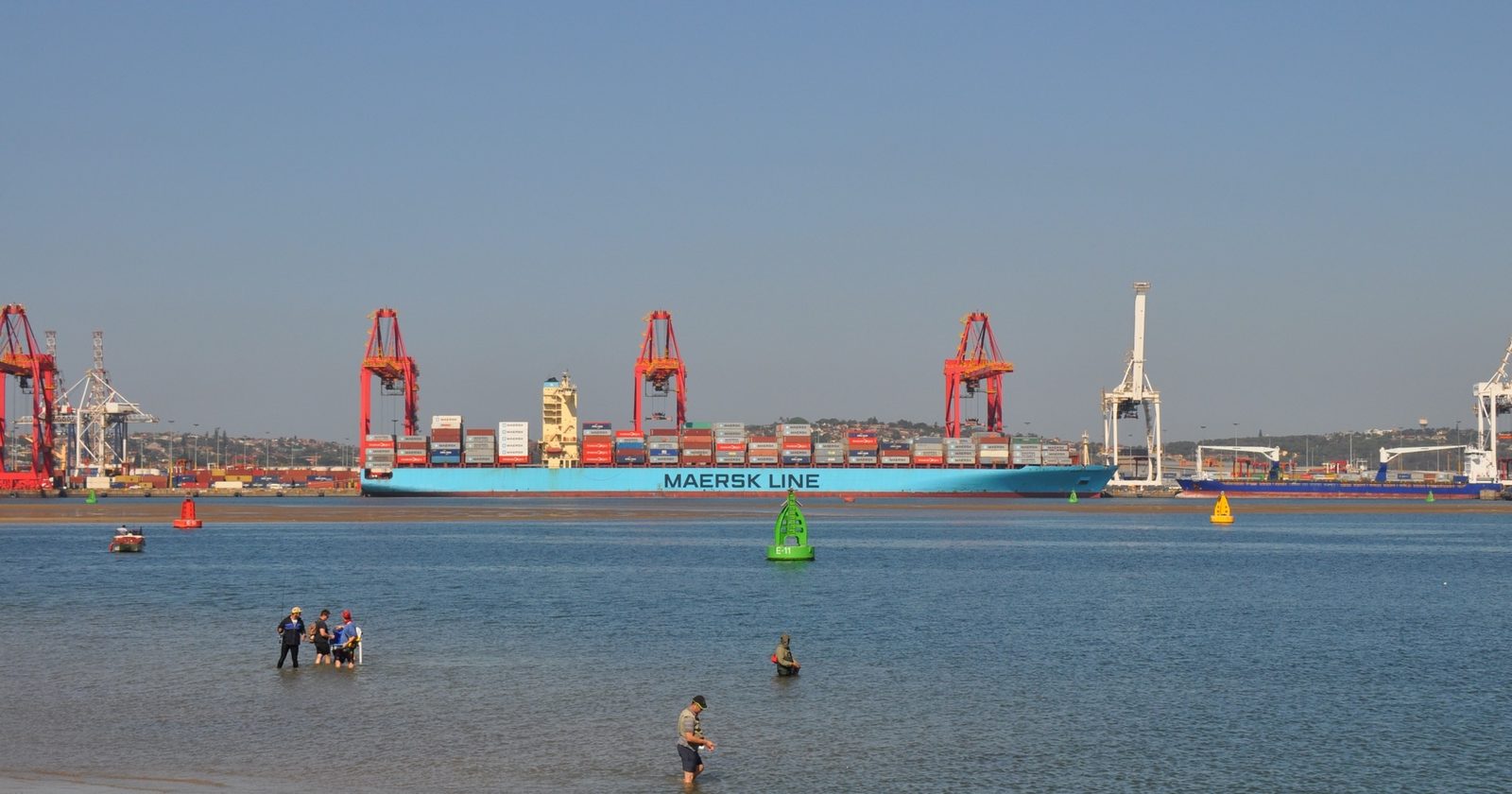
The Indian Ocean is emerging as a critical arena of geopolitical competition, connecting Africa and the Indo-Pacific through strategic maritime corridors, resource supply chains and expanding economic partnerships. As regional powers seek to strengthen their influence, secure access to critical minerals and diversify their trade and investment networks, cooperation across this maritime space is becoming increasingly important to the future of global economic and security relations.
From maritime security threats and infrastructure financing to critical mineral diplomacy, South-South cooperation and climate resilience, the evolving relationship between Africa and the Indo-Pacific presents both opportunities and challenges for developing economies. The expansion of multilateral platforms, the pursuit of alternatives to established infrastructure financing models and the growing importance of regional trade integration are also creating new possibilities for African countries to diversify their partnerships and strengthen their strategic autonomy.
To examine these developments, we interviewed Bahauddin Foizee, a geopolitical analyst, risk consultant and columnist specializing in Indo-Pacific affairs. In this interview, Foizee discusses the maritime security challenges facing the Indian Ocean, the competition among Indo-Pacific economies for Africa's critical minerals, the alternative infrastructure financing models, the implications of expanding South-South cooperation, the shared climate vulnerabilities and the sectors best positioned to benefit from deeper economic integration between Africa and Indo-Pacific.
Kabelo Molefe: The Indian Ocean connects Africa and the Indo-Pacific through strategically important maritime corridors. What are the principal piracy, asymmetric warfare and maritime security threats that regional naval cooperation must address over the next decade?
Bahauddin Foizee: The Indian Ocean is the primary maritime bridge connecting the African continent and the Indo-Pacific region. From my strategic perspective, joint naval initiatives between these two regions over the next decade must move past traditional localized policing to counter highly sophisticated asymmetric threats.
We are seeing a convergence of traditional piracy, which has evolved from low-tech hijackings to heavily armed and coordinated transnational networks, with modern geopolitical proxy conflicts. The primary risk centres on vital choke points like the Bab-el-Mandeb, the Mozambique Channel and the Gulf of Aden. Joint deployments must address the proliferation of low-cost loitering munitions, sea-skimming drones and sea mines deployed by non-state actors. These asymmetric threats can choke global sea lines of communication (SLOCs) instantly, making real-time intelligence sharing and multi-national naval interoperability between Asian powers and East African littoral states non-negotiable for trade continuity.
KM: How is competition among major Indo-Pacific economies for Africa's critical minerals and rare earth elements influencing their investment priorities, diplomatic engagement and long-term supply-chain strategies?
BF: The accelerating global transition toward the defence-tech modernization and the green infrastructure has sparked an intense competitive race for Africa’s critical minerals and rare earth elements. The major Indo-Pacific economies like India, Indonesia, Japan and South Korea are aggressively reshaping their diplomatic and investment strategies to challenge Beijing’s historical dominance over African supply chains.
These Asian middle powers are utilizing targeted state-backed capital, instead of relying purely on open-market purchases. Japan and South Korea are deploying long-term equity investments and technology-transfer partnerships directly into mining infrastructures in nations like the Democratic Republic of Congo, Zambia and Namibia to secure exclusive off-take agreements for cobalt, lithium and copper.
India is actively leveraging its historical diaspora-driven diplomatic ties in East and Southern Africa to ink bilateral strategic mineral partnerships, treating access to these resource nodes as a fundamental pillar of its long-term national security and industrial survival.
KM: What alternative infrastructure financing models can India, Japan and other Indo-Pacific partners offer African countries seeking to diversify their funding sources and balance China's Belt and Road Initiative?
BF: Some African nations are actively seeking alternative infrastructure financing models to balance, if not counter, China’s BRI. Indo-Pacific partnerships are stepping into this opportunity by offering co-financing mechanisms. For example, the Asia-Africa Growth Corridor (AAGC), a collaborative blueprint led by India and Japan, is designed to integrate the sea routes and the institutional infrastructure that connect the two regions. There are instances of advanced project financing structures backed by the financial institutions operating in India and Japan, focusing on digital networks, port modernizations and clean energy corridors. By offering financing models that avoid predatory debt structures, Indo-Pacific coalitions provide African states with vital developmental alternatives while systematically balancing Beijing's regional leverage.
KM: How could the expansion of South-South cooperation frameworks, including BRICS and the Indian Ocean Rim Association (IORA), reshape Western economic influence in East and Southern Africa, and what challenges could limit their impact?
BF: From a strictly political affairs vantage point, the expansion of South-South institutional cooperation frameworks, such as an expanded BRICS bloc and the Indian Ocean Rim Association (IORA), is fundamentally reshaping the geopolitical architecture of East and Southern Africa.
This shift provides the African state actors with greater diplomatic leverage and a broader range of strategic options. By engaging with non-Western multilateral forums, the African governments can diversify their sources of development finance and reduce their reliance on the traditional institutions such as the IMF and World Bank, while maintaining their existing economic relationships with Western partners. Instead of signalling a withdrawal from the Western-led economic order, this development reflects a gradual redistribution of economic influence towards a more multipolar system. It also enables the African countries to expand direct trade, explore alternative payment and currency settlement mechanisms, and strengthen security dialogues with the fast-growing Indo-Pacific economies, thereby enhancing their capacity to pursue national interests and negotiate partnerships on more favourable terms.
However, the extent of this transformation will depend on whether these frameworks can move beyond diplomatic alignment and towards meaningful economic integration. The competing national interests and the disparities in bargaining power may constrain collective action, while African countries must ensure that new partnerships deliver tangible developmental gains, instead of merely reproducing the existing patterns of unequal exchange.
At the same time, the traditional Western economic powers are likely to remain influential in the region’s geopolitical and economic landscape. The extent to which the South-South cooperation can reshape these dynamics will ultimately depend on whether the African governments can translate their expanded diplomatic options into meaningful economic integration and sustainable development.
KM: How can South Asian and East African coastal states turn shared climate vulnerabilities—including sea-level rise, cyclones and agricultural disruption—into practical regional cooperation on early warning, disaster response and coastal resilience?
BF: While I am not an environmental scientist, I do understand the social science behind the environmental developments. My forecasting models emphasize that shared planetary risks must be treated as structural drivers for cross-continental policy defence alignments. Both South Asian littoral states and East African coastal nations face similar vulnerabilities, particularly rising sea levels, devastating cyclical cyclones and acute agricultural disruptions.
Through platforms like IORA, these regions are beginning to move past symbolic environmental pacts toward concrete security coordination. This includes establishing joint early-warning systems, building integrated maritime disaster-response centres, and collaborating on coastal resilience engineering. By reframing climate vulnerability from a localized humanitarian crisis into a shared and systemic threat to maritime borders and food security, these states are building a unique cross-continental defence framework aimed at preserving regional stability against planetary shocks.
KM: As the African Continental Free Trade Area (AfCFTA) advances continental market integration, which Indo-Pacific manufacturing and digital services sectors are best positioned to benefit from expanded market access, localized production and cross-continental commercial partnerships?
BF: As the AfCFTA progressively integrates Africa into the world’s largest unified free trade zone, the forward-looking economic sectors within the Indo-Pacific are uniquely positioned to capitalize on this massive cross-continental commercial space.
Instead of viewing Africa merely as an exporter of raw commodities, the advanced Asian enterprises are shifting toward localized manufacturing and digital service integration. Indo-Pacific automotive, pharmaceutical and light-industrial conglomerates are establishing assembly hubs directly within AfCFTA member states to secure duty-free access across the entire continent. Simultaneously, South Asian and East Asian fintech and digital telecommunications providers are aggressively exporting mobile-banking infrastructures and digital services to anchor themselves into Africa's rapidly expanding consumer market.

Comments
No comments yet. Be the first.
Comments are closed on this article.